
The United States is a tapestry of names derived from diverse origins, ranging from indigenous languages and European royalty to descriptive Spanish phrases. However, the story behind the naming of Idaho stands out as one of the most peculiar and debated chronicles in American history. Unlike Florida, which translates to “land of flowers,” or Vermont, meaning “green mountain,” the origin of the name Idaho involves a mixture of political maneuvering, a Victorian-era hoax, and the eventual embrace of a fabricated etymology that became an inseparable part of the state’s identity. To understand how this name came to be, one must look back at the mid-19th century, a time of rapid expansion and the formation of new territories in the American West.
The Great Name Hoax: George M. Willing and the Colorado Connection
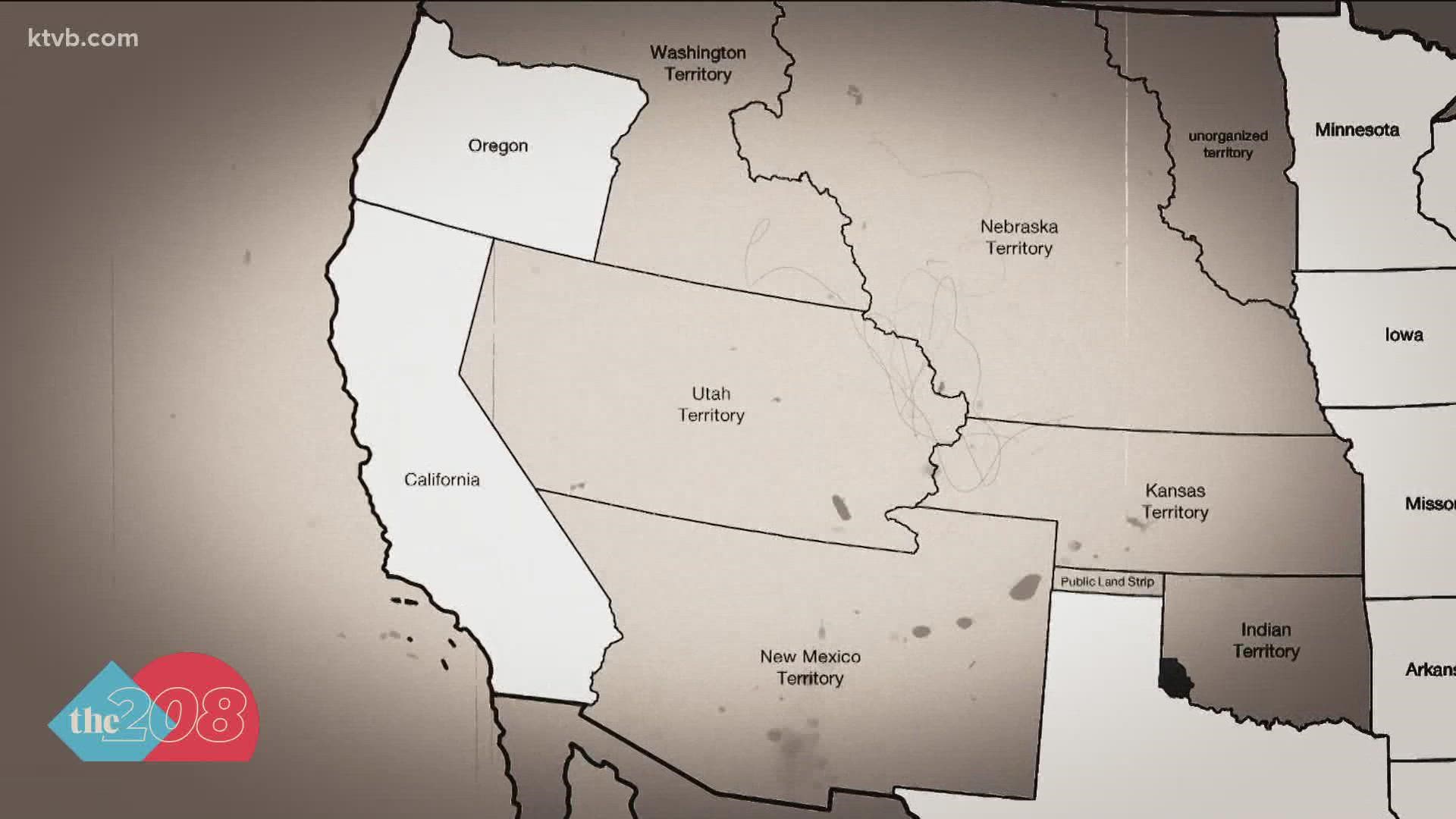
The journey of the name Idaho did not actually begin within the borders of the current state. It started hundreds of miles away in the halls of the United States Congress during the debates over the naming of the territory we now know as Colorado. In 1860, a lobbyist and eccentric eccentric named George M. Willing suggested the name “Idaho” for the newly proposed mining territory.
The Fabrication of “Gem of the Mountains”
George M. Willing claimed that “Idaho” was a Shoshone word meaning “Gem of the Mountains.” The poetic nature of the phrase immediately appealed to the sensibilities of the era. The idea of a rugged, mineral-rich land being described as a “gem” nestled among peaks fit the romanticized view of the western frontier perfectly. For a brief period, it seemed certain that the region around Pikes Peak and Denver would bear the name.
The Exposure of the Lie
However, the legitimacy of the name was soon called into question. Suspicious colleagues and scholars began to press George M. Willing for the exact linguistic roots of the word. Eventually, he admitted that he had simply made the name up. Some historians suggest he might have been inspired by the name “Ida,” but the specific construction of “Idaho” was his own invention. When the deception was revealed, the United States Senate grew wary. Fearing that naming a territory after a fabricated word would be a joke on future generations, they opted for the more traditional Spanish name, Colorado.
From Hoax to the Pacific Northwest: The Migration of a Name
While the name was rejected for the Rocky Mountains of the central west, it did not vanish from the American lexicon. Like many ideas in the 19th century, the name “Idaho” traveled along trade routes and through the press, eventually finding a new home in the Pacific Northwest.
The Influence of the Steamship “Idaho”
The survival of the name is largely credited to the maritime history of the Columbia River. In 1860, a steamship was launched on the river and christened the “Idaho.” This vessel carried miners and supplies to the bustling gold fields of what was then the eastern portion of the Washington Territory. Because the ship was a primary mode of transport to the mining camps, the name became associated with the region’s burgeoning wealth and rugged landscape.
The Formation of the Idaho Territory
By 1863, the population in the mining regions grew so significantly that a new administrative division was required. When the time came to name the new territory, which encompassed parts of present-day Montana and Wyoming, the name “Idaho” was proposed once again. Despite the earlier controversy in Washington D.C., the name had become widely used and locally loved. On March 4, 1863, President Abraham Lincoln signed the act creating the Idaho Territory. The fabricated name had officially found its place on the map, forever anchoring itself to the mountains and valleys of the northwest.
Etymological Debates and Indigenous Linguistic Reality

Although George M. Willing admitted to inventing the word, some linguists and historians have spent decades trying to find a factual basis for the name. This has led to a fascinating intersection of folklore and genuine indigenous history.
The Shoshone and Apache Theories
While the “Gem of the Mountains” translation is widely considered a myth, some argue that there may have been a kernel of phonetic truth in George M. Willing’s invention. One theory suggests the word is derived from the Shoshone exclamation “Ee-dah-how,” which roughly translates to “The sun comes down the mountain” or “It is morning.” This would refer to the way the sun lights up the mountain peaks before the valleys below. Another theory points toward an Apache word, “Idahi,” which was used to refer to the Comanche people. However, neither of these theories has been definitively proven as the direct source of the state’s name, leaving the George M. Willing hoax as the most likely primary origin.
Cultural Adoption of the Moniker
Regardless of its dubious origins, the residents of the state embraced the “Gem of the Mountains” moniker. It became more than just a name; it became a branding tool for the region’s identity. The “Gem State” became the official nickname, celebrating the fact that Idaho produces over 72 types of precious and semi-precious stones, including the rare star garnet found in the Panhandle National Forests.
Historic Landmarks and Nature Defined by the Name
The name “Idaho” is now inextricably linked to some of the most spectacular natural landmarks in North America. These landmarks serve as the physical manifestation of the “Gem of the Mountains” ethos, regardless of whether the name was born from a lie or a legend.
The Salmon River and the Frank Church-River of No Return Wilderness
The Salmon River is one of the most iconic landmarks in the state. Often referred to as the “River of No Return,” it carves through the Frank Church-River of No Return Wilderness, the largest contiguous federally managed wilderness area in the lower 48 states. This rugged landscape represents the “mountains” part of the state’s name perfectly, offering deep canyons and towering peaks that have remained largely untouched since the days of the early pioneers.
Craters of the Moon National Monument and Preserve
While the name implies mountains and gems, Idaho also boasts a “lunar” landscape. Craters of the Moon National Monument and Preserve is a vast ocean of lava flows and cinder cones. It serves as a reminder that the geological history of the state is as complex and surprising as the history of its name. This landmark provides a stark contrast to the lush forests of Northern Idaho, showcasing the geographic diversity of the territory.
The Sawtooth Mountains and Sun Valley
The Sawtooth Mountains are perhaps the most literal interpretation of the “Gem of the Mountains.” Their jagged, granite peaks rise dramatically above the alpine lakes of the Sawtooth National Recreation Area. Nearby, Sun Valley stands as a landmark of cultural significance, being the site of the world’s first chairlift and a symbol of how Idaho transitioned from a rugged mining frontier to a destination of international renown.
The Legacy of the Name in Modern Idaho
Today, the controversy surrounding George M. Willing is mostly a footnote in history books, but the name “Idaho” has taken on a life of its own. It represents a state that is fiercely independent, geographically stunning, and rich in natural resources.
The capital city, Boise, along with historic towns like Lewiston and Idaho City, continues to preserve the heritage of the territory. Idaho City, once the largest city in the Northwest during the gold rush, stands as a testament to the era when the name “Idaho” first began to circulate among miners and dreamers.
In conclusion, the naming of Idaho is a masterclass in how language and identity are formed on the frontier. It shows that a name doesn’t necessarily need an ancient or “authentic” origin to become meaningful. Through the influence of steamships, the persistence of local miners, and the eventual endorsement of Abraham Lincoln, a fabricated word became the cornerstone of a state’s identity. From the depths of Hells Canyon to the heights of Borah Peak, the “Gem of the Mountains” continues to live up to the poetic, if slightly dishonest, promise of its inventor. The story of Idaho remains a unique chapter in the history of the United States, proving that sometimes, the myths we create can become the landmarks we cherish.
LifeOutOfTheBox is a participant in the Amazon Services LLC Associates Program, an affiliate advertising program designed to provide a means for sites to earn advertising fees by advertising and linking to Amazon.com. Amazon, the Amazon logo, AmazonSupply, and the AmazonSupply logo are trademarks of Amazon.com, Inc. or its affiliates. As an Amazon Associate we earn affiliate commissions from qualifying purchases.