
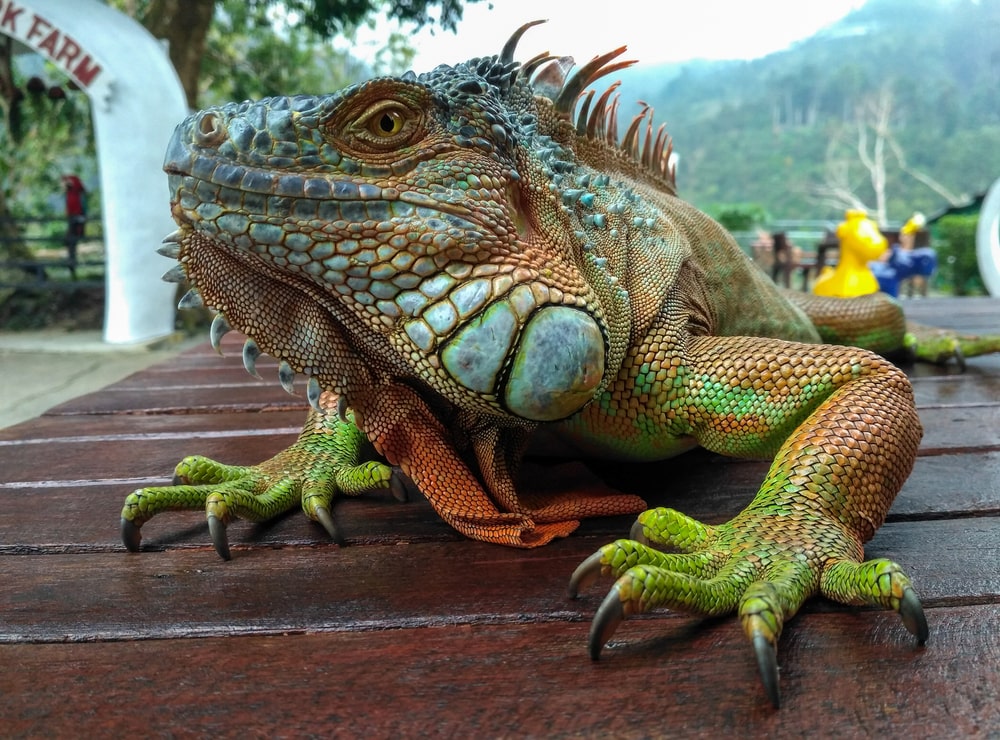
The vibrant landscape of Florida, celebrated for its sun-drenched beaches, unique wetlands, and rich biodiversity, has, over recent decades, acquired an unexpected new resident: the iguana. These striking reptiles, particularly the Green Iguana (Iguana iguana), are now an undeniable part of the state’s natural tapestry, often spotted basking on seawalls, scurrying across golf courses, or clinging to palm trees. Their presence, once a rare sight, has become so ubiquitous in certain regions, especially in South Florida, that it raises a fundamental question for residents and visitors alike: how did these tropical reptiles, native to Central America, Mexico, and the Caribbean, establish such a strong foothold in the Sunshine State? The answer lies in a fascinating, albeit concerning, blend of human activity, environmental factors, and the remarkable adaptability of these creatures, fundamentally altering the natural history and ecological profile of one of America’s most iconic natural landmarks.
An Uninvited Chapter in Florida’s Natural History
The story of iguanas in Florida is a contemporary example of how global connectivity and specific environmental conditions can lead to dramatic shifts in a region’s native fauna. Unlike the state’s ancient alligators or graceful manatees, iguanas are not indigenous. Their arrival marks a new, relatively recent chapter, underscoring the dynamic and sometimes fragile nature of ecosystems. Understanding their journey is crucial for appreciating the ongoing evolution of Florida’s natural heritage.
The Allure of the Sunshine State
Florida’s climate mirrors that of the iguanas’ native habitats. The warm, humid conditions, year-round mild temperatures, and abundant vegetation provide an ideal environment for these cold-blooded reptiles to thrive. For centuries, the natural barrier of the Gulf Stream and vast oceanic distances prevented their natural migration to the continental United States. However, as human populations grew and global trade expanded, these natural barriers became increasingly porous, creating unintended pathways for species introduction.
The Inadvertent Travelers
The iguanas’ journey to Florida wasn’t a coordinated migration but a series of accidental introductions, primarily driven by human actions. Their presence is a stark reminder of the unintended consequences of globalization and the pet trade. Once established, their rapid proliferation highlights their resilience and the absence of natural predators capable of controlling their numbers in their new home. This phenomenon transforms the very definition of “nature” in Florida, adding a non-native element to its already unique natural landmarks.
Routes of Arrival: More Than Just a One-Way Ticket
The iguanas’ colonization of Florida wasn’t a single event but a multi-faceted process, involving several distinct vectors. Each pathway contributed to their initial establishment and subsequent spread, creating a complex narrative of how an invasive species takes hold.
The Pet Trade Pathway
By far the most significant vector for iguana introduction into Florida has been the exotic pet trade. Green Iguanas were once popular pets due to their striking appearance and docile nature when young. However, as they grow larger and more demanding – often reaching lengths of five to six feet and requiring specialized care – many owners found themselves unable or unwilling to continue housing them. The unfortunate, yet common, practice was to release these unwanted pets into the wild.
South Florida’s tropical climate proved to be remarkably forgiving for these abandoned creatures. With ample food sources (ranging from ornamental plants to fruits) and a lack of significant predators, the released iguanas not only survived but began to reproduce. This cycle of release and reproduction initiated the foundation of Florida’s wild iguana populations, primarily centered around urban and suburban areas of Miami, Fort Lauderdale, and West Palm Beach.
Stowaways on Cargo Ships
Another less frequent but documented pathway for iguana arrival involves their unwitting transport as stowaways on cargo ships. Vessels traveling from Central America or the Caribbean to Florida’s busy ports, such as Miami, occasionally harbor these reptiles amidst their freight. Once the ships dock, the iguanas seize the opportunity to escape into a new, seemingly hospitable environment. While this method of introduction is harder to quantify, it likely contributed to the early establishment of localized populations, particularly in port cities.
Hurricane-Aided Migration
Nature itself, in its most powerful forms, may have also played a role. While less common, there are instances where strong hurricanes, originating in the Caribbean, have been known to carry debris, including plants with animals clinging to them, across significant stretches of ocean. There have been documented cases, for example, of iguanas arriving in the Florida Keys or other coastal areas following major storm events. This “rafting” phenomenon, though rare, underscores the incredible resilience and accidental dispersal mechanisms that can contribute to the spread of species across geographic barriers, adding another layer to the intricate history of Florida’s evolving natural landmarks.

The Green Iguana’s Ecological Footprint in Florida
Once introduced, the Green Iguana’s story quickly shifted from one of arrival to one of impact. Their successful adaptation and proliferation have generated significant ecological and infrastructural challenges, changing how both conservationists and the public perceive Florida’s natural environment.
Adapting to a New Home
The Green Iguana possesses several biological traits that have facilitated its remarkable success in Florida. They are highly adaptable herbivores, consuming a wide range of vegetation, including native plants, ornamental landscaping, and even fruits. Their ability to lay large clutches of eggs (sometimes 20-70 per female per year) and their relatively long lifespan (up to 15-20 years in captivity, though likely less in the wild) contribute to rapid population growth. Furthermore, they are adept climbers and swimmers, allowing them to navigate Florida’s waterways and dense vegetation with ease.
Their thermoregulatory behavior, involving basking in the sun to raise their body temperature, makes Florida’s abundant sunshine a vital resource. While they are sensitive to extreme cold, occasional cold snaps only temporarily reduce their activity or cause them to fall from trees in a stunned state; many often recover once temperatures rise. This hardiness ensures their survival even in adverse conditions.
Impact on Native Ecosystems and Infrastructure
The ecological impact of iguanas in Florida is multifaceted and largely negative. As generalist herbivores, they compete with native wildlife for food resources, particularly impacting native species that rely on specific plants for survival. They consume rare and endangered plants, damage fruit crops, and can even carry Salmonella bacteria, posing a public health concern.
Beyond their dietary habits, iguanas are notorious for their burrowing activities. They dig extensive tunnels, particularly along seawalls, canal banks, and residential properties. These burrows can undermine infrastructure, leading to erosion, collapse of sidewalks, seawalls, and foundations. This damage poses significant costs for homeowners, municipalities, and businesses, fundamentally altering the stability of human-made “landmarks” as well as natural ones. Their droppings can also be unsightly and contaminate swimming pools and outdoor areas, further impacting the quality of life and the aesthetics of Florida’s landscapes.
Coexisting with Florida’s New Residents
Given their entrenched presence, particularly in South Florida and the Florida Keys, the question is no longer solely about how they arrived, but how the state manages and coexists with these pervasive newcomers. Their sheer numbers mean eradication is not a feasible goal, leading to a focus on management and mitigation.
Management and Conservation Efforts
Various organizations, including the Florida Fish and Wildlife Conservation Commission (FFWCC) and researchers from the University of Florida, are actively involved in understanding and managing iguana populations. Management strategies include public education campaigns to discourage intentional feeding and release, as well as encouraging humane removal methods for property owners. There are no legal protections for Green Iguanas in Florida, and homeowners are permitted to remove them from their property. However, methods must be humane and adhere to anti-cruelty laws. The emphasis is on controlling population growth and mitigating their destructive impacts, rather than complete removal, which is deemed impractical given their widespread distribution from Key West to north of West Palm Beach, and inland towards areas like the fringes of the Everglades and Biscayne Bay.
A Unique Aspect of Florida’s Biodiversity
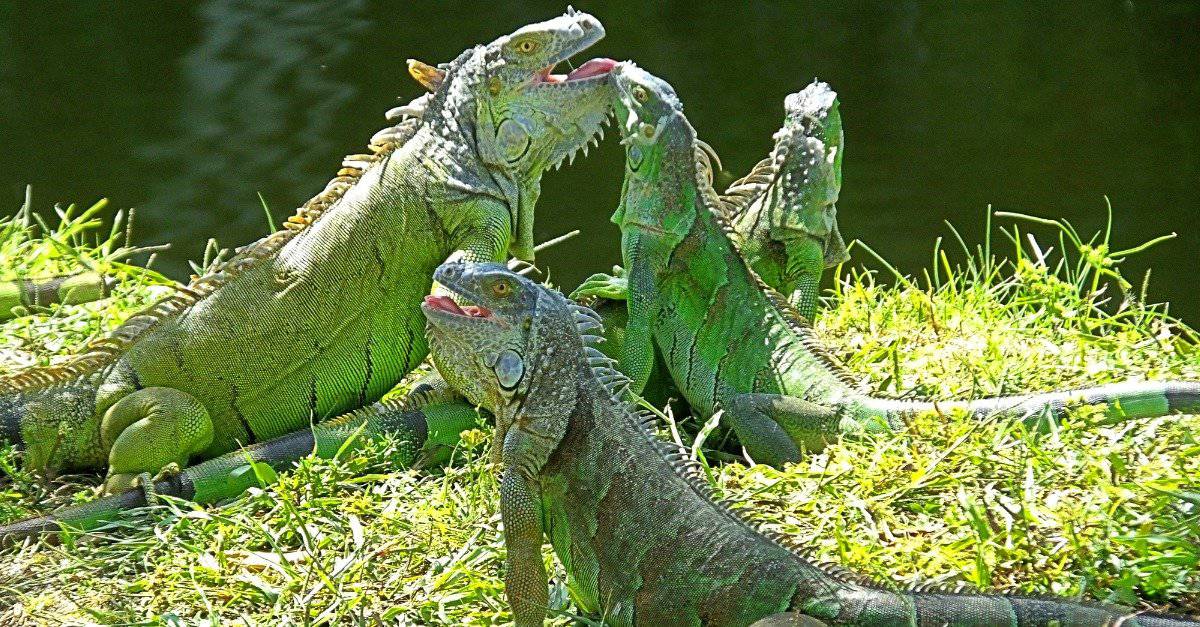
While invasive and problematic, the sheer visibility of iguanas has undeniably added a unique, albeit controversial, element to Florida’s modern natural landscape. For many tourists, spotting an iguana is an exotic novelty, a creature far removed from their native environments. They have become an unexpected fixture in urban parks, along waterways, and within gardens, embodying a peculiar blend of the natural and the introduced. Their presence forces a re-evaluation of what constitutes “nature” in an increasingly globalized world, where the boundaries between native and non-native species are constantly shifting. From an observer’s standpoint, understanding their origins enriches the experience of Florida’s diverse environment, offering a glimpse into its complex ecological dynamics.
Beyond the Beaches: Understanding Florida’s Evolving Natural Landmarks
The tale of how iguanas arrived in Florida is more than just a biological anecdote; it is a profound lesson in environmental change and human impact. These reptiles, once confined to distant tropical realms, have become an integral, if challenging, part of Florida’s natural and even cultural landscape. Their journey highlights the delicate balance of ecosystems and the ripple effects of seemingly small human actions, like releasing a pet.
As visitors and residents navigate Florida’s renowned beaches, explore its unique wetlands, or simply stroll through its vibrant cities, the occasional glimpse of a basking iguana serves as a living, breathing testament to an evolving natural history. They remind us that nature, even in established “landmarks,” is never static. It is a constantly shifting tableau, shaped by both ancient geological forces and the recent, powerful influence of human activity, making the story of Florida’s iguanas an essential part of understanding this extraordinary state.
LifeOutOfTheBox is a participant in the Amazon Services LLC Associates Program, an affiliate advertising program designed to provide a means for sites to earn advertising fees by advertising and linking to Amazon.com. Amazon, the Amazon logo, AmazonSupply, and the AmazonSupply logo are trademarks of Amazon.com, Inc. or its affiliates. As an Amazon Associate we earn affiliate commissions from qualifying purchases.