
The crisp air of early March 1770 hung heavy over Boston, a city teetering on the precipice of revolution. While today Boston is a vibrant hub for tourism, famed for its historical landmarks, culinary delights, and charming waterfront hotels, two and a half centuries ago, it was the focal point of escalating tensions between American colonists and the reigning power of Great Britain. The event known as the Boston Massacre stands as a stark and tragic turning point in this brewing conflict, a moment when the abstract political grievances of taxation and representation erupted into bloodshed on the cobblestone streets. Understanding how this pivotal event transpired requires a journey back through the contentious decade leading up to it, examining the political climate, the daily friction between civilians and soldiers, and the specific sequence of events on that fateful evening. For anyone planning a trip to Boston, particularly those with an interest in American history and the origins of the United States, delving into the story of the Boston Massacre offers a profound appreciation for the sacrifices and struggles that shaped a nation.
A City on Edge: Precursors to Conflict
The roots of the Boston Massacre were deeply embedded in a decade of mounting frustration and resentment. Following its costly victory in the French and Indian War (also known as the Seven Years’ War), Great Britain sought to replenish its coffers by imposing a series of new taxes and regulations on its American colonies. This move, however, was met with fierce resistance, particularly in a politically charged city like Boston, known for its independent spirit and influential thinkers.
The Seeds of Discontent: Taxation Without Representation
The philosophical underpinning of the colonists’ outrage was the principle of “no taxation without representation.” British Parliament, thousands of miles away across the Atlantic, was levying taxes on the colonies without any direct colonial representation. The first major legislative act that ignited widespread fury was the Stamp Act of 1765, which required colonists to pay a tax on every piece of printed paper, from legal documents and newspapers to playing cards. While the act was eventually repealed due to colonial boycotts and protests orchestrated by groups like the Sons of Liberty, Parliament quickly followed with the Townshend Acts of 1767. These acts imposed duties on imports such as glass, lead, paints, paper, and tea, goods that were staples for colonial life.
The revenue generated from these taxes was intended to pay the salaries of British governors and judges in the colonies, effectively removing them from the financial control of colonial assemblies. This was seen as a direct assault on colonial self-governance and an attempt by King George III and his ministers to tighten their grip on the increasingly prosperous American provinces. In Boston, a thriving port city and commercial center, the economic impact of these duties, combined with the perceived infringement on their rights as Englishmen, fueled a simmering rage. Merchants organized further boycotts of British goods, and public sentiment grew increasingly hostile towards British authority. Many who visit Boston today will encounter these narratives at historical sites like Faneuil Hall, often dubbed the “Cradle of Liberty,” where impassioned debates about these very acts once took place.
Military Presence and Mounting Tensions
To enforce the Townshend Acts and quell the growing unrest, especially in Boston, Great Britain dispatched British Regulars, also known as “Redcoats,” to the city in October 1768. The arrival of thousands of armed soldiers in a city of roughly 16,000 inhabitants was a monumental point of contention. The soldiers, far from home, often poorly paid, and sometimes arrogant, were seen not as protectors but as an occupying force.
The presence of the British Regulars exacerbated existing grievances and created constant friction. They competed with colonists for scarce jobs, particularly on the docks during their off-duty hours, leading to resentment among local laborers. Furthermore, the Quartering Act, which required colonists to house and provision British soldiers, was deeply unpopular. Daily interactions between the soldiers and the populace were often tense, characterized by taunts, insults, and minor skirmishes. The red coats of the soldiers became a hated symbol of oppression, and their drums a constant, unwelcome reminder of imperial authority. The sight of armed sentries patrolling Boston Common or standing guard outside prominent buildings like the Custom House was a daily provocation. These were not just political disagreements; they were personal, street-level conflicts that eroded any remaining goodwill. The stage was set for tragedy.
The Fateful Evening of March 5, 1770
The day that would forever alter the course of American history began like many others in Boston – with simmering discontent. However, as dusk fell on March 5, 1770, a seemingly minor altercation rapidly spiraled into a deadly confrontation, forever etching the event into the collective memory as the Boston Massacre.
A Street Brawl Escalates
The catalyst for the evening’s horror began innocuously enough. Around 8 PM, a young wigmaker’s apprentice named Edward Garrick approached Private Hugh White, a lone British sentry guarding the Custom House on King Street (now State Street). Garrick reportedly badgered White about an officer’s unpaid bill. When White retorted sharply, he was joined by a fellow soldier, and a heated exchange ensued. Soon, a small crowd of colonists began to gather, drawn by the commotion and the ever-present animosity towards the soldiers.
The crowd quickly swelled, fueled by rum and resentment. More colonists poured into King Street, many carrying sticks, clubs, and snowballs packed with oyster shells and ice. They hurled insults, taunts, and projectiles at Private White, shouting “Bloody Backs!” and “Fire and be damned!” The situation rapidly deteriorated from a minor dispute into an angry mob confronting an isolated soldier. Fearing for his life and overwhelmed by the numbers, Private White eventually retreated to the Custom House steps and called for help, his distress signal reaching the main guard.
Shots Fired and Lives Lost
Responding to the call, Captain Thomas Preston, officer of the day, rushed to the scene with a squad of seven other British Regulars, their bayonets fixed. They formed a defensive semicircle around Private White and the Custom House. The sight of more armed soldiers only further enraged the crowd, which now numbered several hundred. The colonists pressed forward, striking the soldiers’ muskets with their clubs and daring them to fire. Accounts vary on precisely what happened next in the chaos and confusion, but a bell began to ring, often interpreted as a fire alarm, further drawing people out into the streets.
Amidst the cacophony of shouts, bell ringing, and the impact of thrown objects, a soldier, Private Hugh Montgomery, was struck by a projectile and fell. He reportedly discharged his musket, either accidentally or in self-defense. This shot, whether intentional or not, broke the tense stalemate. In the immediate aftermath, other soldiers, believing they had been ordered to fire or acting out of panic, also discharged their weapons into the crowd.
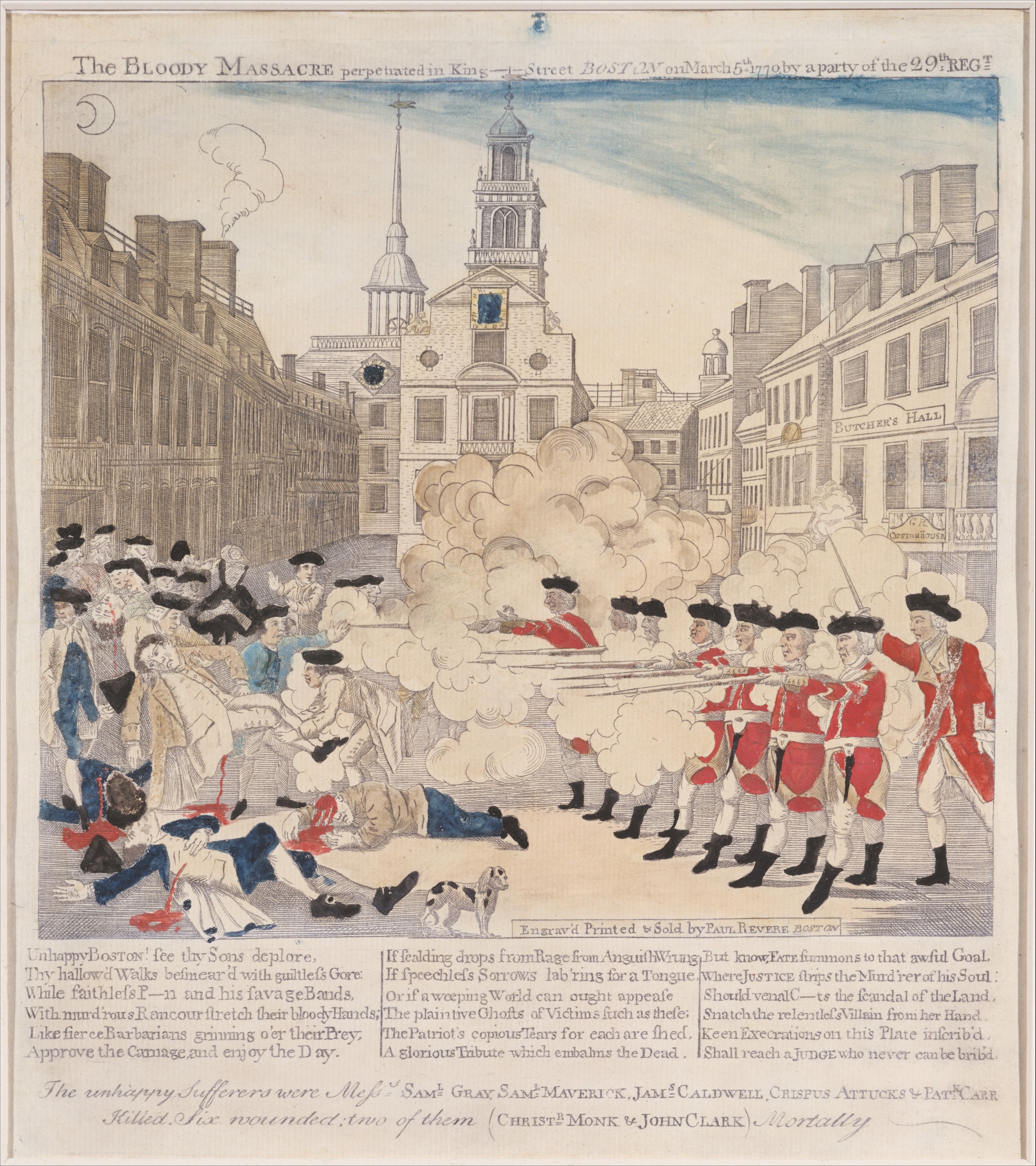
When the smoke cleared, five colonists lay dead or mortally wounded, and several others were injured. The first to fall was Crispus Attucks, a former enslaved man of African and Native American descent, often considered the first casualty of the American Revolution. Also killed were James Caldwell, a sailor; Patrick Carr, an Irish immigrant; and Samuel Gray, a rope maker. Another victim, Christopher Monk, a youth, died days later from his wounds. The bloody tableau on King Street sent shockwaves through Boston and across the colonies, transforming abstract political grievances into tangible, human tragedy.
Aftermath and Legacy: Shaping a Nation
The immediate aftermath of the Boston Massacre was a whirlwind of grief, outrage, and legal proceedings. Its long-term legacy, however, was far more profound, serving as a powerful catalyst on the road to American independence.
The Trials and Propaganda
In the immediate aftermath, Captain Preston and eight of his soldiers were arrested and charged with murder. The subsequent trials, held in Boston later that year, were closely watched throughout the colonies. Remarkably, the defense of the British soldiers was undertaken by prominent colonial lawyer John Adams, who would later become the second President of the United States. Adams, despite his strong patriotic sentiments, believed in the rule of law and the right to a fair trial. He successfully argued that the soldiers were provoked and acted in self-defense against a hostile mob, resulting in the acquittal of Captain Preston and six of the soldiers. Two soldiers, Hugh Montgomery and Matthew Kilroy, were found guilty of manslaughter, branded on the thumb, and released.
While the trials demonstrated a surprising degree of judicial fairness in Massachusetts, the incident was quickly seized upon by colonial propagandists. Figures like Samuel Adams and the Sons of Liberty skillfully used the tragedy to galvanize public opinion against British rule. The most enduring piece of propaganda was an engraving by Paul Revere, depicting the massacre as a deliberate, unprovoked assault by ruthless British soldiers on innocent colonists. While historically inaccurate in many details, Revere’s image circulated widely, inflaming anti-British sentiment and portraying the event as a tyrannical act by an oppressive government. This strategic use of media helped solidify the narrative of British tyranny and colonial victimhood, essential for rallying support for independence.
A Spark for Revolution
The Boston Massacre did not immediately trigger the American Revolution, but it was a crucial stepping stone. It forced the temporary withdrawal of British troops from Boston to Castle William in the harbor, easing immediate tensions. However, it indelibly marked the relationship between the colonies and Great Britain, transforming political disagreements into a matter of life and death. The massacre served as a stark reminder of the potential for violence inherent in the British military presence and strengthened the resolve of many colonists to resist imperial policies.
The event fueled the growing sense of a distinct American identity, separate from that of Great Britain. It demonstrated that the conflict was not merely about taxes but about fundamental rights, liberty, and self-determination. The memory of the slain became a powerful symbol, evoked repeatedly in the years leading up to the battles of Lexington and Concord and the eventual Declaration of Independence. The Boston Massacre proved that colonial grievances were not just abstract concepts but had deadly, tangible consequences, pushing the colonies further down the irreversible path towards revolution.
Experiencing Boston’s Revolutionary Past Today
For modern travelers, the historical weight of the Boston Massacre and the larger narrative of the American Revolution is palpable throughout Boston. The city has done an exceptional job of preserving its revolutionary past, making it an unparalleled destination for history enthusiasts and casual visitors alike.
Walking the Freedom Trail
The iconic Freedom Trail offers a perfect itinerary for exploring the sites related to the Boston Massacre and the broader revolutionary period. This 2.5-mile red-lined path connects 16 historically significant sites, many of which played a direct role in the events of March 5, 1770, and its aftermath.
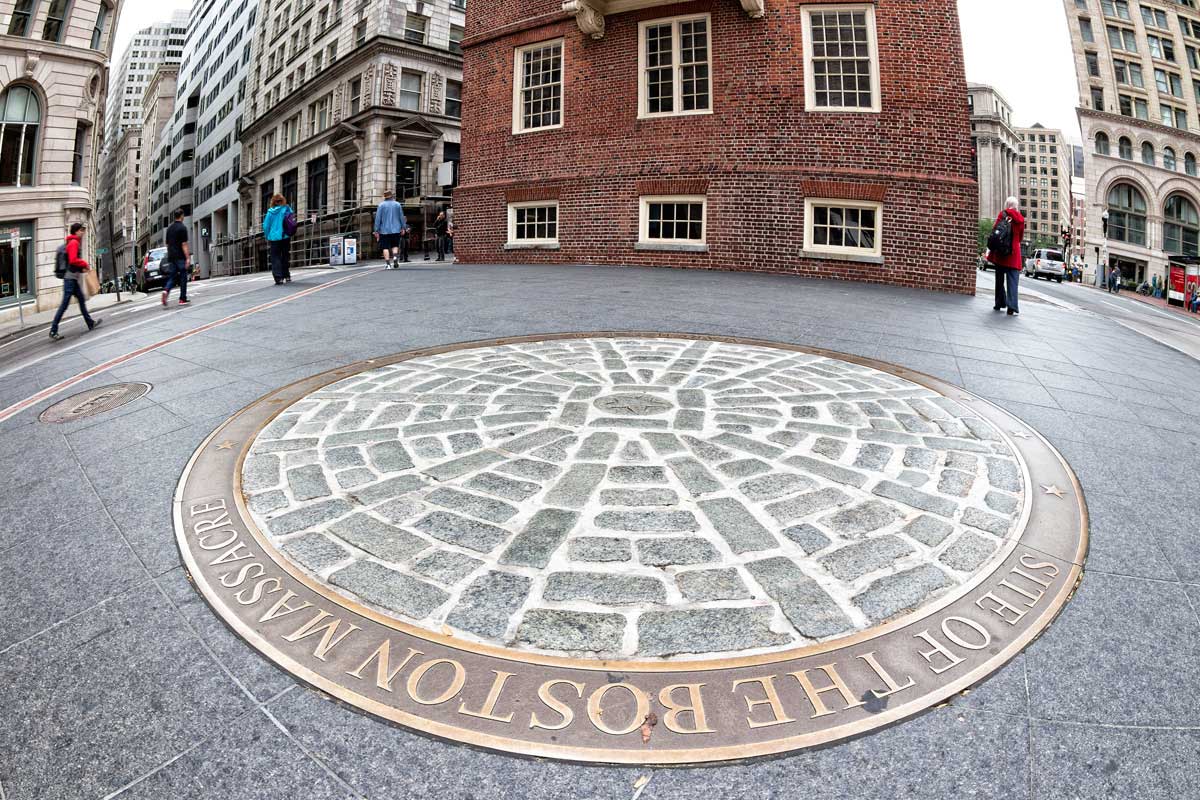
Starting at Boston Common, visitors can walk past the Massachusetts State House before arriving at the very spot where the massacre occurred. The site of the Boston Massacre is marked by a cobblestone circle directly in front of the Old State House. This building, which served as the seat of colonial government, stood witness to the tragic event. Inside the Old State House, now a museum, exhibits offer detailed accounts of the massacre, displaying artifacts and presenting various perspectives on the incident. A visit here provides a visceral connection to the past, allowing travelers to stand on the ground where history unfolded.
Further along the Freedom Trail, you’ll encounter Faneuil Hall, where fiery speeches ignited the revolutionary spirit and protests against British policies were planned. Other notable stops include the Old North Church, famous for Paul Revere’s signal lanterns, and the Bunker Hill Monument in Charlestown, commemorating an early, pivotal battle of the war. Exploring these landmarks provides a comprehensive and immersive experience of Boston’s pivotal role in the birth of a nation, moving beyond the single event of the massacre to its broader context and consequences.

Accommodation and Lifestyle for History Buffs
For travelers keen to immerse themselves fully in Boston’s historical atmosphere, the city offers a diverse range of accommodations, from luxury hotels in historic buildings to charming boutique inns. Many establishments are located within walking distance of the Freedom Trail and other key landmarks, allowing for easy exploration. Imagine staying in a hotel that dates back to the colonial era, offering a unique blend of modern amenities and timeless charm.
When planning your trip, consider booking a stay in the Downtown or Beacon Hill neighborhoods, where historical architecture blends seamlessly with contemporary city life. Hotels in these areas often provide exquisite dining experiences that draw on Boston’s rich culinary traditions, from fresh seafood to classic New England fare. Whether you prefer the opulent suites of a five-star resort or the cozy intimacy of a bed and breakfast, Boston caters to every lifestyle and budget. Beyond the historical sites, Boston’s vibrant cultural scene, world-class museums, and beautiful parks like the Boston Public Garden offer a well-rounded travel experience, making it an ideal destination for those who appreciate both history and modern urban comforts.
The Boston Massacre was a tragic, yet ultimately transformative event. It vividly illustrated the dangers of unchecked power and the deep-seated yearning for liberty that characterized the American colonies. By visiting Boston and walking its historic streets, modern travelers can not only understand how the massacre happened but also truly appreciate its profound impact on the trajectory of the United States and the enduring legacy of freedom it helped to forge.
LifeOutOfTheBox is a participant in the Amazon Services LLC Associates Program, an affiliate advertising program designed to provide a means for sites to earn advertising fees by advertising and linking to Amazon.com. Amazon, the Amazon logo, AmazonSupply, and the AmazonSupply logo are trademarks of Amazon.com, Inc. or its affiliates. As an Amazon Associate we earn affiliate commissions from qualifying purchases.