
Florida, often celebrated as the Sunshine State, is a global magnet for travelers seeking pristine beaches, vibrant cities, and unparalleled natural beauty. From the bustling streets of Miami to the serene wilderness of the Everglades National Park, it offers a diverse tapestry of experiences. However, amidst its allure, Florida grapples with an intriguing and formidable challenge: the pervasive presence of the Burmese python. This magnificent, yet destructive, constrictor has become an emblem of invasive species, threatening the delicate ecological balance that draws so many to this unique destination. The story of how this apex predator, native to distant lands, established a thriving population in the heart of South Florida is a fascinating tale woven from human choices, environmental resilience, and the relentless march of nature. It’s a narrative that underscores the profound impact of our actions on global ecosystems and highlights the complex interplay between tourism, local culture, and conservation.

The Genesis of an Invasion: From Distant Lands to American Shores
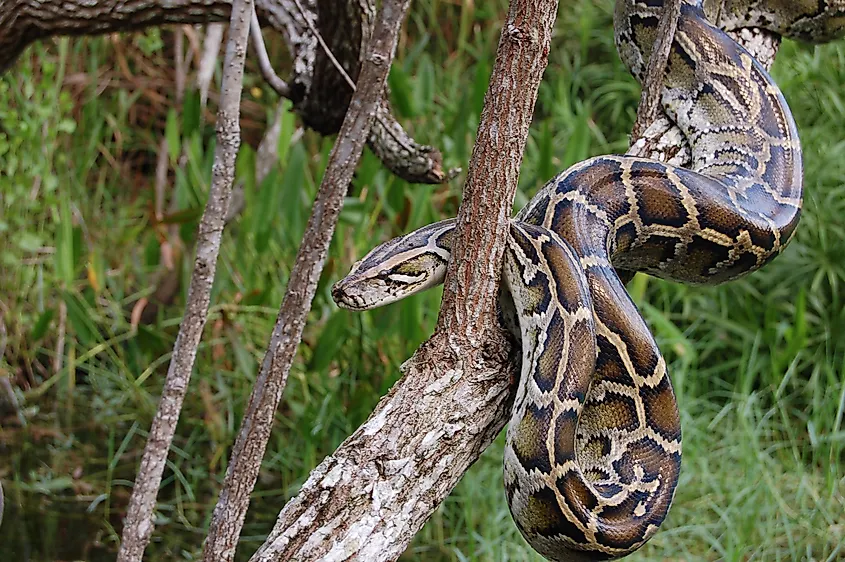
The Burmese python (Python bivittatus) is indigenous to Southeast Asia, a vast region encompassing countries like Myanmar, Thailand, Vietnam, Laos, Cambodia, Southern China, India, Nepal, and Bangladesh. In these tropical and subtropical climes, these snakes are an integral part of the food web, maintaining balance within their natural habitats. Their striking patterns, impressive size, and docile nature when young made them highly sought-after in the exotic pet trade, particularly in the United States during the latter half of the 20th century. This burgeoning demand created a pathway for thousands of these reptiles to embark on an unintended journey across oceans, destined for American homes.
The attraction to exotic pets is often rooted in a desire for the unique, a lifestyle choice that can sometimes have unforeseen consequences. People were captivated by the pythons’ beauty and perceived manageability as juveniles. Breeders and importers saw a lucrative market, facilitating the global travel of these creatures. This burgeoning pet trade represented the primary initial vector for the python’s journey to the United States. It was a period when regulations regarding exotic animal imports were less stringent, allowing for a relatively free flow of species into the country. The story of their arrival is less about a single event and more about a gradual infiltration, a trickle that eventually became a torrent.
The Pet Trade Pathway: A Popular Exotic Choice
For decades, Burmese pythons were a staple in the exotic pet market across the United States. Their captivating appearance, relatively calm demeanor when handled from a young age, and the sheer awe inspired by their potential size made them attractive to hobbyists and collectors alike. People would purchase these small, manageable hatchlings, often just a foot or two long, envisioning a unique companion. Pet shops, animal expos, and private breeders facilitated this trade, turning exotic animal ownership into a burgeoning niche within certain lifestyle communities.
However, what many prospective owners failed to fully grasp was the long-term commitment and the immense challenges associated with housing an animal that can grow to over 20 feet in length and weigh more than 200 pounds. A mature Burmese python requires a substantial enclosure, a large and consistent food supply, and specialized care. As these pets grew from cute hatchlings into powerful, difficult-to-manage adults, many owners found themselves overwhelmed. The dream of an exotic pet often turned into a logistical nightmare. Faced with the reality of an enormous, carnivorous snake that could live for 20-25 years, some owners made regrettable decisions. Instead of finding appropriate rehoming solutions or surrendering them to rescue organizations, a subset of these owners chose what they perceived as the easiest option: releasing their pythons into the wild.

Accidental Release vs. Intentional Abandonment: The Florida Connection
The precise moment the Burmese python established a breeding population in Florida is difficult to pinpoint, but a combination of factors contributed to their successful colonization. A persistent urban myth suggests that Hurricane Andrew in 1992 was solely responsible, alleging that a python breeding facility was destroyed, releasing numerous snakes into the Everglades National Park. While Hurricane Andrew was a catastrophic event that undoubtedly caused widespread disruption, including damage to animal facilities, scientific evidence indicates that pythons were already present and breeding in the wild prior to the hurricane. The more significant and sustained pathway for introduction was the aforementioned pet trade.
The vast majority of python releases were not accidental escapes but rather intentional acts of abandonment by pet owners who could no longer care for their rapidly growing reptiles. South Florida provided an almost perfect environment for these displaced predators. Its subtropical climate closely mimics their native Southeast Asia, offering year-round warmth and high humidity – ideal conditions for cold-blooded reptiles to thrive. Furthermore, the sprawling, interconnected wetland ecosystems of the Everglades National Park and surrounding areas offered abundant food sources, shelter, and a distinct lack of natural predators for adult pythons. This combination of factors created an ecological vacuum, allowing the released pythons to not only survive but also to reproduce rapidly, establishing a robust and self-sustaining population that quickly became an apex predator in a foreign land.
Florida’s Unique Ecosystem: A New Home for a Giant Predator
Florida’s unique natural landscapes are a cornerstone of its appeal, drawing millions of tourists annually. The Everglades National Park, in particular, is an internationally recognized wetland of immense ecological importance, often called the “River of Grass.” This UNESCO World Heritage Site is a mosaic of sawgrass prairies, cypress swamps, mangrove forests, and pine rocklands, teeming with iconic wildlife such as alligators, crocodiles, panthers, and a dazzling array of bird species. It is a prime destination for eco-tourism, offering unparalleled opportunities for wildlife viewing, airboat tours, kayaking, and hiking – truly an experience of a lifetime.
However, this very abundance and lack of co-evolved predators made the Everglades National Park tragically vulnerable to the Burmese python invasion. Once established, these highly adaptable snakes found a land of plenty. The warm, humid climate meant they didn’t have to contend with harsh winters, allowing them to remain active and hunt year-round. Critically, there were no native animals large enough or numerous enough to consistently prey on adult pythons or their clutches of eggs. Alligators, while formidable, primarily prey on smaller pythons, and larger adults often coexist or even prey on alligators themselves. This ecological imbalance allowed the python population to explode, initiating a cascade of devastating effects on native wildlife.
The Everglades: A Delicate Balance Under Siege
The invasion of Burmese pythons has profoundly disrupted the delicate ecological balance of the Everglades National Park, a landmark destination for nature enthusiasts. Pythons are generalist predators with an insatiable appetite, capable of consuming virtually any animal they can overpower. Studies conducted in the Everglades National Park have revealed alarming declines in native mammal populations directly linked to the python’s proliferation. For instance, populations of raccoons and opossums have plummeted by as much as 99%, bobcats by 87%, and even deer populations have experienced significant reductions in the core python-infested areas. These mammals are crucial components of the food web, serving as prey for native predators like the critically endangered Florida panther and various bird species.
The absence of these mammals creates a trophic cascade, impacting other species and altering the very structure of the ecosystem. The pythons also prey on birds, including wading birds that define the scenic beauty of the Everglades National Park, and even alligators and crocodiles, animals that are themselves powerful predators and significant tourist attractions. This relentless predation by an invasive species, unchecked by natural controls, has transformed parts of the Everglades National Park into an eerily quiet landscape, a stark contrast to the vibrant wildlife encounters that once defined travel to this unique wetland. The long-term implications for the park’s biodiversity and its appeal as a prime travel destination are immense.
The Ripple Effect: Beyond the Wetlands
While the Everglades National Park remains the epicenter of the python problem, their presence has begun to ripple outwards, affecting broader aspects of Florida life and tourism. Pythons are highly mobile and adaptable, leading to sightings in suburban areas, golf courses, and even residential neighborhoods throughout South Florida. This expansion raises concerns not only for native wildlife in these new areas but also for human safety and domestic animals. Pets like cats and dogs are vulnerable to predation, adding another layer of anxiety for residents.
The python crisis also carries significant economic implications for Florida’s thriving tourism industry. The degradation of natural habitats and the decline of native species, many of which are key attractions, can diminish the allure of eco-tourism. Furthermore, substantial resources are allocated annually for python management, research, and removal programs, diverting funds that could otherwise be invested in other aspects of conservation or tourism infrastructure. The challenge impacts local culture, as communities grapple with a new reality where a giant constrictor can be found in their backyard. The narrative of Florida as an untouched paradise for nature lovers is now inextricably linked with the ongoing battle against this invasive species, highlighting the need for responsible environmental stewardship in all aspects of travel and lifestyle choices.
Combating the Invasion: Florida’s Response and Future Outlook
Recognizing the severe threat posed by the Burmese python, various state and federal agencies have launched concerted efforts to control and, ideally, eradicate the invasive population. The Florida Fish and Wildlife Conservation Commission (FWC) and the National Park Service, alongside numerous other organizations and academic institutions, are at the forefront of this battle. Their strategies encompass a multi-pronged approach, including direct removal programs, scientific research into detection and control methods, and public awareness campaigns.
One of the most visible initiatives is the regular python removal expeditions, often involving trained professionals and contracted hunters. These individuals traverse the challenging terrain of the Everglades National Park, often during cooler months when pythons bask for warmth, actively searching for and removing snakes. Research efforts are equally critical, focusing on understanding python behavior, diet, and reproductive cycles to develop more effective trapping techniques, such as the use of “Judas snakes” (radio-tagged pythons that lead researchers to breeding aggregations). There is also ongoing research into biological controls and the development of attractants to lure pythons to traps. Public engagement is another vital component, educating residents and visitors about responsible pet ownership and encouraging reporting of python sightings.
The Python Challenge: An Unusual Tourist Attraction?
In a unique blend of conservation and community involvement, Florida periodically hosts the Python Challenge. This event invites members of the public, both experienced hunters and novices, to register and participate in a guided python removal effort for a set period. While the primary goal is to remove as many pythons as possible, the Python Challenge has also inadvertently become an unusual form of eco-tourism or adventure travel for some. Participants get a rare opportunity to explore the depths of the Everglades National Park with experienced guides, gaining firsthand insight into the scale of the invasive species problem.
For those seeking an adrenaline-fueled experience combined with a sense of environmental contribution, the Python Challenge offers a distinctive “experience” that deviates from typical Florida attractions. It draws attention to the issue, fosters public education, and provides a platform for individuals to contribute tangibly to conservation efforts. While certainly not a traditional “landmark” or “attraction” in the usual sense, the challenge leverages the intrigue of the pythons themselves to mobilize a citizen army, showcasing a different facet of local culture and the determination to protect Florida’s natural heritage.
Research and Conservation: Protecting Florida’s Natural Heritage
Beyond the direct removal efforts, long-term success against the Burmese python relies heavily on sustained scientific research and robust conservation strategies. Universities and research institutions across Florida and the United States are actively studying python biology, ecology, and the impacts on native wildlife. This research is crucial for developing innovative tools and methods to manage the invasion, from improved detection techniques to understanding the genetics of the python population to inform potential future control measures.
Protecting Florida’s irreplaceable natural heritage – its diverse wildlife, unique ecosystems, and iconic landmarks like the Everglades National Park – is paramount for future generations of travelers and residents alike. The ongoing battle against the Burmese python serves as a potent reminder of the interconnectedness of global ecosystems and the critical importance of responsible actions, especially in the context of the exotic pet trade. It underscores the fact that the beauty and allure of travel destinations are intrinsically linked to the health of their environments. By investing in research, supporting conservation initiatives, and promoting responsible practices, Florida strives to preserve the very essence of what makes it a world-class destination for tourism and a cherished home for its diverse natural inhabitants.
The journey of the Burmese python from the jungles of Southeast Asia to the wetlands of Florida is a compelling narrative of globalization, human choices, and environmental consequences. It highlights how seemingly innocuous decisions, like acquiring an exotic pet, can inadvertently trigger an ecological crisis far from its origin. While the challenge is immense, Florida’s dedication to combating this invasive species is a testament to its commitment to preserving its natural beauty and biodiversity. For those who travel to Florida, understanding this ongoing struggle adds a profound layer of appreciation for the state’s unique ecosystems and the relentless efforts to protect them for future enjoyment and exploration.
LifeOutOfTheBox is a participant in the Amazon Services LLC Associates Program, an affiliate advertising program designed to provide a means for sites to earn advertising fees by advertising and linking to Amazon.com. Amazon, the Amazon logo, AmazonSupply, and the AmazonSupply logo are trademarks of Amazon.com, Inc. or its affiliates. As an Amazon Associate we earn affiliate commissions from qualifying purchases.