
The crisp air of Boston on March 5, 1770, was charged with tension. For years, the American colonists had chafed under British rule, their grievances mounting with each new tax and regulation imposed by the distant Parliament. The presence of British troops, sent to enforce these unpopular laws, was a constant source of friction. On that fateful evening, a minor scuffle on King Street escalated into a bloody confrontation, an event that would forever be seared into the colonial consciousness: the Boston Massacre.
This tragic incident, where British soldiers fired into a crowd of colonists, killing five, did not occur in a vacuum. It was the culmination of escalating tensions and a flashpoint that ignited a firestorm of colonial reaction. Understanding how the colonists responded requires delving into the multifaceted tapestry of colonial life, their burgeoning sense of identity, and their deeply held beliefs about liberty and justice.

The Immediate Aftermath: Shock, Outrage, and Propaganda
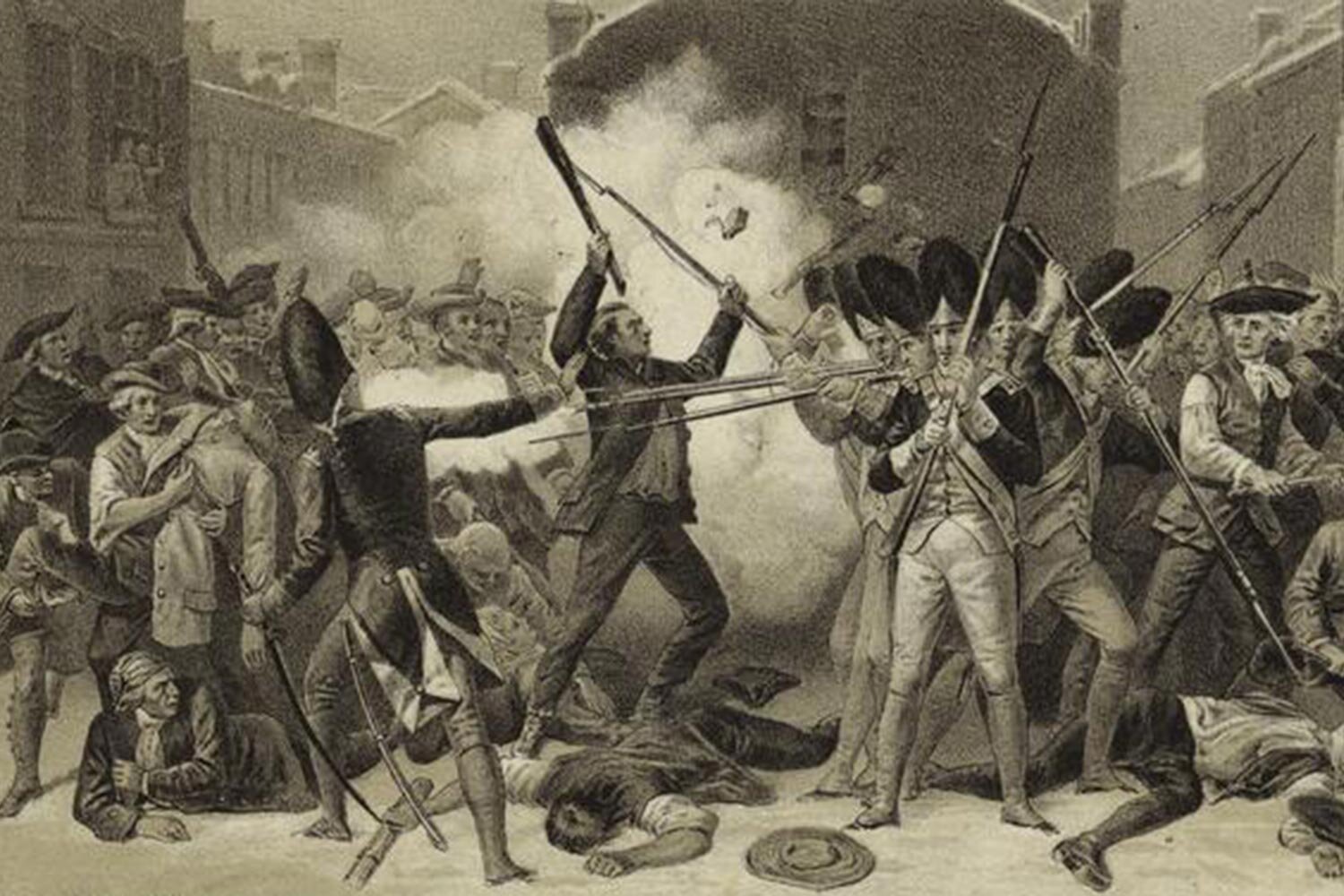
The immediate reaction in Boston was a potent cocktail of shock, grief, and unbridled outrage. The sight of fallen compatriots, victims of what was widely perceived as unprovoked British aggression, sent waves of anger through the populace. This wasn’t just a handful of troublemakers; the victims represented a cross-section of Boston society – a sailor, a rope maker, a shoemaker’s apprentice, and two young men. Their deaths became a symbol of British tyranny.
The Power of Print: Shaping the Narrative
In the absence of instant news, the printed word became the primary vehicle for disseminating information and shaping public opinion. Colonial printers, fueled by the desire to rally support against British policies, were quick to capitalize on the event. Paul Revere, a silversmith and prominent Patriot, played a crucial role in this propaganda effort. His famous engraving, depicting a line of British soldiers firing methodically into a defenseless crowd, though heavily biased, became an iconic image of colonial suffering.
This engraving, widely distributed as a print, was far more than a mere illustration; it was a powerful piece of propaganda. It presented a clear narrative: innocent colonists brutally murdered by a ruthless British military. The detail of the soldiers standing in formation, the bloodied bodies of the victims, and the depiction of Captain Preston giving the order to fire all contributed to the emotional impact. The fact that the engraving omitted any mention of the provocations from the colonial crowd was strategically significant. It served to solidify the image of the British as aggressors and the colonists as victims, a narrative that resonated deeply and spread like wildfire throughout the Thirteen Colonies.
Newspapers and pamphlets followed suit, publishing eyewitness accounts that, while often embellished or outright fabricated, reinforced the narrative of British barbarity. The term “Massacre” itself, a loaded word implying a bloodbath and deliberate slaughter, was deliberately employed to evoke the strongest possible emotional response. This concerted effort to control the narrative was instrumental in galvanizing colonial sentiment against British rule.
Legal and Political Ramifications: Seeking Justice and Accountability
Beyond the emotional outpouring, the Boston Massacre also triggered significant legal and political repercussions. The colonists, while seething with anger, also understood the importance of due process, a principle they felt was being denied by British authorities.
The Trial of the Soldiers: A Test of Colonial Justice

One of the most remarkable aspects of the colonial reaction was the demand for a fair trial for the British soldiers involved. Despite the widespread animosity towards the British military, John Adams, a staunch advocate for colonial rights and a future president, agreed to defend the soldiers. His decision was rooted in his belief that every individual, regardless of their perceived guilt or origin, deserved legal representation and a fair trial. He argued that upholding the rule of law, even for one’s perceived enemies, was crucial for the legitimacy of colonial justice.
The trial, held in Boston, became a focal point, watched closely by colonists and British officials alike. The prosecution faced the challenging task of proving guilt beyond a reasonable doubt in a highly charged atmosphere. The defense, led by Adams, meticulously presented evidence and arguments to demonstrate that the soldiers had acted in self-defense, facing a hostile and aggressive mob. The outcome, with most soldiers acquitted and only two found guilty of manslaughter (later punished by branding on the thumb), was seen by many colonists as a miscarriage of justice. However, it also demonstrated a commitment to legal principles, even in the face of overwhelming public pressure. The acquittal of most soldiers, while infuriating to many, also served to highlight the perceived biases of the colonial jury system in the eyes of some British officials.
Calls for the Removal of Troops
A more immediate and unified political demand from the colonists was the removal of British troops from Boston. The presence of armed soldiers in their city was seen as a constant reminder of their subjugation and a perpetual threat to peace. Following the massacre, the pressure to withdraw the troops intensified. Ultimately, facing mounting pressure and a desire to de-escalate the situation, the British authorities agreed to remove most of the troops from Boston. This was a significant victory for the colonists and a testament to their collective voice. The withdrawal of the British soldiers, even if temporary and limited, was perceived as a direct result of colonial protest and solidified their belief in the efficacy of organized resistance.
Long-Term Impact: Fueling the Flames of Revolution
The Boston Massacre, while a single event, had a profound and lasting impact on the trajectory of American history. It served as a powerful catalyst, accelerating the growing sentiment of colonial discontent and pushing the colonists further down the path towards revolution.
The Seeds of Unity: A Shared Grievance
The massacre transcended local grievances; it became a rallying cry for colonists across all thirteen colonies. The shared outrage and condemnation of British actions fostered a sense of unity and common purpose. It demonstrated that the struggles of Boston were, in essence, the struggles of all colonists facing British oppression. This shared experience of witnessing and reacting to perceived injustice began to weave a stronger sense of American identity, distinct from their British heritage. Events like these provided concrete examples for the rhetoric of liberty and tyranny that would soon define the American Revolution.
A Symbol of Tyranny: Remembering and Mobilizing
The Boston Massacre became an enduring symbol of British tyranny and colonial suffering. For years to come, colonists would commemorate the event, using it as a potent reminder of the sacrifices made in the struggle for freedom. The anniversary of the massacre became an occasion for public gatherings, speeches, and commemorations, keeping the memory of the fallen alive and fueling the revolutionary spirit. This annual remembrance served as a consistent reminder of the stakes involved in their struggle for independence.
The event also emboldened more radical voices within the colonial leadership. Figures like Samuel Adams, a cousin of John Adams and a prominent Patriot, used the massacre to further their agenda of independence. They pointed to the incident as irrefutable proof that British rule was inherently violent and that peaceful reconciliation was impossible. The narrative of British oppression, cemented by the Boston Massacre, became a cornerstone of the Patriot cause.
In conclusion, the colonial reaction to the Boston Massacre was a complex and multifaceted phenomenon. It encompassed immediate shock and outrage, skillfully harnessed through propaganda; a determined pursuit of justice, even for perceived enemies; and ultimately, a profound and lasting impact that fueled the fires of revolution. The events of March 5, 1770, though a tragedy, served as a critical turning point, solidifying colonial resolve and pushing the Thirteen Colonies irrevocably towards the momentous struggle for independence. It was an event that etched itself into the American narrative, a stark reminder of the price of liberty and the power of a people united in their quest for freedom.
LifeOutOfTheBox is a participant in the Amazon Services LLC Associates Program, an affiliate advertising program designed to provide a means for sites to earn advertising fees by advertising and linking to Amazon.com. Amazon, the Amazon logo, AmazonSupply, and the AmazonSupply logo are trademarks of Amazon.com, Inc. or its affiliates. As an Amazon Associate we earn affiliate commissions from qualifying purchases.