
Los Angeles, a vibrant metropolis synonymous with glamour, innovation, and endless sunshine, often finds itself at the forefront of global attention for myriad reasons. Yet, beneath its glittering facade and sprawling urban landscape, a more primal and destructive force frequently shapes its narrative: wildfires. These blazes, a recurring challenge for this Southern California region, don’t just threaten homes and natural habitats; they profoundly impact the very fabric of life, from air quality to travel plans and the overall visitor experience. Understanding “how did the fires start in Los Angeles?” is crucial, not only for residents but also for travelers and the robust tourism industry that defines so much of the city’s identity. The causes are complex, ranging from natural phenomena exacerbated by climate patterns to human activity, both accidental and intentional. For those planning a visit, or for anyone intrigued by the unique lifestyle of California, delving into the origins and wider implications of these fires provides a deeper appreciation for the resilience of the city and the importance of responsible engagement with its beautiful, yet vulnerable, natural surroundings.
Understanding the Predominant Factors Contributing to Los Angeles Wildfires
The genesis of wildfires in Los Angeles is rarely singular. Instead, it’s a confluence of geographical, climatological, and human-driven elements that transform dry brush into devastating infernos. For a destination so beloved by millions, understanding these root causes is paramount for both safety and informed travel.
Natural Factors: The Arid Climate and Unique Topography
At the heart of Los Angeles’ susceptibility to wildfires lies its Mediterranean climate, characterized by hot, dry summers and mild, wet winters. However, periods of prolonged drought have become increasingly common, turning vast expanses of native vegetation—chaparral, sage scrub, and grasses—into highly combustible fuel. This arid environment sets the stage, but it’s often combined with other natural phenomena to create perfect firestorm conditions.
One of the most infamous natural culprits is the Santa Ana Winds. These strong, dry, downslope winds originate inland in the deserts and mountains of the United States Great Basin and sweep towards the Pacific Ocean, funneling through Southern California’s canyons and passes. As they descend, they heat up and lose humidity, effectively desiccating already dry vegetation and fanning any nascent sparks into raging infernos. The speed and erratic nature of these winds make fire containment incredibly challenging, allowing fires to spread rapidly across vast distances, often jumping freeways and natural barriers.
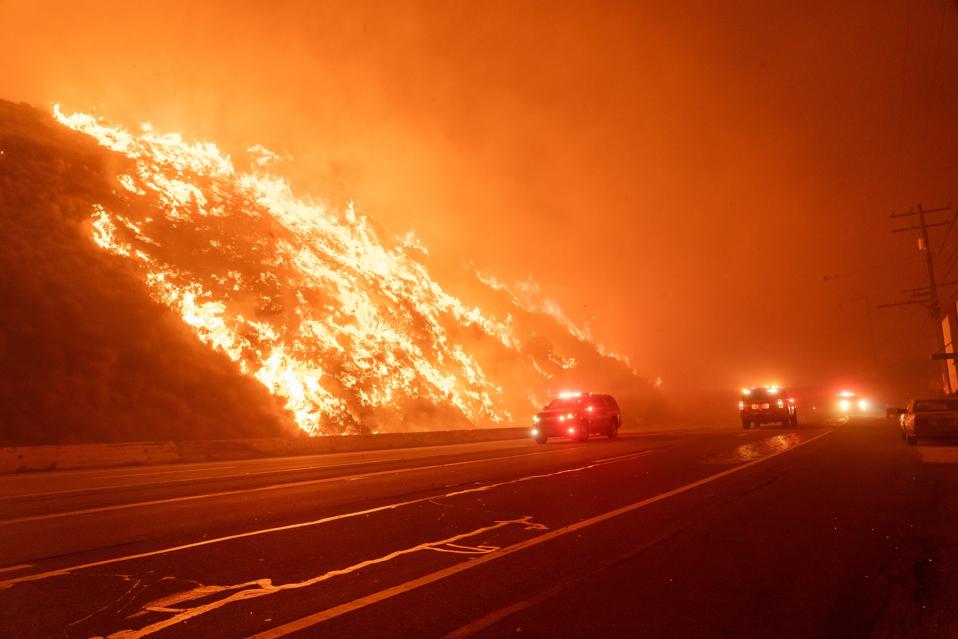
The region’s topography also plays a significant role. Los Angeles is ringed by mountains and hills – the Santa Monica Mountains, the Hollywood Hills, and the San Gabriel Mountains. These steep slopes and canyons act like natural chimneys, accelerating the upward movement of flames and making access difficult for firefighters. The dense, woody vegetation found in these areas, evolved to thrive in drought conditions, is also highly flammable, accumulating decades of fuel that can explode into flames with just a single spark. This combination of dry conditions, powerful winds, and rugged terrain creates a volatile environment where natural ignitions, such as lightning strikes (though less common in California than in other regions, still possible) or even spontaneous combustion in extreme heat, can quickly escalate.
Human-Related Ignitions: The Unpredictable Spark
While natural conditions set the stage, human activity is overwhelmingly the primary ignition source for most wildfires in Los Angeles and throughout California. This spectrum of human involvement ranges from the accidental to the tragically intentional, underscoring the critical need for public awareness and preventative measures.
Accidental ignitions are numerous and varied. Faulty or poorly maintained utility infrastructure, particularly power lines, has been a significant cause of some of California’s most devastating fires. Strong winds can cause lines to snap or sag, sparking dry vegetation below. Similarly, vehicle accidents, especially those involving catalytic converters spitting out hot debris or sparks from dragging chains, can ignite roadside brush. Construction work, landscaping activities using equipment that generates sparks, discarded cigarettes, and uncontrolled campfires are other frequent culprits. Even fireworks, illegal in many parts of Los Angeles due to fire risk, tragically contribute to ignitions during festive periods. For visitors, understanding these risks and adhering to local fire bans and regulations, especially in wilderness areas or national parks, is a crucial aspect of responsible tourism.
Perhaps the most disturbing human cause is arson. While difficult to quantify precisely for every blaze, intentional acts of fire-setting account for a significant percentage of wildfires. These acts are often difficult to predict and prevent, posing a severe challenge for law enforcement and fire agencies. The motive behind arson varies, from thrill-seeking to malicious intent, and its impact is always catastrophic. Regardless of the specific human cause, the underlying message is clear: vigilance and adherence to safety guidelines are not merely suggestions but vital responsibilities in a region perpetually on fire watch. The densely populated wildland-urban interface, where homes and businesses abut natural open spaces, significantly increases the risk, as even a small, carelessly started fire can quickly endanger thousands of lives and properties.

The Role of Urban Expansion and Wildland-Urban Interface
The dramatic growth of Los Angeles has seen its footprint extend into what were once pristine wildland areas, creating a complex and often perilous “wildland-urban interface” (WUI). This expansion directly contributes to both the frequency and severity of wildfires. As communities push deeper into canyons, hillsides, and chaparral-covered slopes, the chances of human-caused ignitions increase exponentially. A simple spark from a backyard barbecue, a power tool, or even a vehicle driving off-road can quickly escalate into a major incident when surrounded by highly flammable vegetation.
Furthermore, development in these WUI zones introduces a vast amount of combustible material in the form of homes, outbuildings, and landscaping. While fire-resistant building materials and defensible space initiatives (clearing vegetation around structures) are mandated, the sheer volume of structures and the intricate topography make firefighting incredibly challenging. When fires ignite in these areas, they not only threaten natural ecosystems but also pose an immediate danger to densely populated residential areas, leading to widespread evacuations and significant property loss. This constant tension between urban development and natural habitat underscores a core dilemma for Los Angeles: how to accommodate growth while mitigating the inherent dangers of its stunning, yet volatile, environment. The challenge impacts local governments, emergency services, and, by extension, the entire infrastructure supporting travel and tourism in the region, including the availability and safety of accommodation for both residents and visitors.
The Far-Reaching Impact on Travel, Tourism, and Lifestyle
Wildfires in Los Angeles are more than just local emergencies; they send ripple effects across the entire region, significantly influencing its acclaimed travel and tourism sectors, and altering the daily lifestyle for both residents and visitors. The perception of safety, the accessibility of attractions, and the quality of the visitor experience can all be compromised when fires blaze.
Disruptions to Attractions, Travel Plans, and Visitor Experiences
The most immediate and visible impact of wildfires on tourism is the disruption to popular attractions and travel itineraries. When fires rage, major roads and highways, especially those traversing mountainous or canyon areas, are often closed to allow emergency vehicle access and ensure public safety. This can isolate entire communities like Malibu or Topanga Canyon, making them inaccessible for visitors. Iconic natural landmarks such as Griffith Park, Runyon Canyon, and hiking trails in the Santa Monica Mountains are routinely shut down, sometimes for extended periods, both for immediate safety and to allow for post-fire assessment and recovery. Historical sites and natural preserves, which are cornerstones of Los Angeles’s diverse offerings, can also be directly threatened or damaged, diminishing the range of experiences available to tourists.
Beyond direct closures, pervasive smoke and ash significantly degrade air quality, turning once-picturesque skies hazy and posing health risks, particularly for vulnerable populations. This often deters outdoor activities, which are central to the Los Angeles lifestyle and tourism appeal, from beach visits to al fresco dining in areas like Beverly Hills or Pasadena. For international travelers arriving at Los Angeles International Airport (LAX), flight delays or cancellations can occur due to poor visibility or firefighting aircraft operations. The overall visitor experience is undeniably diminished when the city’s natural beauty is obscured by smoke and the atmosphere is tinged with anxiety. This inevitably leads to cancellations, impacting the local economy and the reputation of Los Angeles as an idyllic destination.

Impact on Accommodation and Hospitality Sector
The accommodation and hospitality sector bears a substantial brunt during and after wildfires. Hotels, resorts, and rental properties in affected areas, particularly those in fire-prone zones like Malibu or parts of Orange County, face immediate threats of evacuation or direct damage. Even properties far from the fire lines can suffer from a wave of cancellations as travelers reconsider their plans due to air quality concerns, road closures, or general safety worries. This can lead to significant financial losses for businesses reliant on a steady stream of tourists.
Conversely, during large-scale evacuations, hotels not in the immediate danger zone often transform into temporary shelters for displaced residents and emergency personnel. While this demonstrates community solidarity, it also strains resources and staff, who must manage an influx of distressed individuals alongside regular guests. Hotels with specific amenities catering to long-term stays or family trips might see an unusual demand from displaced families. The ability of the hospitality industry to adapt, communicate clearly with guests about safety protocols, and offer flexible booking options becomes crucial during these periods. Post-fire, recovery can be slow, with some properties requiring extensive repairs or even rebuilding, further impacting the availability of accommodation and the livelihoods of those employed in the sector.
Lifestyle and Community Resilience in the Face of Adversity
For residents of Los Angeles, wildfires are an unfortunate, yet recurring, aspect of their lifestyle. The constant threat fosters a unique blend of preparedness and resilience. Communities in WUI zones often live with “go bags” ready, continuously monitor fire alerts, and actively participate in defensible space programs. The psychological toll of living under the threat of evacuation, coupled with the trauma of loss for those directly affected, is immense. However, these challenges also bring out the best in the community. Neighborhoods rally, volunteers assist firefighters, and local charities provide support to those displaced.
The lifestyle of outdoor recreation, central to the Los Angeles ethos, is profoundly impacted. Hiking, cycling, and equestrian activities are regularly curtailed, pushing residents to adapt their routines. Yet, the desire to return to normalcy and rebuild is strong. Post-fire recovery efforts, often involving massive volunteer operations to restore burnt areas, are a testament to this resilience. For visitors, observing this aspect of Los Angeles can be a powerful experience, highlighting not just the challenges but also the strong community spirit and adaptive nature of the city. It underscores that while the fires pose a threat, they also forge a deeper sense of unity and determination within its diverse populace.
Mitigation, Preparedness, and Fostering Resilient Tourism
Given the intrinsic risks of wildfires, Los Angeles and California have invested heavily in mitigation strategies, preparedness protocols, and fostering a form of resilient tourism that prioritizes safety and environmental responsibility. These efforts are crucial for safeguarding lives, property, and the continued appeal of the region as a world-class destination.
Proactive Measures and Emergency Response
The first line of defense against wildfires involves a multi-pronged approach to proactive mitigation. This includes extensive vegetation management programs, where highly flammable brush is strategically cleared from hillsides, around communities, and along utility corridors. Prescribed burns, conducted under controlled conditions, are also utilized to reduce fuel loads. Utility companies are increasingly investing in hardening their infrastructure, burying power lines, and implementing Public Safety Power Shutoffs (PSPS) during high-wind events to prevent ignitions from faulty equipment, a measure that, while disruptive, has proven effective.
Emergency response in Los Angeles is a highly coordinated effort involving the Los Angeles Fire Department (LAFD), the California Department of Forestry and Fire Protection (CAL FIRE), and various other state and federal agencies. These departments are equipped with state-of-the-art firefighting technology, including air tankers, helicopters, and ground crews trained in specialized wildland firefighting techniques. Early detection systems, such as networks of cameras and sensors, along with vigilant public reporting, allow for rapid deployment, which is critical in containing fires before they become uncontrollable. Public alert systems, like reverse 911 calls and emergency apps, ensure timely evacuation orders and critical information reach residents and visitors alike. Constant training and inter-agency cooperation are key to their success in confronting these formidable blazes.
Technological Advancements and Data-Driven Prevention
The fight against wildfires is continually evolving with the integration of cutting-edge technology and data analytics. Satellite imagery, drone surveillance, and artificial intelligence are now being employed for predictive modeling, allowing fire agencies to anticipate where and when fires are most likely to ignite and spread. Weather forecasting, particularly the monitoring of Santa Ana Winds and drought conditions by entities like the National Weather Service, plays a vital role in issuing Red Flag Warnings, triggering heightened alert levels and preventive measures.
New materials and construction techniques are also being developed for homes in the WUI, focusing on fire-resistant landscaping, embers-resistant vents, and non-combustible building materials. Researchers are also exploring bio-engineered solutions to create less flammable vegetation. For the tourism sector, technological advancements contribute to clearer communication. Websites and apps provide real-time updates on fire perimeters, road closures, and air quality, allowing travelers to make informed decisions and adjust their itineraries proactively. This data-driven approach aims to move beyond reactive firefighting to proactive prevention and rapid response, ultimately enhancing the safety and long-term viability of Los Angeles as a destination.
Traveling Responsibly and Safely in Fire-Prone Regions
For individuals planning a trip to Los Angeles or surrounding areas, responsible travel during fire season is paramount. This involves a proactive approach to safety and respect for the local environment and community. Before and during your trip, it is essential to check official sources for current fire advisories, air quality alerts, and any restrictions on outdoor activities, especially in national parks or hiking areas like Griffith Park. Many regions will implement fire bans for campfires, barbecues, and other ignition sources; adhering to these rules is non-negotiable.
When booking accommodation, especially in hillside villas or resorts near wildland areas, inquire about their fire safety plans and evacuation procedures. Consider purchasing comprehensive travel insurance that covers disruptions due to natural disasters. During your stay, be mindful of your actions: properly dispose of cigarettes, avoid parking hot vehicles on dry grass, and be cautious with anything that could generate a spark. Supporting local businesses, particularly during recovery periods, is another way to contribute positively to the community’s resilience. By being informed, vigilant, and respectful of the unique challenges faced by Los Angeles, visitors can ensure their trip is not only enjoyable but also contributes to the safety and well-being of this extraordinary destination. This commitment to responsible tourism helps protect the natural beauty and vibrant lifestyle that makes Los Angeles so compelling.
In conclusion, the question “How did the fires start in Los Angeles?” unravels a complex interplay of natural vulnerability and human activity. From the desiccating power of the Santa Ana Winds to the accidental sparks of human endeavor, the origins are multifaceted. Yet, equally compelling is the city’s unwavering commitment to preparedness, innovation, and community resilience. For travelers, understanding these dynamics isn’t just about safety; it’s about engaging with Los Angeles with a deeper appreciation for its unique challenges and the enduring spirit that makes it such an iconic and desirable destination. By adopting responsible travel practices, visitors contribute to the ongoing efforts to protect both the natural landmarks and the vibrant lifestyle that defines this spectacular Southern California region.