
The story of how the United States acquired Florida is a complex tapestry woven with threads of colonial ambition, diplomatic maneuvering, military pressure, and the inexorable march of American expansionism. It’s a tale deeply rooted in the broader geopolitical landscape of the late 18th and early 19th centuries, reflecting the decline of old European empires and the rise of a new republic eager to define its continental boundaries. From its initial discovery by Europeans to its eventual cession, Florida’s journey to becoming a part of the United States is a fascinating chapter in American history, marking a significant milestone in the nation’s territorial growth and the realization of its westward aspirations.
A Legacy of European Ambition: Florida’s Colonial Past
Long before American settlers cast their gaze southward, Florida was a contested prize among European powers, each seeking to assert dominance in the New World. Its strategic location, guarding the entrance to the Gulf of Mexico and the shipping lanes from the Spanish Main, made it a highly coveted territory.
Spain’s Initial Claim and Early Struggles
The European story of Florida began in 1513 when Juan Ponce de León landed on its shores, claiming the land for Spain and naming it “La Florida” in honor of the Easter season (Pascua Florida). For over two centuries, Spanish Florida served as a vital, albeit often neglected, outpost of the Spanish Empire. The city of St. Augustine, founded in 1565, became the longest continuously inhabited European-established settlement in what would become the United States. Its primary purpose was defensive: to protect Spain’s treasure fleets from pirates and rival European powers, particularly France and Great Britain. Despite its longevity, Spanish Florida remained sparsely populated and economically underdeveloped, often struggling against disease, native resistance, and inadequate support from the distant Spanish crown.
British Interlude and Spanish Reassertion
The colonial status of Florida shifted dramatically during the mid-18th century. Following the Seven Years’ War (known as the French and Indian War in North America), Spain, having sided with France, ceded Florida to Great Britain in 1763 as part of the Treaty of Paris (1763). The British divided the territory into East Florida, with its capital at St. Augustine, and West Florida, headquartered in Pensacola. They actively promoted settlement and economic development, which saw a modest increase in population and agricultural output.
However, this British dominion was short-lived. During the American Revolutionary War, Spain, allied with France against Great Britain, launched successful campaigns to retake parts of West Florida. With the war’s conclusion, the Treaty of Paris (1783) returned both East Florida and West Florida to Spanish control. This second Spanish period, however, was marked by increasing instability and a weakening grip on the territory, setting the stage for American intervention.
The Dawn of American Expansion: Border Tensions and Spanish Weakness
As the 19th century dawned, the young United States was a nation consumed by expansionist ambitions. Its westward movement brought American settlers into direct contact and frequent conflict with the borders of Spanish Florida, a territory that was becoming increasingly ungovernable for Spain.
The Vulnerability of Spanish Florida
By the turn of the 19th century, Spain was a declining power, preoccupied with internal turmoil and conflicts in Europe and its vast American colonies to the south. Spanish Florida became a haven for various groups hostile to the United States. Runaway slaves found refuge there, leading to increased tensions with southern American states. Native American tribes, notably the Seminoles, often launched raids into American territory from Florida, sparking retaliatory expeditions. Furthermore, British agents and adventurers sometimes used Florida as a base to foment unrest among Native Americans, a lingering resentment from the War of 1812.
The sparse Spanish garrisons were too weak to control the long, porous border or effectively govern the vast territory. This lack of control turned Florida into a “failed state” on America’s doorstep, a constant source of friction and a perceived threat to American security and economic interests, particularly for states like Georgia and the Mississippi Territory.
American Incursions and West Florida Demands
American citizens and government officials increasingly viewed Spanish Florida as a natural extension of American territory. The Louisiana Purchase in 1803 had ignited American claims that West Florida was part of the deal, a claim Spain vehemently denied. This dispute led to a series of escalating actions.
In 1810, American settlers in West Florida, encouraged by American agents, revolted against Spanish rule, declared independence as the West Florida Republic, and promptly sought annexation by the United States. President James Madison swiftly ordered the annexation of the rebellious territory, integrating it into the Mississippi Territory (later parts of Louisiana, Mississippi, and Alabama), including the strategic city of Baton Rouge. This forceful annexation, justified by the ambiguous wording of the Louisiana Purchase treaty, signaled American resolve to acquire Florida by any means necessary.
Andrew Jackson’s Campaigns and Diplomatic Pressures
The stage was set for direct military intervention, spearheaded by one of America’s most formidable military figures, Andrew Jackson. His actions in Florida would dramatically hasten Spain’s decision to relinquish the territory.
First Seminole War and its Ramifications
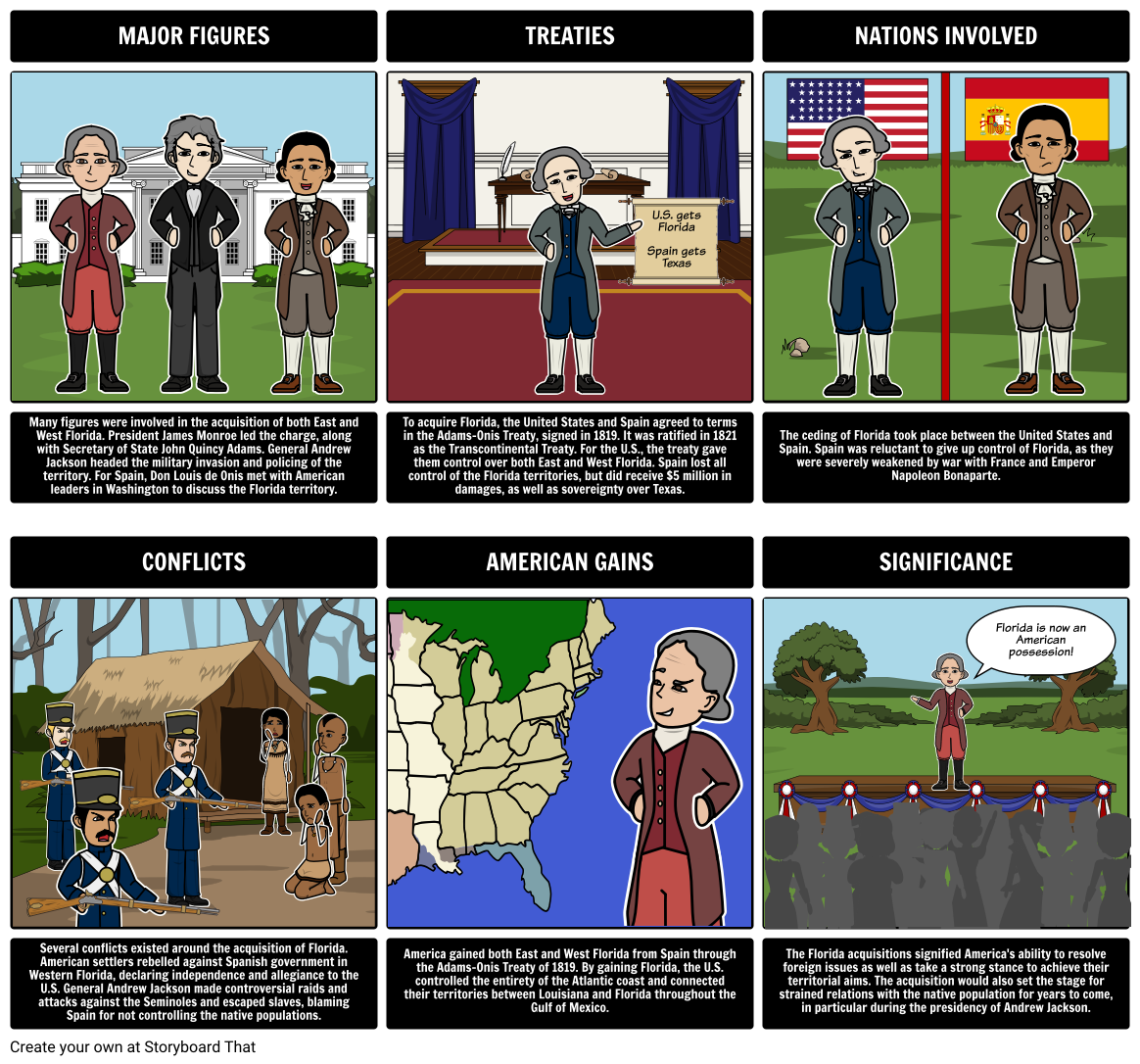
In 1817, border tensions escalated into what became known as the First Seminole War. Following repeated raids by Seminole Indians and disgruntled Creek refugees from Spanish Florida into Georgia and Alabama, Major General Andrew Jackson was ordered to lead American forces to protect the border. His instructions, however, were deliberately vague, allowing Jackson considerable leeway.
Jackson interpreted his orders broadly, leading his troops into Spanish Florida in March 1818. He swiftly destroyed Native American villages and executed two British subjects—Alexander Arbuthnot and Robert Ambrister—whom he accused of inciting the Seminoles. More controversially, Jackson seized the Spanish fort at St. Marks and then marched on Pensacola, the capital of West Florida, capturing it and deposing its Spanish governor. These actions were a blatant violation of international law, an invasion of a sovereign nation’s territory, and sparked an international crisis involving Spain, Great Britain, and the United States.
The Call for Cession: A Geopolitical Chess Game
While some in President James Monroe’s cabinet called for Jackson’s censure, Secretary of State John Quincy Adams deftly defended Jackson’s actions. Adams argued that Spain’s inability to control Florida and prevent hostile actions against the United States justified American intervention under the principle of self-defense. He effectively turned the tables on Spain, demanding that they either adequately police their territory or cede it to the United States.
Spain, facing internal rebellions in its American colonies (which would soon become independent nations like Mexico) and unable to send troops to defend Florida, found itself in an untenable position. The aggressive American posture, combined with Spain’s dwindling resources and inability to assert effective control, made the cession of Florida increasingly inevitable.
The Adams-Onís Treaty: A Landmark Cession
The culmination of these geopolitical pressures and diplomatic negotiations was the Adams-Onís Treaty of 1819, a pivotal moment in American territorial expansion.
Terms of the Transcontinental Treaty
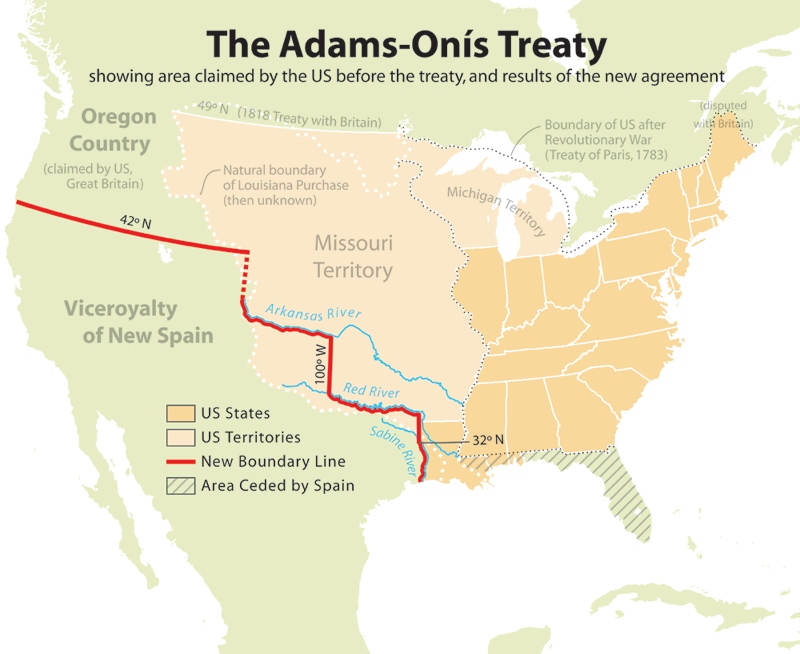
Negotiated between John Quincy Adams and Spanish Minister to the United States, Luis de Onís, the treaty formally known as the Transcontinental Treaty of 1819 was signed in Washington, D.C. on February 22, 1819. Its primary outcome was the official cession of all of Florida—both East Florida and West Florida—to the United States without monetary payment. In exchange, the United States agreed to assume up to $5 million in claims by American citizens against Spain for damages suffered during the border conflicts.
Crucially, the treaty also defined the western boundary of the Louisiana Purchase with New Spain (later Mexico), running from the Sabine River (which forms part of the modern-day Texas-Louisiana border) northwest to the Pacific Ocean. This established a clear demarcation, providing security and predictability for both nations and solidifying the United States’ claims to the Oregon Country. Spain, in turn, received confirmation of its sovereignty over Texas, putting an end to American claims to that territory stemming from the Louisiana Purchase.
Ratification and Transfer of Sovereignty
Despite being signed in 1819, the treaty faced delays in ratification, primarily due to Spain’s reluctance and internal political issues. The Spanish Crown ultimately ratified the treaty in October 1820, and the U.S. Senate followed suit in February 1821. The formal transfer of sovereignty took place in a series of ceremonies throughout 1821. On July 17, 1821, the Spanish flag was lowered and the American flag raised in St. Augustine, signifying the transfer of East Florida. Ten days later, on July 27, 1821, a similar ceremony occurred in Pensacola for West Florida. With these acts, the centuries-long era of Spanish Florida came to an end, and Florida officially became a territory of the United States.
Florida’s American Transformation: From Territory to Sunshine State
The acquisition of Florida was more than just a territorial gain; it was a significant step in the consolidation of American power and identity, laying the groundwork for the state we know today.
Shaping a New American Territory
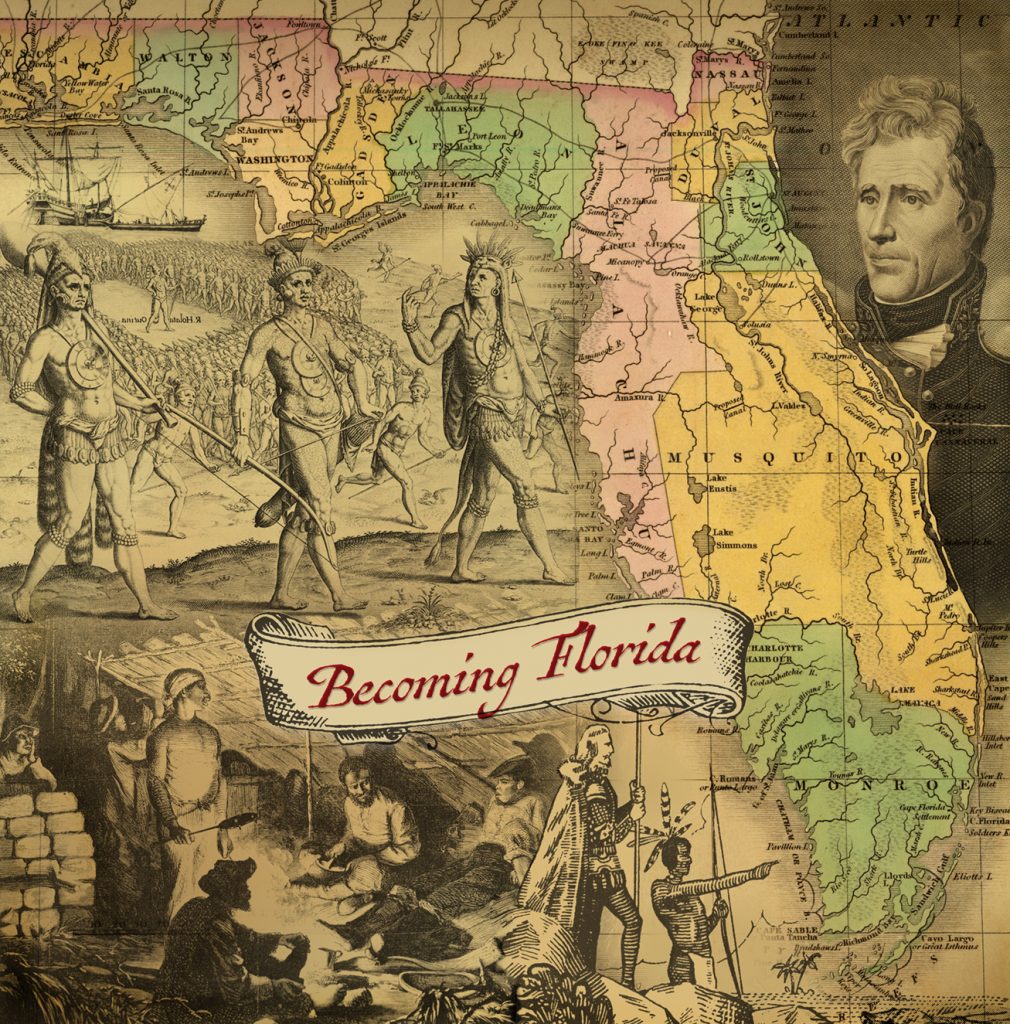
Immediately after the transfer, Congress organized the territory, establishing a territorial government with Andrew Jackson briefly serving as its first military governor. The capital was eventually settled in Tallahassee in 1824, strategically located between the old Spanish capitals of St. Augustine and Pensacola. American settlers, particularly from Georgia, the Carolinas, and Virginia, poured into the territory, drawn by cheap land and the promise of agricultural wealth, particularly cotton and sugar. This influx led to rapid population growth and the development of infrastructure, but also to renewed conflicts with the Seminole Indians, culminating in the costly and protracted Second Seminole War (1835-1842).
Despite these challenges, Florida steadily progressed towards statehood. Its unique blend of cultures—Native American, Spanish, British, and American—began to fuse, creating a distinct identity. On March 3, 1845, Florida officially entered the Union as the 27th state, a free state alongside Iowa, balancing the delicate sectional equilibrium of the pre-Civil War era.
The Enduring Historical Significance of the Acquisition
The acquisition of Florida profoundly impacted the trajectory of the United States. It eliminated a foreign military presence on its southern border, secured crucial trade routes through the Gulf of Mexico, and provided strategic depth for emerging southern states. It was a tangible manifestation of Manifest Destiny, the belief in America’s divinely ordained right to expand across the North American continent.
More broadly, the Adams-Onís Treaty was a diplomatic masterstroke for John Quincy Adams, solidifying the nation’s continental claims and demonstrating its growing influence on the world stage. It set a precedent for future territorial acquisitions and defined American foreign policy for decades to come. Today, Florida stands as a vibrant testament to this rich history, a state whose identity is deeply intertwined with its colonial past and the dramatic story of how it ultimately became part of the United States. Its landmarks, from ancient Spanish forts to historic American towns, silently narrate the intricate process of its acquisition and transformation.
LifeOutOfTheBox is a participant in the Amazon Services LLC Associates Program, an affiliate advertising program designed to provide a means for sites to earn advertising fees by advertising and linking to Amazon.com. Amazon, the Amazon logo, AmazonSupply, and the AmazonSupply logo are trademarks of Amazon.com, Inc. or its affiliates. As an Amazon Associate we earn affiliate commissions from qualifying purchases.