
The story of how the United States acquired Florida is a fascinating tale woven with exploration, colonial rivalries, border disputes, and intricate diplomacy. Far from a simple transaction, it was a culmination of centuries of shifting ownership and geopolitical maneuvering that ultimately shaped the modern Sunshine State, a premier destination for travel, tourism, and diverse lifestyle experiences. Understanding this history not only illuminates Florida’s unique cultural tapestry but also enriches the experience of visiting its myriad landmarks and attractions today.
A Legacy of Empires: Florida’s Colonial Past
Before becoming an American territory, Florida was a contested prize among European powers, primarily Spain and Great Britain. Its strategic location, guarding the sea lanes of the Gulf of Mexico and the Atlantic Ocean, made it invaluable for colonial ambitions.
The Dawn of European Presence: Spanish Exploration and Colonization
The first European to arrive in what is now Florida was Juan Ponce de León in 1513, claiming the land for Spain and naming it La Florida (“land of flowers”). For over a century, Spanish attempts at colonization were largely unsuccessful due to harsh conditions and resistance from indigenous populations. However, the establishment of St. Augustine in 1565 by Don Pedro Menéndez de Avilés marked a turning point. St. Augustine became the longest continuously inhabited European-established settlement in the continental United States, serving as a crucial Spanish outpost. Its enduring presence is a testament to the tenacity of early settlers and is reflected in iconic landmarks like the Castillo de San Marcos, a formidable stone fortress that still stands as a popular attraction for tourism today, offering a glimpse into Florida’s military past and the challenges of colonial life. Travelers to St. Augustine can immerse themselves in its historic district, where accommodation options range from charming bed and breakfasts to modern hotels, all within steps of sites that echo centuries of history.
A Brief British Interlude and Return to Spanish Sovereignty
Spanish control over Florida was not absolute. The geopolitical landscape of the 18th century saw Florida change hands. Following the Seven Years’ War (known in America as the French and Indian War), Spain ceded Florida to Great Britain in 1763 in exchange for Havana, Cuba, which the British had captured. During this period, British Florida was divided into East Florida (with its capital at St. Augustine) and West Florida (with its capital at Pensacola). The British actively encouraged settlement and development, laying groundwork for future growth.
However, British ownership was short-lived. During the American Revolutionary War, Spain, allied with the rebelling American colonies and France, launched campaigns to reclaim Florida. By the Treaty of Paris (1783), which recognized American independence, Great Britain returned both East and West Florida to Spain. This period, though brief, left its mark, influencing land grants and administrative structures, elements of which can still be discerned by those exploring historical maps and colonial archives, a unique experience for history buffs embarking on a deep-dive travel guide through Florida’s past.
A Growing Unease: Tensions Between Spain and the United States
The return of Florida to Spanish rule in 1783 set the stage for increasing friction with the newly independent United States. Spanish control was weak, particularly in the western parts of the territory, and its borders were poorly defined and poorly defended. This vulnerability created a host of problems for the burgeoning American republic.
Border Instability and Native American Conflicts
The ill-defined boundary between Florida and the United States was a constant source of dispute. American settlers expanding westward frequently encroached on Spanish territory, leading to clashes. More significantly, Florida became a haven for various groups hostile to the United States. This included refugee Native American tribes, primarily the Seminole, who had been displaced from American lands, as well as runaway slaves seeking freedom from plantations in Georgia and the Carolinas. These groups, often with some Spanish support or tolerance, would launch raids into American territory, further exacerbating tensions.
The instability escalated, leading to what became known as the First Seminole War. This conflict saw American forces, under the command of General Andrew Jackson, take aggressive action against Seminole towns and even Spanish forts. In 1818, Jackson marched his troops into Florida, seizing Pensacola and St. Marks, executing two British subjects accused of aiding the Seminole, and effectively demonstrating American military dominance in the region. This brazen act, while controversial and nearly causing international incidents, made it abundantly clear that Spain could not effectively govern or defend Florida.
The “Patriot War” and West Florida Annexation
Further complicating matters were American attempts to seize parts of Florida by force or through covert means. In 1810, American settlers in West Florida declared independence from Spain, forming the short-lived Republic of West Florida, which was quickly annexed by the United States under President James Madison. This act further chipped away at Spanish authority. Another attempt, the “Patriot War” of 1812, saw American adventurers, ostensibly supporting local revolts, attempt to seize East Florida, though this effort ultimately failed. These incidents highlighted Spain’s dwindling influence and the growing American determination to secure the peninsula. Travelers visiting Pensacola today can explore its historic downtown, a blend of Spanish, British, and American influences, reflecting the successive waves of control. The city’s accommodation options provide a comfortable base for exploring military landmarks and enjoying the coastal lifestyle.
The Diplomatic Solution: The Adams-Onís Treaty of 1819
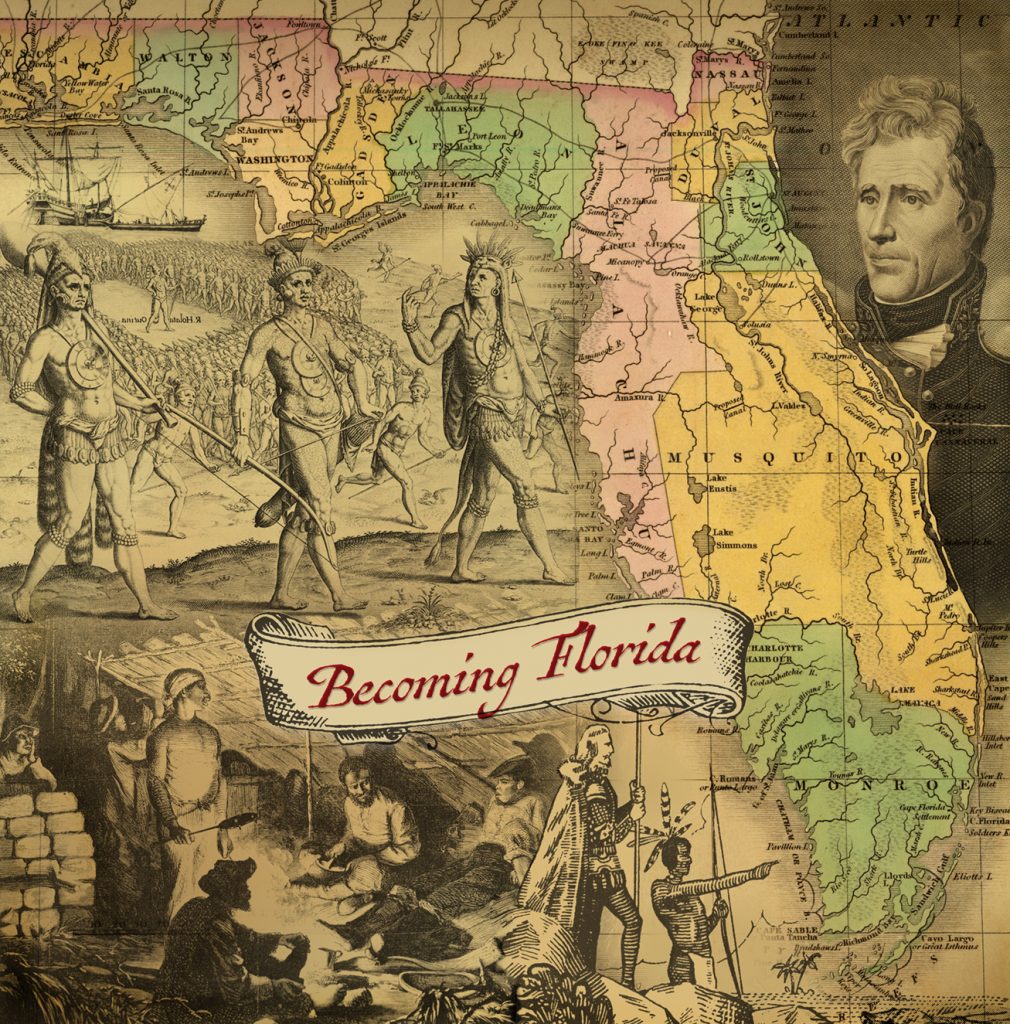
By the late 1810s, it became clear to both Spain and the United States that the status quo in Florida was unsustainable. Spain was grappling with internal turmoil and independence movements in its vast South American colonies, making it difficult to maintain a strong presence in Florida. The United States, on the other hand, viewed Florida as essential for its security and westward expansion. This convergence of interests paved the way for a diplomatic solution.
Negotiations and Terms of Cession
The primary figures in these crucial negotiations were John Quincy Adams, the astute U.S. Secretary of State, and Luis de Onís, the Spanish Minister to the United States. After protracted discussions, they reached an agreement, signing the Transcontinental Treaty, more commonly known as the Adams-Onís Treaty, on February 22, 1819.
The treaty’s terms were multifaceted:
- Cession of Florida: Spain formally ceded all of Florida (both East and West Florida) to the United States.
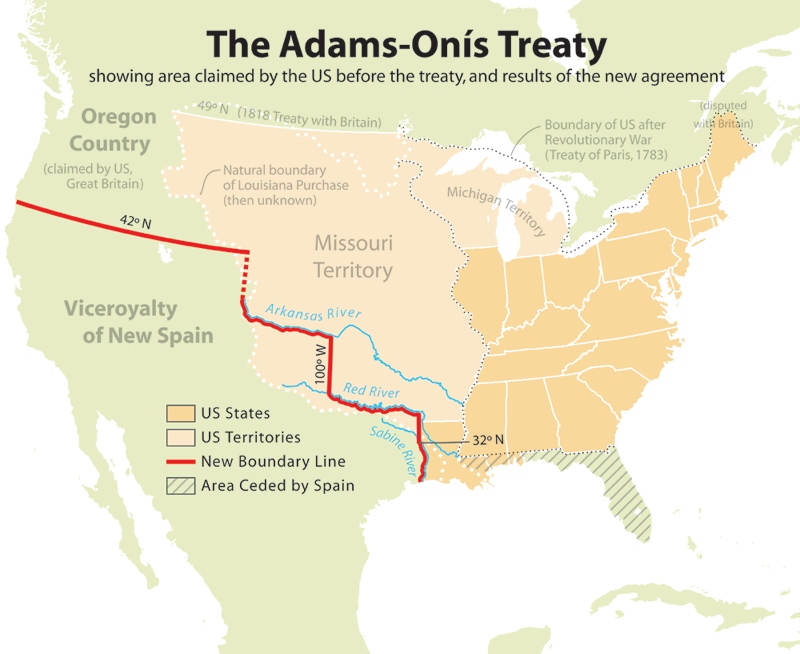
- Boundary Definition: A clear border was established between American territory and New Spain (which included much of what is now the American Southwest). This boundary began at the mouth of the Sabine River (Louisiana-Texas border), snaked along various rivers and parallels, and then turned north to the 42nd parallel, extending to the Pacific Ocean. This effectively solidified U.S. claims to the Oregon Country and relinquished any American claims to Texas.
- Claims Settlement: The United States agreed to assume up to $5 million in claims by its citizens against Spain for damages.
This treaty was a triumph for American diplomacy, securing Florida without further military conflict and defining its western borders, an important step in its transcontinental expansion. The historical significance of this agreement is often discussed in museums across Florida, offering an educational element to any travel itinerary focused on American history.
Ratification and Official Transfer
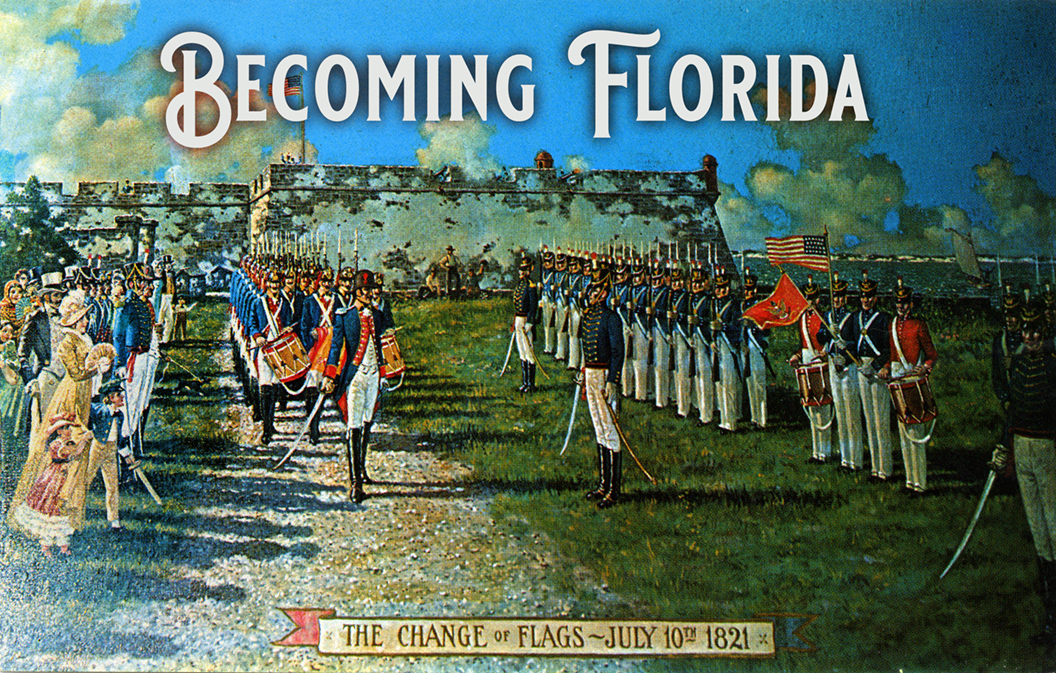
Despite being signed in 1819, the treaty faced delays in ratification, primarily due to internal Spanish politics and the question of land grants made by Spain in Florida just before the treaty. After some clarifications and assurances, Spain finally ratified the treaty in 1821. On July 17, 1821, in St. Augustine, and on July 21, 1821, in Pensacola, the official transfer ceremonies took place, marking the end of Spanish rule and the beginning of American sovereignty over Florida. Andrew Jackson was appointed as the first territorial governor, overseeing the transition. This momentous occasion, centuries in the making, set Florida on an irreversible path towards becoming a foundational part of the United States.
Florida’s Transformation: From Frontier to Premier Destination
The acquisition of Florida was just the beginning of its journey as an American territory. From a sparsely populated frontier, it gradually transformed into the vibrant, diverse, and economically significant state it is today, a testament to its unique history and geographical blessings.
Early American Governance and Road to Statehood
Under American governance, Florida was organized as a territory, with Tallahassee eventually chosen as its capital due to its central location between St. Augustine and Pensacola. The territory saw an influx of American settlers, rapid development of plantations, and continued conflict with the Seminole (leading to the second and third Seminole Wars). Despite these challenges, Florida pushed for statehood, finally being admitted to the Union on March 3, 1845, as the 27th state. The early territorial period saw the establishment of crucial infrastructure, laying the groundwork for future development that would eventually support its booming tourism industry and complex accommodation network.
Historical Landmarks and Modern Tourism in the Sunshine State
Today, Florida’s rich and complex history is etched into its landscape and culture, offering a compelling backdrop for any visitor. The legacy of its Spanish colonial past is celebrated in St. Augustine, where historic streets, the Castillo de San Marcos, and various museums draw millions seeking historical experiences. Here, visitors can choose from an array of hotels, resorts, and charming bed-and-breakfasts that offer a comfortable stay amidst historical grandeur, epitomizing a luxurious yet culturally rich lifestyle.
The remnants of its British period, though less overt, contribute to the architectural styles and early town planning in cities like Pensacola and Fernandina Beach, home to Fort Clinch State Park, a Civil War-era fort that stands on land with a deep colonial past. The continuous development under American rule, from early settlements to modern metropolises, showcases an evolution that caters to every kind of traveler.
Beyond historical sites, Florida’s historical journey directly led to its present-day allure. The state’s extensive coastline, once a strategic defensive perimeter, is now famous for world-class beaches like those in Miami, Naples, and Sarasota. The diverse ecosystems, from the Everglades National Park to the unique environment of the Florida Keys, were all part of the vast territory acquired through the Adams-Onís Treaty. These natural wonders, combined with man-made attractions like the Walt Disney World Resort and Universal Orlando Resort in Orlando, or the Kennedy Space Center on the Space Coast, make Florida a global magnet for tourism.
Whether staying in a luxury suite at a Miami Beach resort, a family-friendly apartment near Orlando’s theme parks, or a tranquil villa in the Florida Keys, the options for accommodation cater to every taste and budget. Modern travel guides often highlight these unique destinations, offering tips on booking the best stays and exploring local culture and food.
In essence, the complex historical narrative of Florida’s acquisition by the United States is not just a chapter in a history book. It is the foundation upon which its vibrant present is built, inviting millions to explore its diverse offerings, from ancient landmarks to cutting-edge attractions, making it a perpetually compelling destination for travel and lifestyle adventures.
LifeOutOfTheBox is a participant in the Amazon Services LLC Associates Program, an affiliate advertising program designed to provide a means for sites to earn advertising fees by advertising and linking to Amazon.com. Amazon, the Amazon logo, AmazonSupply, and the AmazonSupply logo are trademarks of Amazon.com, Inc. or its affiliates. As an Amazon Associate we earn affiliate commissions from qualifying purchases.