
The story of how the United States acquired Hawaii is a complex narrative woven with threads of exploration, economic ambition, political maneuvering, and ultimately, a significant shift in global power dynamics. Far from a simple purchase or discovery, the annexation of the Hawaiian Islands was the culmination of decades of increasing American influence that fundamentally reshaped the destiny of a sovereign island nation. This historical journey from an independent kingdom to a U.S. state offers a profound insight into 19th-century geopolitics and the evolving concept of Manifest Destiny beyond the continental mainland.
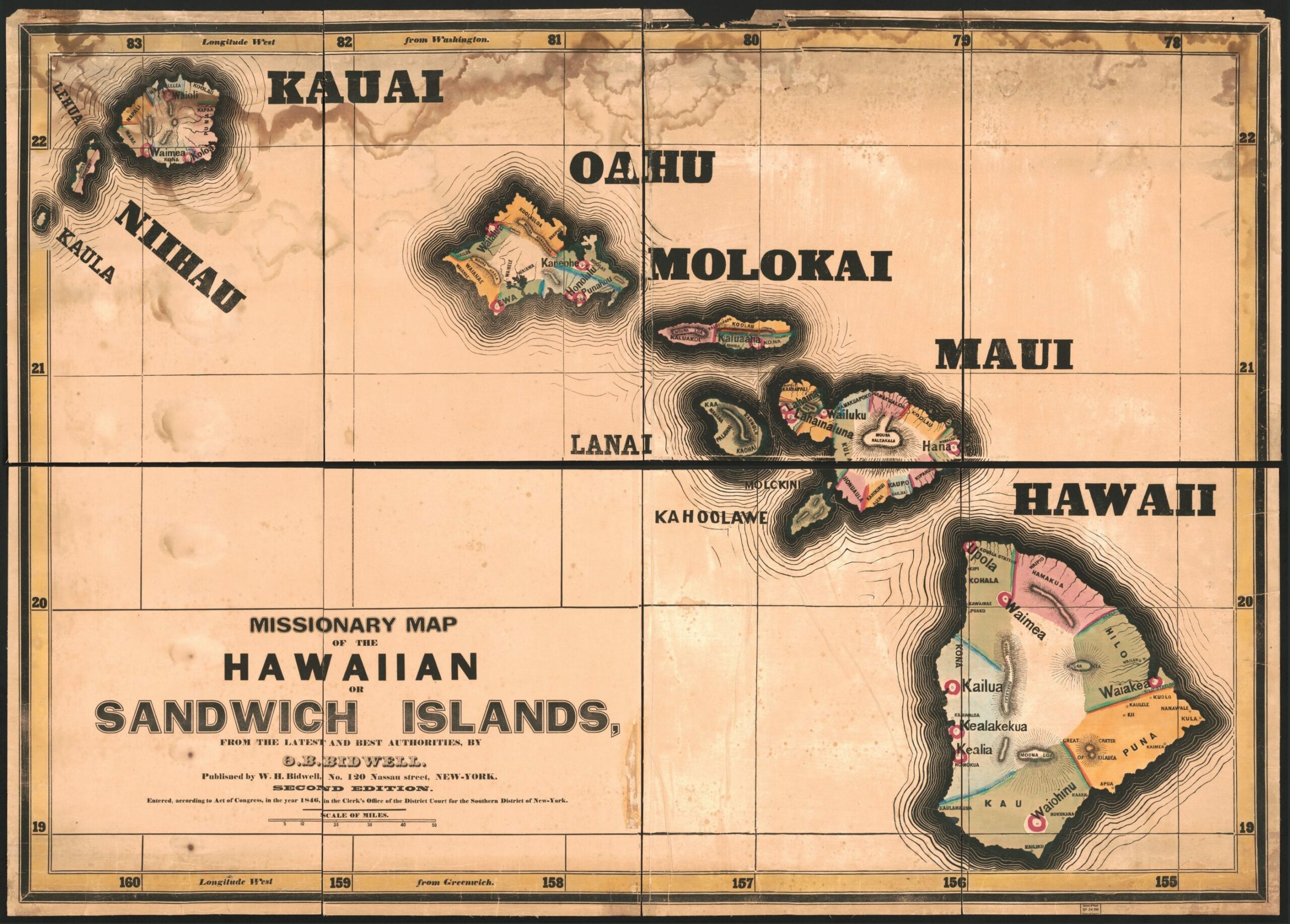
The Dawn of Western Influence and the Rise of the Monarchy
Before the arrival of Western powers, Hawaii was a collection of independent chiefdoms, rich in unique culture and sophisticated social structures. The subsequent centuries would bring dramatic changes, both consolidating indigenous power and introducing external forces that would ultimately lead to annexation.
Early Encounters and Cultural Exchange
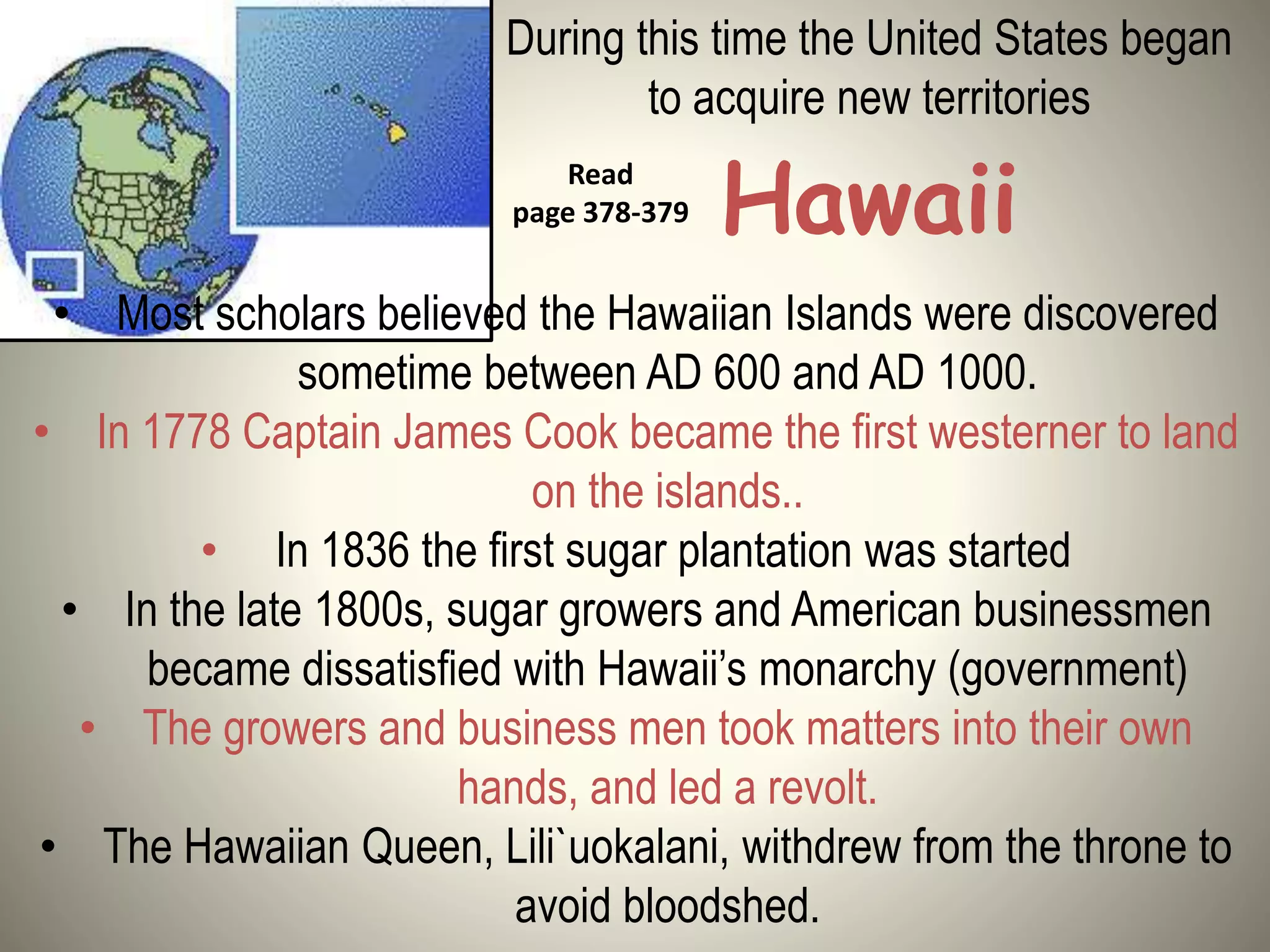
The first documented European contact with the Hawaiian Islands occurred in 1778, when British explorer Captain James Cook stumbled upon the archipelago during his third Pacific voyage. Initially welcomed by the Hawaiians, Cook’s arrival marked the beginning of a rapid integration of Hawaii into the global economy and Western consciousness. European goods, technologies, and, tragically, diseases were introduced, having devastating effects on the native population. This initial contact, however, also provided new tools and ideas that played a role in the unification of the islands.
The Unification of the Islands under Kamehameha
In the wake of Cook’s visits, one powerful chief, King Kamehameha I, leveraged Western weaponry and tactics to conquer and unify the warring chiefdoms into the Kingdom of Hawaii by 1810. Kamehameha I established a strong monarchy, laying the groundwork for a recognized sovereign nation. His successors continued to modernize the kingdom, introducing a written language, a constitution, and engaging in diplomacy with major world powers, including the United States, Great Britain, and France. These early decades saw Hawaii navigating the complex waters of international relations, asserting its independence while increasingly opening its doors to foreign trade and settlement, particularly from American missionaries and merchants.
Escalating American Interests and Political Subversion
As the 19th century progressed, the strategic location and fertile lands of Hawaii became increasingly attractive to American commercial and political interests. This growing influence gradually eroded the sovereignty of the Hawaiian monarchy, culminating in a dramatic shift of power.
Economic Allure: Whaling and Sugar
The allure of Hawaii for the United States was primarily economic. In the early to mid-19th century, Hawaii served as a vital provisioning stop for American whaling fleets in the Pacific, bringing significant revenue to the islands. However, it was the burgeoning sugar industry that truly cemented American economic dominance. American entrepreneurs and their descendants established vast sugar plantations, requiring significant investment and a large labor force. These plantations became the backbone of the Hawaiian economy, and their owners, largely American expatriates, gained immense political leverage. The Reciprocity Treaty of 1875, which allowed Hawaiian sugar to enter the U.S. duty-free in exchange for exclusive U.S. naval base rights at Pearl Harbor, deepened this economic dependence and solidified American strategic interests.
The Imposition of the Bayonet Constitution (1887)
The growing power of American and European businessmen, coupled with a desire to protect their economic interests, led to a direct challenge to the Hawaiian monarchy. In 1887, a group of armed, non-native businessmen and planters, known as the Hawaiian League, forced King Kalākaua to sign a new constitution at gunpoint. This infamous document, known as the Bayonet Constitution, severely stripped the monarch of his executive authority and disenfranchised most native Hawaiians, granting voting rights primarily to wealthy property owners, regardless of their ethnicity. It effectively transferred real political power to the hands of the haole (foreign) elite, paving the way for further erosion of Hawaiian sovereignty. Kalākaua died in 1891, his reign overshadowed by this humiliating power transfer.
The Fall of the Monarchy and the Provisional Government
The Bayonet Constitution set the stage for the final act in the overthrow of the Hawaiian monarchy, sparking a desperate struggle by the last reigning monarch to restore native Hawaiian rights and sovereignty.
Queen Liliʻuokalani’s Struggle for Sovereignty

Upon King Kalākaua’s death, his sister, Queen Liliʻuokalani, ascended to the throne in 1891. A staunch nationalist, Liliʻuokalani understood the profound injustice of the Bayonet Constitution and was determined to restore power to the monarchy and the native Hawaiian people. Her primary goal was to promulgate a new constitution that would reassert royal authority and restore voting rights to her subjects. This move was seen as a direct threat by the powerful, largely American, planter class and their political allies, who had consolidated their power under the existing framework.
The 1893 Coup d’état
The Queen’s attempts to enact a new constitution provided the pretext for the inevitable. On January 17, 1893, a group of pro-American conspirators, led by Sanford B. Dole, a prominent American lawyer and sugar magnate, staged a coup d’état. They formed the “Committee of Safety” and, with the controversial support of armed U.S. Marines (who ostensibly landed to protect American lives and property but effectively intimidated the Queen’s supporters), forced Queen Liliʻuokalani to abdicate. To avoid bloodshed, the Queen yielded under protest, appealing to the United States for justice, stating, “I yield to the superior force of the United States of America whose minister plenipotentiary, His Excellency John L. Stevens, has caused United States troops to be landed at Honolulu and declared that he would support the Provisional Government.” The monarchy was overthrown, and the Provisional Government of Hawaii was established, with Dole as its president, immediately seeking annexation by the United States.
The Road to Annexation
Despite the swift overthrow of the monarchy, immediate annexation was not a foregone conclusion. The legitimacy of the coup and the question of annexation became a contentious issue in American politics, delaying Hawaii’s full integration for several years.
The Republic of Hawaii and Shifting US Sentiments
Following the coup, the provisional government quickly moved to request annexation by the United States. However, President Grover Cleveland, a Democrat, was deeply troubled by the circumstances of the overthrow. He launched an investigation, which concluded that the coup was an illegal act supported by U.S. diplomatic and military personnel. Cleveland condemned the actions, refused to annex Hawaii, and even called for the restoration of the monarchy, although this proved politically impossible to achieve. In response, the Provisional Government declared Hawaii a republic in 1894, establishing the Republic of Hawaii with Sanford B. Dole as its first president. This republic, though unrecognized by many Hawaiians, governed the islands for four years, persistently lobbying for annexation.
A Strategic Imperative: The Spanish-American War
The turning point for Hawaii’s annexation came with the outbreak of the Spanish-American War in 1898. The war underscored Hawaii’s immense strategic value as a mid-Pacific coaling station and naval base for projected American military operations in the Philippines and Asia. Pro-annexation sentiment in the United States surged, fueled by naval strategists like Alfred Thayer Mahan and expansionist politicians who viewed the islands as essential for American global power projection. The idea that another foreign power might seize Hawaii if the U.S. did not act became a powerful argument for annexation.
The Newlands Resolution and Formal Annexation (1898)
With the shifting political winds and the strategic urgency created by the war, President William McKinley, a strong proponent of expansion, revived the annexation effort. Unable to secure the necessary two-thirds majority in the Senate for a formal treaty, proponents instead pushed for annexation through a joint resolution of Congress. This legislative maneuver, known as the Newlands Resolution, required only a simple majority in both the House and Senate. Despite protests from native Hawaiian groups and some anti-imperialist factions in the United States, the resolution passed, and President McKinley signed it into law on July 7, 1898. On August 12, 1898, a formal ceremony was held at ʻIolani Palace in Honolulu, officially transferring Hawaiian sovereignty to the United States.
From Territory to Statehood
The annexation of Hawaii in 1898 marked the end of its independence but not the end of its journey within the American system. It would take more than half a century for the islands to achieve full equality as a state.
Life as a U.S. Territory
Following annexation, Hawaii officially became a U.S. territory in 1900 under the Hawaiian Organic Act. This period saw significant economic development, primarily in the sugar and pineapple industries, largely controlled by the “Big Five” corporations that dominated the islands. A diverse workforce from Japan, China, Portugal, and the Philippines migrated to Hawaii to work on these plantations, creating the unique multicultural tapestry that defines the state today. Despite economic growth, native Hawaiians often found themselves marginalized in their own homeland, struggling with cultural suppression and land loss. Hawaii’s strategic importance also grew, particularly with the establishment and expansion of military bases, culminating in the attack on Pearl Harbor in 1941, which directly propelled the United States into World War II.
The Path to the 50th Star
Decades of advocacy for statehood by residents of Hawaii, who desired full political representation and equal rights as American citizens, eventually bore fruit. Following World War II, the strategic and economic arguments for statehood gained momentum. The population, including a significant number of American citizens of various ethnic backgrounds who had served in the war, increasingly demanded an end to territorial status. Finally, after a plebiscite in which Hawaiian residents overwhelmingly voted in favor of statehood, Congress passed the Hawaii Admission Act. On August 21, 1959, Hawaii officially became the 50th state of the United States, marking the completion of a long and often controversial journey from an independent kingdom to an integral part of the American Union.
The story of Hawaii’s acquisition by the United States is a complex chapter in both nations’ histories, fraught with questions of legality, ethics, and the legacy of imperialism. It stands as a testament to the powerful forces of economic ambition and strategic necessity that shaped the global landscape of the late 19th and early 20th centuries.
LifeOutOfTheBox is a participant in the Amazon Services LLC Associates Program, an affiliate advertising program designed to provide a means for sites to earn advertising fees by advertising and linking to Amazon.com. Amazon, the Amazon logo, AmazonSupply, and the AmazonSupply logo are trademarks of Amazon.com, Inc. or its affiliates. As an Amazon Associate we earn affiliate commissions from qualifying purchases.