
The history of how the United States acquired Hawaii is a complex narrative involving economic ambition, geopolitical strategy, and a dramatic clash of cultures. Unlike many other territories that joined the union through purchase or treaty following war, the transition of the Hawaiian Islands from a sovereign kingdom to an American territory was a protracted process marked by an internal coup and controversial diplomatic maneuvers. Today, the landmarks of this era, from the grand halls of Iolani Palace to the naval infrastructure of Pearl Harbor, serve as silent witnesses to a turning point in Pacific Ocean history.
The Roots of a Kingdom and the Rise of Foreign Influence
To understand the takeover, one must first look at the strength of the original Kingdom of Hawaii. In the late 18th century, King Kamehameha I used modern weaponry and strategic diplomacy to unify the disparate islands of Oahu, Maui, Molokai, Lanai, and Kauai. This unification created a stable, recognized sovereign state that engaged in global trade. However, the discovery of the islands by Captain James Cook in 1778 opened the door to a flood of foreign influence that would eventually destabilize the monarchy.
The Missionary Influence and the Sugar Boom
In the 1820s, Christian missionaries from New England arrived in Honolulu and Lahaina. While their primary goal was religious conversion, their descendants became a powerful economic and political elite. These “missionary boys” moved away from the pulpit and into the fertile soil of the islands, establishing vast sugarcane plantations. By the mid-19th century, the Hawaiian Islands had become a vital source of sugar for the United States, especially during the American Civil War when Southern supplies were cut off.
This economic boom created a dependency. The plantation owners, mostly of American descent, sought favorable trade terms with Washington D.C.. This led to the Reciprocity Treaty of 1875, which allowed Hawaiian sugar to enter the American market duty-free. In exchange, the United States gained exclusive rights to use Pearl Harbor as a coaling and repair station for its ships. While this brought wealth to the islands, it also gave the American government a significant strategic foothold in the central Pacific Ocean.
The Great Mahele and Land Ownership
A pivotal historical moment was the Great Mahele of 1848, a land redistribution act proposed by King Kamehameha III. This act transitioned the traditional communal land system to a Western model of private ownership. While intended to protect Hawaiian land from foreign seizure, it unintentionally allowed foreign investors to purchase vast tracts of land. Over time, the indigenous population lost control of their ancestral territory, and the economic power shifted almost entirely into the hands of a small group of American and European businessmen.
The Bayonet Constitution and the Erosion of Sovereignty
By the late 1880s, the tension between the Hawaiian monarchy and the foreign business community reached a breaking point. The elite planters and lawyers formed a secret organization known as the Hawaiian League. Their goal was to reduce the power of the monarchy and eventually facilitate annexation to the United States to ensure the continued profitability of the sugar industry.
The Reign of King Kalakaua
King Kalakaua, often called the “Merrie Monarch,” was a staunch defender of Hawaiian culture and sovereignty. He built the opulent Iolani Palace in Honolulu to demonstrate the kingdom’s modernity and prestige. However, his efforts to maintain Hawaiian independence and his expensive tastes made him a target for the Hawaiian League.
In 1887, members of the Hawaiian League, backed by an armed militia known as the Honolulu Rifles, forced King Kalakaua at gunpoint to sign a new constitution. This document, forever known as the Bayonet Constitution, stripped the king of much of his executive power and disenfranchised a large portion of the native Hawaiian population by implementing property and income requirements for voting. Crucially, it granted voting rights to foreign residents, effectively handing political control of the kingdom to the American-led business elite.
The McKinley Tariff and Economic Pressure
The political instability was further exacerbated by economic shifts in the United States. In 1890, the United States Congress passed the McKinley Tariff, which eliminated the duty-free status of Hawaiian sugar and provided a subsidy to domestic American sugar producers. This move devastated the Hawaiian economy. The plantation owners realized that the only way to restore their competitive advantage and protect their investments was for Hawaii to become part of the United_States, making their sugar “domestic.”
Queen Liliuokalani and the Overthrow of 1893
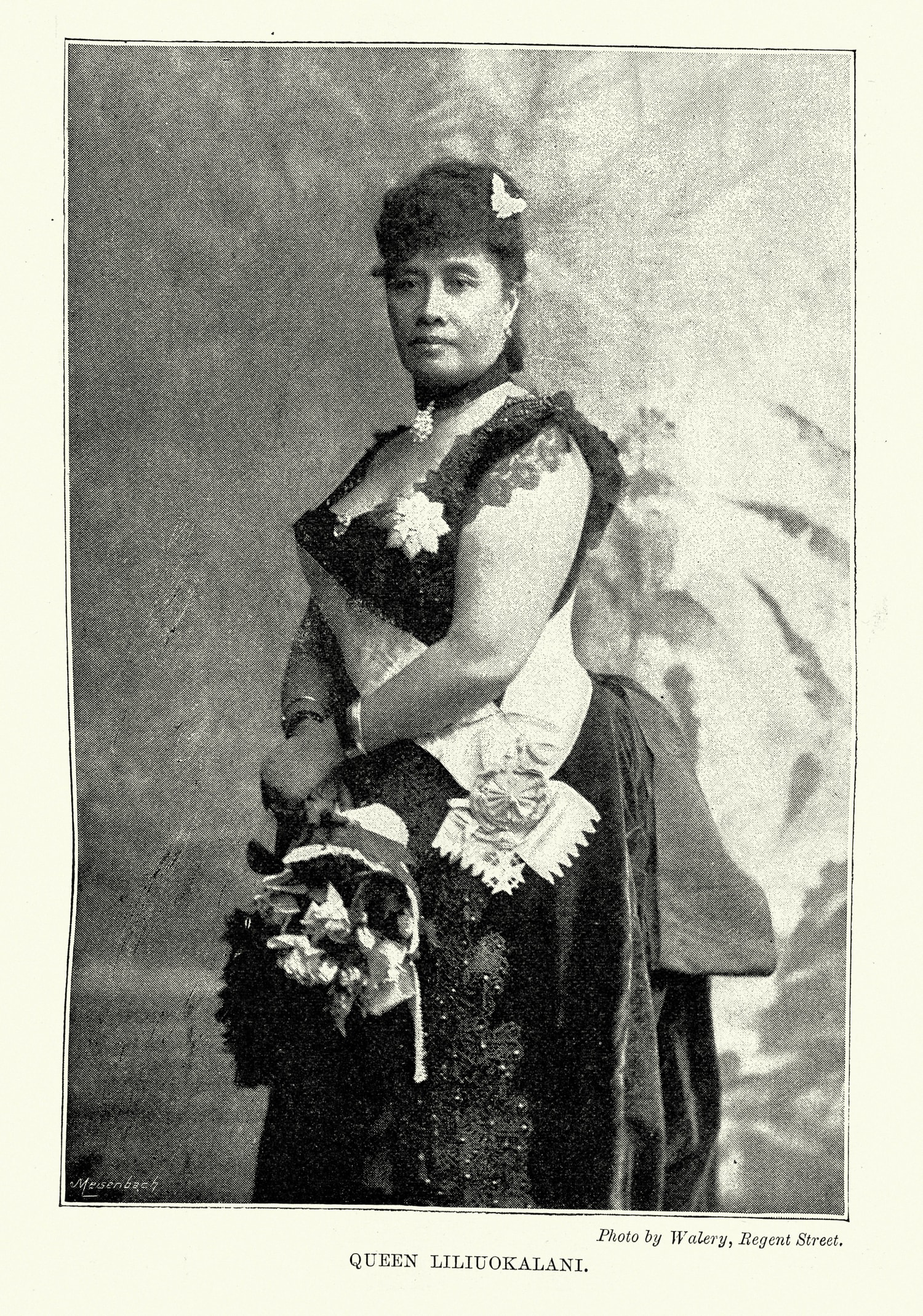
When King Kalakaua died in 1891, his sister, Queen Liliuokalani, ascended the throne. She was a brilliant composer and a determined leader who was deeply committed to restoring the power of the monarchy and the rights of her people. She operated from Washington Place and Iolani Palace, working on a new constitution that would undo the damage of the Bayonet Constitution.
The Committee of Safety
In response to the Queen’s proposed constitution, the business elite formed the Committee of Safety. This group, led by Sanford B. Dole and Lorrin A. Thurston, conspired to overthrow the monarchy. They sought the support of the American Minister to Hawaii, John L. Stevens, who was an ardent supporter of annexation.
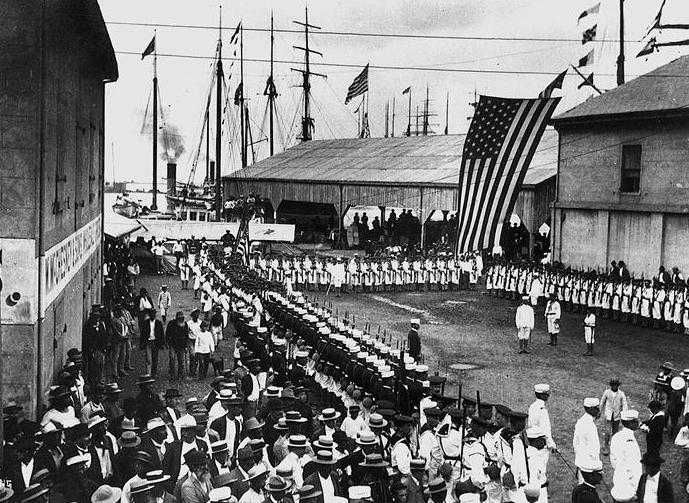
On January 16, 1893, John L. Stevens ordered troops from the USS Boston, which was anchored in Honolulu Harbor, to land on Oahu. The marines and sailors took up positions near Iolani Palace and the Aliiolani Hale, ostensibly to “protect American lives and property.” The presence of American military force effectively intimidated the Queen’s supporters and prevented any armed resistance.
The Surrender and the Provisional Government
Faced with the threat of bloodshed and the overwhelming power of the United States military, Queen Liliuokalani issued a statement of surrender. However, she made it clear that she was yielding her authority not to the Committee of Safety, but to the superior force of the United States government, trusting that once the facts were known, the American government would restore her to the throne.
The conspirators immediately established a Provisional Government with Sanford B. Dole as president. They quickly sent a commission to Washington D.C. to negotiate a treaty of annexation.
From Republic to Annexation and Statehood
The path to annexation was not as swift as the Committee of Safety had hoped. When Grover Cleveland became President of the United States shortly after the overthrow, he was skeptical of the events. He dispatched James H. Blount to conduct an investigation into the matter.
The Blount Report and the Republic of Hawaii
The resulting Blount Report was a scathing condemnation of the overthrow. It concluded that John L. Stevens had acted improperly and that the majority of native Hawaiians opposed annexation. Grover Cleveland attempted to restore Queen Liliuokalani to the throne, but the Provisional Government refused to step down. Realizing that the United States would not use force to reinstate the Queen, the conspirators declared the Republic of Hawaii in 1894, waiting for a more favorable political climate in America.
The Spanish-American War and the Newlands Resolution
The tide turned in 1898 with the outbreak of the Spanish-American War. As the United States fought in the Philippines and Guam, the strategic importance of Hawaii as a mid-Pacific naval base became undeniable. President William McKinley, a supporter of expansionism, advocated for annexation as a matter of national security.
Because a formal treaty of annexation could not gather the required two-thirds majority in the United States Senate, supporters used a joint resolution known as the Newlands Resolution. This required only a simple majority in both houses of Congress. It passed, and on August 12, 1898, the Republic of Hawaii was officially annexed by the United States. The flag of the Kingdom of Hawaii was lowered at Iolani Palace, and the Stars and Stripes were raised.
Legacy and the Path to the 50th State
Hawaii remained a territory for over sixty years. During this time, it became a central pillar of American military power in the Pacific Ocean. The attack on Pearl Harbor in 1941 drew the United States into World War II and further solidified the bond between the islands and the mainland. In 1959, after a long campaign for political representation, Hawaii was admitted as the 50th state of the union.
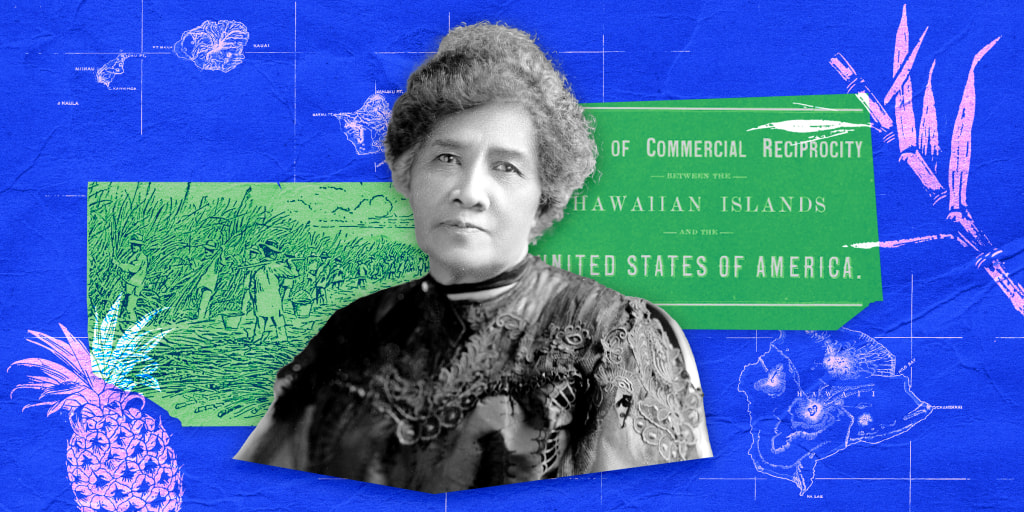
Today, visitors to landmarks like the Bernice Pauahi Bishop Museum or the statues of Queen Liliuokalani can explore the nuanced history of this transition. While the takeover brought significant economic development and modernization, it also remains a source of reflection and cultural revitalization for the Native Hawaiian community, who continue to honor the legacy of their independent kingdom.
LifeOutOfTheBox is a participant in the Amazon Services LLC Associates Program, an affiliate advertising program designed to provide a means for sites to earn advertising fees by advertising and linking to Amazon.com. Amazon, the Amazon logo, AmazonSupply, and the AmazonSupply logo are trademarks of Amazon.com, Inc. or its affiliates. As an Amazon Associate we earn affiliate commissions from qualifying purchases.