
The hallmark of a high-end luxury stay is the sight of a crisp, perfectly made bed with linens so bright they seem to glow. Whether you are checking into a suite at The Ritz-Carlton in Paris or a boutique villa in Bora Bora, the expectation for pristine white sheets remains the same. This universal standard of cleanliness is not merely an aesthetic choice; it is a psychological signal to the guest that the environment is hygienic and well-maintained. However, maintaining that level of brilliance across thousands of rooms and daily turnovers is a monumental task. The secret to how the hospitality industry achieves this involves a combination of industrial-grade chemistry, rigorous operational protocols, and strategic textile procurement.
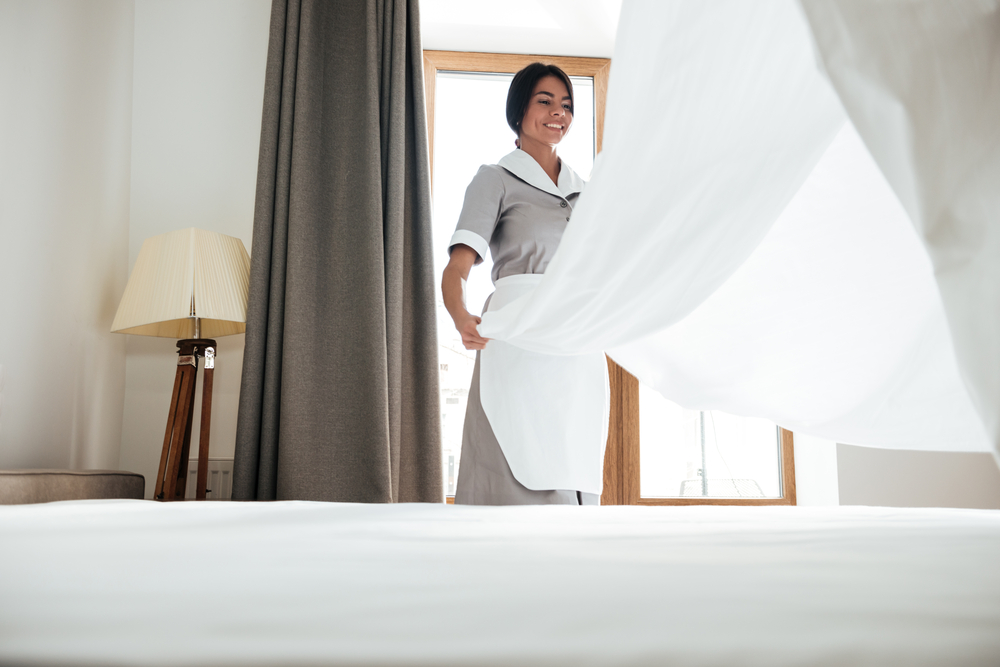
The Engineering of the Industrial Laundry Room
In the world of professional hospitality, laundry is treated more like a science than a household chore. While a typical homeowner might throw a load into a domestic machine and hope for the best, a property like the Waldorf Astoria Hotels & Resorts in New York City utilizes massive industrial infrastructures designed for volume, efficiency, and precision.
High-Capacity Washers and Extractors
The journey of a white sheet begins in high-capacity tunnel washers or large-scale extractors. These machines are significantly more powerful than anything found in a residential setting. Industrial washers are designed to handle 100 to 200 pounds of linen per cycle. The mechanical action—the way the clothes tumble—is calibrated to ensure that water and chemicals penetrate the fibers deeply without causing premature wear. In cities like Las Vegas, where mega-resorts handle tens of thousands of pounds of laundry daily, these machines operate 24/7 to keep up with the demand.
One of the most critical aspects of these machines is their ability to control water temperature with absolute accuracy. To keep sheets white, hotels often use a tiered heating approach. A “break” cycle might start at a lower temperature to loosen protein-based stains (like sweat or skin cells), followed by a high-heat wash cycle that can reach 140°F to 160°F. This heat is essential for activating certain detergents and ensuring that all bacteria and pathogens are eradicated.
Precise Chemical Injection Systems
Hotels do not rely on scoops of powdered detergent. Instead, they use automated liquid injection systems that deliver specific chemicals at precise moments in the wash cycle. This is a standard practice for Marriott International and Hilton Worldwide properties across the United States.
The chemical cocktail usually involves four main components:
- Detergents: Specifically formulated to break down body oils and environmental dust.
- Alkalis: These raise the pH level of the water, which helps to open up the fibers of the cotton, allowing the detergent to release trapped dirt more effectively.
- Bleaching Agents: While chlorine bleach is common, many luxury brands prefer oxygen-based bleaches or hydrogen peroxide. These are gentler on the fabric and prevent the yellowing that can occur when chlorine reacts with certain proteins.
- Optical Brighteners: These are synthetic chemicals that absorb ultraviolet light and re-emit it in the blue spectrum. This “bluing” effect tricks the human eye into perceiving the fabric as whiter and brighter than it actually is.
The Strategic Selection of Textiles and Fibers
The ability to keep sheets white starts long before they ever see a washing machine. It begins with the procurement process. Hotels must choose fabrics that can withstand the rigors of industrial laundering while maintaining a soft, luxurious feel for guests.
Why White is the Universal Standard of Luxury
It may seem counterintuitive to choose the color most likely to show stains, but white is actually the most practical choice for large-scale operations. From a management perspective, white linens can be washed together without the risk of color bleeding. Furthermore, white sheets can be subjected to higher temperatures and more aggressive whitening agents that would strip the dye from colored fabrics.
From a guest experience perspective, white is the ultimate symbol of transparency. When a guest walks into a room at the Four Seasons Hotels and Resorts in Tokyo or London, the white bed serves as proof of cleanliness. It is a bold statement that the hotel has nothing to hide. This psychological “halo effect” of white linens has become so ingrained in the industry that it is now considered an essential amenity in any four- or five-star establishment.
Thread Count and Material Integrity
The composition of the sheet plays a vital role in its longevity and its ability to stay white. Many top-tier hotels opt for a blend of high-quality cotton, often sourced from Egypt or India, and polyester. While 100% cotton is prized for its breathability and prestige, a “cotton-rich” blend (such as 60/40 or 80/20) is often preferred for its durability.
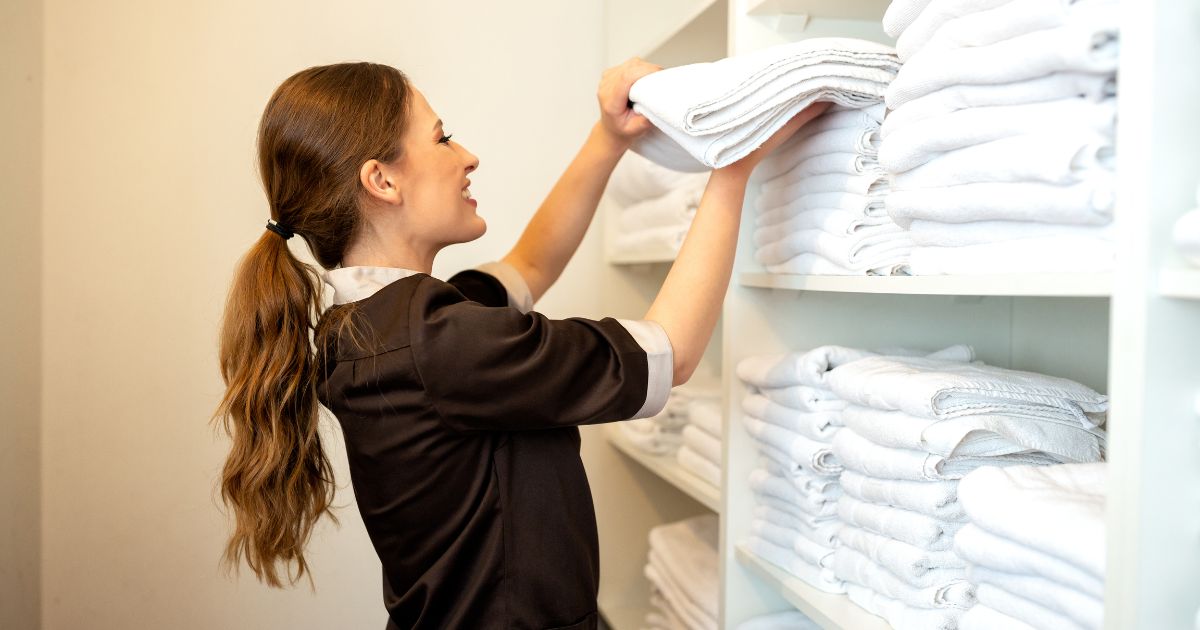
Polyester adds tensile strength, which prevents the sheets from thinning or tearing during the high-speed extraction cycles of industrial washers. It also helps the fabric resist wrinkling. However, the cotton must be of a high enough grade to absorb the whitening agents. Properties like St. Regis Hotels & Resorts often use long-staple cotton, which has fewer loose ends, resulting in a smoother surface that reflects more light and looks whiter.
Advanced Maintenance Protocols and Stain Management
Even with the best machines and chemicals, sheets are subject to intense wear and tear. Housekeeping departments at major chains like Hyatt Hotels Corporation and InterContinental Hotels Group follow strict protocols to manage the lifecycle of their linens.
The Par System and Rest Periods for Linens
One of the best-kept secrets of hotel sheet maintenance is the “Par System.” This refers to the number of sets of linens a hotel has in circulation for every bed. A standard luxury hotel operates on a “3-Par” or “4-Par” system:
- One set is on the bed.
- One set is in the laundry being cleaned.
- One set is “resting” in the linen closet.
The rest period is crucial. Giving the fibers time to recover after the heat and mechanical stress of the laundry process significantly extends the life of the sheet and helps it retain its bright white appearance. If a sheet is washed, dried, and put immediately back on a bed, the fibers become brittle and lose their ability to reflect light, eventually turning a dull grey or yellow.
Specialized Stain Treatment and Pre-Soaking
When a sheet is flagged by a housekeeper for a significant stain—whether it be wine, makeup, or ink—it is separated from the general laundry. Most high-end resorts in Dubai or France have a dedicated station for stain reclamation.
The reclamation process often involves a prolonged soak in a highly concentrated solution of oxygen bleach and enzymes. This “salvage cycle” can rescue up to 80% of linens that would otherwise be discarded. If a stain cannot be removed, the sheet is “retired” from guest use. These retired linens are often repurposed as cleaning rags or donated to local charities, ensuring that only the most pristine, white sheets ever touch a guest’s bed.
The Finishing Touch: Pressing and Presentation
The final step in the journey of a hotel sheet is what gives it that signature “crisp” look that is nearly impossible to replicate at home.
The Role of Industrial Mangles
In the laundry facilities of Sheraton Hotels and Resorts or Westin Hotels & Resorts, sheets are not dried in a traditional tumble dryer until they are bone-dry. Instead, they are taken out while they are still slightly damp and fed into a machine called a mangle.
A mangle consists of large, heated rollers that press the sheet under immense pressure. This process does three things: it dries the remaining moisture, it flattens the fibers to create a mirror-like smoothness, and it applies a final “polish” to the fabric. This flat, smooth surface is what reflects the most light, contributing to that blindingly white appearance. The heat also acts as a final sterilization step, ensuring the sheets are perfectly hygienic before they are folded.
Triple Sheeting and Bed Presentation Standards
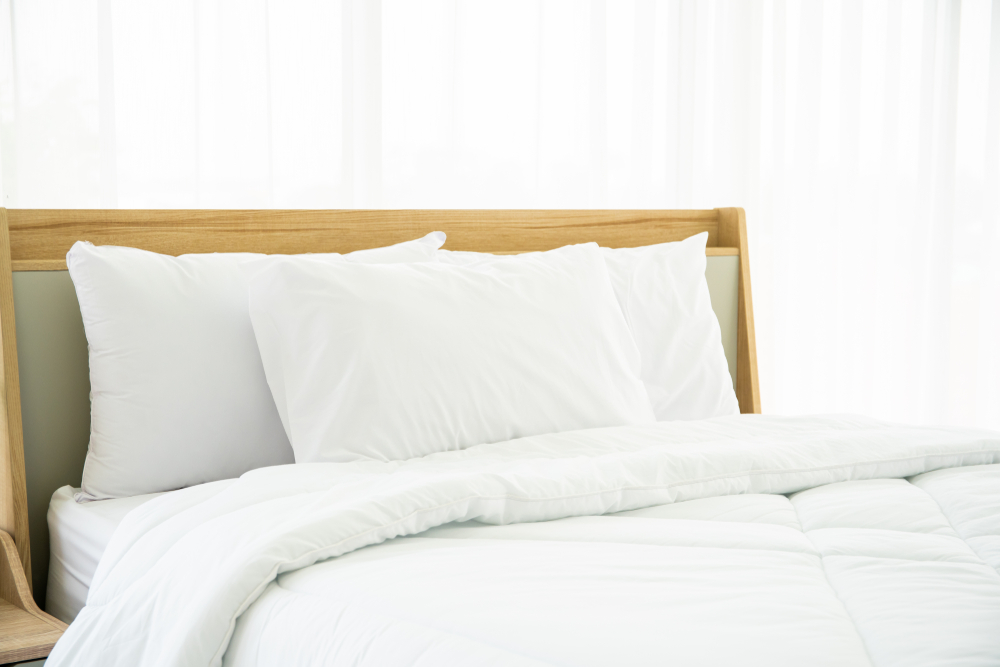
The way the bed is made also enhances the perception of whiteness. Many hotels utilize a technique called “triple sheeting.” This involves layering a thin decorative blanket or duvet between two starched white sheets. Not only does this eliminate the need for a traditional duvet cover (which is difficult to wash), but the layering creates a thick, opaque look.
When you have multiple layers of bright white fabric, the “depth” of the white increases. This is why hotel beds often look much more substantial and inviting than home beds. The layers prevent the mattress or any internal padding from showing through, maintaining the illusion of a solid, pure-white cloud.
By combining the highest quality materials with industrial-grade chemistry and a meticulous rotation system, hotels are able to maintain an impossible standard of brightness. Whether in Italy or the United States, the commitment to the “perfect white” remains one of the most important pillars of the global hotel industry, ensuring that every guest feels the luxury and cleanliness of a fresh start.
LifeOutOfTheBox is a participant in the Amazon Services LLC Associates Program, an affiliate advertising program designed to provide a means for sites to earn advertising fees by advertising and linking to Amazon.com. Amazon, the Amazon logo, AmazonSupply, and the AmazonSupply logo are trademarks of Amazon.com, Inc. or its affiliates. As an Amazon Associate we earn affiliate commissions from qualifying purchases.