
Navigating the application process for government assistance programs can often feel like a labyrinth, but understanding the steps involved for Medicaid in Alabama can demystify the journey. This essential program provides vital health insurance coverage to eligible low-income individuals, families, children, pregnant women, elderly adults, and people with disabilities. Alabama, like other states, has its own specific guidelines and procedures for application, ensuring that resources are distributed efficiently and reach those who need them most. This guide aims to provide a comprehensive overview of how to apply for Medicaid in Alabama, covering eligibility, application methods, required documentation, and what to expect after submission.
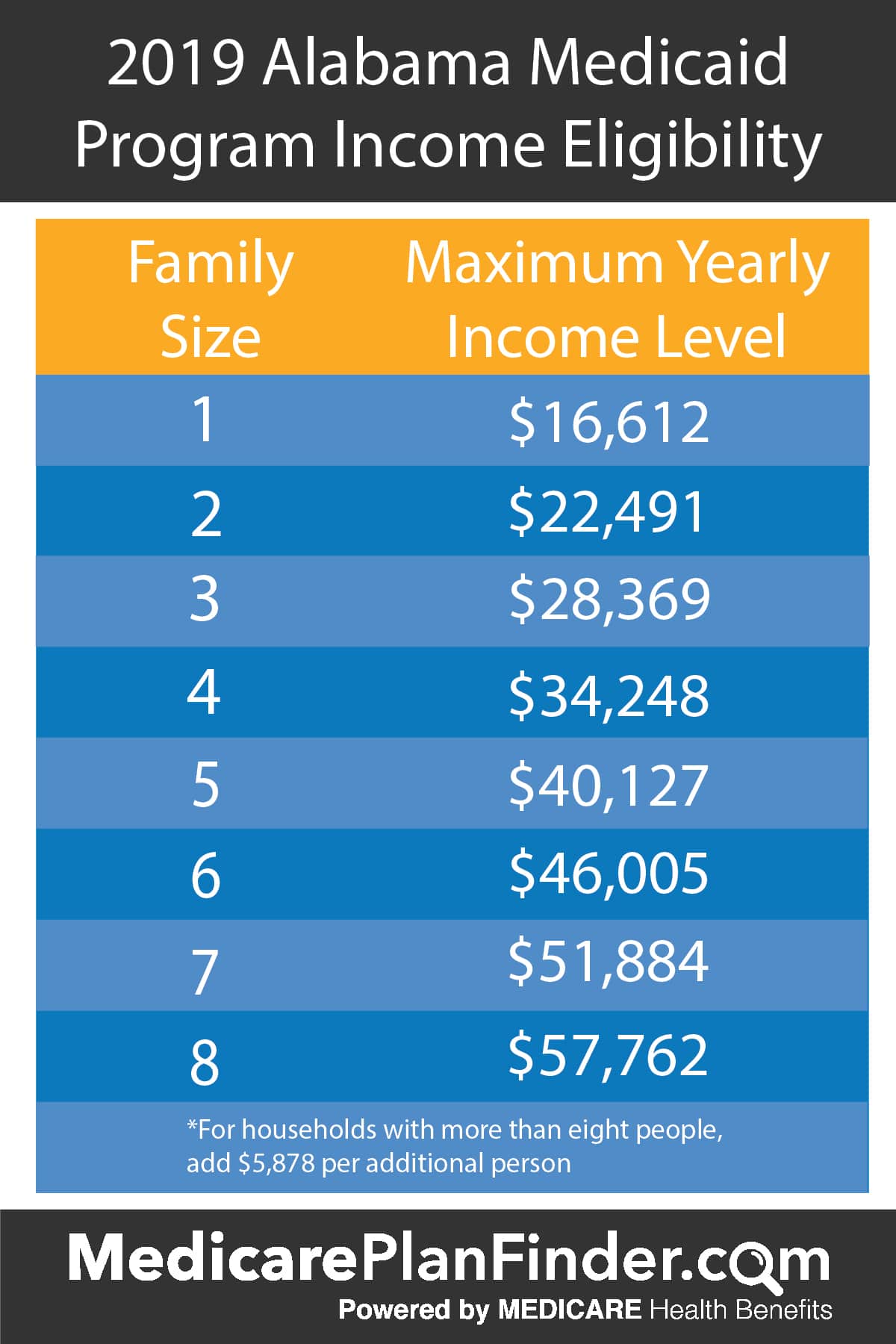
Understanding Alabama Medicaid Eligibility
Before embarking on the application process, it’s crucial to understand who qualifies for Alabama Medicaid. Eligibility is primarily determined by income, household size, age, disability status, and specific health needs. The program generally covers several distinct groups:
Children and Pregnant Women
Alabama places a strong emphasis on ensuring that children and pregnant women have access to necessary healthcare. Families with children, even those with incomes slightly above traditional welfare limits, may qualify for Medicaid or the Children’s Health Insurance Program (CHIP). Pregnant women are also prioritized, with specific income guidelines that allow them to receive prenatal care and delivery services through the program. The specific income thresholds are subject to change annually and are often expressed as a percentage of the federal poverty level.
Adults
Eligibility for adults in Alabama is often more stringent than for children or pregnant women, particularly for those without disabilities or children. Historically, Alabama has not expanded its Medicaid program under the Affordable Care Act to cover all low-income adults. Therefore, eligibility for non-disabled adults without dependent children is generally limited to specific circumstances or those meeting very low-income thresholds.
Elderly and Individuals with Disabilities
Seniors and individuals with disabilities are a key demographic served by Medicaid. This includes coverage for long-term care services, which are often not covered by other types of health insurance. To qualify under this category, individuals typically need to meet income and asset limits, as well as demonstrate a medical need for the services being sought, such as nursing home care or home and community-based services.
General Eligibility Guidelines
While specific figures fluctuate, Alabama Medicaid typically uses a Modified Adjusted Gross Income (MAGI) methodology for most categories of eligibility, simplifying the calculation for families and individuals. However, for elderly and disabled individuals applying for long-term care or other institutional services, different, non-MAGI rules apply, which consider both income and assets. It is advisable to consult the official Alabama Department of Human Resources (DHR) website or contact them directly for the most up-to-date income limits.
How to Apply for Medicaid in Alabama
Alabama offers several convenient ways for individuals to apply for Medicaid, catering to different preferences and accessibility needs. The primary application portal is managed by the Alabama Department of Human Resources (DHR).
Online Application
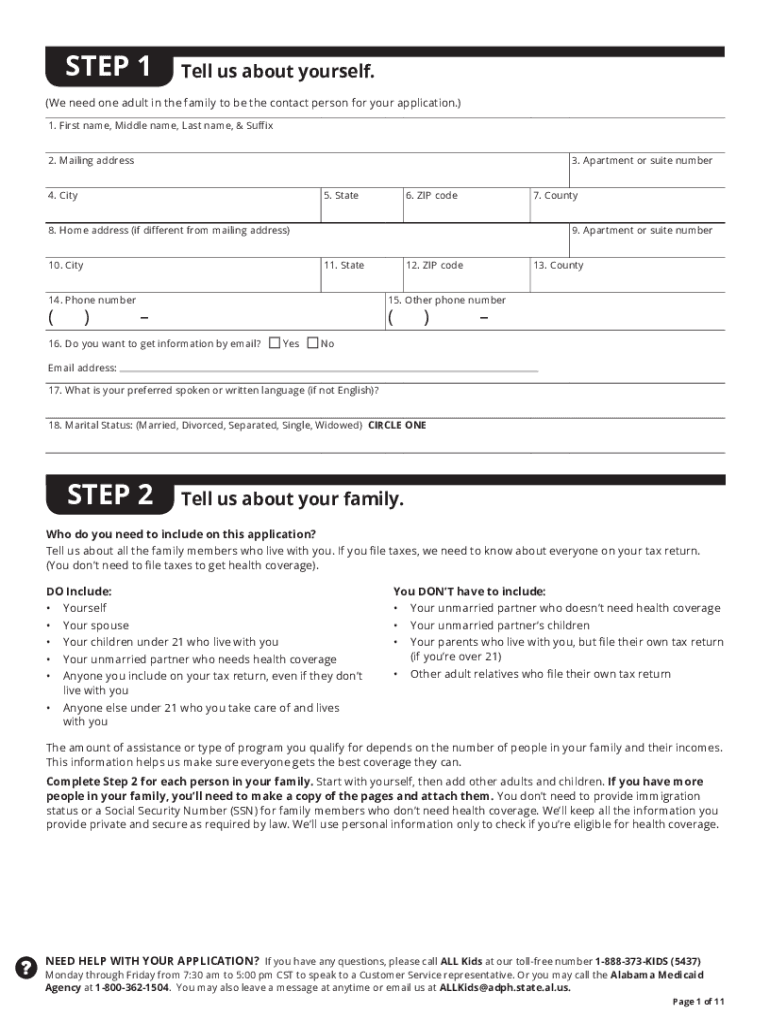
The most streamlined method for applying is through the official Alabama DHR website. This portal allows applicants to create an account, fill out the application form electronically, and upload supporting documents. The online system guides users through the process, asking relevant questions to determine eligibility. This method is often the fastest, as it allows for immediate submission and processing. The website provides clear instructions and prompts to help applicants accurately complete the necessary information.
In-Person Application
For individuals who prefer face-to-face assistance or lack reliable internet access, applying in person is a viable option. Applicants can visit their local DHR office. These offices are staffed with trained caseworkers who can assist with the application process, answer questions, and help gather required documentation. It’s advisable to call ahead to confirm the operating hours of your local office and to inquire about any specific requirements for in-person appointments. The DHR website provides a directory of local offices across the state.
Paper Application
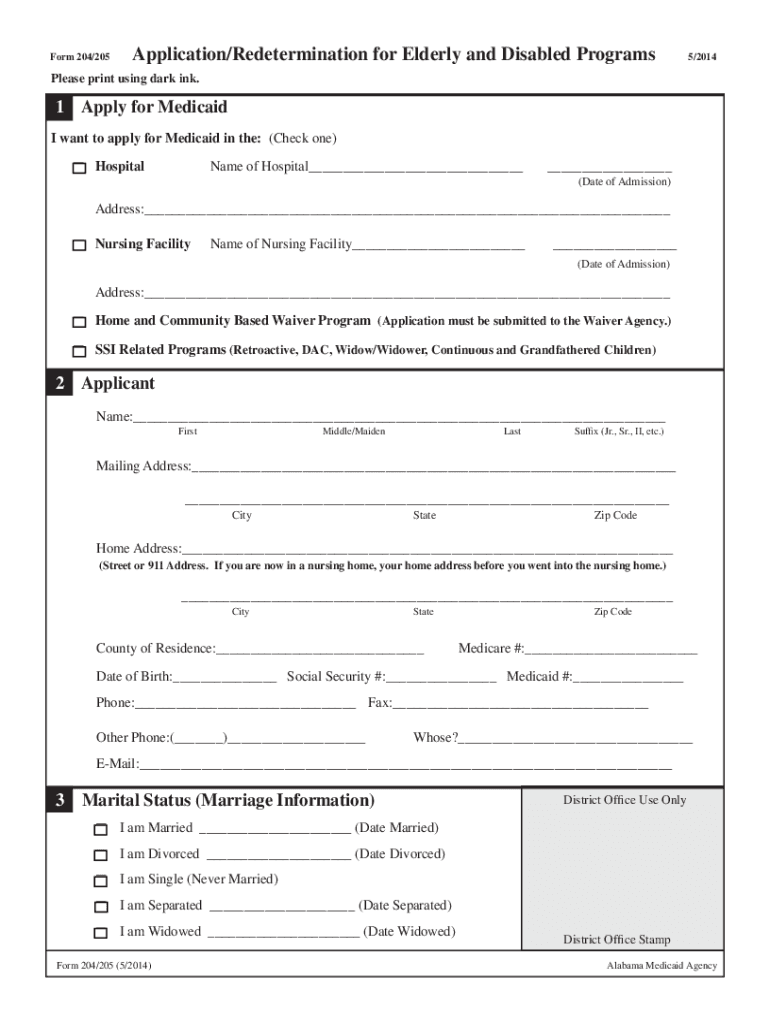
Paper applications can also be downloaded from the Alabama DHR website or obtained from local DHR offices. These forms can be completed by hand and mailed or hand-delivered to the applicant’s local DHR office. While this method is an option, it is generally slower than the online application due to the time required for manual data entry and processing.
Phone Application
In some instances, particularly for urgent situations or for individuals facing significant barriers to other methods, it may be possible to initiate an application or gather information over the phone by calling the Alabama DHR helpline. However, for a complete application, a written or online submission is typically required.
Required Documentation for Medicaid in Alabama
Accurate and complete documentation is critical to a successful Medicaid application in Alabama. Applicants will need to provide proof of identity, residency, income, and other relevant information. While the exact documents may vary slightly based on individual circumstances, the following are commonly requested:
Proof of Identity and Citizenship
- Social Security Cards: For all household members applying for Medicaid.
- Proof of Identity: Such as a driver’s license, state-issued ID card, or passport.
- Proof of Citizenship or Lawful Presence: For U.S. citizens, this is typically confirmed via Social Security number. For non-citizens, documentation of lawful immigration status is required.
Proof of Residency
- Utility Bills: Recent bills (e.g., electricity, water, gas) showing the applicant’s name and address in Alabama.
- Lease Agreement or Mortgage Statement: Demonstrating current residency.
- Mail: Official mail received at the Alabama address.
Proof of Income
This is one of the most crucial aspects of the application, as eligibility is heavily income-dependent.
- Pay Stubs: Recent pay stubs from all employers for all household members.
- Employer Statements: A letter from an employer detailing wages, hours worked, and deductions.
- Unemployment Benefits Statements: Proof of any unemployment compensation received.
- Social Security Benefits Statements: Award letters from the Social Security Administration.
- Pension or Retirement Income Statements: Documentation of any pension or retirement benefits.
- Alimony or Child Support Orders: Proof of any such payments received.
- Bank Statements: To verify income deposits and assets.
- Tax Returns: Recent federal income tax returns.
Proof of Household Size
- Birth Certificates: For children in the household.
- Court Orders: Such as custody or adoption decrees.
Proof of Disability (If Applicable)
- Medical Records: Documentation from physicians or specialists detailing the disability.
- Social Security Disability Insurance (SSDI) Award Letter: If applicable.
- Letters from healthcare providers: Confirming the ongoing nature and impact of the disability.
Proof of Assets (For Aged, Blind, or Disabled Categories)
As mentioned earlier, the asset limits for long-term care or institutional services are different from MAGI-based eligibility. Applicants may need to provide:
- Bank Statements: For checking, savings, and other investment accounts.
- Property Deeds: For any real estate owned.
- Vehicle Titles: Documentation for any vehicles owned.
- Stocks and Bonds: Statements detailing ownership and value.
It is highly recommended to gather as much of this documentation as possible before starting the application to expedite the process. If certain documents are difficult to obtain, the DHR caseworker can provide guidance.
What to Expect After Applying
Once an application for Alabama Medicaid is submitted, the process moves into a review and determination phase.
Application Review
The Alabama DHR will carefully review the submitted application and all supporting documentation. This typically involves verifying the information provided against external databases and, in some cases, contacting the applicant for clarification or additional information. Caseworkers assess whether the applicant meets the eligibility criteria based on the category for which they are applying.
Determination of Eligibility
After the review, a decision will be made regarding eligibility. Applicants will receive an official notification letter detailing the outcome of their application.
- Approval: If deemed eligible, the letter will confirm coverage and often provide information on selecting a managed care plan if applicable. It will also detail the start date of the coverage.
- Denial: If denied, the letter will explain the reasons for denial and outline the applicant’s right to appeal the decision. This often includes information on how to request a fair hearing.
Waiting Period
The timeframe for processing an application can vary. Generally, Medicaid applications are processed within 45 days for most applicants. However, for applications involving disability, this timeframe can extend to 90 days. It is important to be patient during this period. Applicants can often check the status of their application online through their DHR account if they applied electronically.
Ongoing Responsibilities
Once approved for Medicaid, recipients have ongoing responsibilities to maintain their coverage. This includes:
- Reporting Changes: Any changes in income, household size, residency, or other relevant circumstances must be reported to the DHR promptly. Failure to do so can result in loss of benefits.
- Renewals: Medicaid coverage requires periodic renewal. Applicants will receive notifications when it’s time to re-certify their eligibility. It is essential to complete the renewal process on time to avoid a gap in coverage.
- Choosing a Managed Care Plan: In Alabama, most Medicaid beneficiaries are enrolled in managed care plans, such as Blue Cross Blue Shield of Alabama or UnitedHealthcare. Recipients may have the opportunity to choose a plan that best suits their healthcare needs and provider preferences.
Applying for Medicaid in Alabama is a critical step for many residents seeking access to essential healthcare services. By understanding the eligibility requirements, the available application methods, the necessary documentation, and the post-application process, individuals can navigate this system more effectively and secure the health coverage they need. The Alabama Department of Human Resources (DHR) stands as the primary resource for assistance throughout this journey.
LifeOutOfTheBox is a participant in the Amazon Services LLC Associates Program, an affiliate advertising program designed to provide a means for sites to earn advertising fees by advertising and linking to Amazon.com. Amazon, the Amazon logo, AmazonSupply, and the AmazonSupply logo are trademarks of Amazon.com, Inc. or its affiliates. As an Amazon Associate we earn affiliate commissions from qualifying purchases.