
Navigating the dissolution of a business entity, especially a corporation, involves a series of well-defined legal and administrative steps. In California, dissolving a corporation is a process that requires careful attention to detail to ensure compliance with state regulations and to protect the interests of the corporation’s stakeholders. This guide aims to provide a comprehensive overview of the procedures involved in formally closing down a California corporation, covering everything from initial resolutions to final filings.
Understanding the Dissolution Process
Dissolving a corporation is not a single action but rather a phased approach. It signifies the formal termination of a corporation’s legal existence. This process is distinct from simply ceasing business operations. Even if a business is no longer active, its corporate status remains until it is officially dissolved with the California Secretary of State. Failure to properly dissolve can lead to ongoing filing requirements, penalties, and personal liability for directors and officers. The process generally involves a series of resolutions, asset liquidation, debt settlement, and final tax and legal filings.
Voluntary vs. Involuntary Dissolution
California law outlines two primary avenues for corporate dissolution: voluntary and involuntary.
Voluntary Dissolution
This is the most common method, initiated by the corporation itself and its shareholders. It is chosen when the business has achieved its objectives, is no longer profitable, or when the owners decide to move on to other ventures. The process is driven by the corporation’s own governance and typically involves the following stages:
- Board Resolution: The board of directors first adopts a resolution recommending the dissolution of the corporation.
- Shareholder Approval: The proposed dissolution is then submitted to the shareholders for approval. The required majority for approval is typically specified in the corporation’s bylaws or the California Corporations Code.
- Filing a Certificate of Dissolution: Once approved, the corporation files a Certificate of Dissolution with the California Secretary of State. This signals the formal commencement of the dissolution proceedings.
Involuntary Dissolution
This type of dissolution is typically initiated by a court order, often at the request of a shareholder, the Attorney General, or other interested parties. Reasons for involuntary dissolution can include:
- Fraudulent incorporation or procurement of the corporate charter.
- Abuse, misuse, or abandonment of corporate powers.
- Misappropriation, theft, or otherwise illegal, fraudulent, or oppressive conduct by directors or those in control of the corporation.
- Deadlock in the management of the corporation, where shareholders are equally divided and cannot agree on a course of action.
While involuntary dissolution is a more complex and adversarial process, understanding its existence highlights the importance of adhering to corporate governance principles to avoid such a scenario.
Key Steps for Dissolving a California Corporation
The voluntary dissolution of a California corporation follows a structured path designed to wind down operations, settle affairs, and distribute remaining assets. Each step is crucial for a clean and legally sound termination.
Step 1: Board of Directors’ Resolution
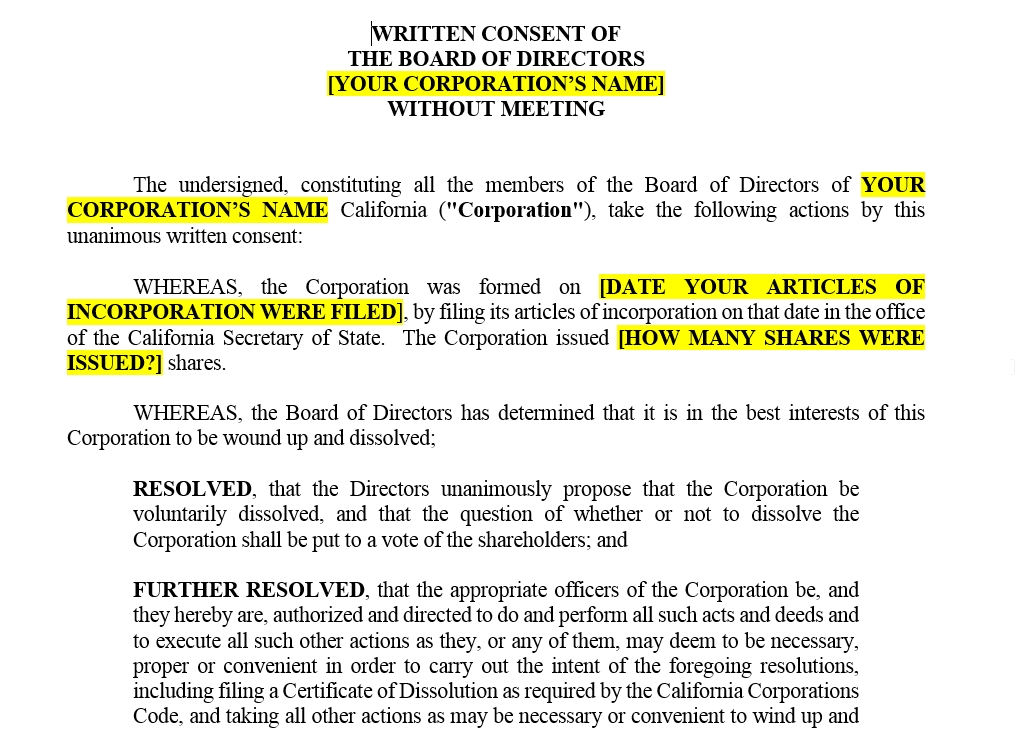
The initial formal action in a voluntary dissolution is the adoption of a resolution by the board of directors. This resolution should clearly state the board’s intent to dissolve the corporation and recommend that the shareholders approve this action. The resolution typically outlines the reasons for dissolution and appoints a committee or individual responsible for overseeing the dissolution process. This internal document serves as the foundation for all subsequent steps.
Step 2: Shareholder Approval
Following the board’s resolution, the proposed dissolution must be presented to the shareholders for their vote. The required percentage of shareholder approval varies based on the corporation’s articles of incorporation and the California Corporations Code. Generally, a majority vote of the outstanding shares entitled to vote is necessary. Special shareholder meetings may be convened to vote on the dissolution. Minutes of this meeting, documenting the vote and approval, are essential records.
Step 3: Filing the Certificate of Dissolution
Once shareholder approval is secured, the corporation must file a Certificate of Dissolution with the California Secretary of State. This filing officially marks the beginning of the dissolution process. The certificate typically includes:
- The corporation’s name.
- The date the shareholders approved the dissolution.
- A statement that the required vote of shareholders was obtained.
- The name and address of the person or entity responsible for winding up the affairs of the corporation.
There are two types of dissolution certificates that can be filed:
- Certificate of Dissolution: Filed when the corporation has not yet begun to wind up its affairs.
- Certificate of Election to Dissolve: Filed when the corporation has already commenced winding up its affairs.
The distinction is important for the timing of subsequent actions and filings.
Step 4: Winding Up Corporate Affairs
This is arguably the most critical and time-consuming phase of dissolution. “Winding up” involves the orderly liquidation of the corporation’s assets, the payment of its debts and liabilities, and the distribution of any remaining assets to its shareholders. This process is governed by specific provisions in the California Corporations Code and must be conducted with due diligence.
Liquidating Assets
The corporation’s assets are converted into cash or other forms of value. This may involve selling inventory, real estate, equipment, and other business property. The goal is to maximize the value realized from these assets to satisfy creditors and distribute to shareholders.

Paying Debts and Liabilities
All outstanding debts, obligations, and liabilities of the corporation must be identified and settled. This includes:
- Creditor Claims: The corporation must notify known creditors and may publish a notice to unknown creditors, establishing a deadline for them to submit their claims.
- Taxes: All federal, state, and local tax obligations must be satisfied. This includes income taxes, sales taxes, payroll taxes, and any other applicable taxes up to the date of dissolution.
- Other Obligations: This can include outstanding loans, lease obligations, employee wages, and any pending legal judgments.
It is crucial to prioritize payments according to legal requirements. Secured creditors are typically paid first, followed by unsecured creditors, and then shareholders.
Distributing Remaining Assets
After all debts, liabilities, and taxes have been paid, any remaining assets are distributed to the shareholders. The distribution is made according to the shareholders’ respective ownership interests, as outlined in the corporation’s articles of incorporation and bylaws. This distribution can be in the form of cash or other assets.
Step 5: Filing Final Tax Returns
Once all assets have been liquidated and all debts paid, the corporation must file its final tax returns.
Franchise Tax Board (FTB)
The corporation must file a final California Franchise Tax Board (FTB) return. This final return should indicate that it is a final return and should report all income and deductions up to the date of dissolution. A Tax Compliance Statement (Form FTB 3555) must also be filed, certifying that all taxes have been paid or provided for. The FTB will issue a tax clearance certificate once all tax obligations are met.
Internal Revenue Service (IRS)
Similarly, a final federal income tax return must be filed with the Internal Revenue Service (IRS). This return will report income and deductions up to the date of dissolution. The corporation’s Employer Identification Number (EIN) should be included on this return.
Step 6: Filing the Certificate of Termination of Corporate Existence
The final step in the voluntary dissolution process is to file a Certificate of Termination of Corporate Existence with the California Secretary of State. This document confirms that the corporation has completed the winding-up process, paid all its debts and liabilities, and distributed its remaining assets. Once this certificate is accepted and filed by the Secretary of State, the corporation’s legal existence officially ceases.
Important Considerations and Potential Pitfalls
While the steps for dissolving a California corporation are clearly defined, several factors can complicate the process or lead to unintended consequences if not managed properly.
The Role of Directors and Officers
Directors and officers have a fiduciary duty to the corporation and its shareholders throughout the dissolution process. They are responsible for ensuring that the winding-up is conducted in a manner that is fair and equitable to all parties. Failure to act in good faith or to properly fulfill these duties can result in personal liability for any damages incurred by the corporation or its shareholders.
Tax Implications
The tax implications of dissolution can be significant. The sale of assets during liquidation may trigger capital gains taxes. Distributions to shareholders may also have tax consequences, depending on whether they represent a return of capital or dividends. It is highly recommended to consult with a qualified tax professional to navigate these complexities and ensure compliance.
Creditor Notification and Claims
The process for handling creditor claims is crucial. If creditors are not properly notified or if their claims are not adequately addressed, they may pursue legal action against the corporation or its directors and officers even after dissolution. Establishing a clear timeline for claim submission and having a robust process for evaluating and satisfying claims is essential.
Record Keeping
Maintaining thorough and accurate records throughout the dissolution process is paramount. This includes board minutes, shareholder resolutions, financial statements, asset liquidation records, debt settlement documentation, and tax filings. These records can be vital in defending against any future claims or challenges.
Continuing Liability
Even after filing the Certificate of Dissolution, a dissolved corporation can continue to exist for the purpose of winding up its affairs. This means that for a period, it can still be sued. However, California law provides a statute of limitations for claims against dissolved corporations. It is important to understand these limitations and ensure that all reasonable steps have been taken to settle claims.

Seeking Professional Assistance
Given the legal and financial intricacies involved, it is strongly advisable to seek professional guidance. An experienced business attorney can ensure that all legal requirements are met, draft necessary documents, and advise on potential liabilities. A qualified accountant or tax advisor can assist with tax filings, asset valuation, and the financial aspects of the winding-up process.
By understanding and diligently following these steps, business owners can ensure a smooth and legally compliant dissolution of their California corporation, allowing them to move forward with confidence.
LifeOutOfTheBox is a participant in the Amazon Services LLC Associates Program, an affiliate advertising program designed to provide a means for sites to earn advertising fees by advertising and linking to Amazon.com. Amazon, the Amazon logo, AmazonSupply, and the AmazonSupply logo are trademarks of Amazon.com, Inc. or its affiliates. As an Amazon Associate we earn affiliate commissions from qualifying purchases.