
Navigating the legalities of marriage can sometimes feel like a complex journey, but understanding the process for obtaining a marriage license in Colorado is straightforward when you know the essential steps. This guide aims to provide a comprehensive overview, ensuring your special day is built on a solid legal foundation, whether you’re planning a destination wedding in the picturesque Rocky Mountains or a more intimate ceremony closer to home. This process is a crucial first step for any couple embarking on their marital adventure within the Centennial State.
Understanding Colorado Marriage License Requirements
Before you can say “I do,” you’ll need to secure a marriage license from a county clerk’s office in Colorado. The state has a relatively simple set of requirements designed to ensure all marriages are legal and recognized. Unlike some other states, Colorado does not have a waiting period, meaning you can apply for and receive your license on the same day, and you can get married immediately after obtaining it. This flexibility is particularly beneficial for couples planning elopements or spontaneous ceremonies.
Age and Identification
To apply for a marriage license in Colorado, both individuals must be at least 18 years old. If either party is between 16 and 18 years old, they must have written consent from both of their parents or legal guardians. Individuals under the age of 16 are not permitted to marry in Colorado.
Both applicants will need to present valid, government-issued photo identification. Acceptable forms of ID include:
- A driver’s license
- A state-issued identification card
- A passport
- A military identification card
In some cases, a certified copy of a birth certificate may be requested, especially if the photo ID does not clearly indicate the applicant’s date of birth. It’s always a good idea to confirm the specific requirements with the county clerk’s office where you intend to apply, as practices can vary slightly.
Previous Marriages
If either applicant has been previously married, they will need to provide proof that the previous marriage has been legally terminated. This typically means presenting a certified copy of a divorce decree or a death certificate of the former spouse. The court date or the date the divorce was finalized is usually sufficient for the county clerk to verify the dissolution of a previous union. Some counties may require specific dates of dissolution, so having this information readily available will expedite the process.
Residency Requirements
Colorado does not have any residency requirements to obtain a marriage license. This means that both U.S. citizens and foreign nationals can apply for and obtain a marriage license in Colorado, regardless of where they reside. This makes Colorado a popular choice for destination weddings and elopements for couples from all over the world.
Blood Tests and Medical Exams
Fortunately for couples planning their weddings, Colorado does not require blood tests or medical examinations as part of the marriage license application process. This streamlines the procedure and removes another potential hurdle for engaged individuals.
The Marriage License Application Process
Applying for a marriage license is a relatively straightforward procedure, but it’s important to be prepared. The process typically involves visiting a county clerk’s office, completing an application, and paying the required fee.
Where to Apply
You can obtain a marriage license from any county clerk’s office in Colorado. It is not necessary to apply in the county where you plan to get married, nor do you need to be a resident of that county. Some of the more popular counties for obtaining licenses include:
- Denver County: For those marrying in or near the state capital, the Denver County Clerk and Recorder’s office handles marriage license applications.
- El Paso County: For couples planning a wedding in the Colorado Springs area, the El Paso County Clerk and Recorder’s office is the place to go.
- Boulder County: For those seeking a mountain wedding near Boulder, the Boulder County Clerk and Recorder’s office will assist you.
- Larimer County: Couples marrying in or around Fort Collins can visit the Larimer County Clerk and Recorder.
It is advisable to check the specific operating hours and any appointment requirements for the county clerk’s office you choose. Many counties now offer online appointment scheduling, which can save you time and ensure your visit is efficient.
Completing the Application
Both applicants must appear in person at the county clerk’s office to apply for the marriage license. You will be asked to complete a marriage license application form. This form will request information such as:

- Full legal names of both applicants
- Dates of birth
- Places of birth
- Current addresses
- Names and birthplaces of parents (including mother’s maiden name)
- Social Security numbers (if applicable)
- Information regarding previous marriages, including dates of dissolution
Be prepared to answer these questions accurately. Any discrepancies or inaccuracies could delay the issuance of your license.
Fees and Payment
There is a fee associated with obtaining a marriage license in Colorado. The fee varies slightly by county, but it is generally in the range of $30 to $70. Payment is typically accepted in cash, check, or credit card. It’s best to confirm the exact fee and accepted payment methods with the specific county clerk’s office when you make your appointment or visit.
Issuance of the License
Once the application is complete, all requirements are met, and the fee is paid, the county clerk will issue your marriage license. As mentioned, there is no waiting period in Colorado, so you can get married immediately after receiving the license. The license is valid for 35 days from the date of issuance. This means your marriage ceremony must take place within this 35-day window. If you do not get married within this period, you will need to reapply and pay for a new license.
The Marriage Ceremony and License Validity
The marriage license is the legal document that authorizes you to get married. Once you have it, you can proceed with your ceremony.
Who Can Perform the Ceremony
In Colorado, a marriage ceremony can be performed by:
- A judge or retired judge
- A magistrate or retired magistrate
- A licensed medical doctor
- A minister, priest, or rabbi of any religious denomination
The officiant must be legally authorized to solemnize marriages in the state. It is the responsibility of the couple to secure an officiant for their wedding.
Returning the License
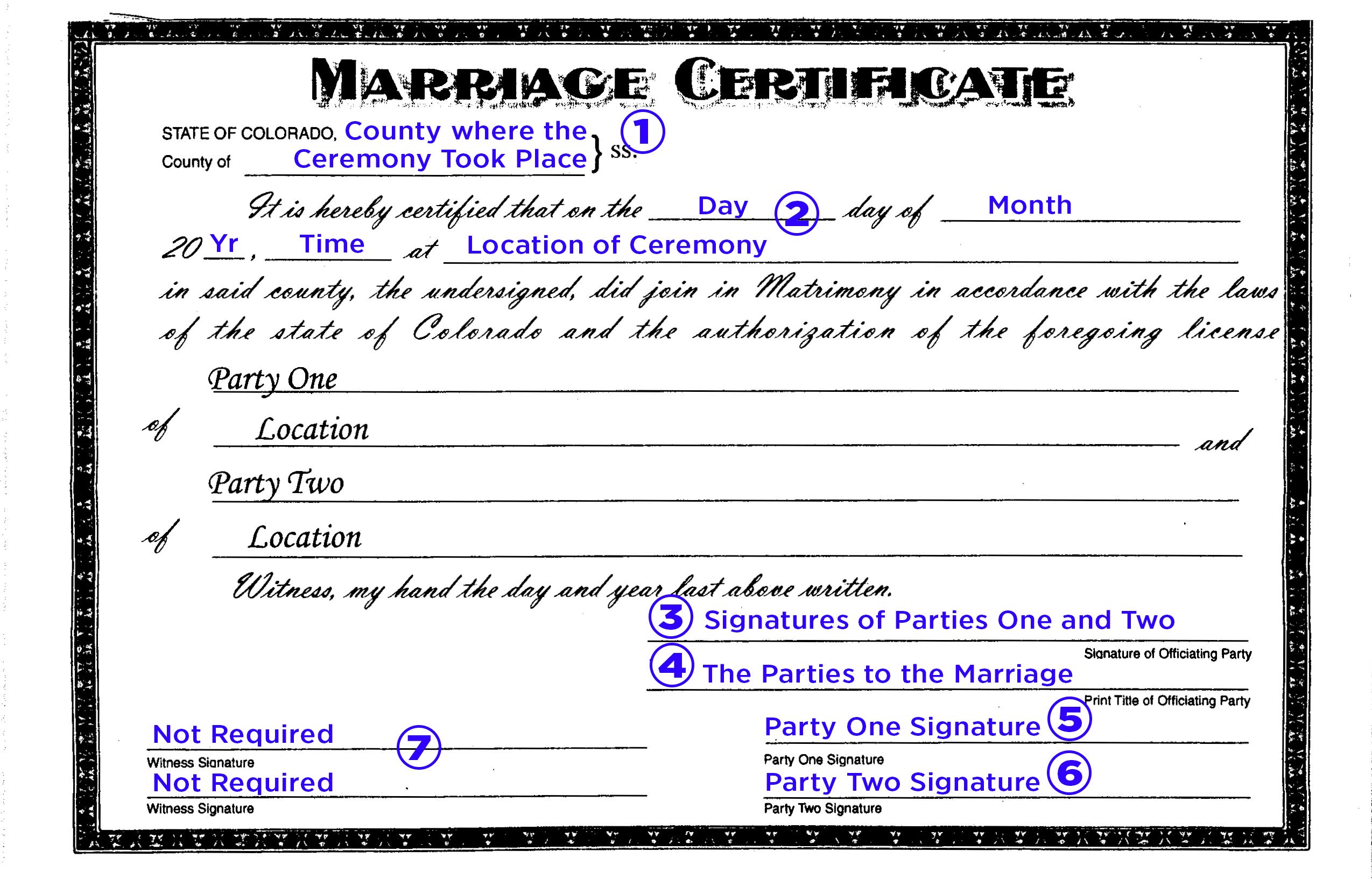
After the ceremony, the officiant is responsible for signing the marriage license and returning it to the county clerk’s office that issued it. This must be done within 35 days of the ceremony. It is crucial that this step is completed promptly, as it is what legally registers your marriage. Once the signed license is recorded by the county clerk, your marriage is officially recognized.
You can typically obtain certified copies of your marriage certificate from the same county clerk’s office after the license has been recorded. These certified copies are official legal documents used for various purposes, such as changing your name on identification, updating insurance policies, and other administrative tasks.
Special Considerations for Destination Weddings
Colorado’s stunning natural beauty, from the majestic Rocky Mountains to charming mountain towns like Aspen and Telluride, makes it a highly sought-after destination for weddings and elopements. For couples planning a destination wedding, understanding the marriage license process is even more critical.
Planning Ahead
Even with the lack of a waiting period, it is wise for destination wedding couples to plan their license application in advance. If possible, consider arriving in Colorado a few days before your wedding to visit the county clerk’s office. This allows for any unexpected issues or delays to be addressed without jeopardizing your wedding date.
Out-of-State and International Couples
As previously mentioned, Colorado is very welcoming to couples from out of state and internationally. The requirements for identification and proof of dissolution of previous marriages remain the same. International couples may need to ensure their identification documents are translated if they are not in English, although many county offices are accustomed to assisting with various forms of identification. Bringing passports and any relevant visa documentation is recommended.

Hiring a Wedding Planner
For destination weddings, working with a local wedding planner can be immensely beneficial. A planner can help coordinate appointments, ensure all documentation is in order, and guide you through the entire process, making your experience smoother and less stressful. They are often familiar with the specific requirements of different counties and can provide invaluable assistance.
Ultimately, obtaining a marriage license in Colorado is a manageable and essential step in your wedding journey. By understanding the requirements, preparing your documentation, and following the outlined steps, you can ensure your legal union is as seamless and joyful as the celebration itself.
LifeOutOfTheBox is a participant in the Amazon Services LLC Associates Program, an affiliate advertising program designed to provide a means for sites to earn advertising fees by advertising and linking to Amazon.com. Amazon, the Amazon logo, AmazonSupply, and the AmazonSupply logo are trademarks of Amazon.com, Inc. or its affiliates. As an Amazon Associate we earn affiliate commissions from qualifying purchases.