
Embarking on a new business venture in the Golden State, particularly within the bustling travel, tourism, and hospitality sectors, is an exciting prospect. Whether you’re dreaming of opening a charming boutique hotel, launching an exclusive tour operation, curating unique local experiences, or selling artisanal souvenirs to visitors exploring iconic California landmarks, understanding the foundational legal requirements is paramount. One of the most crucial permits you’ll need to secure if you plan to sell tangible goods – or certain taxable services – is a California Seller’s Permit. This isn’t just a bureaucratic hurdle; it’s a vital component of legally operating your business, collecting sales tax, and contributing to the state’s infrastructure and services that enhance the very tourism landscape you operate within. For anyone looking to set up shop in vibrant cities like Los Angeles, historic San Francisco, or sunny San Diego, understanding this permit is your first step towards legitimate and thriving operations.
This comprehensive guide will walk you through everything you need to know about obtaining a seller’s permit in California, tailored with insights for entrepreneurs in the travel, accommodation, and lifestyle industries. From understanding what the permit entails to the step-by-step application process and your ongoing responsibilities, we’ll demystify the journey, helping you focus on creating unforgettable experiences for your guests and customers.
Understanding the California Seller’s Permit: A Prerequisite for Your Golden State Venture
Before diving into the application process, it’s essential to grasp the fundamental nature of a California Seller’s Permit and determine if your specific business activities necessitate one. This permit is more than just a piece of paper; it’s your authorization from the state to collect sales tax from your customers. This tax is then remitted to the state, playing a crucial role in funding public services.
What Exactly Is a Seller’s Permit?
Often referred to as a “resale license,” “sales tax permit,” or “resale permit,” a California Seller’s Permit is issued by the California Department of Tax and Fee Administration (CDTFA). It is a legal document that allows businesses to sell tangible personal property for resale without paying sales tax on their purchases (if they intend to resell those items) and, more importantly, obligates them to collect sales tax from the end consumer.
For instance, if you operate a hotel in Palm Springs and also sell branded merchandise, local artisan crafts, or even bottled water in your lobby shop, you’ll need this permit to legally collect sales tax on those sales. Similarly, if you’re a tour operator in Napa Valley who sells merchandise like wine accessories, branded apparel, or commemorative photos, your permit is essential. The permit ensures a fair and transparent system for all businesses and consumers across the state.
Who Needs a California Seller’s Permit?
The general rule is straightforward: if you are engaged in the business of selling tangible personal property in California, you need a seller’s permit. This applies whether you are a wholesaler, retailer, or even a service provider who occasionally sells tangible goods. The definition of “tangible personal property” is broad, encompassing most physical items you can see, weigh, measure, feel, or touch.
Consider these scenarios in the travel and tourism sphere:
- Accommodation Providers: A boutique hotel in Santa Barbara selling spa products, toiletries, or gift shop items to guests. An Airbnb host in Lake Tahoe selling local souvenirs or packaged snacks.
- Tour Operators & Experience Providers: A company offering guided tours in Yosemite National Park that also sells hiking gear, t-shirts, or photography prints. A surf school in Malibu selling boards, wetsuits, or branded apparel.
- Food & Beverage Businesses: A food truck operating near Santa Monica Pier, a pop-up restaurant in Hollywood, or a local bakery in Carmel-by-the-Sea.
- Event Planners: If your event planning business in Beverly Hills provides tangible items like party favors, decorations, or rental equipment that are considered sales.
- Online Retailers: Even if your primary business is online, but your customers are in California and you have a physical presence (office, warehouse, employees) in the state, you likely need a permit. This is particularly relevant for businesses selling travel-related products, custom luggage, or digital guides that also come with physical components.
- Temporary Sellers: If you plan to sell goods at a temporary event, such as a farmers market, craft fair, or festival near Disneyland, you’ll need a temporary seller’s permit. These are often easier to obtain and are valid for a limited period.
It’s important to note that certain services are not subject to sales tax, but if those services involve the transfer of tangible property, the lines can blur. For example, a travel agency primarily selling flight tickets and hotel bookings might not need one, but if they start selling travel kits with physical items, the permit becomes necessary. When in doubt, it’s always best to consult the CDTFA or a tax professional to ensure compliance.
The Step-by-Step Guide to Applying for Your Permit
The application process for a California Seller’s Permit is surprisingly straightforward, thanks to the CDTFA’s online portal. However, gathering the correct information beforehand will make the process even smoother.
Gathering Your Essentials: What You’ll Need
Before you begin the online application, ensure you have the following information readily available. Being prepared can save you significant time and potential frustration.
-
Business Information:
- Legal Business Name: The official name under which your business is registered.
- Doing Business As (DBA) Name: If you operate under a name different from your legal business name (e.g., “Golden Gate Tours” operating under “Smith Enterprises LLC”).
- Business Address: Your physical business location in California. Even if you primarily operate online, you’ll need a physical address within the state.
- Mailing Address: If different from your business address.
- Description of Business Activities: Be specific about what you will be selling. For a hotel, this might include “accommodation services, gift shop sales, food & beverage.” For a tour operator, “guided tours, souvenir sales, equipment rentals.”
- Estimated Monthly Taxable Sales: An educated guess about the amount of sales you expect to make that will be subject to sales tax. This helps the CDTFA determine your filing frequency (e.g., quarterly, monthly).
- Start Date of Business Operations: The date you began or plan to begin making taxable sales.
-
Owner/Partners/Corporate Officer Information:
- Social Security Number (SSN) or Federal Employer Identification Number (FEIN): If you are a sole proprietor or partnership, your SSN may suffice. Corporations and LLCs will use their FEIN.
- Driver’s License or State ID Number: For each owner, partner, or corporate officer.
- Personal Contact Information: Name, address, phone number, and email.

-
Bank Account Information (Optional but Recommended): Having your banking details handy can facilitate setting up direct payments for sales tax remittances later on.
-
Resale Information (if applicable): If you will be purchasing items for resale without paying sales tax to your suppliers, you’ll indicate this on your application. For example, if your hotel purchases local honey to sell in its gift shop, you’d provide your seller’s permit number to the honey supplier so they don’t charge you sales tax on your purchase.
Navigating the CDTFA Application
Once you have all your information ready, you can proceed to the online application.
- Visit the CDTFA Website: Go to the official website of the California Department of Tax and Fee Administration (CDTFA). Look for the “Register a New Business” or “Apply for a Seller’s Permit” section.
- Create an Account: If you don’t already have one, you’ll need to create an online services account with the CDTFA. This account will be your portal for managing your permit, filing returns, and making payments.
- Select Business Type: The application will ask you to specify your business structure (e.g., sole proprietorship, partnership, corporation, LLC).
- Enter Business Details: Carefully input all the business information you gathered in the previous step, including your legal name, DBA, address, and description of activities. Be thorough and accurate.
- Provide Owner/Officer Information: Enter the required personal details for all responsible parties associated with the business.
- Answer Business-Specific Questions: The application will include questions about your expected sales volume, whether you will be making purchases for resale, and if you have multiple business locations (e.g., a chain of hotels across Orange County).
- Review and Submit: Before final submission, meticulously review all the information for accuracy. Any errors could delay the processing of your permit. Once satisfied, submit your application electronically.
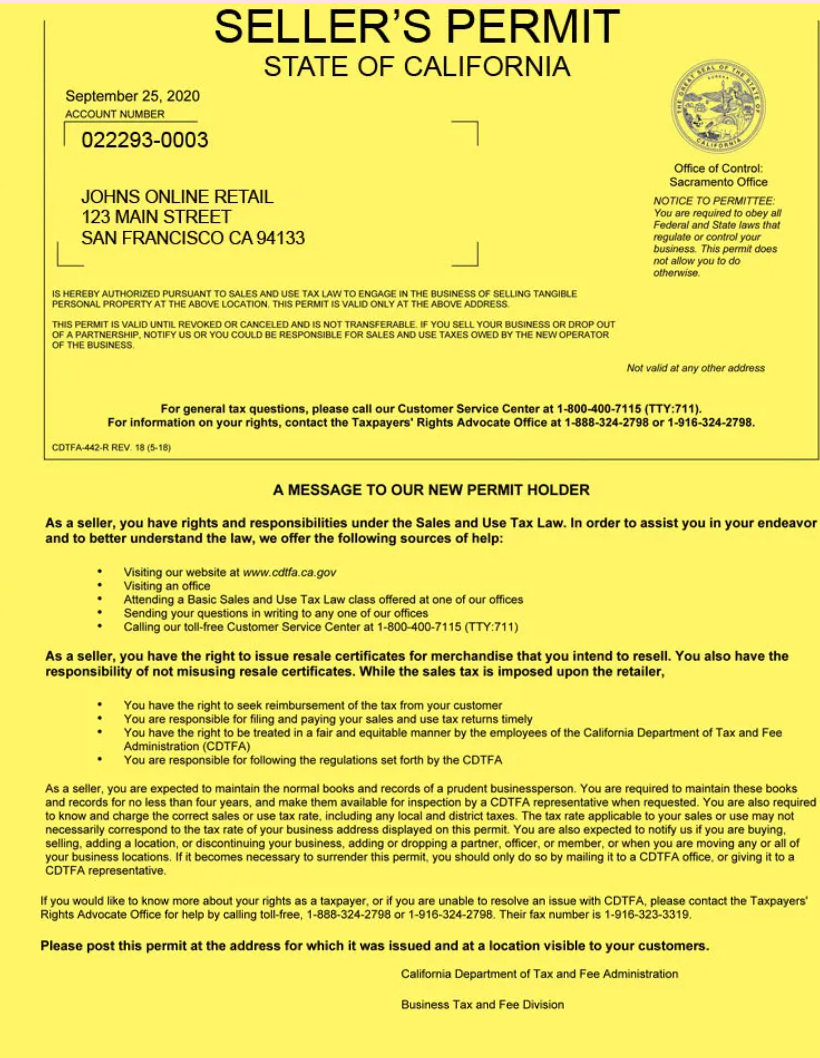
- Receive Your Permit: In most cases, if your application is complete and accurate, you will receive your temporary or permanent seller’s permit number almost immediately after online submission. A physical permit document will typically be mailed to you within a few weeks. Display this permit prominently at your place of business.
The process is generally free, though some specific types of businesses or additional licenses might incur fees. For most standard seller’s permits, there is no application fee.
Post-Application: What to Expect and Your Ongoing Responsibilities
Obtaining your seller’s permit is a significant milestone, but it’s just the beginning. The permit comes with ongoing responsibilities, primarily related to collecting and remitting sales tax. Understanding these obligations is crucial for maintaining compliance and avoiding penalties.
Understanding Sales Tax and Your Reporting Obligations
Once you have your seller’s permit, you are officially authorized and obligated to collect sales tax from your customers on all taxable sales.
- Sales Tax Rate: The statewide sales tax rate in California is 7.25%, but local district taxes can push the combined rate higher, often exceeding 10% in some cities and counties (e.g., in parts of Los Angeles County or San Francisco). You must charge the correct combined rate based on the location where the sale occurs (or, for online sales, often the destination of the buyer). Tools and resources are available on the CDTFA website to help you determine the precise rate for any California address.
- Filing Frequency: Based on your estimated sales volume provided during the application, the CDTFA will assign you a filing frequency. This could be quarterly, monthly, or even annually for very low-volume sellers. It is critical to file your sales tax returns by the due date, even if you had no taxable sales during the period.
- Remitting Taxes: The sales tax you collect is not your money; it belongs to the state. You are essentially holding it in trust until you remit it to the CDTFA. Most businesses remit electronically through the CDTFA’s online portal.
- Record Keeping: Maintain meticulous records of all sales, sales tax collected, and sales tax remitted. This includes invoices, receipts, and any documentation related to exempt sales (e.g., sales for resale, sales to out-of-state buyers). The CDTFA has the right to audit your records, and good record-keeping will be invaluable in such an event.
- Resale Certificates: If you purchase goods for resale, you will issue a resale certificate to your supplier. This exempts you from paying sales tax on that purchase. You must keep records of all resale certificates issued and received.
Common Pitfalls and How to Avoid Them
Even with the best intentions, businesses can sometimes stumble. Being aware of common issues can help you avoid them:
- Failing to Collect Sales Tax: This is a big one. If you make taxable sales but don’t collect the tax, you are still liable for remitting it to the state out of your own pockets. Ensure your point-of-sale system, invoicing, and staff are all trained to correctly apply and collect sales tax.
- Incorrect Sales Tax Rate: Charging too little sales tax means you’ll owe the difference. Charging too much can lead to customer complaints. Always verify the correct combined rate for your specific location.
- Late Filing or Payment: Penalties and interest can accrue quickly for late filings or payments. Mark your due dates on a calendar and consider setting up automatic reminders or payments through the CDTFA portal.
- Poor Record Keeping: As mentioned, good records are your best defense in an audit. Digitize records where possible and keep backups.
- Not Renewing/Updating Information: While seller’s permits usually don’t expire, you must update the CDTFA if there are significant changes to your business, such as a change of address, legal entity, or ownership.
The Strategic Advantage: Boosting Your Travel & Tourism Business in California
Beyond legal compliance, obtaining a seller’s permit positions your business for growth and legitimacy within California’s vibrant economy, especially in the travel and tourism sectors.
Leveraging Your Permit for Growth
A seller’s permit is a foundational step that allows you to engage with suppliers and customers professionally and legally.
- Professional Image: Operating with the necessary permits projects a professional and trustworthy image to your customers and business partners. This is crucial in the hospitality industry, where reputation is key. Imagine a luxury resort on the Mendocino Coast or a bespoke travel agency in San Francisco – compliance underpins their credibility.
- Wholesale Purchasing: Having a seller’s permit allows you to purchase goods for resale from wholesalers and distributors without paying sales tax. This significantly improves your profit margins on items like hotel gift shop merchandise, souvenirs sold at Big Sur viewpoints, or products offered with curated lifestyle experiences. Imagine sourcing artisan products from the Central Valley to sell to tourists.
- Business Expansion: As your business grows, a seller’s permit enables you to diversify your offerings. A thriving travel guide service might expand into selling branded apparel or local delicacies. A popular Orange County resort might introduce a specialized retail outlet. The permit is a scalable asset.
- Access to State Resources: Being a registered business with a seller’s permit can sometimes grant you access to various state-level business resources, workshops, and support programs that can further aid your growth.
- Fair Competition: By collecting and remitting sales tax, you contribute to a level playing field, ensuring that all legitimate businesses contribute their fair share, fostering a healthy economic environment for all. This is especially important in competitive tourist markets like Santa Monica or Catalina Island.
In conclusion, obtaining a California Seller’s Permit is a mandatory yet manageable step for any entrepreneur looking to engage in taxable sales within the state. For those in the travel, hotels, tourism, accommodation, landmarks, and lifestyle sectors, it’s not merely a legal requirement but a cornerstone for building a reputable, compliant, and ultimately successful enterprise. By understanding the process, fulfilling your responsibilities, and leveraging the advantages, you can confidently navigate the regulatory landscape and focus on delivering exceptional experiences in one of the world’s most desired destinations. Your journey to thriving in the Golden State starts here.
LifeOutOfTheBox is a participant in the Amazon Services LLC Associates Program, an affiliate advertising program designed to provide a means for sites to earn advertising fees by advertising and linking to Amazon.com. Amazon, the Amazon logo, AmazonSupply, and the AmazonSupply logo are trademarks of Amazon.com, Inc. or its affiliates. As an Amazon Associate we earn affiliate commissions from qualifying purchases.