
Embarking on new adventures, securing your future, or simply navigating the essentials of modern life often hinges on one foundational document: your birth certificate. For those born in the Golden State, understanding “How Do I Get My Birth Certificate From California?” is not just a bureaucratic query; it’s a gateway to a world of possibilities, from international travel to establishing your identity for long-term accommodation or even new career paths. In an increasingly globalized world where personal identification is paramount, having a certified copy of your California birth certificate readily accessible is an invaluable asset, ensuring smooth transitions and uninterrupted journeys through life’s diverse landscapes.
This comprehensive guide will demystify the process, offering clear steps, essential insights, and practical tips to help you obtain this crucial document efficiently. We’ll explore the various methods available, delve into the necessary documentation, clarify fees, and even touch upon special considerations, all while contextualizing its importance within the broader scope of your lifestyle and travel ambitions.
The Indispensable Role of Your California Birth Certificate in a Life of Exploration
Before diving into the mechanics of obtaining your birth certificate, it’s worth appreciating its profound significance. Far more than just a piece of paper, this document serves as your foundational proof of identity and citizenship within the United States, underpinning countless aspects of your personal and public life.
Fueling Your Travel Aspirations: Passports and Beyond
For the avid traveler, your birth certificate is often the first domino in a thrilling chain of events that leads to exploring new destinations. It is the primary document required when applying for your first U.S. passport, the indispensable key that unlocks international borders. Without a certified birth certificate, your dreams of backpacking through Europe, lounging on beaches in Southeast Asia, or experiencing the vibrant cultures of South America remain just that—dreams.
Beyond passports, a birth certificate can also be crucial for domestic travel. While a driver’s license is typically sufficient for air travel within the United States, the upcoming REAL ID requirements emphasize the importance of having secure, federally recognized identification. Your birth certificate serves as a primary document to obtain a REAL ID compliant driver’s license or state ID card through the Department of Motor Vehicles (DMV). This means that whether you’re planning a road trip along the Pacific Coast Highway or flying from Los Angeles to New York, having your birth certificate as part of your essential documents portfolio ensures a smoother journey, free from identity verification hurdles. It can also be requested by certain tour operators or cruise lines to verify age or citizenship for specific itineraries or discounts, further cementing its role in your travel lifestyle.
Securing Your Accommodation and Identity
When it comes to securing comfortable and safe accommodation, particularly for longer stays or in foreign countries, your birth certificate indirectly plays a significant role. While hotels typically only require a photo ID at check-in, for extended apartment rentals, lease agreements, or even certain hostel bookings abroad, additional proof of identity or citizenship might be requested. For digital nomads or those seeking long-term stays in vibrant locales like San Francisco or San Diego, having a readily verifiable document like your birth certificate can streamline application processes and build trust with landlords or property managers.
Furthermore, it’s foundational for obtaining other vital forms of identification. From acquiring a social security card through the Social Security Administration (SSA) to enrolling in higher education, applying for a job, or even verifying eligibility for certain travel insurance policies, your birth certificate is repeatedly called upon to confirm who you are and where you come from. This robust proof of identity is not just a convenience; it’s a necessity for seamlessly integrating into new communities, both at home and abroad.

Everyday Lifestyle Necessities
Beyond travel and specific identity verification, your California birth certificate is a cornerstone for numerous everyday lifestyle activities. It’s required for marriage licenses, registering for school, claiming inheritances, applying for government benefits, and even enrolling in sports leagues for children. In essence, it’s the fundamental document that proves your existence and identity, granting you access to rights, services, and opportunities throughout your life. For individuals seeking to live a life free from administrative headaches, prioritizing the secure and accessible possession of this document is a smart investment in peace of mind.
Navigating the Application Process: Your Options for Obtaining a Birth Certificate
Obtaining a certified copy of a birth certificate from California involves a structured process, typically handled by the California Department of Public Health – Vital Records (CDPH-VR) or the County Recorder’s office in the county where the birth occurred. There are primarily three ways to apply, each offering different levels of convenience and processing times.
The Online Pathway: Convenience at Your Fingertips
For many, the easiest and most preferred method in our digital age is applying online. The California Department of Public Health – Vital Records partners with authorized third-party vendors to process online requests. These services often provide user-friendly interfaces, secure payment options, and tracking capabilities.
How it Works:
- Identify an Authorized Vendor: Search for “California birth certificate online” to find official partners. Ensure the service is authorized by the CDPH-VR to avoid scams.
- Complete the Application Form: You’ll need to provide information about the registrant (the person whose birth certificate is being requested), including their full name at birth, date of birth, place of birth (city/county), and parents’ full names (including mother’s maiden name).
- Proof of Identity: Most online applications will require you to upload scanned copies of your valid government-issued photo ID.
- Notarized Sworn Statement (if applicable): For “authorized certified copies” (which are generally required for official purposes like passports), you will likely need to complete a sworn statement and have it notarized. This notarized statement is then typically mailed to the vendor or CDPH-VR separately. Some online services offer options to streamline the notarization process.
- Payment: Fees are paid electronically via credit card or other accepted online payment methods.
Pros: Convenience, ability to apply from anywhere, often faster processing than mail for certain vendors.
Cons: Additional service fees from third-party vendors, requirement for a separate mailed notarized statement can add a step.

Applying by Mail: A Traditional Approach
For those who prefer a traditional method or do not have easy access to online services, applying by mail remains a viable option. This method can be utilized whether you’re requesting from the California Department of Public Health – Vital Records in Sacramento or a specific County Recorder’s office.
How it Works:
- Download Application Form: Obtain the “Application for Certified Copy of Birth Record” form from the CDPH-VR website or the relevant County Recorder’s website (e.g., Los Angeles County Registrar-Recorder/County Clerk).
- Complete and Notarize Sworn Statement: Fill out the application completely and accurately. The sworn statement section, which declares your eligibility to receive an authorized certified copy, must be signed in front of a notary public. This is a critical step; applications without proper notarization will be rejected.
- Gather Required Documents: Include a photocopy of your valid government-issued photo ID (driver’s license, state ID, passport). Ensure the ID is current and clearly legible.
- Payment: Include a check or money order payable to the “CDPH Vital Records” or the specific County Recorder, covering the required fees. Do not send cash through the mail.
- Mail Application: Send the completed form, notarized sworn statement, ID copy, and payment to the appropriate address for the CDPH-VR or the County Recorder’s office. It’s recommended to use certified mail with return receipt requested for tracking.
Pros: No third-party service fees (only state fees), direct submission.
Cons: Slower processing times due to mailing delays, requires finding a notary.
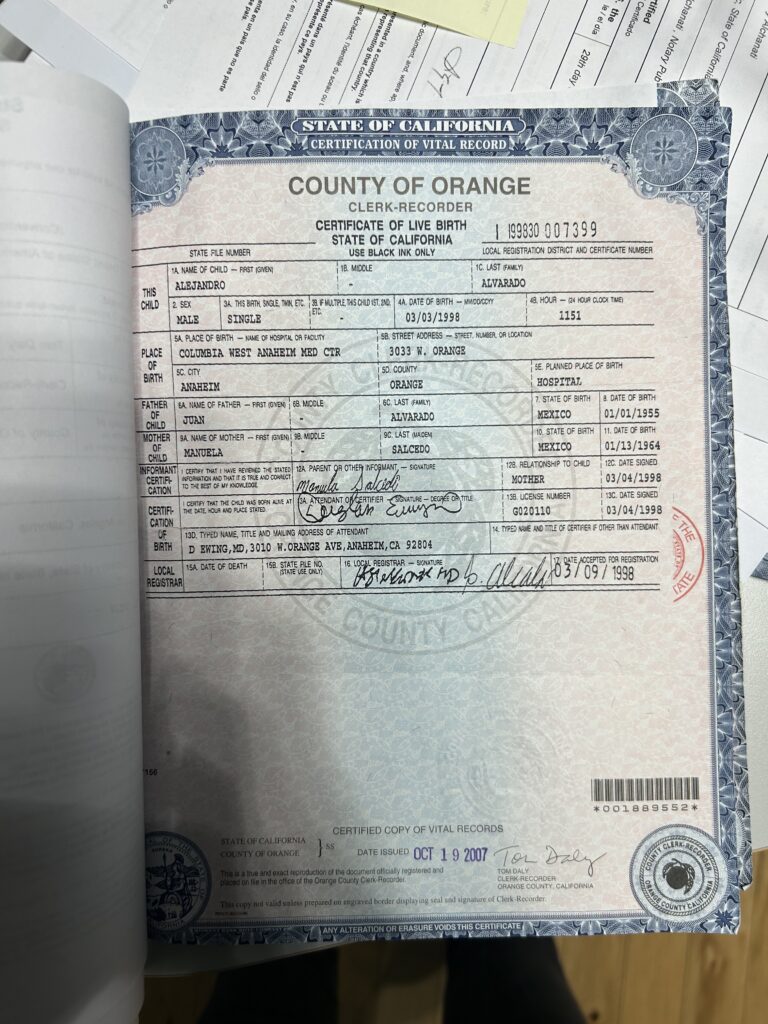
In-Person Application: Direct and Efficient
For individuals who need their birth certificate urgently or prefer face-to-face interaction, applying in person at a County Recorder’s office is often the fastest method. This is particularly useful if you live near one of the major county offices in California, such as in Los Angeles, San Diego, or Orange County. While the CDPH-VR office in Sacramento does not process walk-in requests for birth certificates, many county offices do.
How it Works:
- Locate Your County Recorder’s Office: Determine the county where the birth occurred and find the address and operating hours for their Registrar-Recorder/County Clerk office. Many counties, like San Francisco County or Alameda County, have multiple branch locations.
- Prepare Necessary Information: Have all the registrant’s details ready, including full name at birth, date of birth, place of birth, and parents’ full names.
- Bring Valid Photo ID: You will need to present a current, government-issued photo ID.
- Payment: Be prepared to pay the fee, usually with cash, credit/debit card, or money order. Check the specific office’s accepted payment methods beforehand.
- Complete Application On-Site: You will fill out the application form at the office, and the sworn statement will be completed and signed in front of a staff member, eliminating the need for a separate notary.
- Receive Certificate: In many cases, if the record is found and all requirements are met, you can receive your certified birth certificate on the same day.
Pros: Fastest processing, often same-day issuance, no notary required.
Cons: Requires travel to a specific office, potential wait times, limited to the county where the birth occurred. For travelers exploring the diverse landscapes of California, perhaps visiting Yosemite National Park or Disneyland Park, an in-person application in a city like Los Angeles might offer a quick resolution before continuing their journey.
Essential Requirements and What to Expect
Regardless of the method chosen, certain requirements remain consistent across the board. Understanding these will help you prepare thoroughly and avoid common delays.
Required Documentation and Information
To successfully obtain a birth certificate, you will need:
- Complete Information about the Registrant: This includes the full name at birth, date of birth (month, day, year), city or county of birth, and the full names of both parents (including the mother’s maiden name). The more accurate and complete the information, the easier it is to locate the record.
- Proof of Identity: A valid, government-issued photo identification is mandatory. Acceptable IDs typically include a driver’s license, state-issued identification card, U.S. passport, military ID, or foreign passport with a U.S. visa. The ID must be current.
- Sworn Statement (Affidavit): This is a crucial document where you attest under penalty of perjury that you are an authorized person to receive the certified copy. For mail or online applications, it must be notarized. For in-person applications, it’s signed in front of office staff.
Understanding Fees and Payment Methods
The fee for a certified copy of a birth certificate in California is standardized at the state level. As of the last update, the fee is generally around $29 per copy. However, it’s always wise to check the official CDPH-VR website or the relevant County Recorder’s website for the most current fee schedule, as these can occasionally change.
- Online: Typically paid via credit/debit card, often with an added service fee from the third-party vendor.
- Mail: Usually requires a check or money order payable to the “CDPH Vital Records” or the specific County Recorder. Cash should not be sent by mail.
- In-Person: Most offices accept cash, credit/debit cards, or money orders.
Processing Times and Delivery
Processing times can vary significantly depending on the method of application and the volume of requests.
- Online: Can range from a few business days to several weeks, plus shipping time, depending on the vendor and whether a notarized statement needs to be mailed separately. Expedited shipping options are often available for an additional cost.
- Mail: Typically the longest method, often taking 2-4 weeks or even longer during peak periods, plus mailing time in both directions.
- In-Person: Often the fastest, with same-day issuance possible at most County Recorder offices.
Consider your travel schedule or other deadlines when choosing your application method. If you have an upcoming trip to visit Hollywood Walk of Fame or Universal Studios Hollywood and also need a birth certificate for a passport application, planning ahead is key.
Who Can Obtain a Certified Copy? (Eligibility)
California law restricts who can obtain an “authorized certified copy” of a birth certificate, which is necessary for official purposes like passports or REAL ID. This is a measure to protect privacy and prevent fraud. Authorized individuals include:
- The registrant (the person named on the birth certificate).
- A parent or legal guardian of the registrant.
- A child, grandparent, grandchild, sibling, spouse, or domestic partner of the registrant.
- A member of a law enforcement agency or a representative of a governmental agency, as provided by law, who is conducting official business.
- An attorney representing the registrant or the registrant’s estate, or a court order.
- A party entitled to receive the record by court order.
If you do not meet these criteria, you may only be able to obtain an “informational certified copy,” which states “INFORMATIONAL, NOT A VALID DOCUMENT TO ESTABLISH IDENTITY.” This copy cannot be used for official purposes but can be useful for genealogical research or personal records.
Addressing Special Circumstances and Common Queries
Life often presents unique situations, and obtaining a birth certificate is no exception. Knowing how to navigate these can save time and stress.
Expedited Services for Urgent Travel Plans
If you have urgent travel plans, such as an unexpected trip to Beverly Hills for business or a last-minute family emergency requiring international travel, some county offices offer expedited in-person services for an additional fee. Online vendors may also provide faster processing and shipping options. Always inquire about these services if time is of the essence, as they can significantly shorten the wait. However, remember that even expedited services require accurate information and proper documentation.
Correcting Errors or Amending Records
Mistakes can happen. If there’s an error on your original birth certificate (e.g., misspelled name, incorrect date), you’ll need to follow a different process to amend the record. This typically involves submitting an “Application to Amend a Birth Record” to the CDPH-VR, along with supporting documentation (e.g., marriage certificates, court orders) and a sworn statement. The process can be more time-consuming, so it’s best to address any discrepancies as soon as they are discovered, well before you plan to use the certificate for travel or other critical lifestyle needs.
Dealing with Lost or Damaged Certificates
A lost or damaged birth certificate is a common reason for needing a new copy. The process for obtaining a new copy is the same as applying for the first time. Simply follow the steps outlined above using your preferred application method. There isn’t a separate “replacement” procedure; you are always requesting a new certified copy of the original record. Keeping digital copies of important documents (stored securely, of course) can be a helpful backup, especially for frequent travelers who might face unexpected situations far from home, whether in Palm Springs or across the globe.
Obtaining Records for Adoptees or Historical Needs
For adoptees, obtaining original birth records can be a more complex process due to adoption laws designed to protect privacy. Generally, adoptees born in California can obtain a non-certified copy of their original birth certificate (pre-adoption) once they are 18 years old, but specific procedures apply, often through the CDPH-VR. For genealogical research or historical purposes, “informational certified copies” are usually sufficient and easier to obtain, as they do not require the strict eligibility criteria for authorized copies. If your exploration involves tracing family roots in the San Joaquin Valley, an informational copy might be perfect for your tourism and research needs.
Conclusion
Obtaining your birth certificate from California is a straightforward process once you understand the requirements and options available. Whether you opt for the digital convenience of an online application, the reliability of mail, or the efficiency of an in-person visit to a County Recorder’s office, having this fundamental document in hand is a cornerstone for a well-organized and adventurous life. It’s the proof of identity that enables global exploration, streamlines essential life transactions, and provides peace of mind.
By diligently following the steps outlined in this guide and ensuring all documentation is accurate and complete, you’ll soon have your certified California birth certificate ready to support your next big adventure, whether it’s applying for a passport to visit the shores of Lake Tahoe or simply navigating the administrative demands of a thriving lifestyle. Don’t let bureaucracy hold you back; equip yourself with this vital document and unlock the full potential of your journeys.