
For anyone considering a career in security, or simply looking for a flexible job opportunity while experiencing the diverse lifestyle of California, obtaining a Guard Card is the essential first step. This crucial credential, officially known as a Security Guard Registration, is mandatory for anyone performing security guard functions in the Golden State. Whether you’re a seasoned professional seeking new horizons, an aspiring security officer, or an expat looking to establish a temporary work base that offers both income and the freedom to explore, understanding the process is key. California offers a vibrant backdrop, from the bustling urban centers of Los Angeles and San Francisco to the serene landscapes of its national parks, and a Guard Card can unlock various employment avenues across this expansive state. This comprehensive guide will walk you through every stage of acquiring your California Guard Card, ensuring a smooth journey from application to approval.

Understanding the California Guard Card: What It Is and Why You Need It
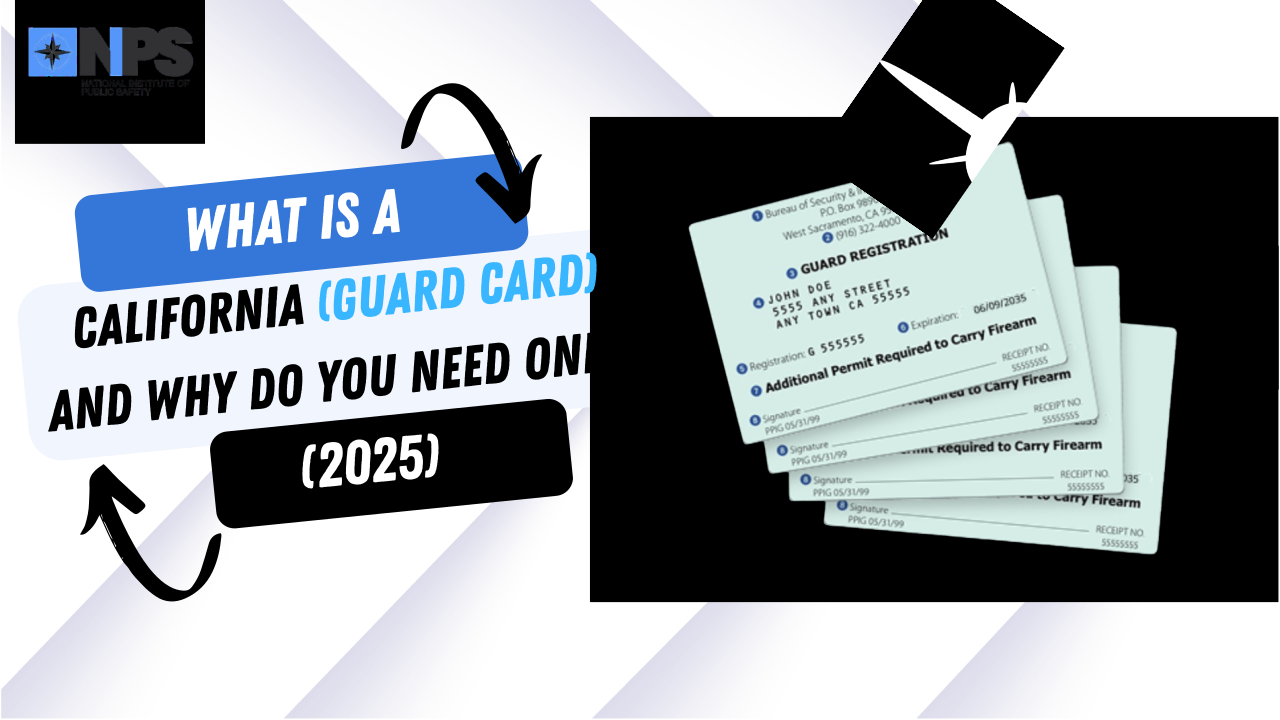
The California Guard Card is more than just an identification; it’s a license that grants individuals the legal authority to work as a security guard. Its primary purpose is to ensure that all security personnel operating within the state are properly trained, vetted, and meet specific professional standards. Without this card, it is illegal to perform security guard duties for any employer other than a proprietary security employer (one who employs guards directly for their own business, not for hire to others), and even then, there are specific limitations. For those wishing to work for contract security companies, which are prevalent across California and offer a wide range of assignments from corporate security to event protection, the Guard Card is non-negotiable.
The security industry plays a vital role in maintaining safety and order in various environments, including hotels, resorts, tourist attractions, residential complexes, and business districts. As California continues to be a global hub for tourism, business, and entertainment, the demand for qualified security professionals remains consistently high. Obtaining your Guard Card not only opens doors to these opportunities but also demonstrates your commitment to professionalism and public safety.
The Role of the Bureau of Security and Investigative Services (BSIS)
The Bureau of Security and Investigative Services (BSIS) is the regulatory body responsible for overseeing and licensing security guards, private investigators, alarm companies, and other security-related professions in California. Established under the California Department of Consumer Affairs, the BSIS ensures that all licensees meet the stringent requirements set forth by state law. They handle applications, conduct background checks, administer examinations, and enforce compliance, safeguarding both the public and the integrity of the security industry. Their website is an invaluable resource, providing official forms, regulations, and updates throughout the application and renewal processes. Engaging with the BSIS is a central part of obtaining and maintaining your Guard Card, so familiarity with their procedures is essential.
Basic Eligibility Requirements
Before embarking on the application process, it’s crucial to confirm that you meet the fundamental eligibility criteria established by the BSIS. These requirements are in place to ensure that security guards are responsible individuals capable of upholding public trust. Generally, to be eligible for a California Guard Card, an applicant must:
- Be at least 18 years of age: This is a strict legal requirement, with no exceptions.
- Be legally authorized to work in the United States: This means holding U.S. citizenship, permanent residency, or an appropriate work visa. The BSIS does not sponsor work visas; applicants must already possess the legal right to employment.
- Undergo and pass a criminal background check: This is a comprehensive check conducted through the California Department of Justice and the FBI (Federal Bureau of Investigation). Certain convictions, especially those involving felonies or crimes of moral turpitude, will disqualify an applicant. Misdemeanors may also be disqualifying depending on their nature and recency.
- Complete the required training: This includes the initial “Power to Arrest” course and additional training on “Weapons of Mass Destruction” (WMD) and other subjects.
- Have no history of severe mental health issues that would impair judgment or pose a risk: While not always explicitly stated as a direct disqualifier, issues that compromise an individual’s ability to safely and effectively perform security duties may be considered during the background review.
Meeting these basic prerequisites is foundational. If you have concerns about your eligibility, particularly regarding your criminal history, it’s advisable to consult with the BSIS or a legal professional before investing time and money into the process.
The Step-by-Step Process to Getting Your Guard Card
Obtaining your California Guard Card is a structured process that involves training, background checks, and formal application submission. Following these steps diligently will help expedite your application and minimize potential delays.
Step 1: Complete Your Training (Power to Arrest and Weapons of Mass Destruction)
The very first practical step involves completing the mandatory training courses. This training is designed to equip prospective security guards with the fundamental knowledge and skills required for the job.
- Initial 8-Hour Training: This consists of two primary components:
- The Power to Arrest Course (4 hours): This segment is critical and covers the legal aspects of a security guard’s authority. You will learn about the limitations and responsibilities associated with the power to arrest, the proper use of force, citizen’s arrest laws in California, and the ethical considerations of the role. Understanding these concepts is paramount to performing duties legally and effectively.
- Weapons of Mass Destruction (WMD) and Terrorism Awareness Course (4 hours): Given the current global security landscape, this training is vital. It educates guards on identifying potential signs of terrorist activity, understanding the types of WMD threats, and appropriate response protocols to minimize harm and assist law enforcement.
These initial 8 hours of training must be completed and passed before you can apply for your Guard Card. Many approved training providers, often security companies or specialized academies, offer these courses both in-person and online. It’s crucial to choose a BSIS-approved training provider to ensure your certificates are valid. Upon successful completion, you will receive a certificate for each course.
- Subsequent 32-Hour Training: While not required for initial application, you must complete an additional 32 hours of training within the first six months of being issued your Guard Card. This continuing education broadens your skill set and includes topics such as public relations, observation and documentation, communication and its significance, liability and legal aspects, and specific training depending on the guard’s duties (e.g., baton, pepper spray, firearms if applicable, which require separate licensing).
- Within 30 days of employment: You must complete an additional 16 hours of training.
- Within 6 months of employment: The remaining 16 hours of training must be completed, bringing your total to 40 hours.
These staggered training requirements ensure that new guards are continuously developing their competencies and staying updated with best practices.
Step 2: Live Scan Fingerprinting
After completing your initial 8 hours of training, the next critical step is to undergo Live Scan fingerprinting. This electronic fingerprint submission process is mandatory for the comprehensive criminal background check required by the BSIS.
- What is Live Scan? It’s a digital fingerprinting service that electronically transmits your fingerprints to the California Department of Justice (DOJ) and the FBI for a thorough criminal record review. This method is faster and more accurate than traditional ink-and-roll fingerprinting.
- Where to go? Live Scan services are available at various locations across California, including police departments, sheriff’s offices, private service providers, and even some UPS stores. You can find authorized Live Scan providers on the California DOJ website.
- What to bring? You will need a completed “Request for Live Scan Service” form, which you can typically obtain from your training provider or the BSIS website. This form will have specific codes for the “applicant type,” “agency name,” and “mailing address” for the BSIS so that your background check results are sent to the correct regulatory body. You must also bring a valid government-issued photo identification (e.g., California driver’s license, U.S. passport).
- Fees: There are fees associated with the Live Scan service itself (paid to the Live Scan operator) as well as the DOJ and FBI background check fees (often paid through the Live Scan operator). These fees can vary slightly by provider, but expect to pay a total of around $70-$100.
The Live Scan results are electronically sent to the BSIS, and this process typically takes anywhere from a few days to several weeks, depending on the volume of applications and whether any issues arise during the background check.
Step 3: Submitting Your Application to the BSIS
Once you have completed your initial 8 hours of training and undergone Live Scan fingerprinting, you are ready to submit your application for the Guard Card to the BSIS.
- Application Method: The BSIS strongly encourages online applications through their BreEZe system, which is generally faster and more efficient than mailing a paper application.
- Required Documents/Information:
- Application Form: Complete the Security Guard Registration Application accurately.
- Training Certificates: You will need to upload or provide details of your 8-hour Power to Arrest and Weapons of Mass Destruction training certificates.
- Live Scan ATI Number: This is the “Applicant Tracking Identifier” number provided to you at the Live Scan facility. It is crucial for the BSIS to match your application with your background check results.
- Application Fee: There is a non-refundable application fee (typically around $55 for the initial application, but always check the current fee schedule on the BSIS website). This can usually be paid via credit card through the online system.
- Completing the Online Application (BreEZe):
- Create an account on the BreEZe system if you don’t already have one.
- Navigate to the “Security Guard Registration” application.
- Fill in all personal details, training information, and affirm your understanding of the regulations.
- Upload any required documents, such as your training certificates.
- Enter your Live Scan ATI number.
- Pay the application fee.
- Review all information carefully before submitting. Errors can lead to delays.
Step 4: Awaiting Approval and Receiving Your Card
After submitting your application, the process enters the review phase. The BSIS will correlate your application with your Live Scan background check results.
- Processing Time: The processing time can vary significantly, from a few weeks to several months, depending on the volume of applications the BSIS is handling, the completeness of your application, and whether any issues arise during your background check. You can check the status of your application online through the BreEZe system using your applicant ID or social security number.
- Interim Permit: In some cases, if your background check clears quickly and there are no immediate disqualifying factors, the BSIS may issue an interim permit. This allows you to begin working as a security guard while your physical card is being printed and mailed. However, this is not guaranteed for everyone.
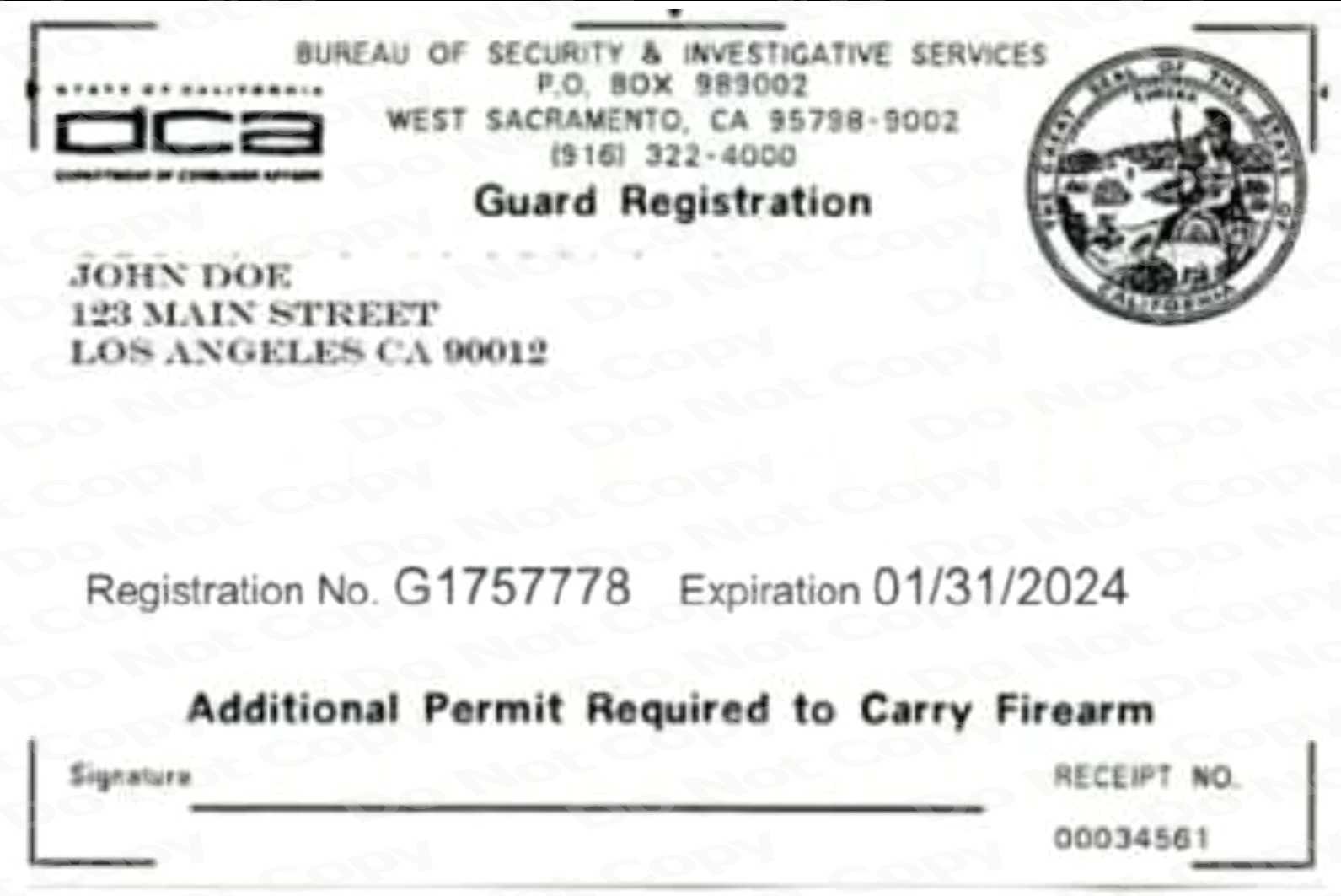
- Receiving Your Card: Once your application is approved and all checks are clear, the BSIS will issue your official California Guard Card, which will be mailed to the address you provided. Keep this card safe, as you must carry it while on duty. It’s often recommended to make a photocopy or take a picture of both sides of your card for your records.
Maintaining Your Guard Card and Continuing Education
Obtaining your Guard Card is not a one-time event; it requires ongoing commitment to training and timely renewal to remain valid.
Ongoing Training Requirements
As mentioned, beyond the initial 8 hours, you have further training obligations:
- Within 30 days of initial registration: Complete an additional 16 hours of training.
- Within 6 months of initial registration: Complete the final 16 hours of training, bringing your total to 40 hours for your first year of licensure.
These courses cover a range of topics relevant to a security guard’s duties, enhancing professional competence and adherence to industry standards. It is the responsibility of the guard to complete these hours and retain records, although the BSIS does not require submission unless audited.
Renewal Process
Your California Guard Card is valid for a period of two years. To continue working as a security guard, you must renew your registration before its expiration date.
- Continuing Education for Renewal: Before renewing, you are required to complete an additional 8 hours of continuing education training every two years. This training ensures that guards stay current with evolving laws, security techniques, and best practices. These courses must be completed through a BSIS-approved training provider.
- Renewal Application: You can renew your Guard Card online through the BSIS BreEZe system, similar to the initial application. You will need to attest that you have completed the required continuing education.
- Renewal Fee: A renewal fee (typically around $40, but check current fees) is required.
- Timely Renewal: It is highly recommended to renew well in advance of the expiration date. If your card expires, you cannot legally work as a security guard until it is reactivated. There is often a grace period with an additional late fee, but allowing your license to lapse can lead to complications and potential job loss.
Guard Card and the California Lifestyle: Opportunities and Considerations
While the process of obtaining a Guard Card is focused on regulation and safety, its implications for lifestyle, travel, and work opportunities in California are significant. California is a state renowned for its diverse economy, dynamic cities, and breathtaking natural beauty, making it a desirable destination for both permanent residents and temporary visitors.
Finding Work and Exploring California
Holding a California Guard Card opens up a multitude of employment opportunities that can complement various lifestyles, including those centered around travel and exploration. Security roles are available across virtually every sector:
- Hospitality and Tourism: Hotels, resorts, amusement parks, convention centers, and tourist attractions from San Diego to Sacramento frequently employ security guards. This can offer a stable income while allowing you to be in the heart of the action, potentially even at iconic landmarks or luxurious accommodations.
- Retail and Commercial: Shopping malls, corporate offices, industrial sites, and construction zones require security presence. These roles can often provide regular schedules or flexible shifts, allowing time for exploring local culture, engaging in outdoor activities, or pursuing other interests.
- Events and Entertainment: California hosts countless concerts, sports events, film productions, and festivals. Event security can be dynamic and exciting, offering temporary contracts that are ideal for those on a travel budget or looking for short-term work.
- Residential and Gated Communities: High-end residential areas and apartment complexes often employ guards for access control and patrol, offering potentially quieter environments.
For travelers or individuals on a budget, a security guard position can provide a steady income to fund experiences, accommodations, and the general cost of living in California. Many positions offer hourly wages that, especially in major metropolitan areas, can support comfortable living, allowing you to save for that dream trip to Yosemite National Park or a long-term stay in a San Francisco apartment. The flexibility of shifts (day, night, weekends) often inherent in security work can also be a significant advantage, enabling guards to pursue hobbies, education, or personal travel during off-hours.
Important Considerations for Expats and Travelers
For those new to California or the United States, there are additional points to keep in mind:
- Legal Work Authorization: As reiterated, possessing valid legal authorization to work in the United States is non-negotiable. This is often the primary hurdle for international travelers or expats. Ensure your visa status permits employment before starting the Guard Card process.
- Language Proficiency: While not an explicit BSIS requirement, strong English communication skills (both verbal and written) are essential for effective security work in California. You’ll need to communicate clearly with the public, clients, and emergency services, and write detailed incident reports.
- Cultural Nuances: Understanding local laws, customs, and community dynamics is crucial for effective security work. This can be a learning curve for those unfamiliar with California or American society.
- Cost of Living: While a Guard Card can provide stable income, California, particularly cities like Los Angeles and San Francisco, has a high cost of living. Factor this into your financial planning for accommodation, food, and transportation. Budgeting carefully and seeking out affordable long-term stay options or shared accommodations might be necessary.
- Transportation: Many security jobs, especially those involving patrols or located in sprawling areas, may require reliable personal transportation. Public transit varies greatly by region within California.
In conclusion, securing a California Guard Card is a clear and achievable goal for individuals committed to the security profession. By diligently following the outlined steps – completing accredited training, undergoing a thorough background check via Live Scan, and submitting a precise application to the BSIS – you can unlock a rewarding career path. This credential not only enables you to contribute to public safety but also provides a practical means to live, work, and explore the unparalleled opportunities that the Golden State offers, whether you’re building a long-term career or funding your adventures across its diverse landscapes and vibrant cities.