
Texas Holdem Poker, a globally recognized variant of poker, offers a captivating blend of strategy, psychology, and chance. Its widespread popularity, often seen in the glitz of Las Vegas casinos and the competitive arena of online poker rooms, stems from its relatively simple rules that mask a depth of strategic complexity. Understanding the fundamentals is the first step to appreciating the game’s enduring appeal and potentially honing your skills. This guide will walk you through the essential elements of playing Texas Holdem, from the basic setup to understanding hand rankings and betting actions.

The Fundamentals of Texas Holdem
At its core, Texas Holdem is a game played with a standard 52-card deck. The objective is to form the best possible five-card poker hand using a combination of your own two “hole” cards and five “community” cards dealt face-up on the table. Each player receives two private cards, known as hole cards, which are only visible to them. Following this, a series of betting rounds occur, interspersed with the dealing of community cards.
The Deck and Dealing
A standard 52-card deck is used, with no wild cards. The game can be played with anywhere from two to ten players, though it is most commonly enjoyed with six to nine players at a single table. The role of the dealer rotates clockwise after each hand. In home games or when not at a dedicated poker table, a “button” is used to indicate the dealer’s position. This button moves one position to the left after each hand, signifying the rotation of the dealer role and, importantly, the betting order.
Blinds and Antes
Before any cards are dealt, two players to the left of the dealer must post “blinds.” The player immediately to the left of the dealer posts the “small blind,” and the player to their left posts the “big blind.” The big blind is typically double the amount of the small blind. These forced bets ensure there is always money in the pot to play for, incentivizing action from the outset. In some tournaments or higher-stakes cash games, “antes” may also be required. An ante is a small, mandatory bet posted by every player at the table before the hand begins.
Hand Rankings in Texas Holdem
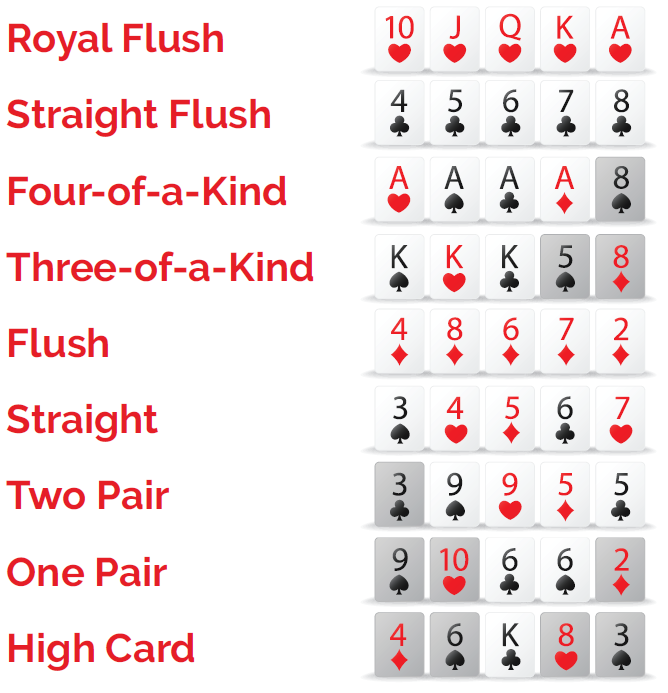
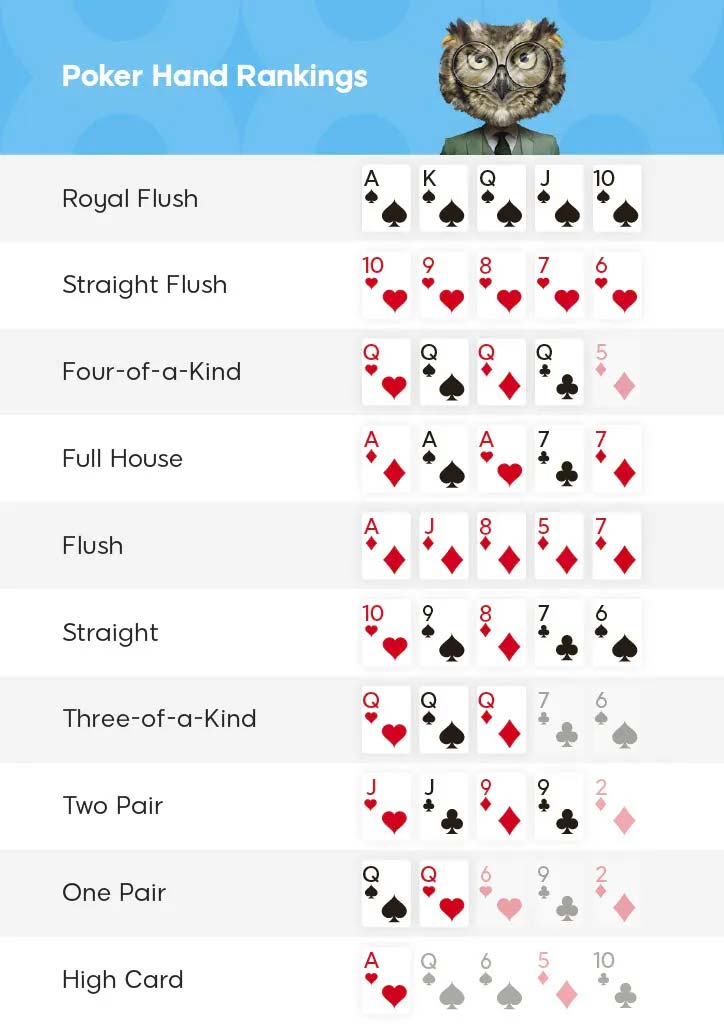
Mastering hand rankings is paramount to success in Texas Holdem. The strength of your hand is determined by its rank, and the player with the highest-ranking hand at the showdown wins the pot. The rankings, from highest to lowest, are as follows:
- Royal Flush: Ace, King, Queen, Jack, Ten of the same suit. This is the rarest and highest-ranking hand.
- Straight Flush: Five cards in sequence, all of the same suit (e.g., 9, 8, 7, 6, 5 of hearts).
- Four of a Kind: Four cards of the same rank (e.g., four Aces).
- Full House: Three cards of one rank and two cards of another rank (e.g., three Kings and two 7s).
- Flush: Five cards of the same suit, but not in sequence (e.g., K, Q, 8, 4, 2 of spades).
- Straight: Five cards in sequence, but not all of the same suit (e.g., 7, 6, 5, 4, 3 of mixed suits). Ace can be used as either high (A-K-Q-J-10) or low (A-2-3-4-5).
- Three of a Kind: Three cards of the same rank and two unrelated cards (e.g., three 10s).
- Two Pair: Two cards of one rank, two cards of another rank, and one unrelated card (e.g., two Queens, two 6s, and a 9).
- One Pair: Two cards of the same rank and three unrelated cards (e.g., two Jacks).
- High Card: If no player can form any of the above hands, the player with the highest-ranking single card wins. If the highest cards are tied, the next highest card is compared, and so on.
The Flow of a Texas Holdem Hand
A typical Texas Holdem hand unfolds through a series of betting rounds, dictated by the positions of the blinds and the dealer button.
Pre-Flop
This is the first betting round, occurring after each player has received their two hole cards. The player to the left of the big blind initiates the action. They have three options:
- Fold: Discard their hand and forfeit any chance of winning the pot.
- Call: Match the amount of the big blind.
- Raise: Increase the bet beyond the big blind. Any subsequent player must at least match the raised amount to stay in the hand.
The betting continues clockwise until all remaining players have contributed an equal amount to the pot.
The Flop
After the pre-flop betting round concludes, the first three community cards are dealt face-up in the center of the table. These are known as “the flop.” A new betting round then commences, starting with the first active player to the left of the dealer button. The betting options are:
- Check: If no bet has been made before them, a player can “check,” meaning they do not bet but remain in the hand. The action then passes to the next player.
- Bet: A player can initiate betting.
- Call: Match the current bet.
- Raise: Increase the current bet.
- Fold: Discard their hand.
The Turn
Following the betting round on the flop, a fourth community card, known as “the turn” or “fourth street,” is dealt face-up. Another round of betting ensues, identical to the flop betting round. This is often where strategic decisions become more complex as more of the board is revealed, and players can better assess potential hands.
The River
The fifth and final community card, called “the river” or “fifth street,” is dealt face-up. This completes the set of community cards. A final betting round takes place, again starting with the first active player to the left of the dealer.
The Showdown
If two or more players remain in the hand after the final betting round, a “showdown” occurs. Each remaining player reveals their hole cards. The player who can form the best five-card poker hand using any combination of their two hole cards and the five community cards wins the pot. If two players have the exact same best hand, the pot is split.
Key Betting Actions and Strategies
Understanding betting actions is crucial. Besides folding, calling, and raising, players might also encounter:
- Check-raise: A strategic move where a player checks initially, hoping an opponent will bet, and then raises when the action is returned to them. This can be used to build the pot or bluff.
- Bluffing: Betting with a weak hand in the hope of convincing opponents to fold their stronger hands. Bluffing is a vital, yet risky, component of poker.
Positional Awareness
Your position at the table relative to the dealer button significantly impacts your strategy. Acting later in a betting round (acting “in position”) provides the advantage of seeing how your opponents have bet before you make your decision. This information is invaluable for making informed choices. Early position players often need to play more cautiously, as they must act before others.
Bankroll Management
Responsible bankroll management is essential for any poker player, whether playing casually or professionally. It involves setting aside a specific amount of money designated for poker and playing at stakes that are appropriate for that bankroll, ensuring you can withstand losing streaks without depleting your funds.
Texas Holdem, with its accessible rules and profound strategic depth, continues to captivate players worldwide. By understanding the hand rankings, the flow of the game, and the nuances of betting, you lay the foundation for enjoyable and potentially successful gameplay. The journey from novice to skilled player is one of continuous learning, adaptation, and strategic refinement, making every hand a unique challenge.
LifeOutOfTheBox is a participant in the Amazon Services LLC Associates Program, an affiliate advertising program designed to provide a means for sites to earn advertising fees by advertising and linking to Amazon.com. Amazon, the Amazon logo, AmazonSupply, and the AmazonSupply logo are trademarks of Amazon.com, Inc. or its affiliates. As an Amazon Associate we earn affiliate commissions from qualifying purchases.