
Understanding eligibility for the Supplemental Nutrition Assistance Program (SNAP), commonly known as food stamps, in Florida is crucial for individuals and families facing food insecurity. This program, administered by the Florida Department of Children and Families (DCF), aims to provide essential nutritional support to low-income households. Navigating the qualification process involves understanding several key criteria, including income limits, household size, work requirements, and asset limitations. This comprehensive guide will walk you through the essential factors to consider when determining your eligibility for food assistance in the Sunshine State.
Understanding the Basics of SNAP in Florida
The Supplemental Nutrition Assistance Program (SNAP) is a federal program with state-specific administration. In Florida, the DCF manages the program, ensuring that eligible residents can access benefits to purchase healthy food. The primary goal of SNAP is to combat hunger and promote better nutrition among vulnerable populations. Benefits are provided through an Electronic Benefit Transfer (EBT) card, often referred to as a “Foodstamps card,” which can be used at authorized retailers.
Who is Eligible?
Eligibility for SNAP in Florida is determined by a combination of factors. Generally, households must meet certain income and asset limits, be residents of Florida, and comply with work registration requirements (with some exceptions). The program is designed to assist a wide range of individuals, including families with children, the elderly, individuals with disabilities, and those experiencing temporary unemployment.
How Benefits are Calculated
The amount of SNAP benefits a household receives is determined by its net income and the number of eligible individuals in the household. The benefit amount is calculated to provide a baseline of nutritional support. The DCF uses a formula that subtracts certain allowable deductions from a household’s gross income to arrive at their net income. This net income is then compared to the income eligibility standards for the state. Larger households and those with lower net incomes generally receive higher benefit amounts.
Key Eligibility Factors in Florida
To qualify for food stamps in Florida, applicants must meet several stringent criteria. These factors are designed to ensure that the program assists those most in need. Understanding each of these components is vital for a successful application.
Income Limitations
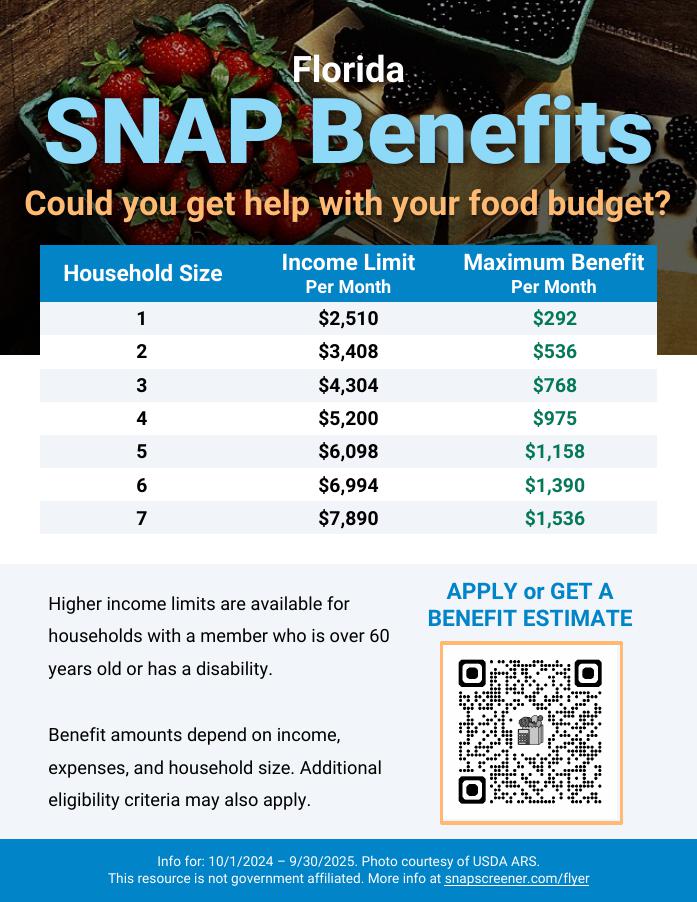
Income is a primary determinant of eligibility. Florida has established gross and net income limits that vary based on household size.
Gross Income
Gross income is the total income your household receives before any deductions. For most households, the gross monthly income cannot exceed 130% of the federal poverty level for their household size. This means that if your household’s total earnings before taxes and other deductions exceed this threshold, you may not be eligible.
Net Income
Net income is calculated after certain allowable deductions are subtracted from your gross income. These deductions can include a standard deduction, a dependent care deduction (if you have work or training expenses), medical expenses for elderly or disabled household members that exceed a certain amount, and shelter costs (rent or mortgage, utilities, and insurance) that exceed a certain percentage of your net income. For most households, net income cannot exceed 100% of the federal poverty level for their household size.
Common Income Sources Considered:
- Wages and salaries
- Self-employment income
- Social Security benefits
- Supplemental Security Income (SSI)
- Unemployment benefits
- Pension and retirement income
- Alimony and child support received
- Any other cash income
It is important to note that some types of income are excluded from consideration, such as foster care payments, certain scholarships, and income from temporary job training programs.
Asset Limitations
In addition to income, households are also subject to asset limits. Assets are resources that a household owns.
Countable Assets
Certain assets are considered “countable” and contribute to the household’s total asset value. For most households, the limit for countable assets is $2,500. For households with at least one member aged 60 or older or who is disabled, this limit increases to $3,750.
Examples of Countable Assets:
- Cash on hand
- Checking and savings accounts
- Stocks and bonds
- Land (other than the home and its immediate surrounding property)
- Vehicles (though there are specific rules regarding vehicles, and often one or two vehicles per household are excluded from the asset test)
- Trust funds
Excluded Assets
Many assets are not counted towards the limit. These typically include:
- The home in which the household resides and its surrounding property.
- One or two vehicles, depending on the household’s composition and needs.
- Resources set aside for a retirement or education account.
- Indian trust or judgment funds.
- Properties that are not income-producing and are being sold.
Understanding which assets count and which do not is crucial for accurately assessing your eligibility.
Household Size and Composition
The number of people in your household directly impacts both your income eligibility limits and the amount of benefits you may receive. Larger households typically have higher income thresholds and are eligible for higher benefit amounts. The definition of a household for SNAP purposes is generally a group of people who live together and purchase and prepare food together. This can include individuals, couples, and families with children.
Residency Requirements

To be eligible for SNAP in Florida, you must be a resident of the state. This means you must have a place of residence in Florida and intend to stay in the state. Individuals who are temporarily visiting Florida from another state are generally not eligible. Proof of residency, such as a utility bill, lease agreement, or driver’s license, may be required.
Work Requirements and Exceptions
For most non-elderly, non-disabled adults without dependent children, SNAP includes work registration requirements. This is often referred to as the Able-Bodied Adults Without Dependents (ABAWD) rule.
ABAWD Rule
Individuals classified as ABAWDs must meet certain work requirements to receive SNAP benefits for more than three months in a 36-month period. These requirements typically involve:
- Working at least 20 hours per week.
- Participating in a qualifying work program for at least 20 hours per week.
- Participating in a workfare program.
Failure to meet these requirements can result in a loss of benefits.
Exemptions from Work Requirements
There are several exemptions from the work requirements. You may be exempt if you:
- Are under 18 or 50 years of age or older.
- Are medically certified as physically or mentally unfit for employment.
- Are pregnant.
- Are responsible for the care of a dependent child or incapacitated person.
- Are a student enrolled at least half-time in an institution of higher education.
- Are already participating in another assistance program that includes work requirements.
It is important to accurately report your circumstances to the DCF to determine if you qualify for an exemption.
Applying for Food Stamps in Florida
The application process for SNAP in Florida is managed by the Department of Children and Families (DCF). There are several ways to apply, and it is essential to provide accurate and complete information to ensure a smooth process.
Application Methods
- Online: The most common and often the fastest method is to apply online through the DCF’s ACCESS Florida portal. This allows you to submit your application 24/7.
- In Person: You can visit a local Florida DCF service center to pick up an application or complete one on-site.
- By Mail or Fax: Applications can be downloaded from the DCF website and mailed or faxed to the appropriate office.
- By Phone: You can request an application to be mailed to you by calling the DCF customer service number.
Required Documentation
When you apply, you will need to provide documentation to verify the information on your application. This typically includes:
- Proof of Identity: Such as a driver’s license, state ID, or birth certificate.
- Proof of Residency: Such as a utility bill, lease agreement, or mortgage statement.
- Proof of Income: Pay stubs, unemployment benefit statements, Social Security award letters, etc.
- Proof of Household Composition: Birth certificates for children, marriage certificates, etc.
- Proof of Expenses: Rent receipts, utility bills, medical bills for elderly/disabled members, childcare receipts.
- Proof of Assets: Bank statements, vehicle titles.
Gathering these documents in advance will help expedite the application process.
The Interview Process
After submitting your application, you will likely be scheduled for an interview with a DCF representative. This interview is typically conducted by phone, but in-person interviews may be required in some cases. The purpose of the interview is to review your application, clarify any discrepancies, and ensure you understand the program rules. Be prepared to answer questions about your household, income, expenses, and any other relevant information.
Processing Time and Notification
Once your application and interview are complete, the DCF will review your case. The processing time can vary, but generally, decisions are made within 30 days of receiving a complete application. If your case is urgent due to severe food insecurity, you may be eligible for expedited processing, with a decision made within seven days. You will be notified in writing of the decision regarding your eligibility and the amount of benefits you will receive if approved.
Navigating Common Challenges and Considerations
Even with a thorough understanding of the eligibility criteria, some applicants may encounter challenges. It is helpful to be aware of these common issues and how to address them.
Inaccurate Information and Reporting Changes
Providing accurate and truthful information on your application is paramount. Any misrepresentation or omission can lead to delays, denial of benefits, or even penalties. It is equally important to report any changes in your household circumstances that could affect your eligibility, such as a change in income, household size, or address, within 10 days of the change. Failure to report changes can result in an overpayment of benefits, which you may have to repay.
Appeal Process
If your application is denied, or if you disagree with a decision made about your benefits, you have the right to appeal. The DCF will provide information on how to file an appeal with your denial notice. An appeal typically involves a hearing where you can present your case. It is advisable to gather all relevant documentation and consider seeking assistance from legal aid services or advocacy groups if you need help with the appeal process.

Maintaining Eligibility
Once approved for SNAP benefits, your eligibility is subject to ongoing review. The DCF will conduct periodic recertifications to ensure you still meet the program’s requirements. This typically involves submitting updated information about your household’s income, expenses, and composition. It is crucial to respond promptly to any requests for information from the DCF to avoid any disruption in your benefits. Regular communication with the DCF and accurate reporting of changes are key to maintaining your eligibility.
By understanding the intricacies of income limitations, asset rules, work requirements, and the application process, individuals and families in Florida can better navigate the path to securing vital food assistance through the SNAP program.
LifeOutOfTheBox is a participant in the Amazon Services LLC Associates Program, an affiliate advertising program designed to provide a means for sites to earn advertising fees by advertising and linking to Amazon.com. Amazon, the Amazon logo, AmazonSupply, and the AmazonSupply logo are trademarks of Amazon.com, Inc. or its affiliates. As an Amazon Associate we earn affiliate commissions from qualifying purchases.