
Understanding the Basics of an LLC in Texas
Establishing a Limited Liability Company (LLC) in Texas offers a compelling legal structure for businesses, combining the pass-through taxation of a sole proprietorship or partnership with the personal liability protection of a corporation. This dual benefit makes it an attractive choice for entrepreneurs and small business owners seeking to safeguard their personal assets from business debts and lawsuits. In Texas, the formation process is overseen by the Texas Secretary of State.
An LLC is a distinct legal entity, separate from its owners, known as “members.” This separation is the cornerstone of liability protection. If the LLC incurs debts or faces litigation, the members’ personal assets—such as their homes, vehicles, and personal bank accounts—are generally protected. However, it’s crucial to understand that this protection is not absolute. It can be compromised through actions like commingling personal and business funds, engaging in fraudulent activities, or failing to maintain the LLC as a separate legal entity.
Key Advantages of an LLC in Texas
- Limited Liability Protection: As mentioned, this is the primary benefit. Members are shielded from personal responsibility for business obligations.
- Pass-Through Taxation: Unlike C-corporations, LLCs typically do not pay corporate income taxes. Instead, the profits and losses are “passed through” to the members and reported on their individual income tax returns. This avoids the “double taxation” that can occur with corporations.
- Flexibility in Management: LLCs can be managed by their members (member-managed) or by appointed managers (manager-managed). This flexibility allows businesses to tailor their operational structure to their specific needs.
- Fewer Formalities: Compared to corporations, LLCs generally have fewer ongoing compliance requirements, such as mandatory annual meetings or extensive record-keeping.
- Credibility: Operating as an LLC can enhance a business’s credibility in the eyes of customers, suppliers, and lenders, signaling a more established and professional operation.
Distinguishing LLCs from Other Business Structures
It’s important to differentiate an LLC from other common business structures:
- Sole Proprietorship: Owned and run by one individual, with no legal distinction between the owner and the business. The owner is personally liable for all business debts.
- Partnership: Two or more individuals agree to share in all assets, profits, and financial risks of a business. Partners are typically personally liable for business debts.
- Corporation (S Corp and C Corp): A more complex structure that is a separate legal entity. Corporations offer liability protection but are subject to more stringent regulations and potential double taxation (for C-corps). An S-corp election allows for pass-through taxation, but it has specific eligibility requirements.
For many small to medium-sized businesses in Texas, the LLC strikes an ideal balance between protection, flexibility, and administrative ease.
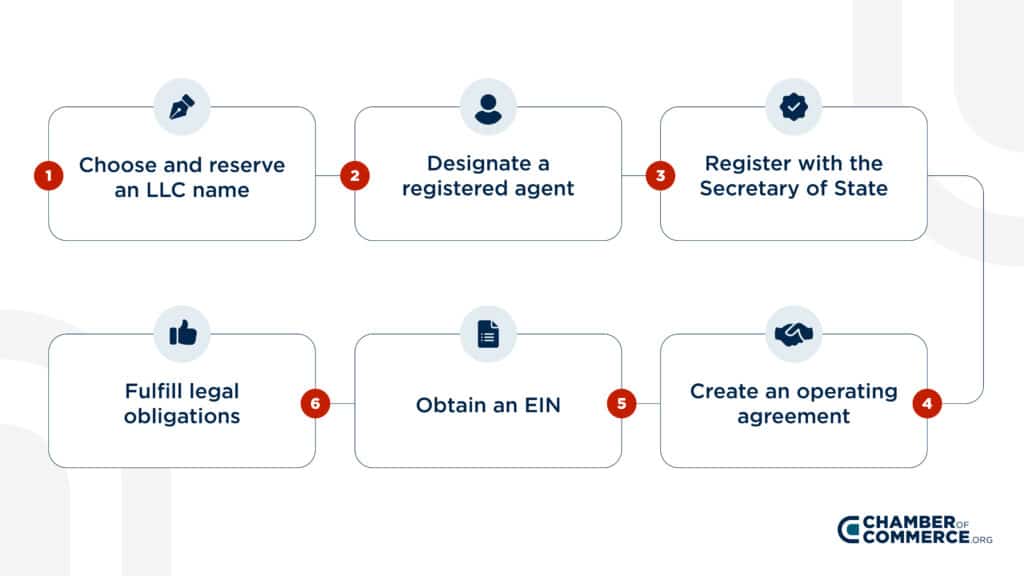
The Step-by-Step Process of Forming an LLC in Texas
Forming an LLC in Texas involves several distinct steps, each requiring careful attention to detail. While the process is generally straightforward, adhering to the requirements of the Texas Secretary of State is paramount for successful establishment.
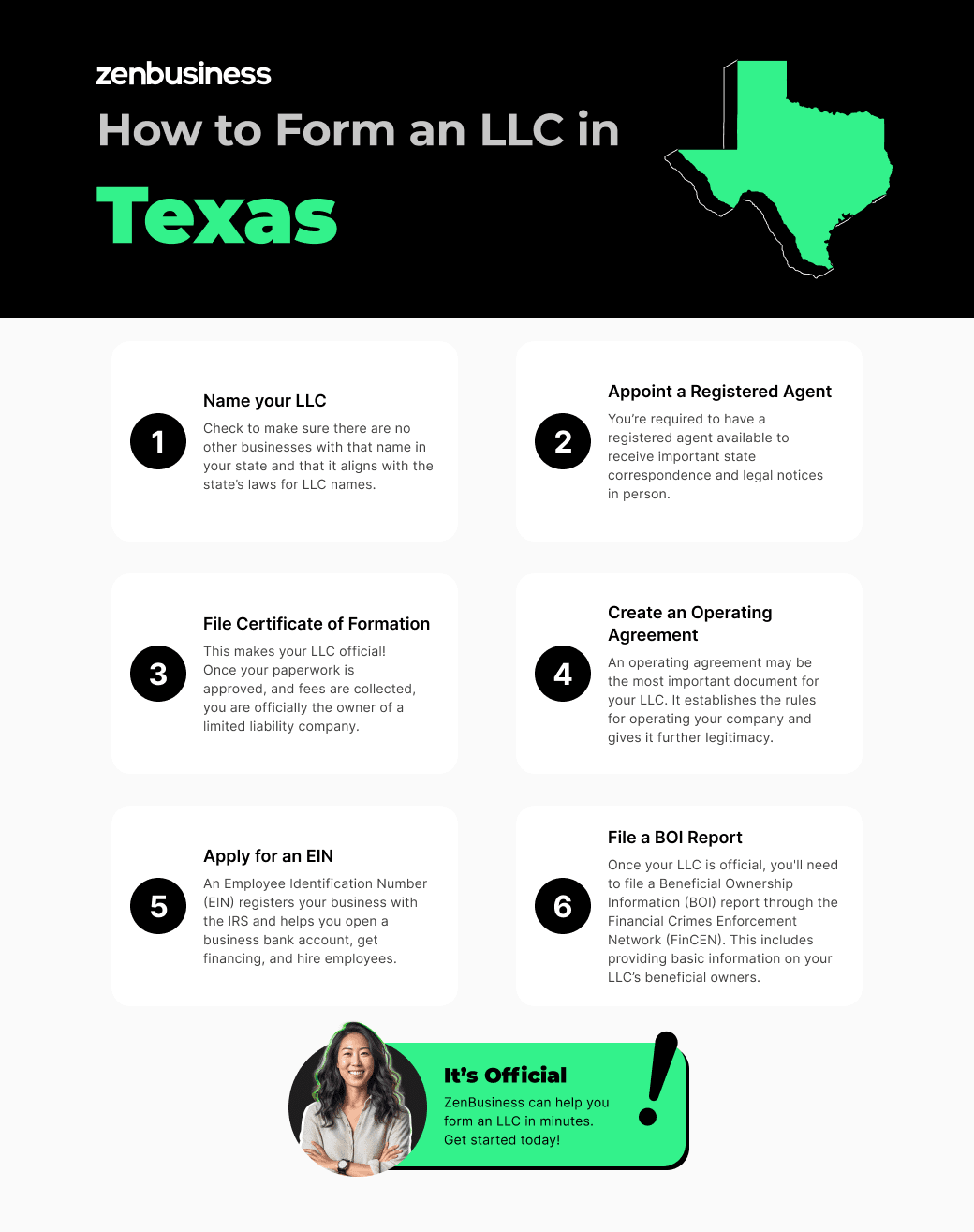
Step 1: Choose a Business Name
The first critical step is selecting a unique and compliant business name for your LLC.
Name Availability Search
Before committing to a name, you must ensure it is not already in use by another registered business entity in Texas. The Texas Secretary of State website provides a free online database where you can search for existing business names. This search will help you avoid potential conflicts and the need to choose an alternative name later in the process.
Naming Requirements
Your LLC name must include specific designators to indicate its legal structure. In Texas, acceptable designators include:
- “Limited Liability Company”
- “LLC”
- “L.L.C.”
The name must also be distinguishable from the names of other entities on file with the Texas Secretary of State. Certain words may be restricted or require additional approval (e.g., “bank,” “insurance,” “trust”).
Optional: Name Reservation
If you have a name you love but are not ready to form your LLC immediately, you can reserve it. You can file a “Name Reservation Request” form with the Texas Secretary of State. This reservation typically lasts for 120 days and prevents others from using your chosen name during that period. There is a fee associated with this service.
Step 2: Appoint a Registered Agent
Every LLC in Texas must have a registered agent. This is an individual or a business entity that agrees to accept legal documents (such as service of process, official government notices, and tax documents) on behalf of the LLC.
Registered Agent Qualifications
The registered agent must:
- Be a resident of Texas or a business entity authorized to do business in Texas.
- Have a physical street address in Texas (a P.O. Box is not sufficient).
- Be available during normal business hours to accept deliveries.
Choosing a Registered Agent
You can appoint yourself, another member of the LLC, or a third-party service as your registered agent. Using a professional registered agent service can be beneficial if you travel frequently, wish to maintain privacy, or want to ensure that legal documents are always received promptly.
Step 3: File the Certificate of Formation

This is the foundational document that officially creates your LLC in Texas.
The Certificate of Formation Document
The Certificate of Formation is filed with the Texas Secretary of State. It requires specific information, including:
- The name of the LLC.
- The name and physical address of the registered agent.
- The principal office address of the LLC.
- The management structure of the LLC (member-managed or manager-managed).
- The names and addresses of the organizers (the individuals filing the document).
Filing Methods and Fees
You can file the Certificate of Formation online, by mail, or in person. The Texas Secretary of State charges a filing fee, which is subject to change. It’s advisable to check their official website for the most current fee schedule. Online filing is often the quickest and most convenient method.
Step 4: Create an Operating Agreement
While not legally required by the state of Texas for LLC formation, an Operating Agreement is a critical internal document. It outlines the ownership, operating procedures, and member responsibilities of the LLC.
Purpose and Importance of an Operating Agreement
The Operating Agreement serves as a roadmap for your LLC. It typically includes provisions on:
- Member Contributions: How much each member contributes to the LLC (money, property, services).
- Profit and Loss Distribution: How profits and losses will be allocated among members.
- Management Structure: Details on decision-making processes, voting rights, and the roles of members or managers.
- Membership Changes: Procedures for admitting new members, transferring ownership interests, or handling the departure of a member.
- Dissolution: Conditions under which the LLC can be dissolved.
Benefits of a Well-Drafted Agreement
A comprehensive Operating Agreement can prevent disputes among members, clarify expectations, and provide a framework for managing the business effectively. It is particularly important for multi-member LLCs. Even for single-member LLCs, it can help reinforce the separation between the owner and the business, bolstering liability protection.
Step 5: Obtain an Employer Identification Number (EIN)
If your LLC plans to hire employees, operate as a corporation for tax purposes, or meet certain other criteria, you will need an Employer Identification Number (EIN) from the Internal Revenue Service (IRS).
When an EIN is Necessary
An EIN is essentially a Social Security number for your business. You will likely need one if:
- Your LLC has more than one member.
- You plan to hire employees.
- Your LLC is a multi-member LLC taxed as a partnership.
- Your LLC is a single-member LLC but elects to be taxed as a corporation.
- Your LLC files excise tax returns or operates certain types of businesses.
How to Apply for an EIN
Applying for an EIN is free and can be done directly on the IRS website. The application process is typically quick, and you can receive your EIN immediately upon approval.
Ongoing Compliance and Best Practices for Texas LLCs
Forming an LLC in Texas is the first step; maintaining its legal standing and operational integrity requires ongoing attention to compliance and best practices. Failing to adhere to these requirements can lead to penalties, dissolution of the LLC, or even the loss of liability protection.
Maintaining Your Texas LLC
- Annual Franchise Tax Report: In Texas, LLCs are subject to an annual franchise tax. While many small LLCs may qualify for a “no tax due” threshold, they are still required to file an annual report (called the “No Tax Due Report” or Form 05-704) with the Texas Comptroller of Public Accounts. This report is due annually, typically by May 15th. Failure to file can result in penalties and interest.
- Registered Agent Maintenance: Ensure your registered agent’s information remains current with the Texas Secretary of State. If your registered agent moves or resigns, you must promptly file an amendment to update the information to avoid missing critical legal notices.
- Business Licenses and Permits: Depending on your industry and the specific activities of your LLC, you may need to obtain various federal, state, and local business licenses and permits. Research the requirements for your particular business operations.
- Separate Finances: Consistently maintain separate bank accounts for your LLC and your personal finances. Avoid commingling funds, as this is a common reason for piercing the corporate veil and losing liability protection.
- Record Keeping: While LLCs have fewer formalities than corporations, maintaining good business records is crucial. This includes keeping copies of your Certificate of Formation, Operating Agreement, financial statements, and any significant business contracts.
Tax Obligations for Texas LLCs
- Federal Taxes: As mentioned, most LLCs benefit from pass-through taxation. Profits and losses are reported on the members’ personal income tax returns using Schedule C (for single-member LLCs) or Schedule K-1 (for multi-member LLCs). If your LLC has employees, you will be responsible for payroll taxes.
- State Taxes: In addition to the franchise tax, Texas does not have a state income tax. However, depending on your business activities, you may be subject to other state taxes, such as sales and use tax if you sell tangible goods or taxable services.
Seeking Professional Guidance
Navigating the legal and financial aspects of business formation and operation can be complex.
- Legal Counsel: Consider consulting with a business attorney in Texas when drafting your Operating Agreement or if you encounter complex legal issues. An attorney can ensure your agreement is robust and fully protects your interests.
- Accounting Services: Engaging a qualified accountant or CPA is highly recommended. They can help you understand your tax obligations, set up proper bookkeeping systems, and ensure compliance with federal and state tax laws. Professionals can also advise on the most advantageous tax elections for your LLC.
By diligently adhering to ongoing compliance requirements and implementing sound business practices, you can ensure your LLC in Texas operates smoothly, maintains its legal standing, and continues to provide the valuable liability protection it was designed for.
LifeOutOfTheBox is a participant in the Amazon Services LLC Associates Program, an affiliate advertising program designed to provide a means for sites to earn advertising fees by advertising and linking to Amazon.com. Amazon, the Amazon logo, AmazonSupply, and the AmazonSupply logo are trademarks of Amazon.com, Inc. or its affiliates. As an Amazon Associate we earn affiliate commissions from qualifying purchases.