
Embarking on a career as a social worker in California is more than just choosing a profession; it’s adopting a profound and impactful lifestyle dedicated to human well-being and social justice. This path offers a unique blend of intellectual challenge, emotional reward, and the opportunity to make tangible differences in the lives of individuals, families, and communities across the Golden State. From the bustling urban centers of Los Angeles and San Francisco to the diverse rural landscapes, social workers are integral to addressing complex societal issues, fostering resilience, and advocating for equitable outcomes. It’s a calling that shapes not only the lives of those served but also the personal and professional journey of the practitioner, demanding empathy, perseverance, and a deep commitment to service.
The Fulfilling Path of Social Work in California: A Lifestyle of Impact
A social worker’s lifestyle in California is characterized by its dynamic nature and the profound connections forged through service. It’s a role that transcends traditional office settings, often involving direct engagement with clients in their homes, schools, hospitals, and community centers. This immersive approach means no two days are truly alike, offering a constant stream of new challenges and opportunities for growth. The core of this lifestyle is the dedication to empowering vulnerable populations, advocating for their rights, and connecting them with essential resources. It’s a life lived at the intersection of individual needs and systemic change, where every intervention, no matter how small, contributes to a larger vision of a more just and compassionate society.
Diverse Roles and Settings
The breadth of social work practice in California is vast, allowing professionals to tailor their careers to align with their passions and expertise. This diversity is a key component of the social work lifestyle, offering flexibility and opportunities for specialization. Child welfare services, for instance, involve protecting children from abuse and neglect, working closely with families, and navigating complex legal systems. In healthcare, social workers play crucial roles in hospitals and clinics, providing emotional support, facilitating discharge planning, and connecting patients to post-treatment care. Mental health social workers offer counseling, crisis intervention, and therapeutic services, addressing the pressing need for mental wellness support across all demographics.
Beyond these traditional areas, social workers are found in schools, supporting students’ academic and emotional development; in correctional facilities, aiding rehabilitation and reintegration; and in community organizing, driving policy changes and fostering collective action. The geographical spread of California further accentuates this diversity. A social worker in San Diego might focus on military families or cross-border issues, while one in the Central Valley could specialize in agricultural worker support or rural healthcare access. This rich tapestry of roles ensures that a social work career can evolve and adapt, providing a lifelong journey of learning and contribution.
Why California? Unique Needs and Opportunities
California, with its vast population and complex socio-economic landscape, presents unique opportunities and challenges for social workers. The state’s progressive policies, diverse demographics, and significant social disparities create a high demand for skilled professionals. Addressing issues like homelessness, mental health crises, substance abuse, and inequities in education and healthcare requires a robust and well-trained social work workforce. The state’s commitment to social programs, though constantly evolving, also means a greater potential for funding and innovation in practice. Working in California offers the chance to engage with cutting-edge practices, contribute to groundbreaking research, and work within a highly dynamic and often progressive policy environment. This makes it an ideal place for those seeking a career that is both personally fulfilling and professionally stimulating.
Educational Foundations for a Social Work Lifestyle
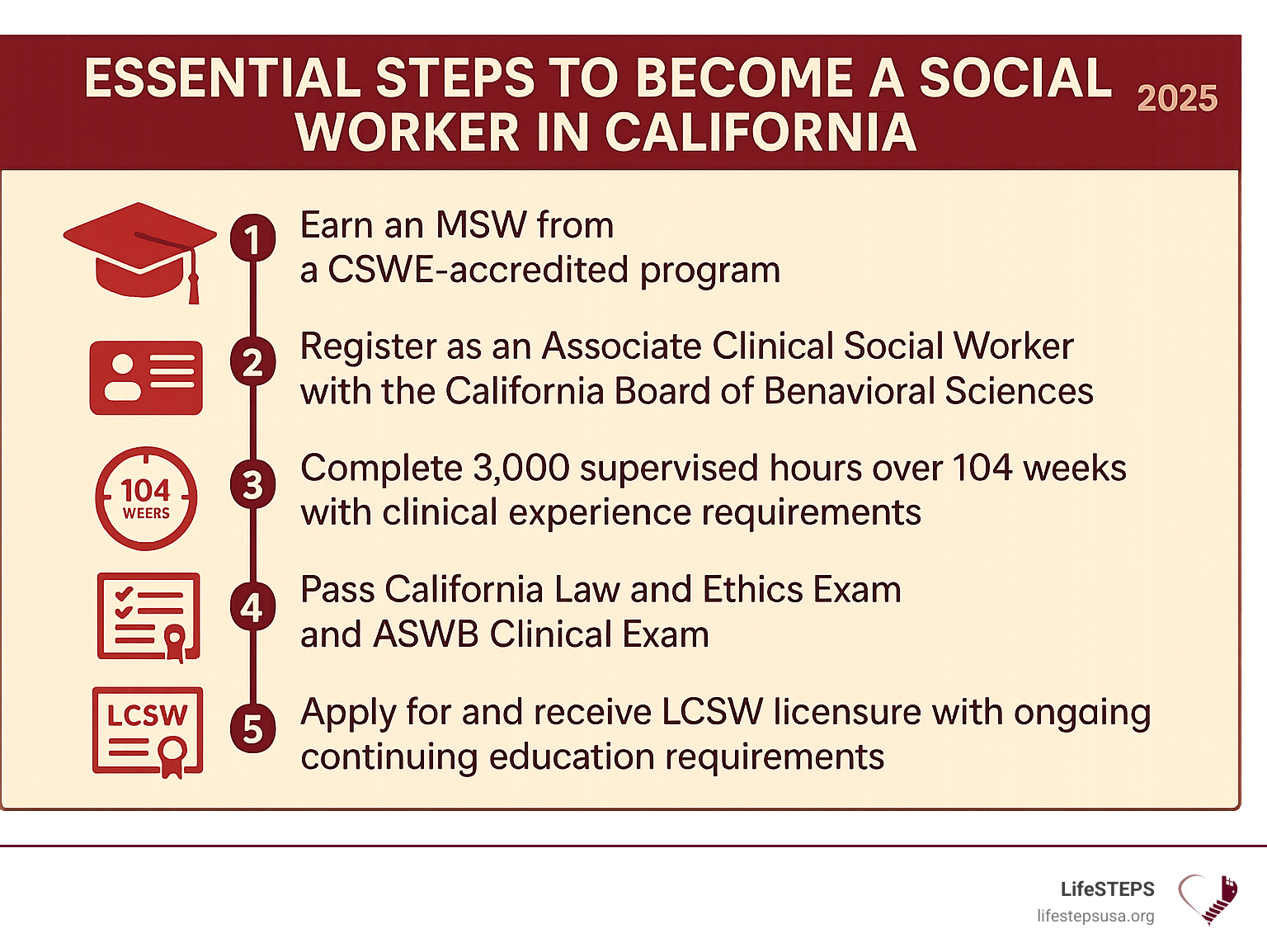
The journey to becoming a licensed social worker in California is structured and requires significant academic commitment. This educational foundation is not merely about acquiring credentials; it’s about developing a comprehensive understanding of human behavior, social systems, ethical practice, and intervention strategies that will define one’s professional lifestyle.
Bachelor of Social Work (BSW)
For many, the first step is earning a Bachelor of Social Work (BSW) degree from a program accredited by the Council on Social Work Education (CSWE). A BSW provides a foundational understanding of social work principles, human diversity, social justice, and basic intervention techniques. While a BSW can qualify individuals for entry-level positions in social services, it typically does not lead to licensure for independent clinical practice in California. However, it is an excellent stepping stone, offering valuable field experience through required internships and preparing students for advanced study.
Master of Social Work (MSW)
The Master of Social Work (MSW) is the standard for those aspiring to become licensed clinical social workers (LCSW) in California. This advanced degree typically takes two years of full-time study and delves deeper into clinical theories, advanced practice methods, research, and policy analysis. MSW programs emphasize hands-on experience through extensive supervised fieldwork, where students apply classroom knowledge in real-world settings. California boasts numerous highly regarded MSW programs, many of which are CSWE-accredited, including those at institutions like UC Berkeley, the University of Southern California (USC), UCLA, and San Jose State University, among others. Selecting an MSW program in California often means having access to diverse practicum placements, reflecting the state’s varied social challenges and opportunities.
Accreditation Matters
Regardless of whether you pursue a BSW or MSW, ensuring the program is accredited by the CSWE is paramount. CSWE accreditation signifies that the program meets rigorous national standards for social work education, which is a non-negotiable requirement for licensure in California and most other states. This accreditation ensures that graduates are well-prepared to uphold ethical standards, apply evidence-based practices, and effectively serve diverse populations, forming the ethical bedrock of their professional lifestyle.
Licensing and Professional Practice: Living the Social Worker’s Life
After completing an CSWE-accredited MSW program, the path to becoming a licensed clinical social worker (LCSW) in California involves a series of specific steps overseen by the Board of Behavioral Sciences (BBS). This licensure is essential for independent practice and signifies a commitment to the highest standards of the social work lifestyle.
Post-Graduate Experience
The most significant step after graduation is accumulating supervised clinical experience. California requires 3,200 hours of supervised experience, accumulated over a minimum of two years. These hours must be earned under the direct supervision of a licensed LCSW, a licensed marriage and family therapist (LMFT), or a licensed psychologist. The supervised experience is critical for integrating theoretical knowledge with practical skills, developing clinical judgment, and understanding the nuances of professional ethics. It’s during this period that aspiring social workers begin to fully inhabit the professional lifestyle, managing caseloads, conducting assessments, and providing therapeutic interventions while receiving invaluable guidance from experienced mentors. This period is not just about logging hours; it’s about deep professional development and mentorship.
The Licensing Exam
Once the supervised hours are completed and verified by the BBS, candidates are eligible to take the National Clinical Social Work Examination, administered by the Association of Social Work Boards (ASWB). This comprehensive exam assesses a candidate’s knowledge, skills, and abilities across various domains of clinical social work practice, including assessment, diagnosis, treatment planning, and ethical considerations. Passing the ASWB exam is the final hurdle to becoming an LCSW, marking the culmination of years of dedication and preparation.
Continuing Education: A Lifestyle of Lifelong Learning
The social work lifestyle in California is also one of continuous learning and adaptation. Once licensed, LCSWs are required to complete continuing education units (CEUs) to maintain their licensure. This ensures that practitioners remain current with the latest research, best practices, ethical guidelines, and emerging societal issues. California requires 36 hours of continuing education every two years for license renewal, including specific courses in ethics and cultural competency. This ongoing professional development is not merely a requirement; it’s an essential aspect of sustaining a high-quality, impactful social work practice and enriching one’s professional lifestyle.
Cultivating a Resilient Social Work Lifestyle
The demanding nature of social work, while immensely rewarding, also requires a conscious effort to cultivate personal and professional resilience. The lifestyle of a social worker is built on empathy and a deep engagement with human suffering, which necessitates robust self-care strategies.
Essential Qualities
Beyond academic credentials and licenses, successful social workers possess a core set of personal qualities. Empathy, cultural humility, strong communication skills, critical thinking, and an unwavering commitment to social justice are paramount. Resilience, the ability to bounce back from challenging situations and manage emotional labor, is equally vital. The capacity for advocacy, to speak up for those who cannot, and ethical integrity, to navigate complex moral dilemmas, are non-negotiable aspects of this professional lifestyle. Developing these qualities is an ongoing process, shaped by experience, supervision, and self-reflection.
Balancing Work and Well-being
Maintaining a healthy work-life balance is crucial for longevity and effectiveness in social work. The emotional intensity of the profession can lead to burnout if not proactively managed. Strategies include establishing clear professional boundaries, engaging in regular supervision and peer support, pursuing hobbies and interests outside of work, and practicing mindfulness. Many social workers in California prioritize self-care activities, whether it’s exploring the state’s natural beauty, engaging in community activities in cities like Oakland or Long Beach, or simply dedicating time to personal reflection. Cultivating a resilient social work lifestyle means recognizing the importance of one’s own well-being as foundational to effectively serving others.
Becoming a social worker in California is an investment in a lifestyle defined by purpose, impact, and continuous growth. It’s a journey that demands intellectual rigor, emotional intelligence, and unwavering dedication, culminating in a career that profoundly enriches both the lives of those served and the practitioner themselves. From the initial educational pursuits to the ongoing professional development, it is a path for those committed to making a tangible difference in the world, one person and one community at a time.
LifeOutOfTheBox is a participant in the Amazon Services LLC Associates Program, an affiliate advertising program designed to provide a means for sites to earn advertising fees by advertising and linking to Amazon.com. Amazon, the Amazon logo, AmazonSupply, and the AmazonSupply logo are trademarks of Amazon.com, Inc. or its affiliates. As an Amazon Associate we earn affiliate commissions from qualifying purchases.