
Changing your last name in Colorado is a significant life event, often accompanying marriage, divorce, or a personal desire for a fresh start. While the process can seem complex, understanding the steps involved will make it manageable. This guide provides a comprehensive overview of how to legally change your last name in the Centennial State, covering common scenarios and necessary documentation. Whether you’re embarking on a new chapter or seeking legal rectification, navigating the Colorado court system for a name change is a structured process.
Understanding the Legal Framework for Name Changes in Colorado
In Colorado, changing your legal name is primarily handled through a court order. The specific procedures and required documentation can vary slightly depending on the reason for the name change. The Colorado Revised Statutes (C.R.S.) outline the general requirements, emphasizing that the change must not be for fraudulent purposes or to avoid debts or obligations.
Common Reasons for a Last Name Change
- Marriage: This is perhaps the most common reason for a name change. Spouses may choose to adopt one spouse’s surname, create a hyphenated name, or use a completely new surname. Colorado law allows for a name change based on marriage without a separate court petition, typically through the marriage certificate process. However, updating your name with various agencies will still be necessary.
- Divorce: Following a divorce, an individual may wish to revert to their maiden name or a previous surname. This can often be requested as part of the divorce decree. If not, a separate petition for a name change may be required.
- Personal Preference: Individuals may decide to change their name for various personal reasons, such as disliking their current name, wishing to honor a family member, or aligning their legal name with their gender identity. For these cases, a formal court petition and hearing are usually mandatory.
- Adoption: When a child is adopted, their surname is typically changed as part of the adoption proceedings, formalizing the new family structure.
Essential Legal Considerations
Before initiating a name change, it’s crucial to understand the underlying legal principles. Colorado courts require that the name change be for a good and lawful purpose. This means you cannot change your name to evade creditors, escape criminal prosecution, or engage in fraudulent activities. The court will review your petition and may require a hearing to ensure the legitimacy of your request.
The Formal Court Petition Process in Colorado
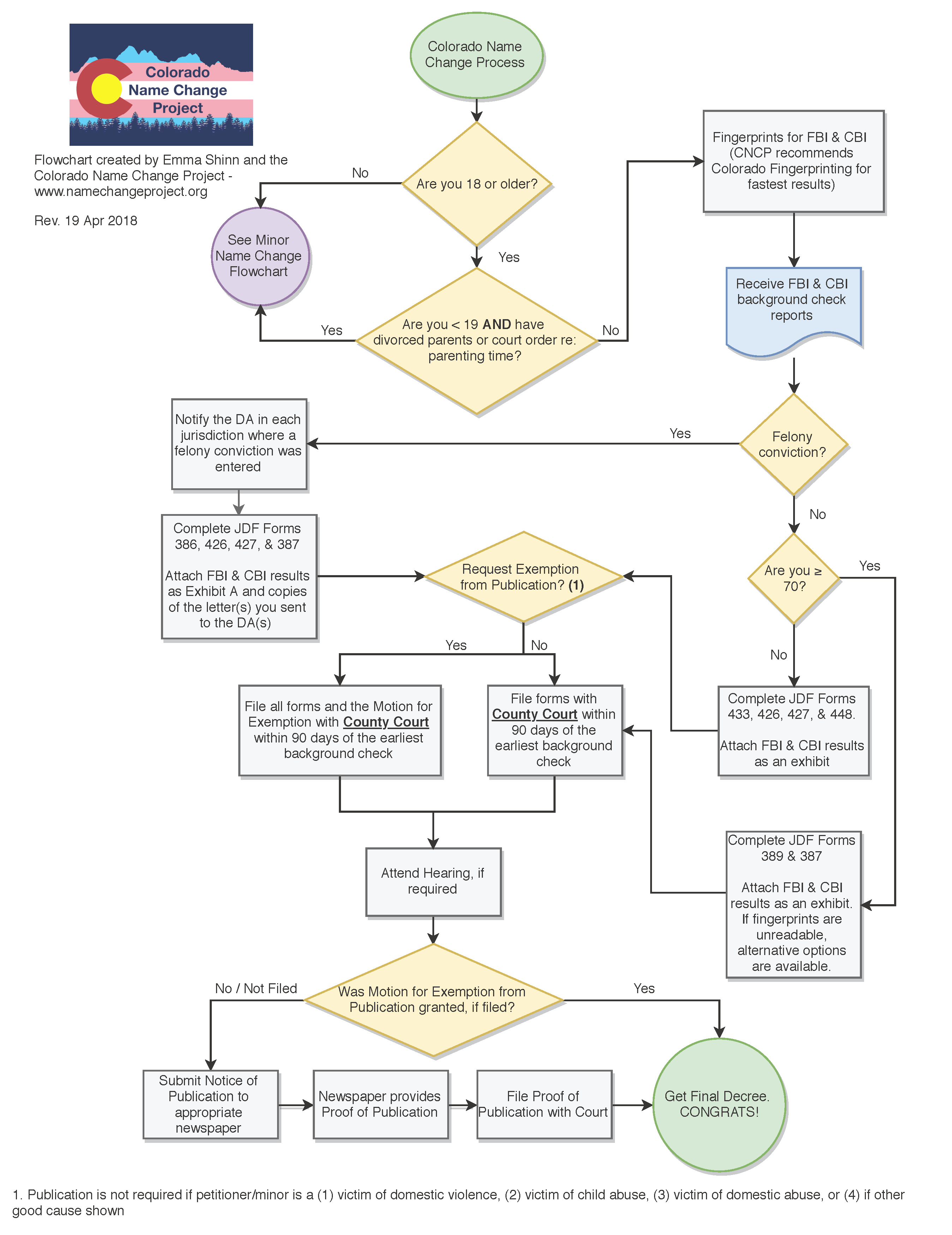
For most name changes, except for those directly tied to a marriage certificate, a formal petition to the court is the standard procedure. This process involves several key stages, from filing the initial paperwork to obtaining the official court order.
Step 1: Obtaining and Completing the Necessary Forms
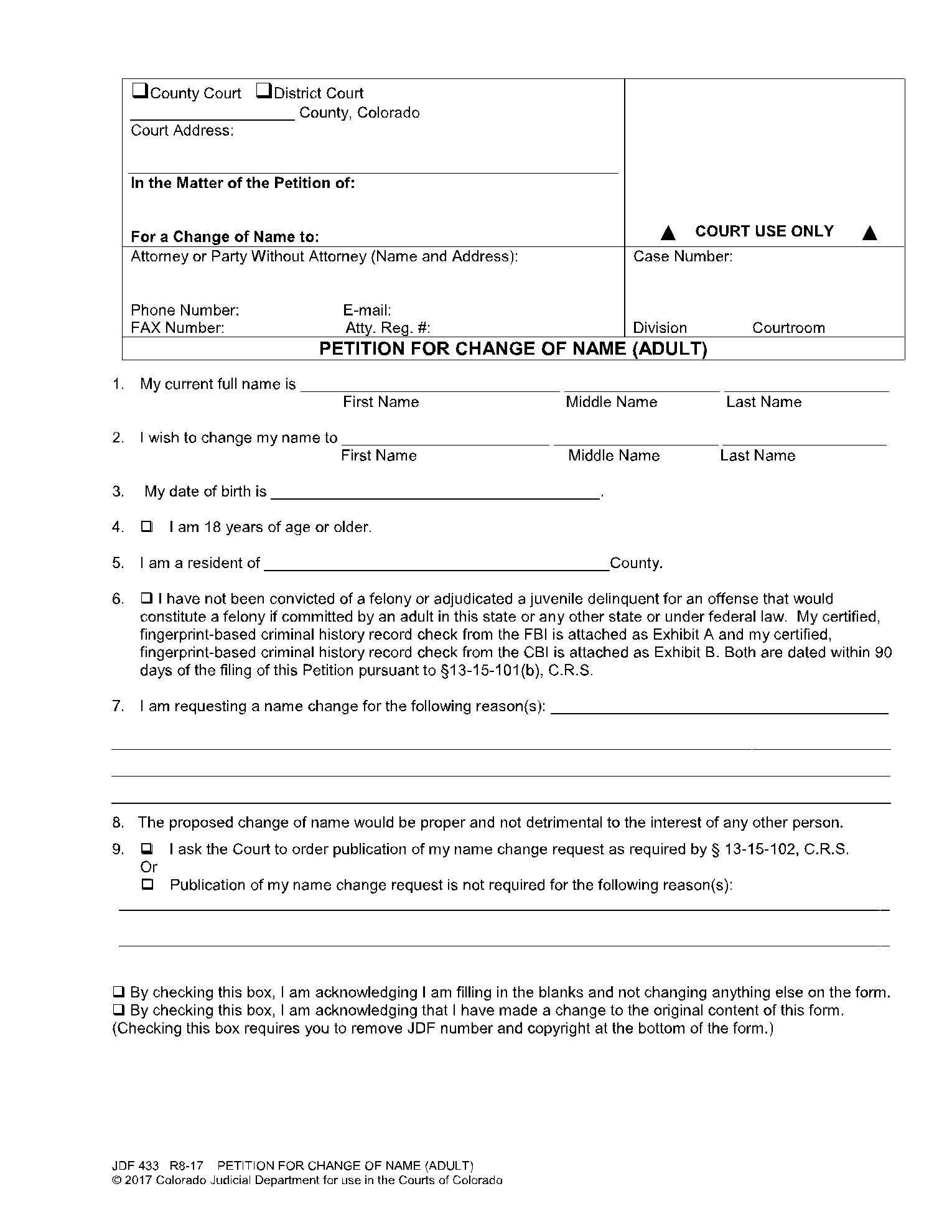
The first step is to obtain the correct legal forms. These are typically available from the Colorado Judicial Branch website or directly from the county courthouse where you reside. The primary form is usually a Petition for Change of Name. This document will require you to provide:
- Your current legal name.
- The desired new legal name.
- Your date and place of birth.
- Your current address.
- The reason for the requested name change.
- A statement confirming the change is not for fraudulent purposes.
You may also need to complete an Order for Change of Name, which the judge will sign if the petition is approved. Additional forms might be required, such as a fingerprint card and a criminal background check, especially if you are seeking a name change for personal preference or if other factors warrant additional scrutiny.
Step 2: Filing the Petition with the Court
Once the forms are accurately completed, you must file them with the Clerk of the District Court in the county where you have lived for at least 90 days. You will need to pay a filing fee at this time. If you cannot afford the fee, you can apply for a waiver of court costs. It’s advisable to make copies of all submitted documents for your records.
Step 3: Publication of Notice (If Required)
In many cases, Colorado law requires that public notice of your intended name change be published. This is to inform any interested parties who might object to the change. The court will typically order that notice be published in a newspaper of general circulation in your county for a specific period, usually once a week for a few consecutive weeks. You will need to arrange for this publication and provide proof of publication to the court. Some exceptions may apply, such as for victims of domestic violence or in cases where the court deems publication unnecessary.
Step 4: The Court Hearing
After the publication period has passed (or if publication is not required), the court will schedule a hearing. You must attend this hearing, where the judge will review your petition and ask questions. The judge will want to ensure you understand the implications of the name change and that your reasons are lawful. If there are no objections and all requirements have been met, the judge will likely grant your petition.
Step 5: Obtaining the Court Order
Upon approval, the judge will sign the Order for Change of Name. This is the official legal document that validates your new name. You should obtain certified copies of this order from the court clerk. These certified copies are crucial for updating your identification and records with various government agencies and private institutions.
Updating Your Identification and Records
Receiving the court order is a significant milestone, but the process isn’t entirely complete. You must now use your certified court order to update your legal identification and inform relevant parties of your new name.
Social Security Administration
The first agency you should notify is the Social Security Administration. You will need to visit a local Social Security office with your certified court order and proof of identity. A name change on your Social Security record is essential as it is linked to your employment history and future benefits.
Driver’s License or State ID
Next, you will need to update your Colorado Driver’s License or state identification card. Visit a Colorado Department of Revenue Motor Vehicle office with your certified court order, your current driver’s license or ID, and any other required documentation.
Passport
If you have a U.S. Passport, you’ll need to update it to reflect your new name. The process depends on how recently your current passport was issued. You may need to complete a specific form and submit it with your certified court order and your old passport.
Other Important Institutions
Beyond these primary documents, you will need to update your name with numerous other entities:
- Banks and Financial Institutions: Inform your banks, credit card companies, and any other financial institutions.
- Employer: Notify your employer so your payroll and HR records can be updated.
- Voter Registration: Update your voter registration information.
- Schools and Universities: If you are a student or have educational records, inform the institutions.
- Insurance Companies: Update your health, auto, home, and life insurance policies.
- Landlords or Mortgage Lenders: If you rent or own property.
- Medical Providers: Inform your doctors, dentists, and pharmacies.
- Post Office: While not always strictly necessary, it’s good practice to inform the post office, especially if your mail is being delivered to a different address.
- Retirement Accounts and Investments: Ensure all investment accounts reflect your new name.
Name Changes Related to Marriage and Divorce
While the formal court petition process covers most name change scenarios, marriage and divorce proceedings offer streamlined pathways for specific situations.
Name Change Upon Marriage
When you get married in Colorado, you can change your last name as part of the marriage process. The marriage certificate itself serves as proof of your name change when presented to various agencies, provided the name change is consistent with the names on the marriage license.
- Marriage License: When applying for a marriage license, you will indicate the name you intend to use after the marriage. This is a crucial step.
- Marriage Certificate: After the ceremony, your officiant will sign and return the marriage certificate. This document, once officially recorded by the county clerk, becomes your legal proof of marriage and, if you chose a new surname, your proof of name change.
- Updating Records: You can then use the certified marriage certificate to update your Social Security card, driver’s license, passport, and other records, similar to the process described above.
It’s important to note that the name change through marriage is typically limited to adopting one spouse’s surname or creating a hyphenated name. For more complex name changes associated with marriage, a formal petition might still be necessary.
Name Change Upon Divorce
If you wish to revert to your maiden name or a previous surname after a divorce, you can often request this as part of the divorce proceedings.
- Request in Divorce Decree: During the divorce process, your legal documents will typically include a section where you can request a restoration of your former name. If the judge approves this request, the divorce decree will include the official order for your name change.
- Using the Divorce Decree: The certified copy of the divorce decree will then serve as your legal proof for updating all identification and records, much like a separate court order for a name change.
- Separate Petition: If the name change was not requested or granted during the divorce, you may need to file a separate petition for a name change after the divorce is finalized.

Tips for a Smooth Name Change Process
Navigating a legal name change requires attention to detail. Here are some tips to help ensure a smoother process in Colorado:
- Be Thorough with Forms: Double-check all information on your petition and any accompanying documents. Errors can cause delays or even rejection of your petition.
- Understand Publication Requirements: If publication is required, ensure you follow the court’s instructions precisely regarding the newspaper and duration of publication. Keep the proof of publication safe.
- Gather Certified Copies: Obtain multiple certified copies of your court order (or marriage certificate/divorce decree). You’ll need them for many different agencies.
- Start with the Social Security Administration: This is a foundational step that often needs to be completed before other agencies will update your records.
- Be Patient: The legal process can take time, and so can updating all your identification. Allow for ample processing periods.
- Keep Records Organized: Maintain a file of all submitted documents, receipts, and correspondence related to your name change and subsequent updates.
- Consider Legal Assistance: If your situation is complex, or if you are unsure about any part of the process, consulting with a Colorado family law attorney can provide valuable guidance and ensure all legal requirements are met.
Changing your last name is a significant step, and by understanding the legal requirements and following the outlined procedures, you can successfully navigate this process in Colorado and officially begin using your new name with confidence.
LifeOutOfTheBox is a participant in the Amazon Services LLC Associates Program, an affiliate advertising program designed to provide a means for sites to earn advertising fees by advertising and linking to Amazon.com. Amazon, the Amazon logo, AmazonSupply, and the AmazonSupply logo are trademarks of Amazon.com, Inc. or its affiliates. As an Amazon Associate we earn affiliate commissions from qualifying purchases.