
When embarking on a journey of exploration, whether it’s delving into the rich tapestry of Local Culture, uncovering hidden Attractions, or meticulously planning your next adventure, academic rigor and clear attribution are paramount. The Chicago Manual of Style (CMOS) is a widely adopted citation system, particularly favored in the humanities and social sciences, and it offers two distinct approaches to source citation: the NOTES and BIBLIOGRAPHY system, and the AUTHOR-DATE system. For many writers, especially those crafting travel narratives, historical accounts of landmarks, or in-depth guides to cultural experiences, the NOTES and BIBLIOGRAPHY system, with its reliance on footnotes or endnotes, proves to be the more intuitive and elegant solution. Understanding how to cite footnotes effectively in Chicago style is not merely an academic exercise; it’s a crucial skill for any traveler who wishes to lend credibility, depth, and intellectual honesty to their written work.

Understanding the Chicago Style Footnote System
The core of the Chicago Style’s NOTES and BIBLIOGRAPHY system lies in the footnote. A footnote is a piece of information that appears at the bottom of a page, indicated by a superscript numeral in the text. This numeral corresponds to a note that provides the bibliographic information for a source, an explanatory comment, or a supplementary detail that doesn’t fit smoothly into the main body of the text. For travelers, this might mean citing an obscure historical text about a Famous Place, providing additional context about a local Food tradition, or crediting a specific researcher whose work illuminated a particular aspect of Nature in a region.
When to Use Footnotes
Footnotes serve multiple purposes, each contributing to the overall clarity and authority of your writing.
Source Citation
The primary function of a footnote is to attribute the information you are presenting to its original source. This is essential for avoiding plagiarism and allowing your readers to verify your claims or explore the topic further. For instance, if you are writing about the history of a specific Architecture style found in Paris, and you draw specific dates or design details from a book by an architectural historian, you would use a footnote to cite that book.
Explanatory Notes
Beyond direct source attribution, footnotes are invaluable for adding supplementary information that would otherwise interrupt the flow of your narrative. Imagine describing a vibrant Experience in Marrakech. You might want to briefly explain the significance of a particular Berber custom or the historical context of a bustling marketplace without derailing your main description. A footnote allows you to provide this enriching detail without disrupting the reader’s immersion in the experience.
Definitions and Translations
If your travel writing incorporates specialized terminology, foreign phrases, or definitions of cultural concepts, footnotes provide an ideal space for clarification. For example, if discussing the nuances of Japanese tea ceremonies, you might use a footnote to define a specific term like “wabi-sabi” or provide a brief explanation of its philosophical underpinnings.
Placement of Footnote Superscripts
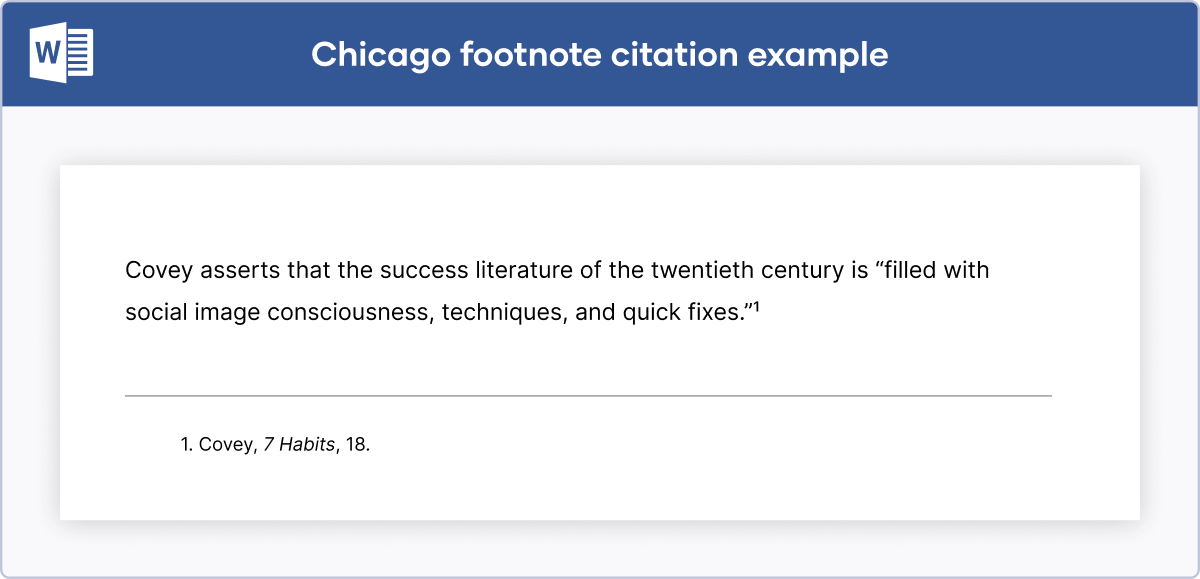
The superscript numeral indicating a footnote should be placed at the end of the sentence or clause to which the note refers. It is crucial to position it after any punctuation, such as periods, commas, or semicolons. This ensures that the punctuation remains with the main text and the footnote marker is clearly associated with the preceding word or phrase. For example, if a sentence contains information derived from a source, the superscript would appear like this: “The ancient ruins at Machu Picchu were remarkably well-preserved.[1]”
Crafting Your First Footnote: The Initial Citation
The first time you cite a particular source in your footnotes, you must provide a full bibliographic citation. This complete entry allows your readers to locate the source with ease. The format for a book, a common source for travel writers, is as follows:
Citing a Book
- Format: ¹ Author First Name Last Name, Title of Book (Place of Publication: Publisher, Year), page number(s).
- Example: ¹ Isabella Bird, Journeys in Persia and Kurdistan (London: John Murray, 1891), 45.
This initial citation includes all the necessary information: the author’s full name, the italicized title of the book, the city of publication, the publisher, the year of publication, and the specific page number(s) from which the information was drawn. When referring to a specific quotation or piece of data, always include the page number. If you are referencing the entire work, you may omit the page number.
Citing Other Source Types (Initial Citations)
While books are frequent references, travel writers often consult a variety of sources.
Citing an Article in a Periodical
- Format: ¹ Author First Name Last Name, “Title of Article,” Title of Periodical Volume, no. Issue (Month Year): page number(s).
- Example: ¹ Paul Theroux, “The Old Patagonian Express,” National Geographic Traveler 25, no. 3 (May 2008): 72.

Citing a Website
- Format: ¹ Author First Name Last Name (if available), “Title of Page,” Name of Website, last modified Month Day, Year, URL.
- Example: ¹ National Park Service, “History of Grand Canyon National Park,” Grand Canyon National Park Official Website, last modified October 26, 2023, https://www.nps.gov/grca/learn/historyculture/index.htm.
Note the inclusion of the full URL and the date it was last modified or accessed if a modification date is unavailable.
Subsequent Citations: The Art of Brevity
After the initial full citation, subsequent references to the same source can be shortened. Chicago style offers two primary methods for these shortened notes.
Using “Ibid.”
The Latin term “Ibid.” (short for ibidem, meaning “in the same place”) is used when a footnote refers to the immediately preceding source. If you cite the same source in two consecutive footnotes, and the page number is also the same, you simply use “Ibid.” If the page number is different, you follow “Ibid.” with the new page number.
- Format:
- ¹ Author First Name Last Name, Title of Book (Place of Publication: Publisher, Year), page number(s).
- ² Ibid. (Same source, same page)
- ³ Ibid., page number(s). (Same source, different page)
- Example:
- ¹ Freya Stark, The Valleys of the Assassins (London: John Murray, 1934), 112.
- ² Ibid.
- ³ Ibid., 115.
While “Ibid.” offers conciseness, its use is limited to consecutive citations. If any other footnote intervenes, even one citing a different source, you cannot use “Ibid.”
Using Shortened Notes
For subsequent citations that are not consecutive, or when you prefer a more descriptive approach, shortened notes are employed. This method includes the author’s last name, a shortened version of the title (if it’s lengthy), and the relevant page number.
- Format: ¹ Author Last Name, Shortened Title, page number(s).
- Example:
- ¹ Bird, Journeys in Persia, 118.
- ² Stark, Valleys of the Assassins, 120.
The shortened title is typically the first few significant words of the original title, italicized, and should be easily identifiable. This system is highly effective for maintaining clarity when referencing multiple works by the same author or when dealing with longer texts where immediate source recall is beneficial.
The Corresponding Bibliography
A crucial component of the NOTES and BIBLIOGRAPHY system is the bibliography, which appears at the end of your work. The bibliography provides a comprehensive list of all the sources you have cited in your footnotes.
Formatting the Bibliography Entry
The format for bibliography entries is similar to the initial footnote citation, with a few key differences:
- Author’s Last Name First: In the bibliography, the author’s last name precedes their first name.
- No Page Numbers for General Reference: Unlike footnotes, bibliography entries for books generally do not include specific page numbers unless you are citing a specific chapter or section that was treated as a distinct work.
- No Superscript Numbers: Bibliography entries are typically arranged alphabetically by author’s last name and are not numbered with superscripts.
Bibliography Entry Example (Book):
- Format: Last Name, First Name. Title of Book. Place of Publication: Publisher, Year.
- Example: Bird, Isabella. Journeys in Persia and Kurdistan. London: John Murray, 1891.
The bibliography serves as a complete reference list, allowing readers to find all the sources you consulted. It is imperative that every source cited in your footnotes is also listed in your bibliography, and vice versa. This ensures a complete and honest representation of your research.
Mastering Footnotes for Richer Travel Narratives
The meticulous practice of citing footnotes in Chicago style, while seemingly a detail, profoundly enhances the credibility and depth of your travel writing. Whether you are chronicling the grandeur of European cities, the untamed beauty of the Amazon Rainforest, or the vibrant street life of Bangkok, accurate and consistent citation is the bedrock of trustworthy narrative. By mastering the nuances of initial and subsequent citations, and by understanding the complementary role of the bibliography, you empower your readers with the ability to verify your information, explore tangential aspects of your subject matter, and appreciate the scholarly foundation upon which your engaging accounts are built. This attention to detail transforms casual observation into well-researched exposition, elevating your travel writing from mere description to insightful exploration.
LifeOutOfTheBox is a participant in the Amazon Services LLC Associates Program, an affiliate advertising program designed to provide a means for sites to earn advertising fees by advertising and linking to Amazon.com. Amazon, the Amazon logo, AmazonSupply, and the AmazonSupply logo are trademarks of Amazon.com, Inc. or its affiliates. As an Amazon Associate we earn affiliate commissions from qualifying purchases.