
Navigating the intricacies of academic citation can often feel like deciphering an ancient map, especially when dealing with diverse scholarly styles. For those embarking on journeys of research within the humanities, arts, and history, understanding the Chicago Style bibliography is paramount. This comprehensive guide will demystify the process, ensuring your scholarly endeavors are presented with clarity, accuracy, and adherence to established academic conventions, whether you’re documenting your exploration of a historical landmark or critiquing the architectural evolution of a renowned city.
The Foundation: Author-Date vs. Notes and Bibliography
The Chicago Manual of Style (CMOS) offers two distinct systems for citation: the Author-Date system and the Notes and Bibliography system. While both aim for accurate attribution, their presentation and application differ significantly. For disciplines like history, literature, and the arts, the Notes and Bibliography system is the predominant choice and will be the focus of this guide. This system utilizes footnotes or endnotes to cite sources within the text and a comprehensive bibliography at the end of the work, providing a complete list of all sources consulted and cited.
Understanding the Notes and Bibliography System
The core principle of this system is to provide readers with immediate access to source information without disrupting the flow of the main text. When a specific fact, idea, quotation, or piece of data is drawn from an external source, a superscript numeral is placed in the text. This numeral corresponds to a note (either a footnote at the bottom of the page or an endnote at the end of the chapter or document) that contains the citation details.
Footnotes vs. Endnotes
- Footnotes: These appear at the bottom of the page where the citation is made. They offer immediate proximity for the reader, allowing them to quickly verify the source without flipping to the end of the document.
- Endnotes: These are compiled at the end of a chapter or the entire work. While they can keep the main text cleaner, they require readers to move away from the point of reference. The choice between footnotes and endnotes is often dictated by the specific publication guidelines or instructor preference.
The first time a source is cited in a note, the citation is usually given in full. Subsequent citations of the same source are typically shortened, often using “Ibid.” (from the Latin ibidem, meaning “in the same place”) for consecutive references to the same source and author, or a shortened title and page number for later references to a source previously cited in full.
The Bibliography: A Comprehensive Inventory
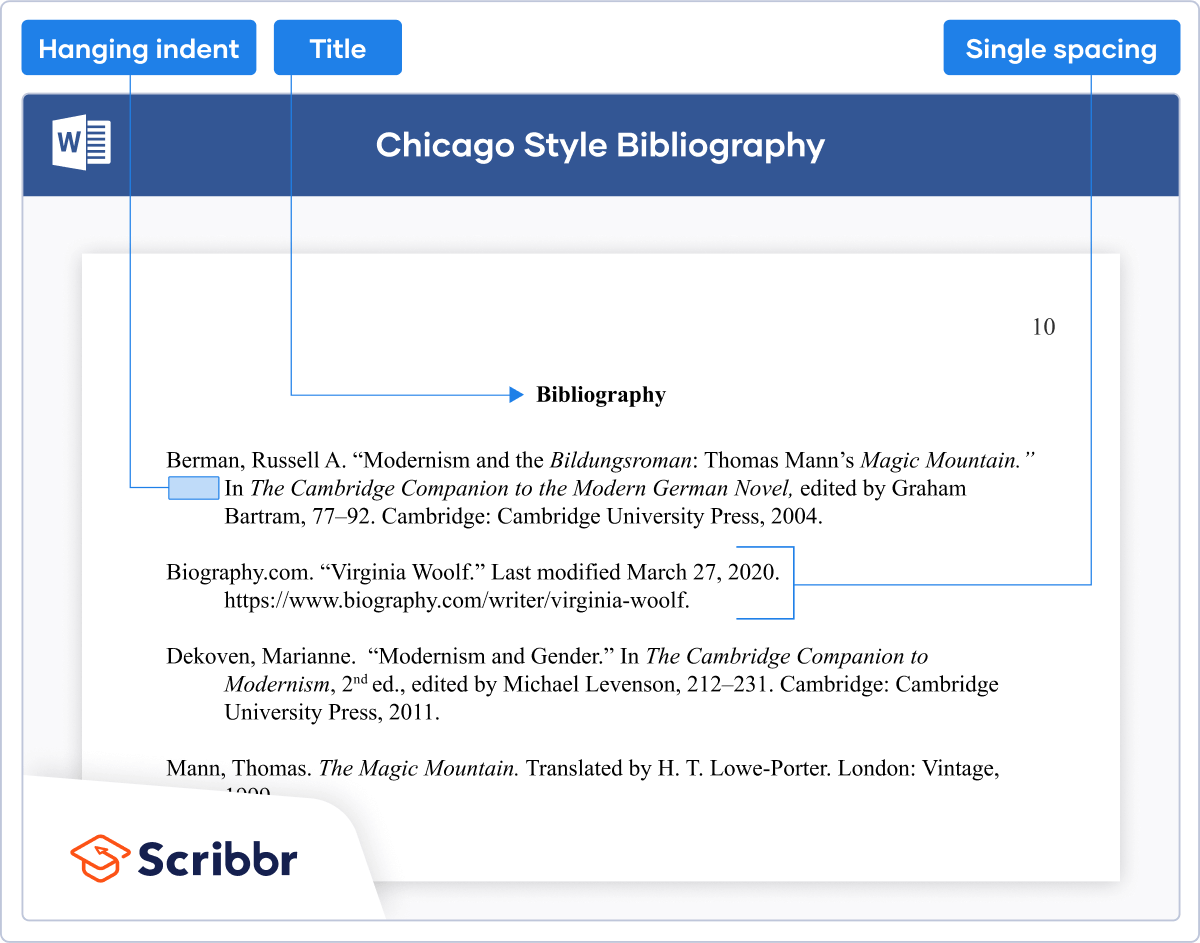
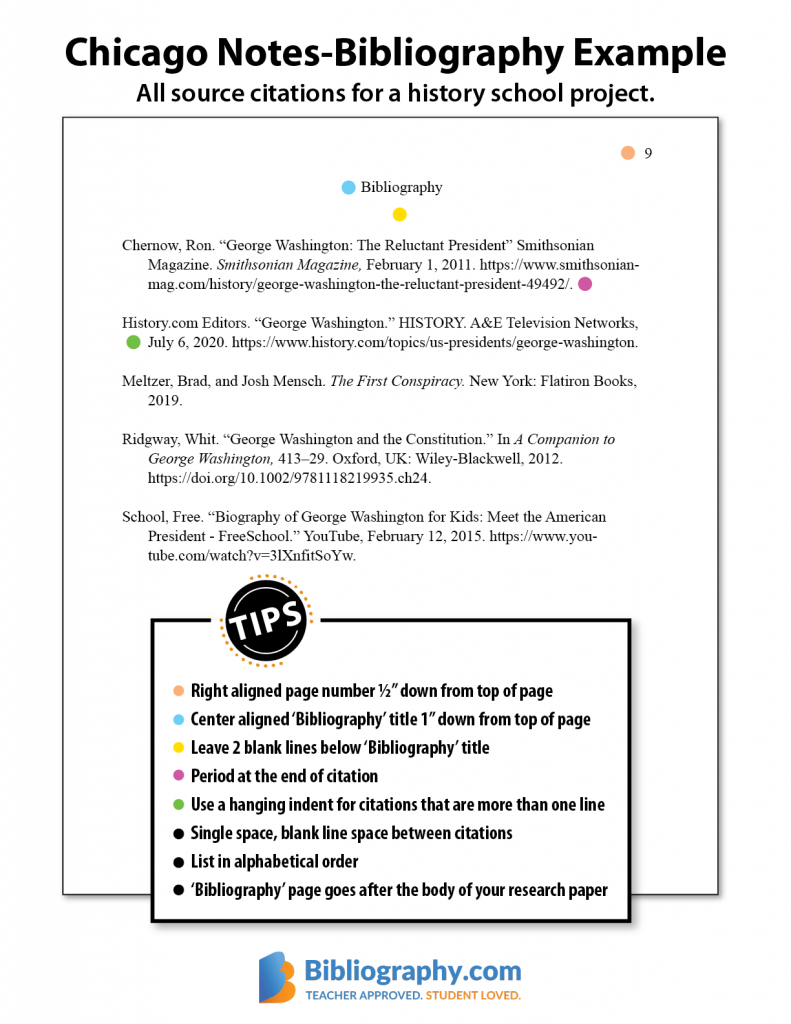
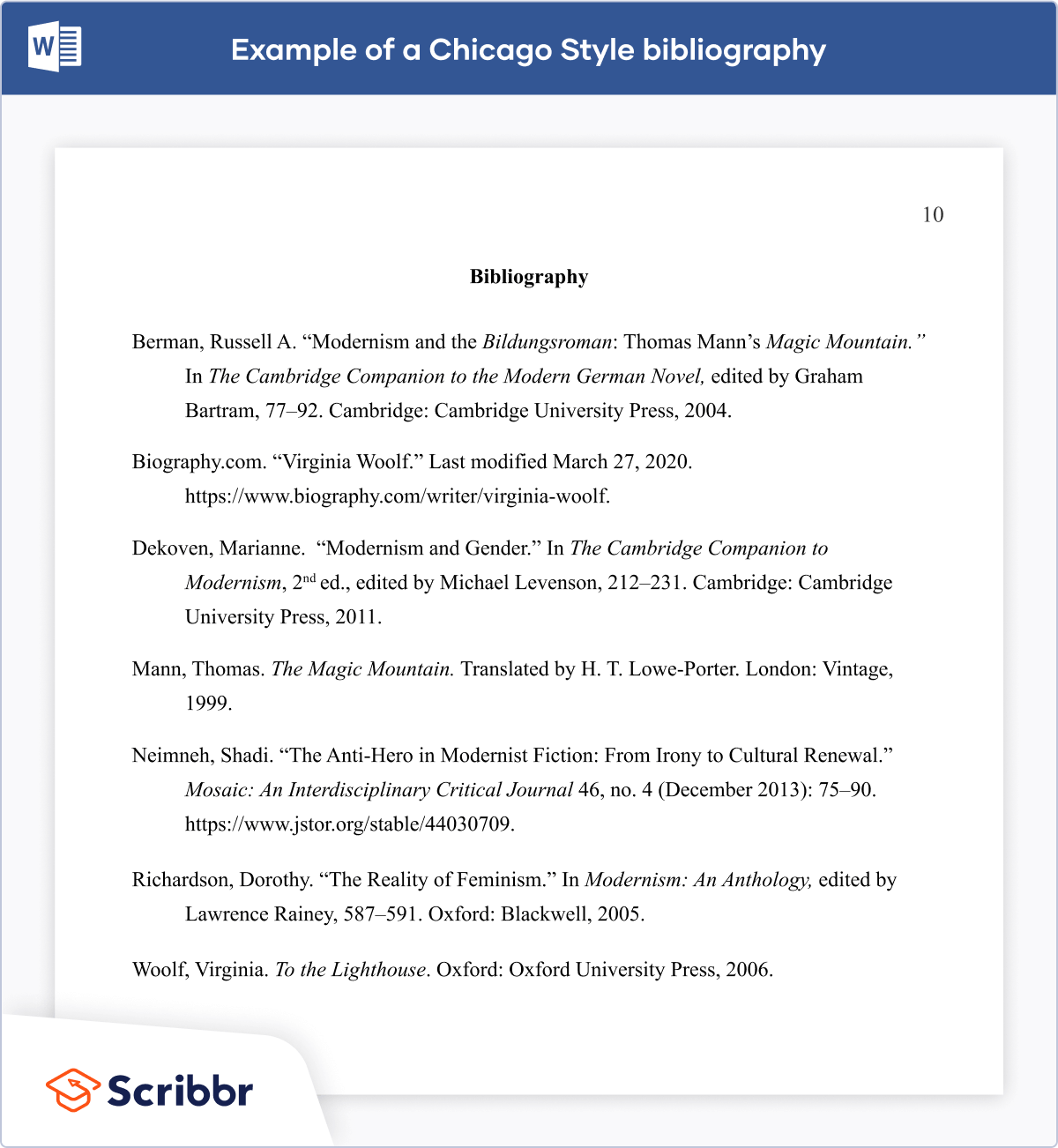
The bibliography, positioned at the end of your work, serves as a definitive list of all the sources you have formally cited in your notes. It is alphabetized by the author’s last name (or by title if no author is given). The bibliography entries provide the full bibliographic details for each source, enabling readers to locate and consult the original material themselves. This section is crucial for demonstrating the breadth of your research and for giving proper credit to the original creators of the information and ideas you have utilized.
Crafting Your Bibliography Entries: Core Principles and Examples
The structure and content of a bibliography entry are determined by the type of source being cited. While variations exist, certain core principles and common source types form the backbone of a Chicago-style bibliography.
Essential Elements of a Bibliography Entry
Regardless of the source type, most Chicago-style bibliography entries will include several key pieces of information:
- Author(s): Last name, First name.
- Title: The full title of the work, italicized for books and articles, or put in quotation marks for shorter works like journal articles.
- Publication Information: For books, this includes the city of publication, publisher, and year of publication. For journal articles, it includes the journal title, volume number, issue number, and publication date.
- Page Numbers: For specific quotations or information, the relevant page numbers are essential.
Common Source Types and Their Formatting
Let’s delve into the specifics of formatting for frequently encountered source types:
Books
Books are a cornerstone of academic research, and their citation in Chicago style is straightforward.
-
Single Author:
Last Name, First Name. Title of Book. City of Publication: Publisher, Year of Publication.Example:
Smith, John. The Lost City of Atlantis. New York: Penguin Books, 2020. -
Two or Three Authors:
Last Name, First Name, and First Name Last Name. Title of Book. City of Publication: Publisher, Year of Publication.
Last Name, First Name, First Name Middle Initial Last Name, and First Name Last Name. Title of Book. City of Publication: Publisher, Year of Publication.Example:
Doe, Jane, and Robert Johnson. Exploring Ancient Ruins. London: Oxford University Press, 2018. -
More Than Three Authors:
Last Name, First Name, et al. Title of Book. City of Publication: Publisher, Year of Publication.
(Note: “et al.” is Latin for “and others”.)Example:
Williams, Sarah, et al. The History of Global Exploration. Boston: Houghton Mifflin Harcourt, 2019. -
Edited Book:
Editor Last Name, First Name, ed. Title of Book. City of Publication: Publisher, Year of Publication.Example:
Miller, David, ed. Journeys Through Time. Chicago: University of Chicago Press, 2021. -
Chapter in an Edited Book:
Author Last Name, First Name. “Title of Chapter.” In Title of Book, edited by Editor First Name Last Name, Page Range of Chapter. City of Publication: Publisher, Year of Publication.Example:
Davis, Emily. “The Architecture of Ancient Wonders.” In Architectural Marvels of the Ancient World, edited by Paul Chen, 45-78. Paris: Gallimard, 2022.
Journal Articles
Academic journals are vital for contemporary research.
-
Journal Article:
Author Last Name, First Name. “Title of Article.” Title of Journal Volume, no. Issue (Year): Page Range of Article.Example:
Brown, Michael. “The Impact of Roman Roads on Trade.” Journal of Ancient History 35, no. 2 (2017): 112-135. -
Article from an Online Journal (with DOI):
Author Last Name, First Name. “Title of Article.” Title of Journal Volume, no. Issue (Year): Page Range. DOI.Example:
Garcia, Maria. “Unearthing Lost Civilizations.” Archaeological Discoveries Quarterly 12, no. 4 (2023): 201-225. doi:10.1080/12345678.2023.1234567.(Note: DOI stands for Digital Object Identifier. If available, it is the preferred way to cite online articles.)
Websites and Online Resources
The digital realm offers a vast array of information, and citing it correctly is crucial.
-
Web Page:
Author Last Name, First Name (if available). “Title of Web Page.” Name of Website. Date of Publication/Last Update (if available). Accessed Date. URL.Example:
White, Robert. “The History of the Silk Road.” National Geographic. May 15, 2023. Accessed October 26, 2023. https://www.nationalgeographic.com/silkroad. -
Online Article (without DOI):
Author Last Name, First Name. “Title of Article.” Name of Publication. Date of Publication. Accessed Date. URL.Example:
Lee, David. “Exploring the Fjords of Norway.” Travel Today. June 10, 2022. Accessed October 26, 2023. https://www.traveltoday.com/norwayfjords.
Special Considerations and Nuances
Beyond these common source types, several other aspects require attention:
Works Cited Multiple Times
As mentioned, the first note for a source is typically full. Subsequent notes referencing the same source are shortened.
- First Note:
- John Smith, The Lost City of Atlantis (New York: Penguin Books, 2020), 55.
- Subsequent Notes for the Same Source:
- If consecutive and the same page:
- Ibid.
- If consecutive but different page:
- Ibid., 62.
- If not consecutive:
- Smith, Lost City, 78.
- If consecutive and the same page:
The bibliography, however, lists all cited works in full, regardless of how many times they were referenced in the notes.
Anonymous Works
If a work has no author, the entry begins with the title. Alphabetize by the first significant word of the title (ignoring “A,” “An,” or “The”).
-
Title of Work. City of Publication: Publisher, Year of Publication.
Example:
The Grand Tour Diaries. London: British Museum Press, 2015.
Works with Corporate Authors
If the author is a corporate body (an organization, company, or government agency), list the name of the body as the author.
-
Corporate Author Name. Title of Work. City of Publication: Publisher, Year of Publication.
Example:
World Tourism Organization. Global Tourism Trends 2023. Madrid: UNWTO, 2023.
Locating Publication Information
For physical books, publication details are typically found on the title page and the copyright page (verso of the title page). For online resources, look for “About Us,” “Contact,” or copyright notices. If a publication date or city is unavailable, you may use “n.d.” (no date) or “n.p.” (no place of publication), but always strive to find this information if possible.
The Art of Citation: Beyond the Mechanics
Mastering the mechanics of a Chicago Style bibliography is essential, but it’s also important to understand the why behind it. Accurate citation demonstrates intellectual honesty and respect for the work of others. It allows your readers to trace your research, critically evaluate your sources, and engage more deeply with the subject matter. Whether you are documenting your research on ancient ruins, analyzing the cultural significance of a landmark, or reviewing the historical context of a famous attraction, a well-crafted bibliography is a testament to your scholarly rigor and a valuable tool for your readers. By diligently applying these principles, you will ensure your research is presented with the clarity and credibility it deserves, enriching both your work and the broader academic conversation.
LifeOutOfTheBox is a participant in the Amazon Services LLC Associates Program, an affiliate advertising program designed to provide a means for sites to earn advertising fees by advertising and linking to Amazon.com. Amazon, the Amazon logo, AmazonSupply, and the AmazonSupply logo are trademarks of Amazon.com, Inc. or its affiliates. As an Amazon Associate we earn affiliate commissions from qualifying purchases.