
Evicting a tenant in Texas, while a necessary process for landlords facing difficult situations, is governed by strict legal procedures. Understanding these steps is crucial to ensure the eviction is lawful and avoids potential complications. This guide breaks down the Texas eviction process, focusing on the legal framework and best practices for property owners. Whether you’re a seasoned landlord or new to property management, navigating this process with knowledge and diligence is paramount.
Understanding the Grounds for Eviction in Texas
Before initiating any eviction proceedings, it’s essential to have a valid legal reason. Texas law outlines several common grounds for eviction, and the landlord must be able to prove the tenant violated the terms of the lease agreement. These grounds generally fall into categories of non-payment of rent or breach of lease terms.
Non-Payment of Rent
This is the most frequent reason for eviction. A tenant’s failure to pay rent on time, as stipulated in the lease agreement, provides a clear basis for eviction. The lease will typically define what constitutes “late” rent and any associated late fees. It’s important to note that even a partial payment of rent after notice has been served can complicate the eviction process, though it doesn’t always nullify the landlord’s right to proceed if the full amount is not eventually paid.
Breach of Lease Agreement
Beyond rent payment, tenants are bound by numerous other provisions in a lease. Violations can include:
- Unauthorized Occupants: Allowing individuals not listed on the lease to reside in the property without the landlord’s permission.
- Damage to Property: Causing significant damage to the rental unit beyond normal wear and tear. This could range from broken windows to structural alterations.
- Illegal Activity: Engaging in or allowing illegal activities on the premises. This is often grounds for immediate eviction.
- Substance Abuse: Using or manufacturing illegal drugs on the property, which can be a serious lease violation.
- Disturbing the Peace: Repeatedly causing disturbances that negatively impact neighbors or other tenants.
- Violation of Community Rules: In multi-unit properties, failing to adhere to established community rules (e.g., pet policies, noise restrictions) after receiving warnings.
- Failure to Maintain Utilities: In some rare cases, if the lease requires the tenant to maintain certain utilities and they fail to do so, leading to property issues.
Lease Expiration Without Renewal
If a fixed-term lease has expired and the tenant has not vacated the property or a new lease has not been agreed upon, the landlord may have grounds to request possession of the property. However, if the landlord continues to accept rent after the lease expires, the tenant may convert to a month-to-month tenancy, requiring a different notice period.
The Legal Process: Step-by-Step Eviction in Texas
The eviction process in Texas is a formal legal proceeding that requires adherence to specific timelines and procedures. Deviating from these steps can lead to the dismissal of the eviction case, forcing the landlord to start over.
Step 1: Serve a Written Notice to Vacate
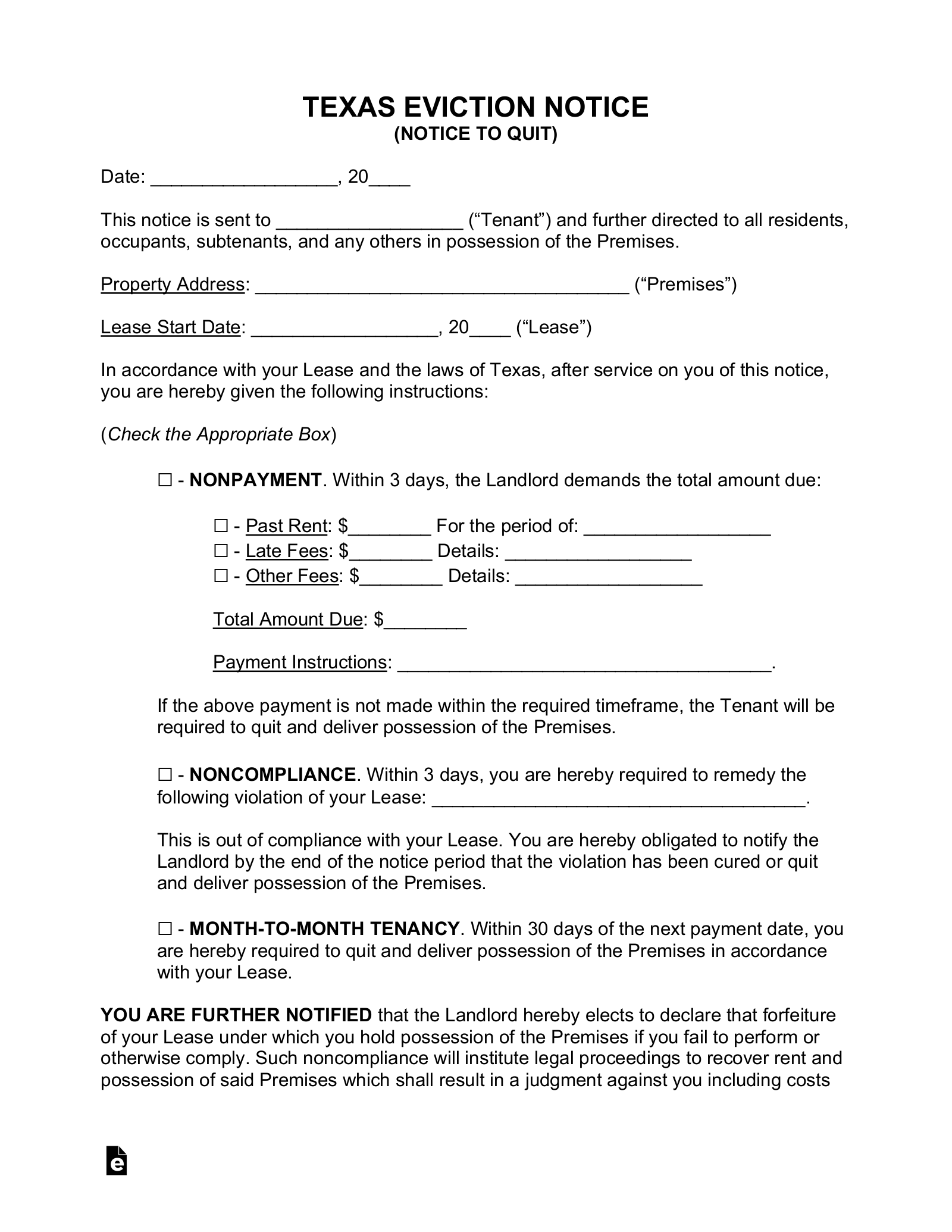
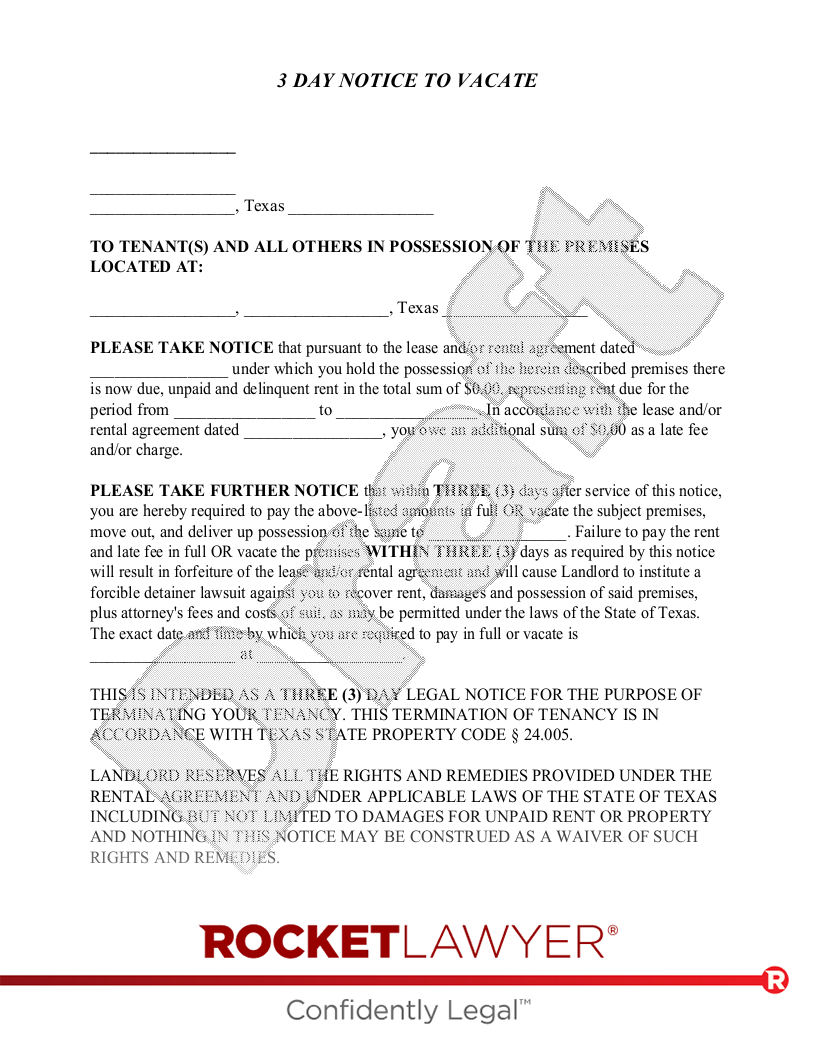
Before filing an eviction lawsuit, the landlord must provide the tenant with a written notice to vacate the premises. This notice serves as a formal warning that the landlord intends to pursue eviction if the tenant does not comply.
Types of Notices and Their Requirements
-
Three-Day Notice to Vacate: This is the most common notice and is typically used for non-payment of rent or lease violations. The notice must clearly state the reason for the eviction and the date by which the tenant must vacate. The “three days” are typically business days, excluding weekends and holidays, and the tenant has until midnight on the third day to move out. The notice must be properly delivered to the tenant. Valid methods of delivery include:
- Personal delivery to the tenant.
- Leaving the notice with another occupant over 16 years of age at the property.
- Posting the notice on the inside of the main entry door if personal delivery or delivery to another occupant is unsuccessful.
- Mailing the notice by certified mail, return receipt requested.
-
One-Month Notice to Vacate: If the lease has expired or the tenant is on a month-to-month lease, a one-month notice to vacate is usually required. This notice must be given on or before the first day of the rental period to be effective for that period. For example, to terminate a lease on May 31st, the notice must be delivered before May 1st.
-
Specific Lease Provisions: Always review the lease agreement, as it may contain specific clauses regarding notice periods that exceed the statutory minimums. In such cases, the lease terms usually take precedence.
Content of the Notice
The written notice should include:
- The tenant’s full name.
- The property address.
- The specific reason for the notice (e.g., “failure to pay rent for the month of [Month]”).
- The date by which the tenant must vacate.
- A statement that if the tenant fails to vacate by the specified date, the landlord will file an eviction suit.
- The landlord’s signature and the date the notice was given.
Step 2: File an Eviction Lawsuit (Forcible Entry and Detainer)
If the tenant does not vacate the property by the date specified in the notice, the landlord can file an eviction lawsuit, also known as a Forcible Entry and Detainer suit, with the Justice of the Peace court in the county where the property is located.
The Petition
The landlord, or their attorney, will file a petition with the court. This document outlines:
- The names of the landlord and tenant(s).
- A description of the property.
- The grounds for eviction.
- The date the notice to vacate was served.
- The relief sought (possession of the property).
Service of Citation
Once the petition is filed, the court will issue a citation. This citation, along with a copy of the filed petition, must be formally served on the tenant by a constable or authorized process server. This ensures the tenant is officially notified of the lawsuit and has an opportunity to respond. The citation will inform the tenant of the date and time of the court hearing.

Step 3: The Eviction Hearing
The court will schedule a hearing, typically within a few weeks of the citation being served. Both the landlord and the tenant have the right to appear and present their case.
Tenant’s Response
The tenant has a limited time to file an answer with the court. If the tenant does not file an answer or appear at the hearing, the landlord may be granted a default judgment.
Presenting the Case
At the hearing, the landlord must present evidence to support their claim for eviction. This may include:
- A copy of the lease agreement.
- Proof of rent payment or non-payment (e.g., bank statements, rent rolls).
- Copies of the written notice to vacate and proof of service.
- Photographs or documentation of lease violations (e.g., property damage, evidence of illegal activity).
The tenant also has the opportunity to present any defenses they may have, such as disputing the amount of rent owed, arguing that the notice was improper, or claiming the landlord failed to maintain the property.
Step 4: Judgment and Writ of Possession
If the judge rules in favor of the landlord, an Order of Eviction (also called a Judgment for Possession) will be issued. This order grants the landlord legal possession of the property.
Writ of Possession
The Order of Eviction does not automatically remove the tenant. The landlord must then request a Writ of Possession from the court. This is a court order directing the constable or sheriff to physically remove the tenant and their belongings from the property if they have not voluntarily vacated after a specific period (usually 24 to 72 hours) following the execution of the writ. The constable will post a notice on the property indicating when they will return to physically remove the tenant.
Tenant’s Property
Texas law has specific rules regarding any property left behind by the tenant. Landlords cannot simply discard it. They must provide written notice to the tenant regarding the abandoned property and store it safely. If the tenant does not claim the property within a certain timeframe, the landlord may be able to sell or dispose of it.
Important Considerations and Best Practices
Navigating an eviction requires careful attention to detail and a commitment to legal compliance. Even minor errors can lead to delays or the dismissal of a case.
Legal Counsel
While not always mandatory, hiring an attorney experienced in landlord-tenant law is highly recommended. An attorney can ensure all legal requirements are met, draft proper notices and court documents, represent you in court, and advise on best practices to avoid common pitfalls. This is especially important for complex cases or for landlords unfamiliar with Texas eviction statutes.
Documentation is Key
Maintain thorough records of all communications with the tenant, lease agreements, rent payments, notices served, and any evidence of lease violations. This documentation is critical for building a strong case in court.
Avoid Self-Help Eviction
Under no circumstances should a landlord attempt to physically remove a tenant or their belongings without a court order, change the locks, or shut off utilities to force a tenant out. These actions constitute “self-help eviction” and are illegal in Texas, carrying significant penalties for the landlord. The only legal way to regain possession of the property is through the court-ordered eviction process.
Tenant Defenses and Strategies
Be prepared for potential tenant defenses. Common defenses include:
- Improper Notice: Arguing that the notice to vacate was not properly served or did not contain the required information.
- Waiver: Claiming the landlord waived their right to evict by accepting rent after the notice was served (though this is often complex and depends on specific circumstances).
- Retaliation: If the tenant believes the eviction is in retaliation for a complaint they made about the property’s condition.
- Breach by Landlord: The tenant may argue that they withheld rent due to the landlord’s failure to make necessary repairs.
Fair Housing Laws
Landlords must ensure that their eviction practices comply with federal and state fair housing laws. Eviction cannot be based on a tenant’s race, religion, sex, familial status, national origin, disability, or other protected characteristics.
Alternative Dispute Resolution
In some situations, before or even during the eviction process, landlords and tenants may consider alternative dispute resolution methods, such as mediation. A neutral third party can help facilitate a discussion and potentially lead to an agreement that avoids the time and expense of a court battle. However, mediation is typically voluntary and not a substitute for the formal legal process if an agreement cannot be reached.
Successfully evicting a tenant in Texas is a process that demands a thorough understanding of state law and meticulous adherence to procedures. By following the legal steps, maintaining excellent documentation, and seeking professional guidance when necessary, landlords can navigate this challenging aspect of property ownership effectively and lawfully.
LifeOutOfTheBox is a participant in the Amazon Services LLC Associates Program, an affiliate advertising program designed to provide a means for sites to earn advertising fees by advertising and linking to Amazon.com. Amazon, the Amazon logo, AmazonSupply, and the AmazonSupply logo are trademarks of Amazon.com, Inc. or its affiliates. As an Amazon Associate we earn affiliate commissions from qualifying purchases.