
Navigating the complexities of obtaining a hardship license in Florida can seem daunting, especially when the need arises from circumstances that significantly impact your daily life. While the primary purpose of lifeoutofthebox.com is to inspire and guide you through the myriad of travel experiences, from exotic destinations to the finest hotels and enriching tourism opportunities, understanding crucial legal and logistical necessities within the Sunshine State is also an integral part of a well-rounded lifestyle, particularly for residents. This article, while deviating from our usual focus on travel and lifestyle, aims to provide clarity on a vital process for many Floridians.
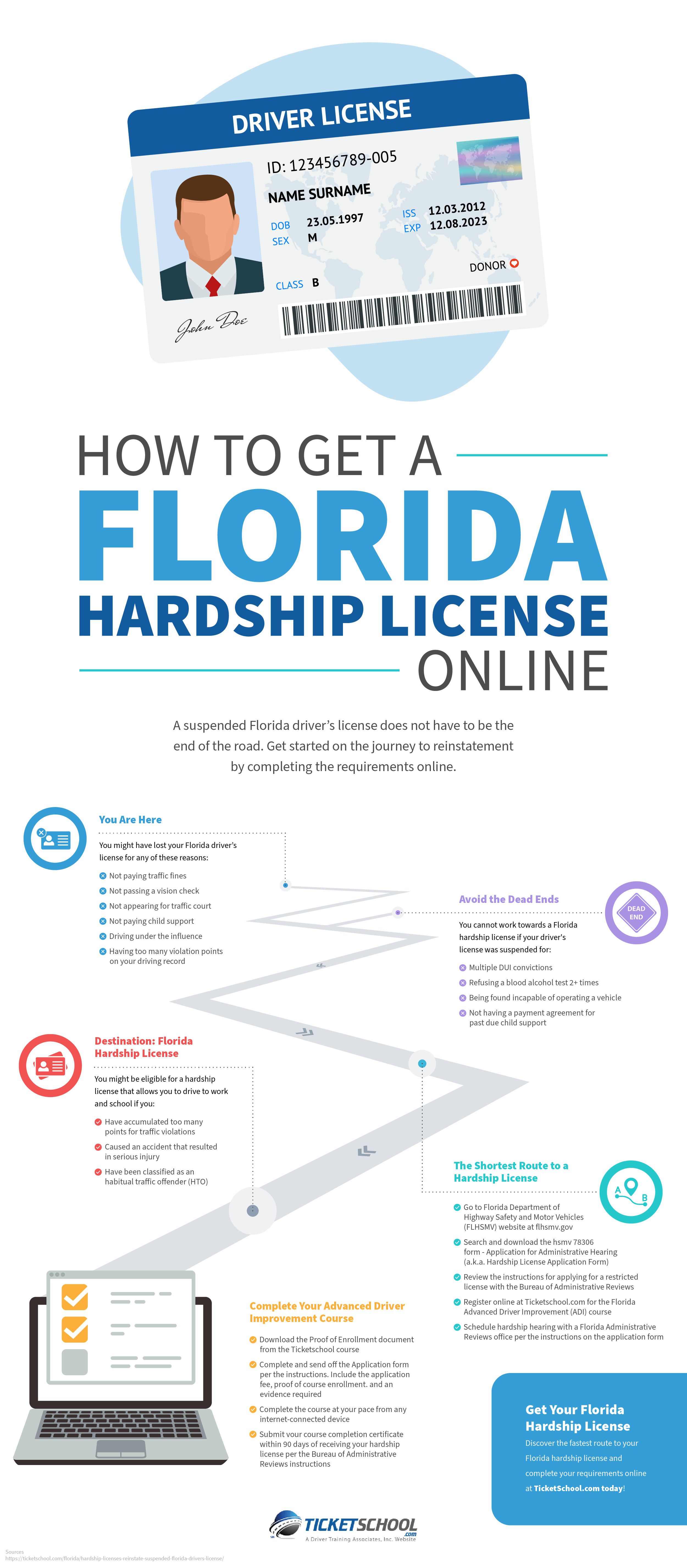
A hardship license, often referred to as a hardship or business purposes only (BPO) license, is a restricted driver’s license that allows an individual whose driving privileges have been suspended or revoked to operate a motor vehicle under specific, limited conditions. This is typically granted when a driver can demonstrate that a lack of driving ability would cause extreme hardship, such as the inability to maintain employment, attend required educational programs, or seek necessary medical treatment. The process is not automatic and requires a thorough application and review by the Florida Department of Highway Safety and Motor Vehicles (FLHSMV).
Understanding the Eligibility Criteria for a Hardship License
The FLHSMV has established specific criteria that applicants must meet to be considered for a hardship license. These criteria are designed to ensure that only those facing genuine necessity are granted this privilege. It’s crucial to understand these requirements before embarking on the application process to avoid unnecessary delays or disappointment.
Demonstrating Extreme Hardship
The core of any hardship license application hinges on proving “extreme hardship.” This is not simply an inconvenience; it signifies a situation where losing the ability to drive creates significant obstacles to essential aspects of your life. The FLHSMV defines extreme hardship as a situation where the inability to drive would:
- Prevent the applicant from getting to and from their place of employment or to and from a location to seek employment. This is one of the most common reasons for seeking a hardship license. If your job requires you to drive, or if reliable transportation is essential for reaching your workplace, you may qualify. This also extends to actively seeking new employment if you are currently unemployed.
- Prevent the applicant from getting to and from the location of a business or for the purpose of attending a course of instruction or an educational institution in which the applicant is enrolled. This covers individuals who need to drive for their business operations or to attend school or college. For students, this might include commuting to classes or accessing necessary resources for their studies.
- Prevent the applicant from getting to and from the location of a required medical appointment or to and from a place to obtain necessary medical treatment for themselves or a person residing in their household. Access to healthcare is a fundamental need. If your ability to attend doctor’s appointments, therapy sessions, or receive vital medical treatments is contingent on driving, you may be eligible. This also applies if you are the primary caregiver for someone in your household who requires medical attention and you are their only means of transportation.
It is important to note that the FLHSMV interprets “extreme hardship” strictly. Personal convenience, such as attending social events, running errands unrelated to employment or medical needs, or visiting family members who are not medically dependent on your transportation, generally do not constitute grounds for a hardship license. The applicant must demonstrate that their situation is dire and that the hardship license is the only viable solution to overcome these critical life necessities.
Specific License Suspension/Revocation Reasons and Hardship Eligibility
The reason for your license suspension or revocation significantly impacts your eligibility for a hardship license. Certain offenses make it more difficult, or even impossible, to obtain one.
- DUI/DWI Offenses: For individuals with Driving Under the Influence (DUI) or Driving While Intoxied (DWI) convictions, Florida law has specific provisions regarding hardship licenses. In many cases, especially for first offenses, a hardship license might be obtainable after serving a mandatory waiting period and completing required DUI programs. However, subsequent offenses often carry stricter penalties, and the availability of a hardship license becomes more restricted. For certain DUI-related revocations, a “Monitoring Device Program” (MDL) may be required, which involves installing an ignition interlock device (IID) in your vehicle.
- Traffic Offenses (Non-DUI): Suspensions due to accumulating too many points on your driving record, habitual traffic offender status, or other non-DUI traffic violations may make you eligible for a hardship license, provided you meet the extreme hardship requirements.
- Criminal Traffic Offenses: Offenses like reckless driving, leaving the scene of an accident, or driving with a suspended license can have varying impacts on hardship license eligibility. The severity of the offense and any prior record will be carefully considered.
- Medical Reasons: In some instances, if a driver’s license was suspended due to medical reasons (e.g., a medical condition that affects driving ability), obtaining a hardship license might be possible if the medical condition has been addressed and certified by a physician, and it can be proven that driving is still essential for necessary life functions.
It is imperative to review the specific statutes and regulations related to your particular suspension or revocation reason. The FLHSMV website is an excellent resource for detailed information on these specific scenarios.
The Application Process for a Hardship License in Florida
Securing a hardship license involves a formal application process with the FLHSMV. This process requires meticulous attention to detail and the submission of supporting documentation to bolster your case.
Gathering Necessary Documentation
The success of your application heavily relies on the evidence you present. Be prepared to gather a comprehensive set of documents. Common requirements include:
- Proof of Employment: If your hardship is due to employment, you will need official documentation from your employer. This can include a letter on company letterhead stating your job title, job duties, hours of employment, and the necessity of driving for your role or to commute. Pay stubs or recent tax returns may also be requested.
- Proof of Enrollment in Educational Programs: If your hardship is related to schooling, you’ll need an official letter from the educational institution verifying your enrollment, course of study, and the schedule of your classes or educational activities.
- Medical Documentation: For hardship related to medical needs, a letter from your physician is crucial. This letter should detail the medical condition, the necessity of medical treatment, the frequency of appointments, and why your personal transportation is essential for accessing this care. It may also need to confirm that your medical condition does not pose an immediate risk to public safety when operating a vehicle under restricted conditions.
- Proof of Residency: You will need to provide evidence of your residency in Florida, such as a utility bill or lease agreement.
- Driving Record: While the FLHSMV has your driving record, you may be asked to obtain a certified copy or be prepared to discuss any discrepancies.
- Proof of Completion of Required Programs: If your suspension is related to a DUI, you will likely need proof of completion of state-approved DUI programs, traffic school, or substance abuse evaluations.
- Application Form: You will need to complete the official FLHSMV application form for a hardship license. This form will require detailed personal information, the specifics of your hardship, and the reasons why you are seeking the restricted license.
Submitting Your Application and Attending Hearings
Once you have meticulously prepared all required documents, the next step is to submit your application. This typically involves visiting a driver license service center or following specific online or mail-in procedures as outlined by the FLHSMV.
- Initial Review: The FLHSMV will review your submitted application and supporting documents. They will assess whether you meet the basic eligibility requirements based on your suspension reason and the evidence of hardship.
- Hearing: In many cases, especially for more complex situations or if there are any ambiguities in your application, you may be required to attend a formal hearing. This hearing is an opportunity for you to present your case directly to an FLHSMV hearing officer. You will be able to explain your situation in detail, present your evidence, and answer any questions the officer may have. It is highly advisable to prepare thoroughly for this hearing, organize your documents, and be clear and concise in your explanations. Having legal counsel present can also be beneficial in navigating these hearings.
- Decision: After reviewing all the information and potentially holding a hearing, the FLHSMV will make a decision on your application. If approved, you will be issued a hardship license with specific restrictions. If denied, you will be informed of the reasons for the denial, and there may be options for appeal.
Understanding Hardship License Restrictions
It is crucial to understand that a hardship license is not a full reinstatement of your driving privileges. It comes with significant restrictions designed to limit your driving to the essential purposes for which it was granted. Common restrictions include:
- Time Restrictions: You may only be permitted to drive during specific hours of the day (e.g., during work hours, school hours, or to and from medical appointments). Driving outside of these permitted hours is a violation and can lead to further penalties.
- Geographic Restrictions: In some cases, the license may be restricted to specific geographic areas, such as driving only within a certain radius of your home or workplace.
- Purpose Restrictions: The license is strictly for the approved purposes (e.g., employment, education, medical). Driving for any other reason is a violation.
- Vehicle Restrictions: You may be required to drive only a specific vehicle or a vehicle equipped with an ignition interlock device (IID), especially if the suspension was for a DUI offense.
Failure to adhere to any of these restrictions will result in severe consequences, including the potential cancellation of your hardship license and further legal penalties. Always carry a copy of your hardship license and any supporting documentation (like a letter from your employer for work-related restrictions) with you while driving.
Obtaining a hardship license in Florida is a process that demands patience, thorough preparation, and a clear understanding of the requirements. While our website typically guides you through the wonders of travel and tourism, we understand that for Florida residents, navigating these essential logistical matters is paramount to maintaining their quality of life and lifestyle. By carefully following the outlined steps and presenting a compelling case of extreme hardship, individuals can increase their chances of regaining essential mobility.