
Embarking on a career in real estate in Colorado offers a unique blend of professional opportunity and an unparalleled lifestyle. Known for its stunning natural beauty, vibrant cities, and thriving economy, Colorado presents an attractive landscape for those looking to build a successful real estate career. This guide will walk you through the essential steps and requirements to obtain your real estate broker license in the Centennial State, preparing you for a rewarding professional journey.
The Allure of a Real Estate Career in Colorado
The decision to pursue a real estate career is often driven by a desire for flexibility, financial independence, and the opportunity to help people achieve their dreams. In Colorado, these motivations are amplified by the state’s dynamic housing market and its appealing lifestyle.
Why Choose Colorado?
Colorado’s appeal is multifaceted. From the majestic Rocky Mountains to the bustling urban centers like Denver and Boulder, the state offers diverse living environments and strong economic growth. This translates into a robust real estate market, with consistent demand for both residential and commercial properties. The state’s natural beauty attracts new residents year-round, fueling a steady influx of potential clients. Furthermore, the active outdoor lifestyle, progressive culture, and strong job market contribute to a high quality of life, making it an attractive place for real estate professionals to both live and work. The diverse range of properties, from luxury ski chalets in Aspen to charming bungalows in Colorado Springs, ensures a varied and interesting professional landscape. This constant movement and growth create ample opportunities for new agents to establish themselves and thrive, making the decision to get licensed here a strategic career move rooted in a desirable lifestyle choice.
Understanding the Role of a Real Estate Broker
In Colorado, individuals involved in real estate transactions on behalf of others are generally referred to as “brokers.” Unlike some states that differentiate between salespersons and brokers, Colorado typically licenses all real estate professionals as brokers. A real estate broker acts as an intermediary between buyers and sellers of real property, helping clients navigate the complex process of purchasing, selling, or leasing properties. This involves everything from property valuation and market analysis to contract negotiation and closing coordination. Brokers are fiduciaries, meaning they have a legal and ethical obligation to act in their clients’ best interests, providing expert advice and guidance throughout the transaction. The role demands strong communication skills, an understanding of market trends, legal knowledge, and a commitment to professional ethics. Becoming a broker in Colorado means becoming a trusted advisor in one of the most significant financial decisions many people make, requiring diligence, integrity, and a proactive approach to client service.
Colorado Real Estate License Requirements: A Step-by-Step Guide
Obtaining a real estate license in Colorado is a structured process designed to ensure that all licensed professionals possess the necessary knowledge and ethical standards. Understanding each step thoroughly will help you navigate the journey efficiently.
Eligibility Criteria
Before you even begin your pre-licensing education, you must meet a few fundamental eligibility requirements set by the Colorado Real Estate Commission. Applicants must be at least 18 years old. While Colorado does not require you to be a resident to obtain a license, you must be legally authorized to work in the United States. Furthermore, you should possess a high school diploma or its equivalent, such as a GED. Perhaps most importantly, you must be prepared to demonstrate honesty, trustworthiness, and integrity. Any past criminal convictions, especially those related to fraud or dishonesty, could impact your eligibility. The Colorado Real Estate Commission will conduct a thorough background check, making full disclosure of any relevant history crucial from the outset. Understanding these foundational requirements is the first critical step toward a successful application.
The Pre-Licensing Education
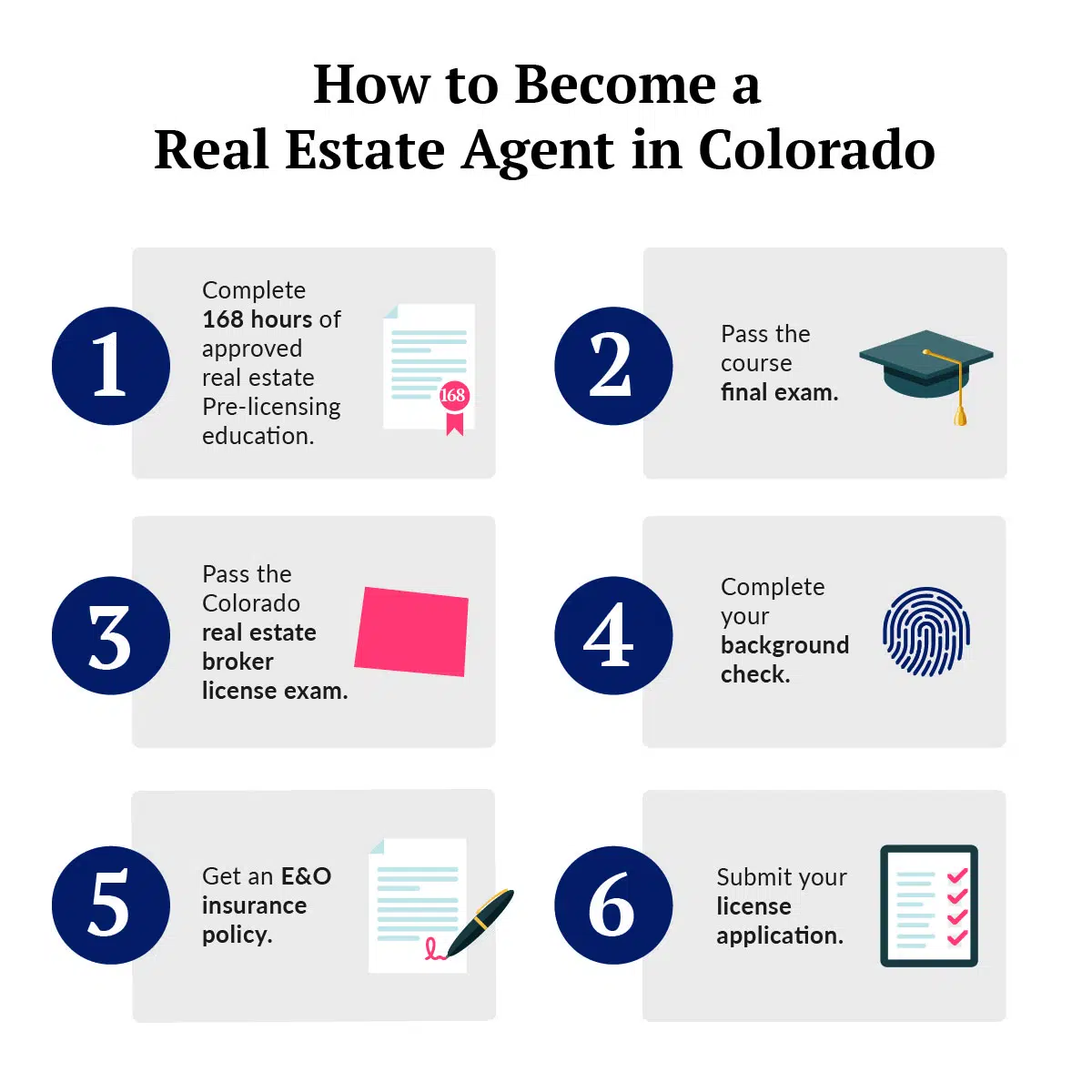
The cornerstone of becoming a licensed real estate broker in Colorado is completing the mandatory pre-licensing education. You are required to complete 168 hours of approved coursework. This extensive curriculum is designed to provide you with a comprehensive understanding of real estate principles, practices, and laws. The courses typically cover a wide range of topics, including:
- Real Estate Law: State-specific statutes, regulations, and legal concepts governing property ownership and transactions.
- Property Ownership: Different forms of ownership, estates, and interests in real property.
- Contract Law: Formation, validity, and enforcement of real estate contracts.
- Agency Relationships: Duties and responsibilities of brokers to clients and customers.
- Valuation and Appraisal: Methods for determining property value.
- Financing: Mortgages, loans, and other financial instruments used in real estate.
- Closing and Settlement: Procedures and documentation involved in transferring property ownership.
- Brokerage Administration: Running a real estate business and managing client relationships.
These courses can be taken through approved real estate schools, which offer both in-person and online learning formats, providing flexibility to suit various lifestyles and schedules. It’s vital to choose an accredited institution to ensure your education meets the commission’s standards. Upon successful completion of all coursework, you will receive a certificate, which is a prerequisite for taking the state licensing exam.
Background Check and Fingerprinting
As part of the eligibility and licensing process, all applicants are required to undergo a comprehensive criminal history background check. This process involves submitting your fingerprints to the Colorado Bureau of Investigation (CBI) and the Federal Bureau of Investigation (FBI) for a nationwide search. The purpose is to ensure public protection by verifying the applicant’s moral character and assessing any potential risks. You will typically schedule a fingerprinting appointment with an approved vendor, and the results will be sent directly to the Colorado Real Estate Commission. It is critical to disclose any past criminal convictions, even minor ones, on your application. Failing to disclose information that is later discovered through the background check can lead to denial of your license application. Transparency throughout this stage demonstrates integrity and can positively influence the commission’s review process, ensuring you meet the ethical standards required of a real estate professional.
Navigating the Colorado Real Estate Exam
Once you’ve completed your pre-licensing education, the next significant hurdle is passing the Colorado Real Estate Broker Exam. This comprehensive examination tests your knowledge across all areas of real estate practice.
Exam Structure and Content
The Colorado Real Estate Broker Exam is administered by a third-party testing service, typically PSI Exams. It is a computer-based test divided into two main sections:
- National Portion: This section covers general real estate principles and practices that are common across most states. Topics include property ownership, real estate contracts, financing, agency law, property valuation, and federal fair housing laws. This part usually consists of around 80 multiple-choice questions.
- State Portion: This section focuses specifically on Colorado real estate laws, rules, and regulations. It assesses your understanding of state-specific statutes, disclosures, and ethical requirements pertinent to practicing real estate within Colorado. This part typically has around 50 multiple-choice questions.

You must pass both sections of the exam. The time allotted for the entire exam is usually four hours, allowing sufficient time to answer all questions thoroughly. Familiarity with the exam format and content is crucial for success, highlighting the importance of focused study.
Preparing for Success
Effective preparation is key to passing the challenging Colorado Real Estate Broker Exam. Here are some strategies to maximize your chances of success:
- Review Your Coursework Thoroughly: Go back through your 168 hours of pre-licensing education material. Create flashcards, summarize key concepts, and ensure you understand the foundational principles.
- Utilize Practice Exams: Many real estate schools and online platforms offer practice exams that simulate the actual test environment. Taking these regularly will help you become familiar with the question types, timing, and overall structure of the exam. Identify areas where you consistently struggle and dedicate extra study time to those topics.
- Focus on Colorado Specifics: While the national portion covers broad concepts, the state-specific portion requires detailed knowledge of Colorado law. Pay close attention to topics like water rights, disclosure requirements, and licensing regulations unique to Colorado.
- Form Study Groups: Collaborating with peers can provide different perspectives, help clarify difficult concepts, and make studying more engaging.
- Manage Your Time: During the actual exam, allocate your time wisely. Don’t get stuck on one difficult question; flag it and come back to it if time permits.
Post-Exam Procedures
Once you complete the exam, you will typically receive your results immediately. If you pass both the national and state portions, congratulations! You will receive instructions on how to proceed with your license application. If you don’t pass one or both sections, you will receive a breakdown of your performance, highlighting areas where you need to improve. You can then reschedule to retake the failed section(s) after a waiting period, which is usually 24 hours. There is no limit to the number of times you can retake the exam, but you will need to pay the exam fee each time. It’s important to remember that passing the exam is a major accomplishment, but it’s just one step in the broader licensing process.
Activating Your License and Launching Your Career
Passing the exam is a significant milestone, but it doesn’t automatically mean you’re a licensed broker. There are still crucial steps to take to formally activate your license and begin your professional journey in Colorado.
Broker Sponsorship
In Colorado, newly licensed brokers (sometimes referred to as “associate brokers” in other states) must work under the supervision of an experienced “employing broker” or “independent broker” for their initial two years of practice. This period ensures that new licensees gain practical experience and mentorship in a supervised environment. Finding a sponsoring broker is a critical step. You’ll want to interview with different brokerages to find one that aligns with your professional goals, offers good training, and has a supportive culture. The employing broker will be responsible for ensuring your compliance with real estate laws and ethical practices. Once you’ve secured a sponsoring broker, they will assist you in completing the final steps of your license application. This mentorship is invaluable for navigating your first transactions, understanding local market nuances, and building your client base.
Applying for Your License
With your pre-licensing education completed, background check cleared, and exam passed, you are ready to submit your formal application to the Colorado Real Estate Commission. This application typically includes:
- Proof of Education: Your certificate of completion for the 168 hours of coursework.
- Exam Scores: Verification of passing both sections of the broker exam.
- Background Check Clearance: Confirmation that your fingerprinting and background check were successfully processed.
- Broker Sponsorship Affidavit: A form signed by your employing broker, indicating their intent to supervise you.
- Application Fee: Payment of the required licensing fee.
The application can usually be submitted online through the Colorado Department of Regulatory Agencies (DORA) portal. Be meticulous in filling out all information and attaching necessary documentation to avoid delays. Once submitted, the commission will review your application. Upon approval, your Colorado Real Estate Broker license will be issued, officially allowing you to practice real estate.
Continuing Education and License Renewal
Obtaining your license is just the beginning; maintaining it requires ongoing commitment to professional development. In Colorado, real estate broker licenses must be renewed every three years. To renew your license, you are required to complete a specific number of continuing education (CE) hours. The current requirement is 24 hours of CE every three-year license cycle, which includes a mandatory Annual Commission Update (ACU) course each year. These courses ensure that brokers stay up-to-date with changes in real estate law, market trends, ethical standards, and best practices. Staying informed is not only a licensing requirement but also essential for providing top-tier service to your clients and maintaining your competitive edge in the dynamic Colorado real estate market.
Building a Thriving Real Estate Business in Colorado
With your license in hand, the real work of building a successful career begins. Colorado’s diverse market offers unique avenues for growth and specialization.
Specializing in Niche Markets
Colorado’s varied geography and economy present numerous opportunities for brokers to specialize. Instead of trying to be a generalist, consider focusing on a particular niche that aligns with your interests and the state’s unique offerings. This could include:
- Luxury Homes: Targeting high-net-worth clients interested in upscale properties in areas like Cherry Creek, Vail, or Aspen.
- Mountain Properties: Specializing in cabins, ski-in/ski-out residences, or vacation rentals in resort towns.
- Commercial Real Estate: Focusing on office buildings, retail spaces, or industrial properties in urban centers like Denver or Fort Collins.
- Land Sales: Assisting clients with the purchase or sale of undeveloped land, particularly relevant in a state with vast natural landscapes.
- First-Time Homebuyers: Guiding new entrants through the complexities of their initial home purchase.
- Relocation Specialists: Assisting individuals and families moving to Colorado, often tapping into the lifestyle aspect.
Developing expertise in a niche allows you to become a go-to authority, build a strong referral network, and cater to specific client needs more effectively.
Networking and Professional Development
Success in real estate is heavily reliant on relationships. Actively engage in networking within the industry and your community. Join local real estate boards and associations, such as the Colorado Association of REALTORS or specific local chapters like the Denver Metro Association of REALTORS. These organizations offer invaluable opportunities for mentorship, continuing education, and connecting with other professionals. Attend industry events, workshops, and seminars to stay current on market trends, technological advancements, and best practices. Building a robust network not only opens doors to new business but also provides a support system and a community for professional growth. Furthermore, consider seeking out mentors who can provide guidance and share their invaluable experience.

Embracing the Colorado Lifestyle
One of the distinct advantages of a real estate career in Colorado is the ability to integrate your professional life with the state’s renowned lifestyle. The flexibility often afforded to real estate professionals allows you to enjoy Colorado’s outdoor activities, vibrant culture, and community events. Whether it’s skiing in the winter, hiking in the summer, or exploring Denver’s art scene, a successful real estate career in Colorado can truly enhance your quality of life. This integration also benefits your business, as your passion for the Colorado lifestyle can become a powerful selling point when connecting with clients who are also drawn to what the state has to offer. By authentically living and embodying the Colorado experience, you can build deeper connections and more effectively serve your clients, helping them find their perfect piece of this beautiful state.
Becoming a real estate broker in Colorado is a journey that demands dedication, continuous learning, and a commitment to serving clients with integrity. By following these steps and embracing the unique opportunities the state provides, you can build a successful and fulfilling career that truly aligns with the Colorado lifestyle.
LifeOutOfTheBox is a participant in the Amazon Services LLC Associates Program, an affiliate advertising program designed to provide a means for sites to earn advertising fees by advertising and linking to Amazon.com. Amazon, the Amazon logo, AmazonSupply, and the AmazonSupply logo are trademarks of Amazon.com, Inc. or its affiliates. As an Amazon Associate we earn affiliate commissions from qualifying purchases.