
Understanding and obtaining a Tax Identification Number (TIN) is a critical step for individuals and businesses operating in Texas and across the United States. While the title of this article specifically addresses Texas, the process for acquiring a TIN is largely governed by federal regulations, with specific state considerations often pertaining to state-level tax IDs rather than the federal TIN itself. This guide will navigate you through the landscape of Tax Identification Numbers, focusing on the most common types and how to obtain them, with a particular emphasis on the implications for residents and businesses within the Lone Star State.

Understanding Tax Identification Numbers (TINs)
A Tax Identification Number (TIN) is a unique identifier used by the Internal Revenue Service (IRS) for tax administration purposes. Think of it as a Social Security Number (SSN) for individuals, but with broader applications for various entities. The primary purpose of a TIN is to track tax liabilities and ensure compliance with federal tax laws. There are several types of TINs, each serving a distinct purpose and issued to different entities. For most individuals residing in Texas who are engaged in business or income-generating activities beyond traditional employment, understanding the difference between an SSN and an Employer Identification Number (EIN) is paramount.
Social Security Number (SSN)
The Social Security Number is the most familiar type of TIN. It is issued by the Social Security Administration (SSA) to U.S. citizens, permanent residents, and eligible temporary (working) residents. If you are an individual operating as a sole proprietor in Texas and your business income is reported on your personal tax return, your SSN will typically serve as your TIN for federal tax purposes. You generally do not need a separate TIN for your sole proprietorship if you are the only owner and do not have employees. However, if your business structure changes or you begin hiring employees, you will likely need to obtain an EIN.
Employer Identification Number (EIN)
An Employer Identification Number, also known as a Federal Tax Identification Number (Federal EIN or FEIN), is a unique nine-digit number assigned by the IRS to business entities operating in the United States, including those in Texas. An EIN is required for various reasons, such as:
- Operating your business as a corporation or partnership.
- Hiring employees.
- Operating a Keogh plan.
- Dealing with certain types of organizations, such as trusts, estates, and non-profits.
- Filing excise tax returns.
- Operating a business as an LLC with more than one member, or if the LLC elects to be taxed as a corporation.
If you are starting a business in Texas and anticipate any of these scenarios, obtaining an EIN is a necessary step. The application process is generally straightforward and can be completed online.
Individual Taxpayer Identification Number (ITIN)
An Individual Taxpayer Identification Number (ITIN) is a tax processing number issued by the IRS to certain resident and non-resident aliens, their spouses, and dependents who cannot get an SSN. An ITIN is for federal tax purposes only. It does not authorize employment in the United States. If you are an individual in Texas who is required to file a U.S. tax return or be claimed as a dependent on a U.S. tax return but does not have, and is not eligible to get, an SSN, you will need an ITIN.
Obtaining an Employer Identification Number (EIN) in Texas
For most businesses operating in Texas that require an EIN, the process is handled directly by the IRS. The most efficient and recommended method is to apply online.
Online Application Process
- Visit the IRS Website: Navigate to the official IRS website and find the section dedicated to EIN applications. The direct link is typically available through the “Apply for an Employer ID Number (EIN) Online” page.
- Eligibility Check: Before you begin, ensure your business entity is eligible to apply for an EIN online. Generally, businesses located in the United States or U.S. territories and that have a valid Taxpayer Identification Number (such as an SSN, ITIN, or another EIN) can apply online.
- Complete the Application: You will be asked to provide detailed information about your business, including:
- Legal Name of Business: The exact name as registered with the state.
- Trade Name (DBA): If applicable.
- Mailing Address and Physical Address: Ensure these are accurate.
- Responsible Party Information: This is the individual who has a level of control over the business and is responsible for its operation and management. This person’s SSN, ITIN, or EIN is required.
- Type of Business Entity: Such as sole proprietorship, partnership, corporation (S Corp, C Corp), LLC, etc.
- Reason for Applying: Select the reason that best fits your situation (e.g., starting a new business, hiring employees, changing business structure).
- Date Business Started: The date your business officially began operations.
- Principal Activity of Business: A brief description of your primary business operations.
- Number of Employees: If applicable, specify the number of employees you plan to hire.
- Submit and Receive Your EIN: Once you submit the application, you will receive your EIN immediately upon successful validation of your information. You will be able to print a confirmation letter with your EIN.
Alternative Application Methods
While online application is the fastest, other methods are available:
- By Fax: You can download Form SS-4, Application for Employer Identification Number, complete it, and fax it to the IRS.
- By Mail: You can also mail the completed Form SS-4 to the IRS.
- By Phone (International Applicants Only): If you are outside the United States and do not have a U.S. mailing address or telephone number, you may be able to apply by phone. However, for Texas businesses, the online or fax/mail methods are most common.
State-Level Tax IDs in Texas
It’s important to distinguish federal TINs from state-level tax identification numbers. While the IRS issues federal TINs, the state of Texas has its own tax agencies and requirements. Texas does not have a state income tax for individuals or businesses, which simplifies many tax matters. However, businesses operating in Texas may need to register with state agencies for other types of taxes, such as sales and use tax.
Texas Sales and Use Tax Permit
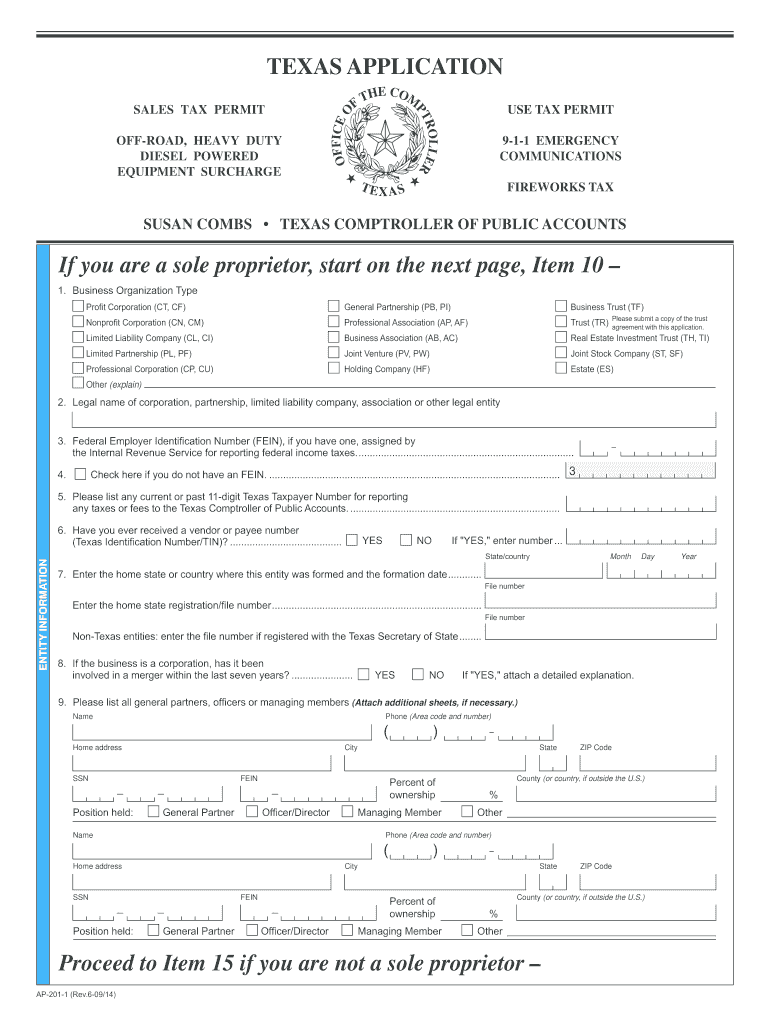
If your business sells taxable goods or services in Texas, you are generally required to obtain a Texas Sales and Use Tax Permit from the Texas Comptroller of Public Accounts. This permit allows you to collect sales tax from your customers and remit it to the state.
Obtaining a Sales and Use Tax Permit
- Online Registration: The primary method for obtaining a Sales and Use Tax Permit is through the Texas Comptroller of Public Accounts website. You can register online by creating an account and completing the required application.
- Required Information: You will typically need to provide:
- Business Name and Address
- Ownership Information
- Federal EIN or SSN
- Description of Business Activities
- Projected Sales Revenue
- Permit Issuance: Once your application is approved, you will be issued a permit number, which you must display at your place of business. This permit is free of charge.
Other State Registrations
Depending on your business industry, you might need other state-specific registrations or licenses. These are distinct from a tax identification number but are crucial for legal operation. Examples could include professional licenses, permits for specific industries (e.g., food service, alcohol sales), or environmental permits. It is advisable to consult with the relevant Texas state agencies or a legal/tax professional to ensure full compliance.
Who Needs a Tax ID Number in Texas?
The necessity of a Tax Identification Number in Texas hinges on your business structure, activities, and employment status.
- Sole Proprietors without Employees: If you operate as a sole proprietor in Texas and do not have employees, your SSN typically suffices for federal tax reporting. You will, however, need a Texas Sales and Use Tax Permit if you sell taxable goods or services.
- Sole Proprietors with Employees: If you hire employees, even as a sole proprietor, you are required to obtain an EIN from the IRS.
- Partnerships: All partnerships require an EIN.
- Limited Liability Companies (LLCs):
- Single-Member LLC: If taxed as a disregarded entity (default for single-member LLCs), the owner uses their SSN. If the LLC elects to be taxed as a corporation, it needs an EIN.
- Multi-Member LLC: Generally requires an EIN, unless it opts to be taxed as a partnership, in which case it still needs an EIN.
- Corporations (S Corp and C Corp): All corporations must have an EIN.
- Non-Profit Organizations: Charitable organizations, foundations, and other non-profits require an EIN to apply for tax-exempt status.
- Estates and Trusts: These entities typically need an EIN.
- Individuals Needing to File Federal Taxes but Lacking an SSN: Residents or non-residents in Texas who have U.S. tax filing obligations but are ineligible for an SSN must obtain an ITIN.

Tips for a Smooth Tax ID Application Process
Navigating the application process for any Tax Identification Number can be made smoother with a few key considerations:
- Accuracy is Paramount: Ensure all information provided on your application is accurate and matches your legal documentation. Errors can lead to delays or rejections.
- Understand Your Business Structure: Clearly define your business entity type (sole proprietorship, partnership, LLC, corporation) before applying. This dictates which TIN you need and how you apply.
- Prepare Necessary Documentation: Have your business formation documents, ownership details, and responsible party’s identification readily available.
- Use Official Channels: Always apply for federal TINs directly through the IRS website or their official forms. For state-level permits, use the designated state agency’s website, such as the Texas Comptroller of Public Accounts. Be wary of third-party services that charge exorbitant fees for something you can obtain directly and often for free.
- Seek Professional Advice: If you are unsure about your specific requirements or the application process, consulting with a tax advisor, accountant, or legal professional in Texas is highly recommended. They can provide tailored guidance based on your unique business situation.
Obtaining the correct Tax Identification Number is a fundamental step for legal and compliant business operations in Texas. By understanding the different types of TINs and the straightforward application processes, you can ensure your business is set up for success from the outset.
LifeOutOfTheBox is a participant in the Amazon Services LLC Associates Program, an affiliate advertising program designed to provide a means for sites to earn advertising fees by advertising and linking to Amazon.com. Amazon, the Amazon logo, AmazonSupply, and the AmazonSupply logo are trademarks of Amazon.com, Inc. or its affiliates. As an Amazon Associate we earn affiliate commissions from qualifying purchases.