
Obtaining a valid identification document is a fundamental step for many activities, whether you’re a resident of the Lone Star State looking to access services, or a visitor planning to engage with local establishments that require proof of identity. In Texas, the primary authority responsible for issuing identification is the Texas Department of Public Safety (TxDPS). This guide will navigate you through the process of acquiring an identification card, focusing on the nuances and requirements that ensure a smooth application. Understanding the types of IDs available, the necessary documentation, and the application steps is crucial for anyone needing official recognition of their identity within Texas.
Types of Identification in Texas
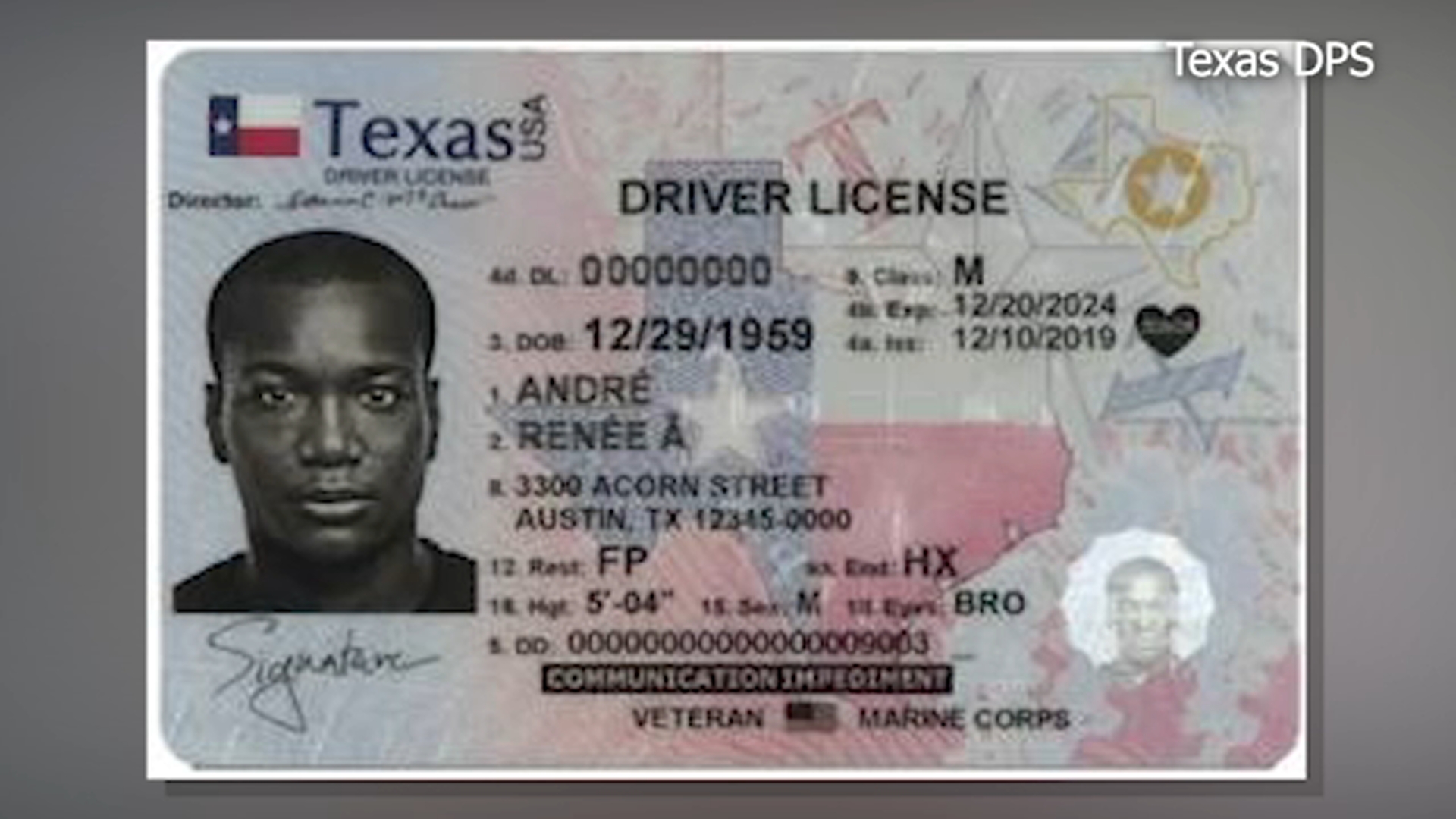
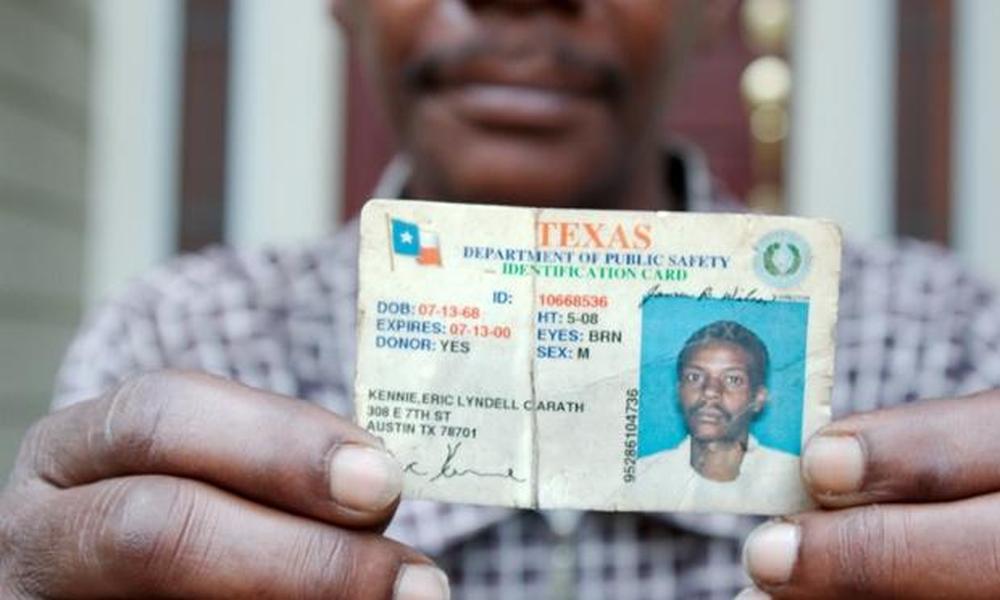
The Texas Department of Public Safety offers several forms of identification tailored to the needs of its residents. The most common among these is the Texas Identification Card, often referred to as a “non-driver ID.” This card serves as a primary form of identification for individuals who do not possess a Texas driver’s license. It is widely accepted for various purposes, including opening bank accounts, boarding airplanes, and entering age-restricted venues.
Beyond the standard identification card, Texas also issues specialized IDs for specific groups. For instance, Texas residents who are at least 65 years of age may be eligible for an identification card with a special designation, indicating senior citizen status. Similarly, individuals with disabilities may receive an ID card that denotes their status, which can sometimes facilitate access to certain services or programs. For those who are not U.S. citizens but legally reside in Texas, the TxDPS offers an Immigrant Identification Card. This card provides essential identification for individuals navigating life in Texas while also fulfilling federal requirements for identification.
The Texas Driver License
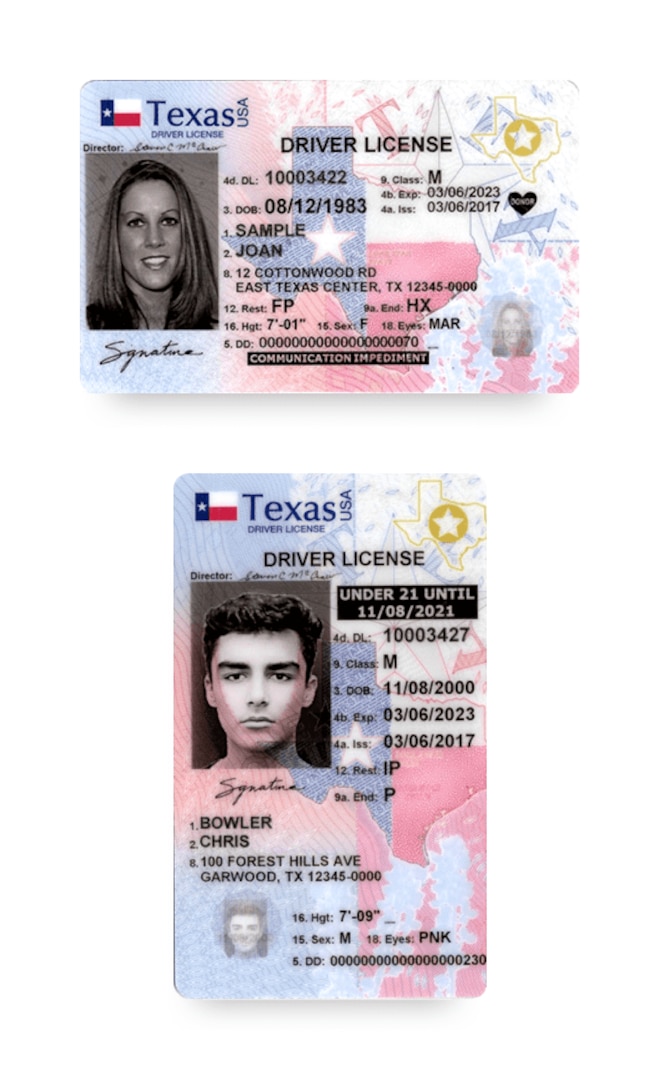
While this article focuses on identification cards, it is important to acknowledge the Texas Driver License as a primary form of identification for licensed drivers. A Texas Driver License not only permits you to operate a motor vehicle but also functions as a robust form of identification for most official purposes. If you are eligible and intend to drive in Texas, obtaining a driver’s license may be a more comprehensive solution than a non-driver ID. However, for those who do not drive or do not wish to obtain a driver’s license, the Texas Identification Card is the direct alternative.
Texas Election Identification Certificate (TIC)
A specific type of identification relevant to civic participation is the Texas Election Identification Certificate (TIC). This card is designed exclusively for voting purposes for eligible voters who do not possess one of the other accepted forms of photo identification for elections, such as a driver’s license, Texas Handgun License, or U.S. Passport. The TIC is free of charge for eligible voters and can be obtained at any TxDPS driver license office. It is a critical document for ensuring that all eligible Texans can exercise their right to vote.
Gathering Required Documentation
The cornerstone of any successful identification application is the thorough preparation of necessary documents. The TxDPS employs a strict verification process to ensure the authenticity of applicants’ information and prevent identity fraud. Applicants are generally required to provide proof of identity, proof of citizenship or lawful presence in the United States, and proof of Texas residency.
Proof of Identity
To establish your identity, you will typically need to present an original or certified copy of one of the following documents: a U.S. birth certificate, a U.S. passport, a Consular Report of Birth Abroad, or an approved foreign passport. If your name has changed since your birth certificate was issued, you will need to provide legal documentation of the name change, such as a marriage certificate, divorce decree, or court order.
Proof of U.S. Citizenship or Lawful Presence
Demonstrating your legal right to be in the United States is paramount. Accepted documents include a U.S. birth certificate, a U.S. passport, a Certificate of Citizenship, a Certificate of Naturalization, or a valid Permanent Resident Card. For non-U.S. citizens, a valid U.S. Immigrant Visa with a Form I-551 stamp or a Form I-94, along with other supporting documents as specified by the TxDPS, will be required. It is essential to consult the official TxDPS website for the most current and comprehensive list of acceptable documents.
Proof of Texas Residency
Establishing that you are a resident of Texas is also a requirement. You will need to present at least one document that bears your current Texas address. Examples of acceptable residency documents include a utility bill (electricity, gas, water) dated within the last 60 days, a lease agreement or mortgage statement, or a recent bank statement. The name and address on these documents must match the name and address provided on your identification application.
The Application Process
Once you have gathered all the necessary documentation, the next step is to initiate the application process, which involves visiting a Texas Department of Public Safety driver license office. It is highly recommended to schedule an appointment in advance, as wait times can be significant, especially during peak hours. Many TxDPS offices allow you to make appointments online through their official website.
Completing the Application Form
Before your appointment, you should download and complete the Application for Texas Driver License or Identification Card (DL-14A) form. This form will require you to provide personal information, including your full legal name, date of birth, and address. Ensure that all information is accurate and corresponds precisely to the documents you have brought with you. Errors or discrepancies can lead to delays or rejection of your application.
At the Driver License Office
Upon arrival at the TxDPS office, you will present your completed application form and all supporting documentation to a customer service representative. They will review your paperwork to ensure completeness and authenticity. Following the document verification, you will be required to have your photograph taken. Your signature will also be captured electronically.
A crucial part of the application is the vision screening, which is a standard procedure for all identification applications, including non-driver IDs. If you wear corrective lenses, ensure you bring them with you to the office. Finally, you will be required to pay the applicable fee for the identification card. The fee amount can vary, so it’s advisable to check the current fee schedule on the TxDPS website. Once all steps are completed and approved, your new Texas Identification Card will be mailed to your address within a few weeks.
Real ID Compliance
It is important to note that Texas offers REAL ID compliant identification cards. A REAL ID is a federal standard for driver’s licenses and identification cards required by the Department of Homeland Security for certain federal purposes, such as boarding federally regulated commercial aircraft and entering certain federal facilities. To obtain a REAL ID compliant card, you will need to provide additional documentation to verify your lawful status and social security number. The TxDPS website provides detailed information on the specific requirements for obtaining a REAL ID in Texas. This is particularly relevant for individuals who plan to travel domestically by air in the future.
Renewing and Replacing Your Texas ID
Your Texas Identification Card has an expiration date and will need to be renewed periodically to remain valid. The TxDPS typically sends renewal notices by mail or email to the address on file, but it is the applicant’s responsibility to ensure their contact information is up to date. Renewals can often be completed online, by mail, or in person at a TxDPS driver license office. The process for renewal is generally similar to the initial application, requiring proof of continued residency and payment of the renewal fee.
Lost or Stolen Identification Cards
If your Texas Identification Card is lost, stolen, or damaged, you will need to apply for a replacement. You can typically do this by visiting a TxDPS driver license office with the required documentation, similar to obtaining a new ID. You will need to present proof of identity, proof of Texas residency, and your Social Security number. A fee will also be associated with obtaining a replacement card. It is advisable to report a lost or stolen ID to the authorities if you suspect identity theft.
Keeping Your Information Updated
It is essential to keep your information current with the TxDPS. If you move to a new address within Texas, you are required to update your address on your identification card within a specified timeframe. While the non-driver ID itself might not always be physically reissued for an address change (unless it’s a renewal), ensuring the TxDPS has your current mailing address is vital for receiving important notifications, such as renewal reminders. You can usually update your address online through the TxDPS portal. Maintaining accurate records ensures that your identification remains a reliable and valid document for all your needs in Texas.
LifeOutOfTheBox is a participant in the Amazon Services LLC Associates Program, an affiliate advertising program designed to provide a means for sites to earn advertising fees by advertising and linking to Amazon.com. Amazon, the Amazon logo, AmazonSupply, and the AmazonSupply logo are trademarks of Amazon.com, Inc. or its affiliates. As an Amazon Associate we earn affiliate commissions from qualifying purchases.