
Selling a car in the great state of Texas might seem like a straightforward transaction, but navigating the Lone Star State’s specific regulations and market nuances can be more involved than simply finding a buyer. Whether you’re a seasoned Texan resident looking to upgrade your ride or a newcomer to the state eager to streamline your lifestyle, understanding the process is key to a smooth and profitable sale. This guide delves into the essential steps, legalities, and market considerations for effectively selling a car in Texas, drawing parallels with the spirit of exploration and curated experiences that define our approach to travel and lifestyle.
Just as one meticulously plans a memorable trip to New York City or seeks out the perfect resort in Hawaii, selling a vehicle requires foresight and attention to detail. The vibrant atmosphere of Texas, from the bustling streets of Houston to the historic charm of San Antonio, influences the demand and pricing of vehicles. This comprehensive overview aims to equip you with the knowledge to confidently market your car, ensuring you achieve a fair price while adhering to all state requirements.
Preparing Your Vehicle for Sale
Before you even think about listing your car, a thorough preparation process is crucial. Much like ensuring your accommodation is ready for guests or packing the right gear for an adventure in Big Bend National Park, a well-prepared vehicle commands a better price and attracts more serious buyers.
Cleaning and Detailing
The adage “first impressions matter” holds especially true in the car selling world. A clean car looks well-maintained and cared for, subtly suggesting a history of good ownership.
Interior Deep Clean
Start with a comprehensive interior cleaning. This involves vacuuming carpets and upholstery, wiping down all surfaces, cleaning windows from the inside, and removing any personal items or clutter. For persistent stains or odors, consider using specialized cleaners or professional detailing services. A fresh scent, perhaps from an air freshener, can further enhance the appeal.
Exterior Wash and Wax
The exterior deserves just as much attention. A thorough wash to remove dirt, grime, and road salt is essential. Following this with a good wax will bring out the paint’s shine, making it look newer and more attractive. Pay attention to the wheels, tires, and any chrome accents. Don’t forget to clean the headlights and taillights, as clouded lenses can make a car appear older.
Minor Repairs and Touch-Ups
Address any minor cosmetic issues. Small scratches can often be buffed out or covered with touch-up paint. Dents, even minor ones, can be a deterrent. Similarly, check for any loose trim, faded plastic, or worn-out wiper blades. Fixing these small problems can significantly boost your car’s perceived value and avoid potential negotiation points with buyers.
Gathering Essential Documentation
Texas law requires specific documentation for selling a vehicle. Having these readily available will expedite the process and demonstrate your preparedness to potential buyers.
Vehicle Title
The most critical document is the vehicle title, also known as the Certificate of Title. This proves ownership. If you have a loan on the vehicle, you’ll need to pay it off before you can get the title from your lender. If the title is lost, you’ll need to apply for a duplicate from the Texas Department of Motor Vehicles (TxDMV). Ensure the title is signed over correctly to the new owner.
Bill of Sale
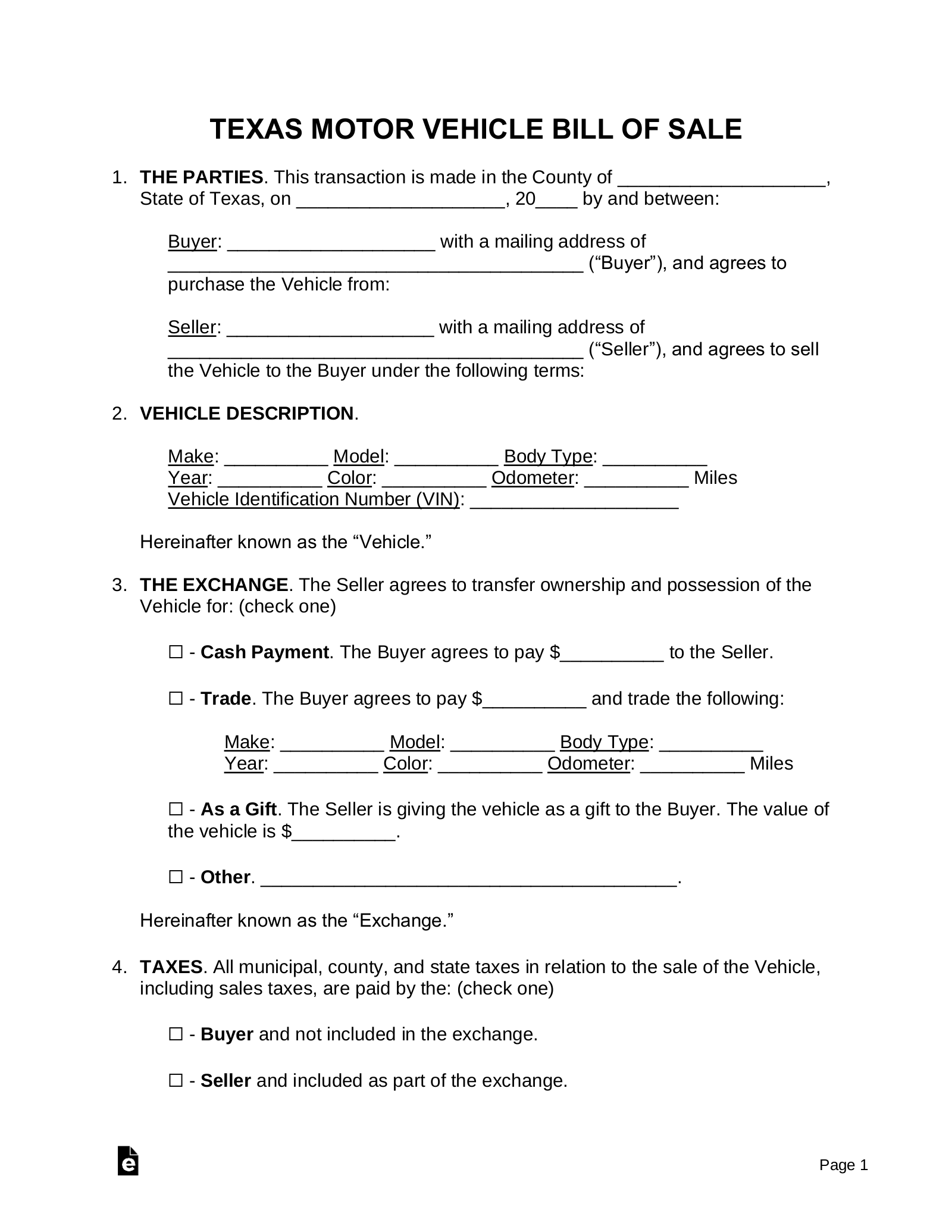
While not always strictly mandated by Texas for private party sales if the buyer is registering the vehicle, it is highly recommended to create a Bill of Sale. This document serves as a receipt and contract between the buyer and seller. It should include:
- The full names and addresses of both the buyer and seller.
- The vehicle’s make, model, year, and Vehicle Identification Number (VIN).
- The sale price.
- The date of sale.
- Any “as-is” disclaimer, which is important for protecting yourself from future claims.
Both parties should sign and date the Bill of Sale, and each should retain a copy.
Vehicle History Report
Consider obtaining a vehicle history report from services like CarFax or AutoCheck. This report can provide buyers with valuable information about the car’s past accidents, title issues, and maintenance records. While an added expense, it can increase buyer confidence and justify your asking price.
Maintenance Records
If you’ve kept up with regular maintenance, gather all service records, oil change receipts, and repair invoices. This documentation is a powerful testament to the car’s condition and care, much like detailed guides to local attractions build trust for travelers.
Determining the Right Price and Marketing Your Car
Setting a competitive price and effectively marketing your vehicle are paramount to a successful sale. In a state as diverse as Texas, understanding market demand and using appropriate channels is crucial.
Researching Market Value
To set a realistic price, you need to understand what similar vehicles are selling for in your area.
Online Valuation Tools
Utilize online resources like Kelley Blue Book (KBB), Edmunds, and NADA Guides. These platforms provide estimated values based on the car’s year, make, model, mileage, condition, and features. Remember that these are estimates, and actual sale prices can vary.
Local Market Analysis
Check local classifieds, online marketplaces, and dealership websites to see what comparable cars are listed for in your region. Factors like the proximity to major cities such as Dallas or Austin, local economic conditions, and the overall demand for specific vehicle types in Texas can influence pricing. For instance, trucks and SUVs often hold their value well in the vast landscapes of Texas.
Choosing Your Selling Platform
Where you list your car can significantly impact your reach and the type of buyers you attract.
Private Party Sales
Selling privately often yields the highest price but requires more effort.
- Online Marketplaces: Websites like Craigslist, Facebook Marketplace, and dedicated car selling platforms are popular. High-quality photos and detailed descriptions are vital here.
- Local Classifieds: Traditional newspapers still have a place, especially for reaching an older demographic.

Dealership Trade-In or Sale
While convenient, trading in a car to a dealership will generally result in a lower price than a private sale. Dealerships offer the advantage of a quick transaction and immediate payment. Some dealerships also offer to buy cars outright, even if you’re not purchasing another vehicle from them.
Consignment Services
Some businesses offer consignment services, where they sell the car on your behalf for a commission. This can be a good option if you lack the time or expertise for a private sale.
Crafting a Compelling Listing
Your listing is your car’s digital storefront. Make it count.
High-Quality Photographs
Take numerous photos from various angles, both inside and out. Ensure good lighting, a clean background, and highlight any desirable features. Include close-ups of the dashboard, seats, trunk, engine bay, and any aftermarket additions.
Detailed and Honest Description
Provide a comprehensive and truthful description of the car. Include:
- Year, make, model, trim level.
- Mileage.
- Engine size and transmission type.
- Color (exterior and interior).
- Any notable features or upgrades (e.g., leather seats, sunroof, navigation system).
- A clear statement about the car’s condition, including any known issues. Honesty upfront can build trust.
- Mention of recent maintenance or repairs.
- Your reason for selling, if appropriate.
Pricing Strategy
Decide whether to list at your firm asking price or to be open to negotiation. Clearly state whether the price is firm or negotiable.
Navigating the Transaction and Legalities in Texas
Once you’ve found a buyer, the final stages involve the legal transfer of ownership and payment. Adhering to Texas regulations is non-negotiable.
Meeting Potential Buyers Safely
When meeting interested buyers, prioritize your safety.
Public Meeting Places
Arrange to meet in a well-lit, public place with plenty of foot traffic, such as a busy shopping center parking lot or near a police station. Avoid inviting strangers to your home.
Test Drives
Accompany the potential buyer on any test drive. Ensure they have a valid driver’s license before allowing them to drive your vehicle.
The Payment Process
Securing payment is a critical step to protect yourself from fraud.
Acceptable Payment Methods
Cash is often preferred for private sales, but be cautious about accepting large amounts of cash. Consider meeting at your bank to deposit the funds immediately. Personal checks can be risky as they can bounce. Certified checks or cashier’s checks from a reputable bank are generally safer, but it’s wise to verify the authenticity of the check with the issuing bank. Wire transfers are another secure option.
Avoiding Common Scams
Be wary of buyers who offer more than your asking price, request to send you a larger check and have you wire back the difference, or ask for personal banking information upfront.
Completing the Title Transfer and Registration
This is where you officially hand over ownership of the vehicle.
Signing the Title
You will need to sign the “Seller” section of the vehicle title. The buyer will then sign the “Buyer” section. Ensure all names and information are accurately filled in. If there is a lienholder listed on the title, they will also need to sign off on it.
Notifying the TxDMV
It is crucial to notify the Texas Department of Motor Vehicles (TxDMV) of the sale within 30 days using a Vehicle Transfer Notification (Form VTR-346). This protects you from liability if the buyer gets tickets or is involved in an accident before they officially register the vehicle in their name. You can submit this form online or by mail.
Removing License Plates
In Texas, license plates are generally not transferred with the vehicle to the new owner in a private sale. You should remove your license plates from the vehicle upon sale. You can then return them to your local county tax assessor-collector’s office or keep them for a future vehicle, if eligible.
Understanding “As-Is” Sales
In Texas, private vehicle sales are typically understood to be “as-is,” meaning the buyer accepts the vehicle in its current condition. However, including an explicit “as-is” clause on your Bill of Sale is highly recommended to further protect yourself from future disputes or claims regarding the vehicle’s condition.
By following these guidelines, you can confidently navigate the process of selling a car in Texas, ensuring a secure and successful transaction. Just as planning a trip to explore the Texas Hill Country or finding the perfect stay near Galveston Island involves careful consideration, so does selling your vehicle. A well-prepared car, a fair price, transparent dealings, and adherence to legal requirements will lead to a satisfying outcome.
LifeOutOfTheBox is a participant in the Amazon Services LLC Associates Program, an affiliate advertising program designed to provide a means for sites to earn advertising fees by advertising and linking to Amazon.com. Amazon, the Amazon logo, AmazonSupply, and the AmazonSupply logo are trademarks of Amazon.com, Inc. or its affiliates. As an Amazon Associate we earn affiliate commissions from qualifying purchases.