
Navigating the complexities of divorce represents a pivotal life transition, marking the end of one chapter and the beginning of another. In California, a state renowned for its progressive legal frameworks, understanding the intricacies of the dissolution of marriage is crucial for anyone embarking on this journey. This guide delves into the procedural and substantive aspects of divorce in the Golden State, offering clarity and insight into a process that significantly reshapes individuals’ lives and futures.
Understanding the Basics: California as a No-Fault State
California operates under a “no-fault” divorce system. This means that to initiate a divorce, neither spouse needs to prove that the other was responsible for the marriage’s breakdown. The only ground required is “irreconcilable differences” that have led to the irremediable breakdown of the marriage. This approach simplifies the process by removing the need for potentially contentious and emotionally taxing accusations of fault, allowing couples to focus on resolving practical matters rather than litigating blame. While “no-fault” is the primary ground, “incurable insanity” is also a recognized, albeit rare, ground for dissolution. This foundational principle underscores California’s commitment to providing a more streamlined and less adversarial path to ending a marriage.
Residency Requirements and Filing
Before a divorce petition can be filed in California, specific residency requirements must be met. At least one spouse must have resided in the state for a minimum of six months and in the specific county where the petition is filed for at least three months. These requirements ensure that California has the appropriate jurisdiction to dissolve the marriage.
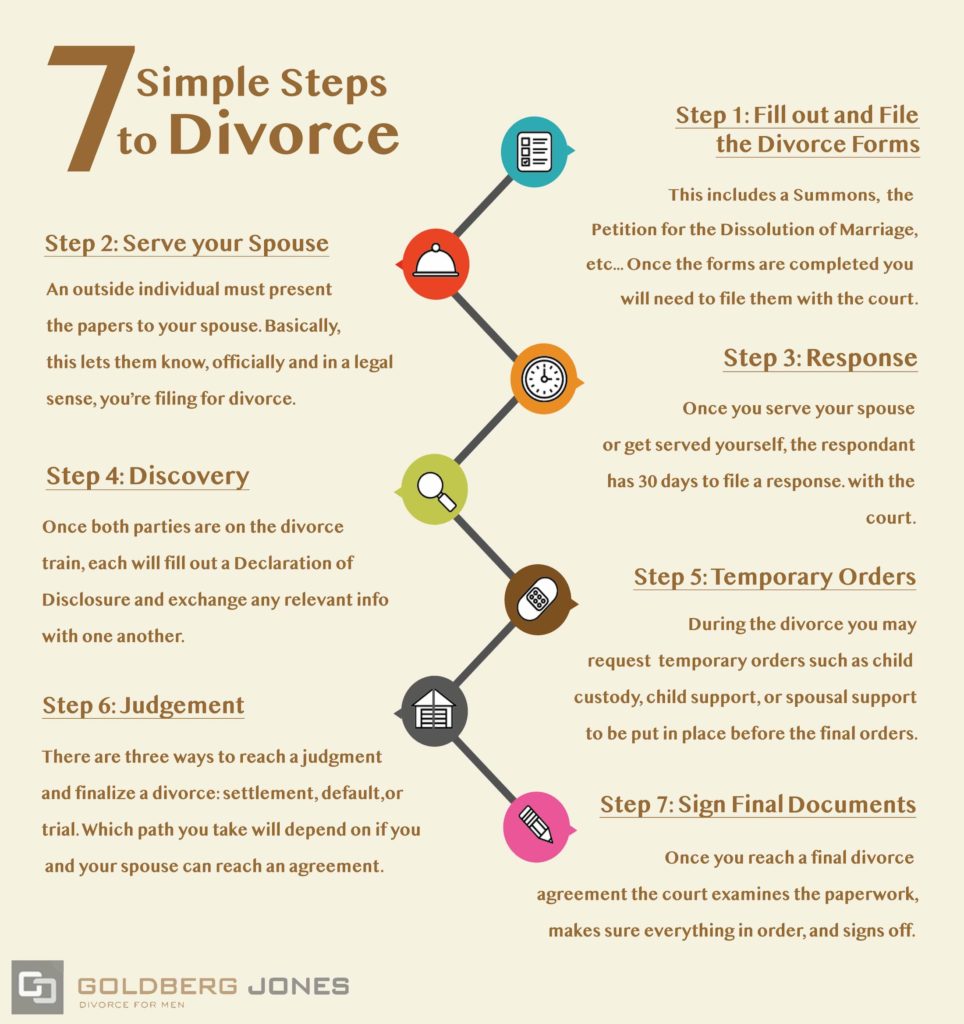
To commence the divorce process, the filing spouse, known as the “Petitioner,” must complete and file a “Petition for Dissolution of Marriage” (Form FL-100) with the superior court in the appropriate county. This document formally requests the court to dissolve the marriage and addresses initial requests concerning property, debt, spousal support, and, if applicable, child custody and support. It is also important to consider if a legal separation, which keeps the marriage intact but allows for separate living and financial arrangements, might be a more suitable initial step for some couples, though it does not fully dissolve the marriage.
Serving Your Spouse
Once the Petition is filed, the other spouse, known as the “Respondent,” must be formally notified of the legal action. This formal notification is called “service of process.” Proper service is a critical legal requirement, as it ensures the Respondent is aware of the proceedings and has an opportunity to respond. The most common methods of service include personal service, where a neutral third party (not the Petitioner) physically delivers the documents, or service by mail with an “Acknowledgment of Receipt.” The Respondent then has 30 days from the date of service to file a “Response” (Form FL-120) with the court. Failure to respond within this timeframe can lead to a default judgment, where the Petitioner may obtain the divorce orders requested in their Petition without the Respondent’s input on key issues.
Key Stages of the Divorce Process
The divorce process in California involves several distinct stages, each designed to facilitate the equitable resolution of all marital issues. While the minimum waiting period for a divorce to be finalized is six months and one day from the date of service, the actual duration can vary significantly depending on the complexity of the case, the level of cooperation between spouses, and court availability.
Financial Disclosures
One of the most critical stages involves the mandatory exchange of comprehensive financial information. Both the Petitioner and Respondent are legally required to complete and exchange detailed financial disclosure forms, including the “Declaration of Disclosure” (Form FL-140), “Schedule of Assets and Debts” (Form FL-142), and “Income and Expense Declaration” (Form FL-150). These documents provide a transparent overview of each party’s income, expenses, assets, and debts. Full and accurate disclosure is paramount, as it forms the foundation for fair and equitable negotiations regarding property division, spousal support, and child support. Concealing assets or providing misleading information can lead to severe legal penalties.
Negotiation and Settlement
The vast majority of divorce cases in California are resolved through negotiation and settlement outside of a courtroom trial. This stage allows spouses to work collaboratively, often with the assistance of attorneys, mediators, or through collaborative divorce processes, to reach mutually agreeable terms. Negotiation can occur directly between spouses, through their attorneys, or with the aid of a neutral mediator who facilitates discussions and helps identify common ground. Collaborative divorce is another increasingly popular option, where both spouses and their attorneys commit to resolving issues without litigation, often involving other professionals like financial planners or child specialists.
If an agreement is reached on all issues, the terms are formalized in a “Marital Settlement Agreement” (MSA). This legally binding contract details the division of assets and debts, spousal support arrangements, and, if applicable, child custody and support orders. The MSA is then submitted to the court for approval and incorporation into the final judgment.
Trial (If Necessary)
When spouses cannot reach an agreement on all issues through negotiation, mediation, or collaborative law, the case may proceed to trial. A trial is a formal court proceeding where a judge (there are no juries in divorce cases) hears evidence and arguments from both sides and makes a final decision on all unresolved matters. Trials are typically lengthy, emotionally draining, and significantly more expensive than settlement processes due to extensive legal preparation, expert witness fees, and court time. While a trial offers a definitive resolution, it also means relinquishing control over the outcome to a judge, whose decisions may not fully satisfy either party. Consequently, spouses and their attorneys often prioritize settlement options to avoid the uncertainties and costs associated with litigation.

Important Considerations in a California Divorce
Several key substantive areas must be addressed in a California divorce, each carrying significant implications for both spouses’ future lifestyles.
Division of Marital Property and Debts
California is a community property state. This fundamental principle dictates that all assets and debts acquired by either spouse during the marriage are considered “community property” and must be divided equally (50/50) between them upon divorce. “Separate property,” which includes assets owned before marriage, inherited gifts, or gifts received during marriage, is generally not subject to division. However, distinguishing between community and separate property can be complex, especially with commingled funds, business interests, retirement accounts, and real estate. Valuing and equitably distributing complex assets like pensions, stock options, and family businesses often requires the expertise of forensic accountants and other financial specialists. This division profoundly impacts each individual’s financial independence and capacity to establish a new lifestyle post-divorce.
Spousal Support (Alimony)
Spousal support, often referred to as alimony, may be ordered by the court to provide financial assistance to a lower-earning spouse after divorce. The purpose is typically to help the recipient spouse become self-supporting and maintain a lifestyle reasonably comparable to that enjoyed during the marriage, for a period. California law distinguishes between temporary spousal support, awarded during the pendency of the divorce, and long-term spousal support, ordered in the final judgment.
For long-term support, courts consider numerous factors outlined in Family Code Section 4320, including the length of the marriage, the earning capacity of each spouse, the marital standard of living, the health and age of each spouse, and the extent to which one spouse contributed to the other’s education or career. For marriages lasting less than 10 years, support is generally granted for half the length of the marriage. For “long-term” marriages (10 years or more), the court retains jurisdiction indefinitely, and support may continue for a longer, potentially indefinite, period until the recipient is self-supporting, remarries, or other circumstances change.
Child Custody and Support
When minor children are involved, decisions regarding child custody and support are paramount. California courts prioritize the child’s best interests in all custody determinations. There are two main types of custody:
- Legal Custody: Refers to the right and responsibility to make decisions about the child’s health, education, and welfare. This is often awarded jointly, meaning both parents share decision-making power.
- Physical Custody: Refers to where the child lives. It can be sole (one parent has the child most of the time) or joint (parents share physical time more equally).
Parents are encouraged to develop a “parenting plan” that outlines visitation schedules, holiday arrangements, and communication protocols. If parents cannot agree, the court may order mediation to assist in reaching a resolution.
Child support is calculated using a statewide guideline formula that considers various factors, including both parents’ incomes, the percentage of time each parent spends with the children, tax deductions, and childcare costs. The purpose of child support is to ensure that children continue to receive financial support from both parents, maintaining a consistent standard of living despite the parental separation.
Finalizing Your Divorce and Moving Forward
The culmination of the divorce process is the entry of a final judgment, which formalizes the dissolution of the marriage and sets the terms for moving forward.
Judgment and Final Orders
Once all issues—property division, debts, spousal support, child custody, and child support—have been resolved, either through settlement or trial, a “Judgment” (Form FL-180) is prepared. This document legally dissolves the marriage and incorporates all the agreed-upon or court-ordered terms. The judgment effectively restores both parties to the status of single individuals and mandates adherence to all stipulated provisions. It is crucial that the final orders are clear, comprehensive, and enforceable to prevent future disputes. The marriage officially ends on the “date of termination” specified in the judgment, which can be no earlier than six months and one day from the date the Respondent was served with the Petition.

Life After Divorce: Embracing a New Chapter
While the legal process of divorce can be demanding, its conclusion signifies a significant turning point—an opportunity to embrace a new chapter and redefine one’s lifestyle. Successfully navigating a divorce in California involves not only understanding the legal framework but also preparing for the emotional and practical shifts that accompany this transition. Post-divorce, individuals often find themselves with newfound financial independence, different living arrangements, and the freedom to pursue personal growth and new experiences. This period allows for a conscious reshaping of one’s future, from career aspirations to personal relationships and leisure activities. By understanding the divorce process, individuals can approach this significant life event with greater clarity, making informed decisions that lay the groundwork for a resilient and fulfilling new lifestyle.
LifeOutOfTheBox is a participant in the Amazon Services LLC Associates Program, an affiliate advertising program designed to provide a means for sites to earn advertising fees by advertising and linking to Amazon.com. Amazon, the Amazon logo, AmazonSupply, and the AmazonSupply logo are trademarks of Amazon.com, Inc. or its affiliates. As an Amazon Associate we earn affiliate commissions from qualifying purchases.