
Understanding the eviction process in Texas is crucial for both landlords and tenants. This legal procedure allows a landlord to remove a tenant from a rental property. While it may seem straightforward, Texas law outlines specific steps and timelines that must be adhered to. Failure to follow these procedures can result in the eviction being dismissed, forcing the landlord to start over. This guide will break down the eviction process in Texas, covering the grounds for eviction, the required notices, court proceedings, and the final writ of possession.
Grounds for Eviction in Texas
Landlords can initiate an eviction for several reasons, but the most common ones are non-payment of rent and violation of lease terms.

Non-Payment of Rent
This is the most frequent cause for eviction. A tenant is considered delinquent if they fail to pay rent by the due date specified in the lease agreement. Even a few days’ delay can be grounds for eviction, provided the lease does not offer a grace period.
Violation of Lease Terms
Leases are legally binding contracts. If a tenant violates any significant term of the lease, the landlord may have grounds for eviction. Common lease violations include:
- Unauthorized Occupants: Allowing individuals not listed on the lease to reside in the property long-term.
- Subleasing: Renting out the property to another party without the landlord’s written consent.
- Property Damage: Intentionally or negligently causing damage to the rental unit beyond normal wear and tear.
- Illegal Activity: Engaging in or allowing illegal activities on the premises.
- Disturbing the Peace: Repeatedly causing disturbances that disrupt other tenants or neighbors.
- Failure to Maintain: Neglecting to keep the property clean or failing to address minor maintenance issues as stipulated in the lease.
Other Grounds
While less common, other valid reasons for eviction can include:
- Expiration of Lease Term: If the lease has ended and the tenant refuses to vacate.
- Foreclosure: If the landlord loses the property through foreclosure.
- Landlord’s Intent to Occupy or Sell: In some limited circumstances, a landlord may evict a tenant if they intend to move into the property themselves or sell it to a buyer who intends to occupy it. This often requires specific notice periods and is subject to lease terms.
It is important to note that a landlord cannot evict a tenant in retaliation for the tenant exercising a legal right, such as requesting repairs or reporting code violations.
The Eviction Notice Process
Before filing an eviction lawsuit, landlords must provide the tenant with a written notice to vacate. The type and content of this notice are dictated by Texas law and the terms of the lease.
The Notice to Vacate
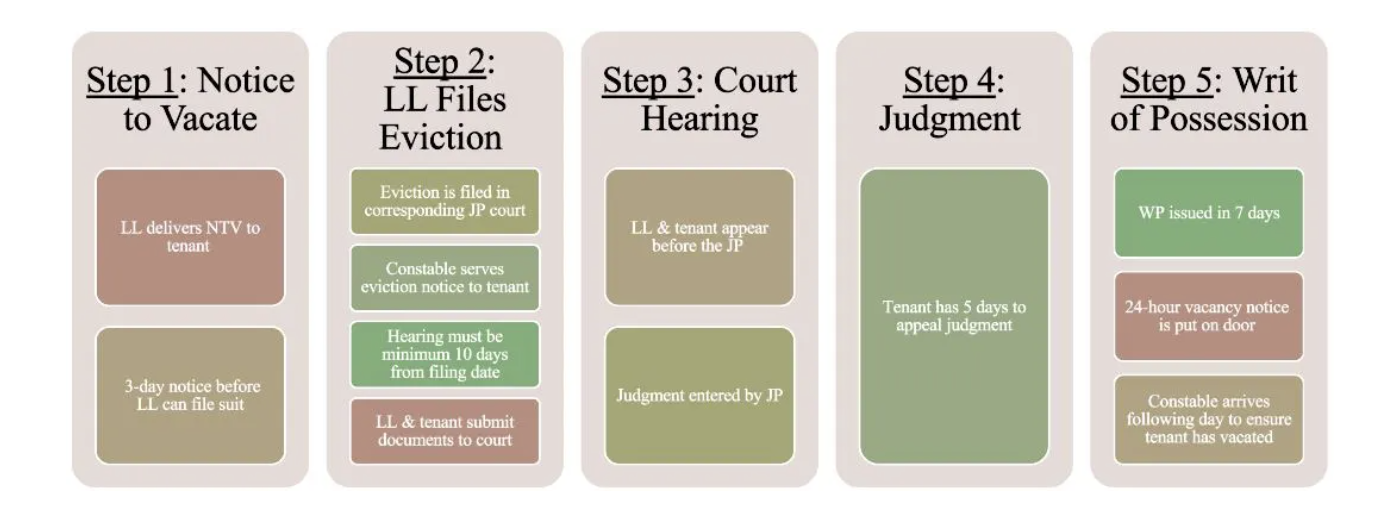
In most cases, a landlord must give a tenant at least a three-day written notice to vacate the premises before filing a lawsuit. This notice must clearly state:
- The reason for the eviction.
- The date by which the tenant must vacate.
- The landlord’s intention to file an eviction lawsuit if the tenant does not comply.
The notice can be delivered in several ways:
- Personal Delivery: Handing the notice directly to the tenant.
- Certified Mail: Sending the notice via certified mail, return receipt requested.
- Posting on the Door: If the tenant cannot be found, the notice can be posted on the tenant’s door, and a copy can be mailed by regular mail.
Some leases may specify a longer notice period than the statutory three days. In such cases, the lease agreement supersedes the state law, and the landlord must comply with the longer notice period.
Specific Notice Requirements for Certain Situations
- Health and Safety Violations: If the eviction is based on the tenant’s violation of a health or safety rule, the notice period may be shorter, often 24 hours, if the lease allows.
- Foreclosure: Specific notice requirements apply when a property is foreclosed upon. Tenants may have additional rights and notice periods under these circumstances.
It is imperative that the notice is properly drafted and served, as any errors can lead to the dismissal of the eviction case.
Filing the Eviction Lawsuit (Forcible Entry and Detainer)
If the tenant does not vacate after the notice period expires, the landlord can file an eviction lawsuit in the appropriate court. This lawsuit is officially called a “Forcible Entry and Detainer” or “Forcible Detainer” suit.
Choosing the Right Court

The lawsuit is typically filed in the Justice of the Peace court in the precinct where the property is located. These courts handle “small claims” and are designed to be accessible without requiring legal representation, although having an attorney is often advisable.
The Petition and Citation
The landlord (or their attorney) files a “Petition” with the court. This document outlines the facts of the case, including the lease agreement, the grounds for eviction, and the notice provided to the tenant.
Once the petition is filed, the court issues a “Citation,” which is a legal document officially notifying the tenant of the lawsuit. The tenant is typically given a specific timeframe to respond. The Citation must be served on the tenant by a constable or sheriff, or by a private process server authorized by the court.
The Tenant’s Response
The tenant has a limited time to respond to the Citation, usually within a few days. They can choose to:
- Move Out: If the tenant vacates the property before the court date, the eviction case may be dismissed.
- Appear in Court: The tenant can choose to appear in court and present a defense against the eviction.
- Fail to Respond: If the tenant does not respond or appear, the landlord can request a default judgment.
The Court Hearing and Judgment
If the tenant contests the eviction or fails to respond, a court hearing will be scheduled.
The Hearing
At the hearing, both the landlord and the tenant have the opportunity to present their case.
- Landlord’s Presentation: The landlord will present evidence supporting their claim, such as the lease agreement, rent payment records, copies of notices, and testimony.
- Tenant’s Defense: The tenant can present evidence and arguments to refute the landlord’s claims. Common defenses include improper notice, retaliatory eviction, or a dispute over rent payment.
The Justice of the Peace judge will listen to both sides and review the evidence to make a decision.
The Judgment
If the judge rules in favor of the landlord, an “Order of Eviction” (also known as a Judgment for Possession) is issued. This order states that the tenant must vacate the property by a specific date.
If the judge rules in favor of the tenant, the eviction case is dismissed, and the tenant is allowed to remain in the property.
Writ of Possession
If the tenant fails to vacate the property by the date specified in the Order of Eviction, the landlord cannot physically remove the tenant or their belongings themselves. This is where the “Writ of Possession” comes into play.
Obtaining the Writ
The landlord must return to court and request a Writ of Possession from the Justice of the Peace. This document directs the constable or sheriff to forcibly remove the tenant and their possessions from the property.
Execution of the Writ
Once the Writ of Possession is issued, it is delivered to the constable or sheriff’s department. They will then schedule a date and time to execute the writ. On the scheduled date, a law enforcement officer will be present at the property to oversee the eviction. The tenant and their belongings will be removed from the premises.
The landlord is typically responsible for paying the constable or sheriff a fee for executing the Writ of Possession.
Tenant Rights and Protections
While landlords have the right to evict tenants for valid reasons, tenants in Texas have certain rights and protections throughout the process.
- Proper Notice: Tenants are entitled to receive proper written notice before an eviction lawsuit can be filed.
- Opportunity to Respond: Tenants have the right to appear in court and present their defense.
- No Self-Help Eviction: Landlords are prohibited from engaging in “self-help” evictions, such as changing locks, shutting off utilities, or removing a tenant’s belongings without a court order. These actions are illegal and can result in penalties for the landlord.
- Rent Escrow: In some situations, a tenant may be able to pay rent into an escrow account with the court while a dispute is being resolved.
Conclusion
The eviction process in Texas is a legal framework designed to provide a fair and orderly way for landlords to regain possession of their property when necessary. Both landlords and tenants should familiarize themselves with these procedures to ensure their rights are protected. Landlords must strictly adhere to the notice requirements and legal steps, while tenants should understand their rights and respond promptly if they receive an eviction notice or lawsuit. Consulting with an attorney specializing in landlord-tenant law is highly recommended for navigating the complexities of eviction in Texas.
LifeOutOfTheBox is a participant in the Amazon Services LLC Associates Program, an affiliate advertising program designed to provide a means for sites to earn advertising fees by advertising and linking to Amazon.com. Amazon, the Amazon logo, AmazonSupply, and the AmazonSupply logo are trademarks of Amazon.com, Inc. or its affiliates. As an Amazon Associate we earn affiliate commissions from qualifying purchases.