
Florida, often lauded for its sunshine, pristine beaches, and vibrant culture, also offers significant financial benefits to its residents, particularly homeowners. Among these, the homestead exemption stands out as a cornerstone of property tax relief. Understanding how this exemption works in the Sunshine State is crucial for anyone who owns or is considering purchasing a home here, impacting everything from personal finances to the broader real estate landscape. This guide delves into the intricacies of Florida’s homestead exemption, exploring its benefits, eligibility requirements, and the process of application.
Understanding the Homestead Exemption in Florida
The homestead exemption in Florida is a constitutional provision designed to protect homeowners from excessive property tax burdens. It functions by reducing the taxable value of a primary residence, thereby lowering the annual property tax bill. This is not merely a discount; it’s a fundamental aspect of Florida’s property tax system, intended to encourage homeownership and provide stability to residents.

The Core Benefits: Property Tax Relief
The primary and most significant benefit of the homestead exemption is the reduction in property taxes. For Florida homeowners, this typically translates to substantial savings each year. The exemption offers two main components:
-
General Homestead Exemption: This provides an automatic exemption of up to $25,000 on the assessed value of a home. For example, if your home is assessed at $200,000, with a $25,000 general exemption, you would only pay taxes on $175,000. However, the first $25,000 of value is exempt. The second $25,000 of assessed value is also exempt for tax purposes if the assessed value is between $75,000 and $125,000. This means a $50,000 exemption applies for tax calculation purposes.
-
Additional Homestead Exemption (Save Our Homes Act): Beyond the general exemption, the Save Our Homes Act (SOH) caps the annual increase in assessed value for homesteaded properties. This cap limits increases to the lower of 3% or the percentage change in the Consumer Price Index (CPI) for the region. This is a powerful protection against dramatic property value fluctuations impacting tax bills, especially in rapidly appreciating real estate markets. For instance, if your home’s market value increased by 10% in a year, your assessed value for tax purposes could only increase by a much smaller percentage due to the SOH cap.
Eligibility Requirements: Who Qualifies?
To benefit from Florida’s homestead exemption, certain criteria must be met. These requirements ensure that the exemption is granted only to those who genuinely use the property as their primary residence.
-
Primary Residence: The most critical requirement is that the property must be the applicant’s permanent home and principal residence. This means the owner lives there for the majority of the year. If an owner has multiple properties, only one can be designated as their homestead.
-
Ownership: The applicant must own the property on January 1st of the tax year for which they are applying. This ownership can be as an individual, a married couple, or other forms of joint ownership, provided the other residency requirements are met.
-
Occupancy: The applicant must reside in the property on or before January 1st of the tax year for which they are applying. This is non-negotiable. Moving into a property on January 2nd, for example, means you won’t qualify for the exemption for that tax year.
-
Florida Resident: The applicant must be a Florida resident. This is often established by having a Florida driver’s license or identification card, registering to vote in Florida, and filing Florida tax returns. The property itself must also be located in Florida.
-
No Other Homestead Exemptions: An individual cannot claim a homestead exemption on any other property, in Florida or any other state.
Applying for the Homestead Exemption
The application process for the homestead exemption is straightforward but requires timely action.
-
Deadline: Applications must be filed with the County Property Appraiser’s Office by March 1st of the tax year for which the exemption is sought. For example, to receive the exemption for the 2024 tax year, the application must be filed by March 1, 2024.
-
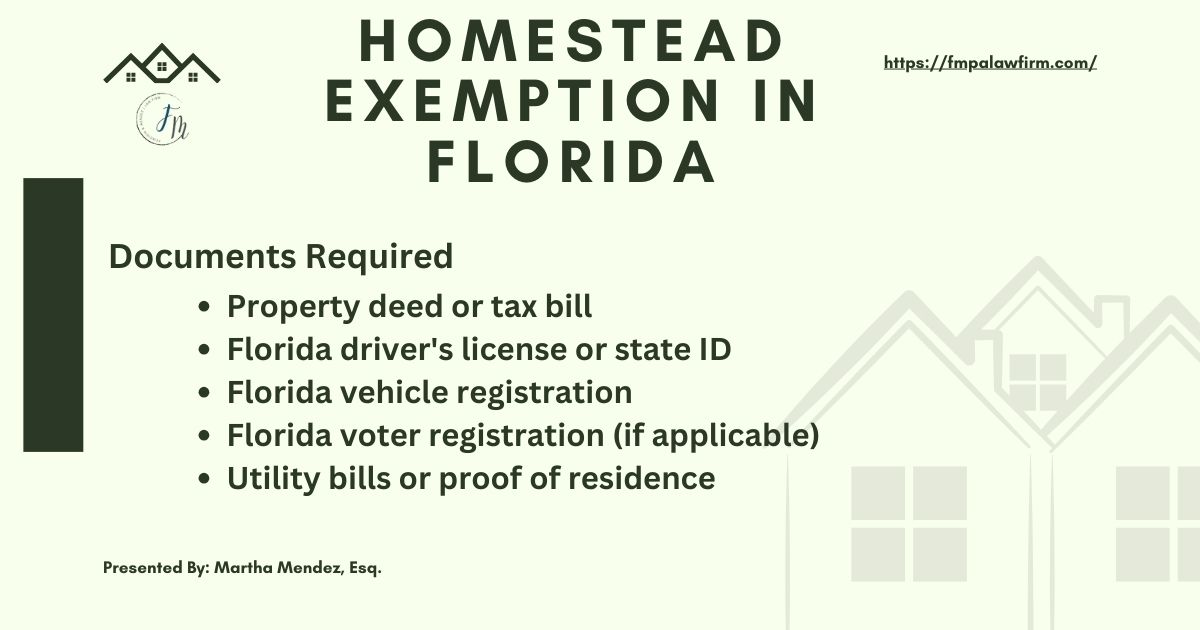
Initial Application: The first-time applicant will need to provide documentation to prove residency and ownership. This typically includes:
- A Florida driver’s license or identification card.
- Florida vehicle registration.
- Voter registration in Florida.
- Florida tax returns.
- Proof of ownership, such as a deed.
- A Social Security number.
-
Renewal: Once granted, the homestead exemption generally renews automatically each year. However, if there are changes in ownership, residency, or the property’s use, a new application may be required. It is the homeowner’s responsibility to inform the Property Appraiser’s Office of any such changes.
Types of Homestead Exemptions and Portability
Beyond the general and SOH exemptions, Florida offers several other specialized homestead exemptions that provide additional property tax relief for specific groups. Understanding these can lead to further savings for eligible homeowners.
Additional Homestead Exemptions for Specific Groups
These exemptions are applied in addition to the general $25,000 exemption and the SOH benefit, further reducing the taxable value of the property.
-
Senior Citizen Exemption: Some counties offer an additional exemption for homeowners aged 65 and older whose household income falls below a certain threshold. The specific income limits and exemption amounts vary by county, so it’s essential to check with the local Property Appraiser’s Office.
-
Disabled Person Exemption: A $5,000 exemption is available for individuals who are totally and permanently disabled. To qualify, applicants typically need to provide a letter from a federal or state agency (like the Social Security Administration) certifying the disability or a physician’s certificate.
-
Veterans and Service Members: Florida offers significant property tax exemptions for veterans, including those with service-connected disabilities. The amount of the exemption can vary based on the degree of disability. For example, veterans with a 100% service-connected disability may be eligible for a full exemption on their homestead. Surviving spouses of eligible veterans may also qualify.
-
First-Time Homebuyer Exemption: This exemption is not a direct reduction in taxes but rather a credit that can be applied against property taxes. It is intended to assist low-income, first-time homebuyers. The amount of the credit is a percentage of the property’s assessed value, capped at a specific dollar amount, and is subject to income limitations.

- Widow/Widower Exemption: A surviving spouse who has not remarried and who owned and occupied the homestead property as of the date of the deceased spouse’s death may be eligible for the homestead exemption.
Portability: Moving Your SOH Benefit
A crucial aspect for homeowners who may need to relocate is the “portability” of the Save Our Homes benefit. If you sell your homesteaded property in Florida and purchase a new one within the state, you can transfer your accumulated SOH benefit to the new property. This feature is invaluable for long-term residents who may downsize or move to a different area within Florida.
-
How Portability Works: The SOH benefit is essentially the difference between the market value of your property and its assessed value. When you sell your homestead, this differential, up to the amount accrued over the years, can be applied to the assessed value of your new homestead. This prevents you from losing the tax savings you’ve built up over time due to the SOH caps.
-
Eligibility for Portability: To transfer the SOH benefit, you must have owned and occupied your previous Florida homestead and now own and occupy a new Florida homestead. The transfer application is typically made when applying for the new homestead exemption.
-
Limitations: The SOH benefit can only be transferred to a homestead property within Florida. The benefit is tied to the property owner, not the property itself.
Understanding Property Tax Assessments and Appeals
The homestead exemption is applied to the assessed value of a property, not its market value. This distinction is important, especially when considering property tax appeals.
Assessed Value vs. Market Value
-
Market Value: This is the price a willing buyer would pay for the property and a willing seller would accept, assuming neither is under duress and both have reasonable knowledge of relevant facts. This is what the Property Appraiser’s Office estimates your property to be worth in the current market.
-
Assessed Value: This is the value of your property that is used to calculate your tax bill. For homesteaded properties, the Save Our Homes Act limits how much the assessed value can increase annually. For non-homesteaded properties, the assessed value generally reflects the market value, with annual increases capped at 10%.
Property Tax Appeals
If you believe your property’s assessed value is higher than its actual market value, you have the right to appeal.
-
The Process: The Property Appraiser’s Office sends out assessment notices annually, usually in August. If you disagree with the assessed value, you typically have 25 days from the mailing date of the notice to file a petition for appeal with the Value Adjustment Board (VAB).
-
Grounds for Appeal: Common grounds for appeal include:
- The assessed value exceeds the property’s market value.
- The property is assessed inequitably compared to similar properties in the same area.
- The property is exempt from taxation.
-
The Value Adjustment Board (VAB): The VAB is a quasi-judicial body that hears property tax appeals. The hearing process involves presenting evidence to support your claim regarding the property’s value.
-
Impact of Homestead Exemption on Appeals: While the homestead exemption and the SOH cap protect your tax bill from rapid increases, they do not prevent the Property Appraiser from assessing your property at its market value. If your property’s market value significantly exceeds its assessed value, an appeal may still be worthwhile, especially if you are considering selling or if the SOH cap will eventually be overcome by market forces.
Beyond the Exemption: Broader Implications for Homeowners
The homestead exemption in Florida is more than just a tax break; it’s a policy that influences homeownership, property values, and the financial well-being of its residents. Its presence is a significant draw for individuals and families looking to establish a permanent residence in the state.
Encouraging Homeownership and Stability
By reducing the ongoing cost of owning a home, the homestead exemption makes Florida a more attractive place to live for a wider range of income levels. This policy fosters a sense of stability for homeowners, providing a predictable tax environment that is less susceptible to the volatility of the real estate market. This, in turn, can contribute to stronger, more established communities.
Impact on Local Government Budgets
While homeowners benefit from reduced property taxes, it’s important to recognize that these exemptions also impact the revenue streams of local governments, including counties, municipalities, and school districts. These entities rely on property taxes to fund essential services such as schools, infrastructure, law enforcement, and fire protection. The collective impact of exemptions means that the tax burden is distributed among fewer taxable properties, or existing taxable properties must absorb a greater portion of the cost.
Considerations for Investors and Second Homeowners
The homestead exemption is exclusively for primary residences. Investors purchasing properties for rental income, or individuals buying second homes or vacation properties, do not qualify for this exemption. They will be subject to non-homestead property tax rates, which are typically higher and do not benefit from the SOH caps. Understanding this distinction is vital for accurate financial planning when acquiring investment real estate in Florida.
The Future of Homestead Exemption
As Florida’s population grows and its real estate market continues to evolve, discussions surrounding property tax reform and the scope of exemptions are ongoing. Proposals to further enhance or modify the homestead exemption, or to introduce new forms of tax relief, are periodically debated. Homeowners are encouraged to stay informed about legislative changes that could affect their property tax obligations.
In conclusion, the homestead exemption is a vital financial tool for Florida homeowners, offering substantial property tax relief and promoting long-term residency. By understanding its nuances, eligibility requirements, and application process, residents can maximize their savings and benefit from one of the most attractive aspects of living in the Sunshine State. Whether you are a first-time buyer or a seasoned homeowner, familiarizing yourself with this essential protection is a wise step towards securing your financial future in Florida.
LifeOutOfTheBox is a participant in the Amazon Services LLC Associates Program, an affiliate advertising program designed to provide a means for sites to earn advertising fees by advertising and linking to Amazon.com. Amazon, the Amazon logo, AmazonSupply, and the AmazonSupply logo are trademarks of Amazon.com, Inc. or its affiliates. As an Amazon Associate we earn affiliate commissions from qualifying purchases.