
California is a state renowned for its innovation, diverse culture, stunning landscapes, and, notably, its robust protections for workers. For anyone living, working, or even considering a business stay in the Golden State, understanding how overtime pay functions is not just a matter of legal compliance; it’s a fundamental aspect of financial planning, work-life balance, and overall lifestyle quality. In a state where the cost of living can be high, every dollar earned, especially those hard-won overtime dollars, can significantly impact one’s ability to thrive, save for future adventures, or simply enjoy the many unique experiences California offers.
Navigating the intricacies of California’s labor laws can seem daunting, but armed with the right information, employees can ensure they are fairly compensated for their efforts beyond the standard workday. This comprehensive guide will demystify overtime pay in California, offering insights crucial for both employees seeking to understand their rights and employers striving for compliance. By grasping these regulations, individuals can make more informed decisions about their careers, budgets, and the lifestyle they wish to cultivate in this dynamic state.
The Foundation of California’s Overtime Regulations
California’s approach to overtime is distinct and often more generous than federal standards. The state’s labor laws are designed to provide significant protections for workers, ensuring that those who put in extra hours are adequately compensated. At its core, overtime is additional pay for working beyond a certain number of hours in a workday or workweek.
Who is Covered? Defining Employee vs. Exemptions
The first step in understanding overtime eligibility is determining an employee’s classification: “non-exempt” or “exempt.”
- Non-Exempt Employees: The vast majority of workers in California are classified as non-exempt. This means they are entitled to overtime pay, meal and rest breaks, and other protections under California labor law. Whether an employee is paid hourly, by salary, or on a commission basis, if they are non-exempt, they must receive overtime.
- Exempt Employees: Certain employees are exempt from overtime pay and some other labor law protections. These exemptions are narrowly defined and typically apply to individuals in executive, administrative, or professional roles. To qualify for an exemption, an employee must generally meet three strict criteria:
- Salary Basis Test: The employee must earn a minimum salary amount, which is typically at least two times the state minimum wage for full-time employment. As of recent changes, this threshold is substantial in California.
- Duties Test: The employee’s primary duties must involve specific high-level responsibilities directly related to the exemption category (e.g., managing the enterprise or a department for executive, performing non-manual work directly related to management for administrative, or engaging in work requiring advanced knowledge for professional).
- Discretion and Independent Judgment: The employee must regularly exercise discretion and independent judgment in performing their duties.
It’s crucial to understand that merely being paid a salary does not automatically make an employee exempt. Employers sometimes misclassify employees to avoid paying overtime, which can lead to significant penalties. For individuals planning their lifestyle and budget in California, verifying one’s true classification is a foundational step.
The Basic Overtime Rule: Beyond 8 Hours a Day
California’s overtime rules are unique because they consider both daily and weekly hours.
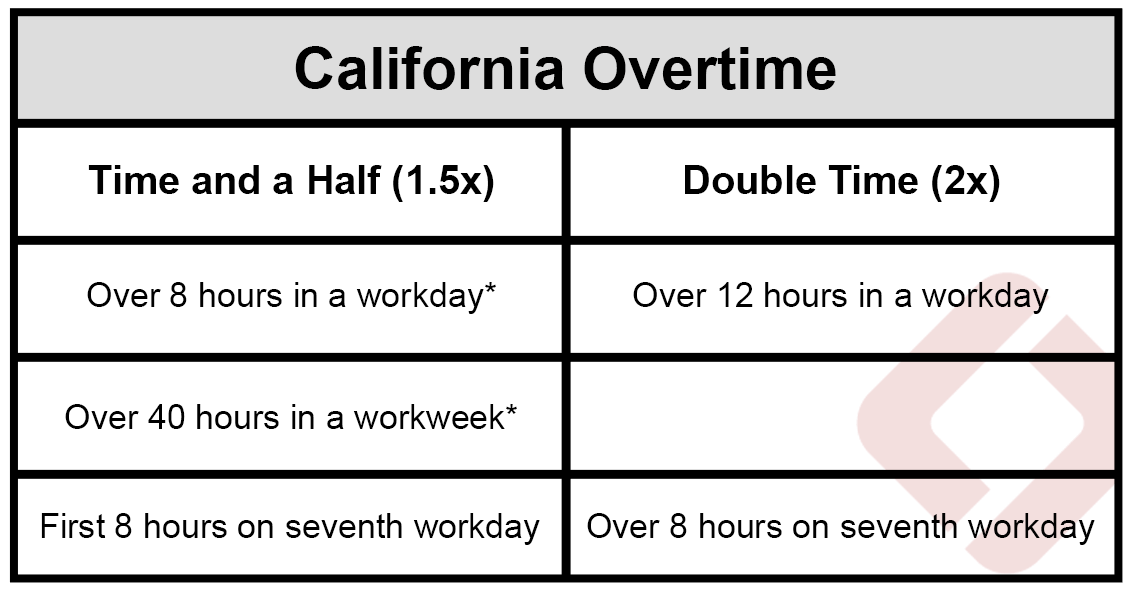
- Daily Overtime: Non-exempt employees must be paid 1.5 times their regular rate of pay for all hours worked over eight (8) hours and up to twelve (12) hours in any workday.
- Weekly Overtime: Non-exempt employees must be paid 1.5 times their regular rate of pay for all hours worked over forty (40) hours in any workweek.
- Seventh Consecutive Day Overtime: A special rule applies to the seventh consecutive day of work in a workweek. Employees must receive 1.5 times their regular rate of pay for the first eight (8) hours worked on the seventh consecutive day.
- Double Time: California also mandates “double time” pay, which is twice the employee’s regular rate of pay, for:
- All hours worked over twelve (12) hours in any workday.
- All hours worked over eight (8) hours on the seventh consecutive day of work in a workweek.
These robust protections mean that a long day at work can significantly boost an employee’s earnings, contributing directly to their financial stability and discretionary spending for their California lifestyle.
Calculating Your Overtime: More Than Just Hourly Rate
While the concept of 1.5x or 2x your pay seems straightforward, calculating the exact overtime amount can be complex due to the definition of the “regular rate of pay.” It’s not always just your base hourly wage.
Understanding the “Regular Rate of Pay”
The “regular rate of pay” is a critical component for accurate overtime calculation. It includes all remuneration for employment paid to, or on behalf of, the employee, with a few statutory exceptions. This means it encompasses more than just the straight hourly wage. Components that typically must be included in the regular rate calculation are:
- Non-Discretionary Bonuses: Bonuses that are promised to employees for meeting certain goals or conditions (e.g., attendance bonuses, production bonuses).
- Commissions: Earnings based on a percentage of sales or other metrics.
- Shift Differentials: Extra pay for working undesirable shifts (e.g., night shifts).
- On-Call Pay: Payments for being on-call, even if no work is performed, depending on the nature of the on-call arrangement.
- Cost-of-Living Adjustments: Certain allowances or payments designed to help with the cost of living.
- Value of Lodging and Meals: If provided by the employer and considered compensation.
Example: If an employee earns $20/hour and also receives a $100 non-discretionary weekly bonus, their regular rate of pay for overtime calculation purposes is not just $20. The bonus must be factored in. For a 40-hour week, the total compensation would be $20 * 40 = $800 + $100 bonus = $900. The regular rate would then be $900 / 40 hours = $22.50 per hour. Overtime would be calculated at 1.5 times or 2 times $22.50. This can make a significant difference in an employee’s take-home pay and overall financial outlook.
Specific Scenarios: Split Shifts and On-Call Pay
California also has rules for specific work arrangements that can affect overtime.
- Split Shifts: If an employee works a split shift (i.e., work periods separated by a non-paid, non-working period of more than a certain duration), they are usually entitled to an additional hour of pay at the minimum wage for that day, in addition to any overtime wages. This is particularly relevant in industries like hospitality and retail, where such schedules are common, impacting a worker’s daily rhythm and compensation.
- On-Call Pay: Whether on-call time counts as hours worked for overtime purposes depends on the degree of restriction placed on the employee. If an employee is required to remain on the employer’s premises or so near thereto that they cannot use the time effectively for their own purposes, it is generally considered hours worked. If an employee is free to engage in personal activities while on-call, the time might not be compensable, but any actual work performed while on-call would be.

Understanding these nuances is vital for accurate compensation and for individuals to properly plan their financial contributions to their California lifestyle.
Special Considerations for the California Worker’s Lifestyle
Beyond the basic calculations, California’s labor laws intertwine with daily work life in ways that directly impact an employee’s well-being and their ability to enjoy their time outside of work.
Meal and Rest Breaks: A Crucial Component of the Workday
California’s meal and rest break laws are among the strongest in the nation and are a significant factor in ensuring employee health and productivity, directly impacting their quality of life.
- Rest Breaks: Employers must authorize and permit non-exempt employees to take a paid 10-minute rest break for every four hours worked, or major fraction thereof. These breaks must be taken approximately in the middle of each work period. For example, an employee working an 8-hour shift should receive two paid 10-minute rest breaks.
- Meal Breaks: For shifts over five hours, employees must be provided a 30-minute unpaid meal break. If an employee works more than ten hours, they are entitled to a second 30-minute unpaid meal break. Employees must be completely relieved of duty during these breaks.
- Penalties for Violations: If an employer fails to provide a legally compliant meal or rest break, they must pay the employee one additional hour of pay at the employee’s regular rate for each workday that a meal or rest period is violated. These penalties can quickly accumulate, underscoring the importance of compliance for employers and vigilance for employees.
These mandatory breaks are not just legal requirements; they are essential for preventing burnout, maintaining focus, and ensuring employees have time for personal recuperation during their workday. This directly contributes to a healthier work-life balance, allowing individuals to be more engaged and energetic for their personal pursuits after work, whether it’s exploring San Francisco, enjoying the beaches of San Diego, or spending time with family in Los Angeles.
The Impact on Financial Planning and Travel Dreams
Understanding and receiving accurate overtime pay directly impacts an individual’s financial health and, by extension, their lifestyle choices in California.
- Increased Earning Potential: Overtime provides a significant opportunity to increase one’s income, which is particularly valuable in a state with a higher cost of living. This extra income can be crucial for meeting expenses, paying down debt, or building savings.
- Funding Lifestyle Choices: For many, the ability to earn overtime translates into the financial flexibility to pursue various lifestyle aspirations. This could mean saving for a down payment on a home, investing in further education, or, notably for a travel-oriented lifestyle, funding leisure activities, weekend getaways to Napa Valley, or even extended vacations beyond California’s borders.
- Budget Travel vs. Luxury Experiences: For those on a budget, overtime earnings can make the difference between dreaming of a California adventure and actually experiencing it. For others, it might enable more luxurious travel experiences, from staying at high-end resorts to indulging in gourmet dining across the state.
- Security and Stability: Knowing your rights and ensuring fair compensation provides a sense of financial security, reducing stress and allowing for a more stable and enjoyable life experience in California. For those working demanding jobs, accurate overtime compensation is a recognition of their extra effort and provides tangible rewards.
Protecting Your Rights and Ensuring Fair Compensation
Even with robust laws, violations can occur. Being informed and proactive is key to protecting your right to fair compensation in California.
Recognizing Overtime Violations
Common overtime violations include:
- Misclassification: Incorrectly classifying a non-exempt employee as exempt to avoid overtime payments.
- Incorrect Regular Rate Calculation: Failing to include all forms of compensation (like non-discretionary bonuses) when calculating the regular rate of pay.
- Off-the-Clock Work: Requiring or permitting employees to work before or after their scheduled shifts, during meal breaks, or at home without recording and compensating for that time.
- Unpaid Meal/Rest Breaks: Failing to provide legally required meal and rest breaks or paying the penalty when they are missed.
- Compensatory Time Off (Comp Time) Instead of Pay: Generally, private employers in California cannot offer “comp time” in lieu of overtime pay. Overtime must be paid in money.
Steps to Take if You Suspect an Issue
If you believe your overtime rights are being violated, consider these steps:
- Document Everything: Keep detailed records of your hours worked, including start and end times, meal and rest breaks taken (or missed), and any communications with your employer regarding work hours or pay. This documentation is invaluable if you need to pursue a claim.
- Communicate with Your Employer: Often, issues can be resolved simply by discussing them with your manager or HR department. Present your concerns clearly and professionally, referencing California’s labor laws.
- Consult the DLSE: The California Division of Labor Standards Enforcement (DLSE), often referred to as the Labor Commissioner’s Office, is the state agency responsible for enforcing labor laws. You can file a wage claim with the DLSE if your employer fails to correct the issue.
- Seek Legal Advice: For complex cases or if you’re uncomfortable proceeding alone, consulting an attorney specializing in employment law can provide expert guidance and representation.
The California Advantage: Strong Worker Protections
California stands out for its commitment to protecting worker rights. The state’s laws are often more protective than federal laws, and when both federal and state laws apply, the law that provides the greater protection or benefit to the employee generally prevails. This proactive stance ensures that employees in California have a strong legal framework to ensure fair compensation and reasonable working conditions, ultimately contributing to a better quality of life.
Conclusion
Understanding how overtime pay works in California is more than just knowing a legal technicality; it’s about empowering yourself with knowledge that directly impacts your financial stability, work-life balance, and overall lifestyle. Whether you’re a long-time resident, a newcomer drawn by California’s opportunities, or a business traveler navigating the state’s employment landscape, being informed about these regulations is crucial.
By ensuring you are properly classified, understanding how your regular rate of pay is calculated, and recognizing your rights concerning breaks and overtime, you can maximize your earnings and protect your well-being. This knowledge empowers you to plan your finances more effectively, pursue your passions, and truly enjoy the diverse and enriching lifestyle that working in California can offer. Take the time to be informed, advocate for your rights, and make the most of your time in the Golden State, both on and off the clock.
LifeOutOfTheBox is a participant in the Amazon Services LLC Associates Program, an affiliate advertising program designed to provide a means for sites to earn advertising fees by advertising and linking to Amazon.com. Amazon, the Amazon logo, AmazonSupply, and the AmazonSupply logo are trademarks of Amazon.com, Inc. or its affiliates. As an Amazon Associate we earn affiliate commissions from qualifying purchases.