
The geographical isolation of Hawaii is one of its most defining characteristics, shaping its history, ecology, and the very nature of the travel experience. Although it is the 50th state of the United States, its position in the heart of the Pacific Ocean places it thousands of miles away from the mainland. For many travelers, the question of distance is not just about mileage but about the logistics of crossing the vast expanse of water that separates North America from this tropical paradise. Understanding this distance is the first step in planning a journey to what many consider the most remote population center on Earth.
Understanding the Geographical Divide
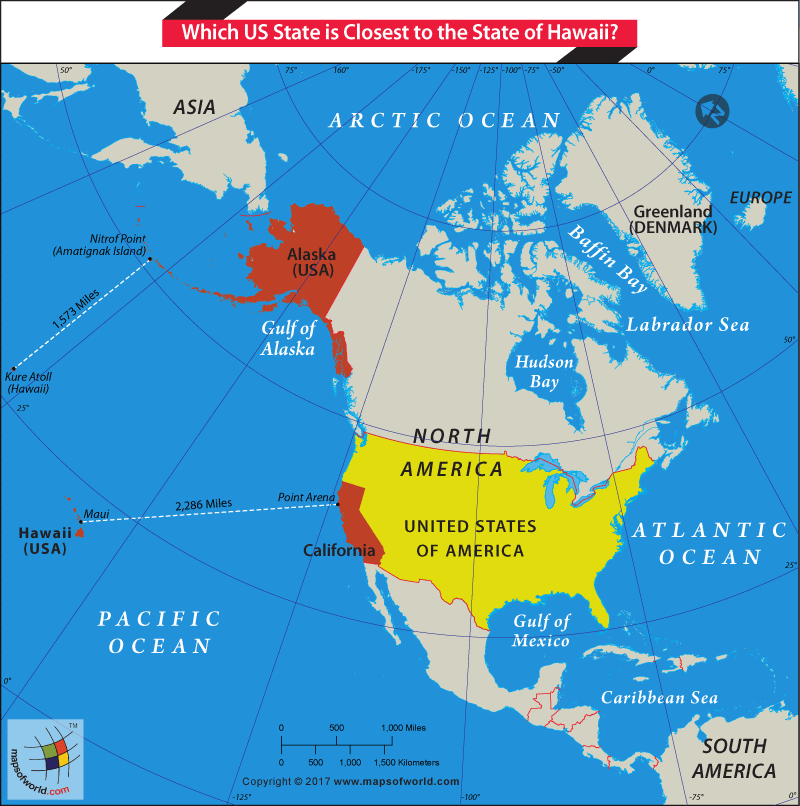
Hawaii is located approximately 2,400 miles from the West Coast of the United States. This distance remains relatively consistent whether one is measuring from California, Oregon, or Washington. Because the archipelago sits so far into the Pacific Ocean, there is no way to reach the islands by car or train, leaving air travel and maritime voyages as the only options for visitors.
The Distance from the West Coast
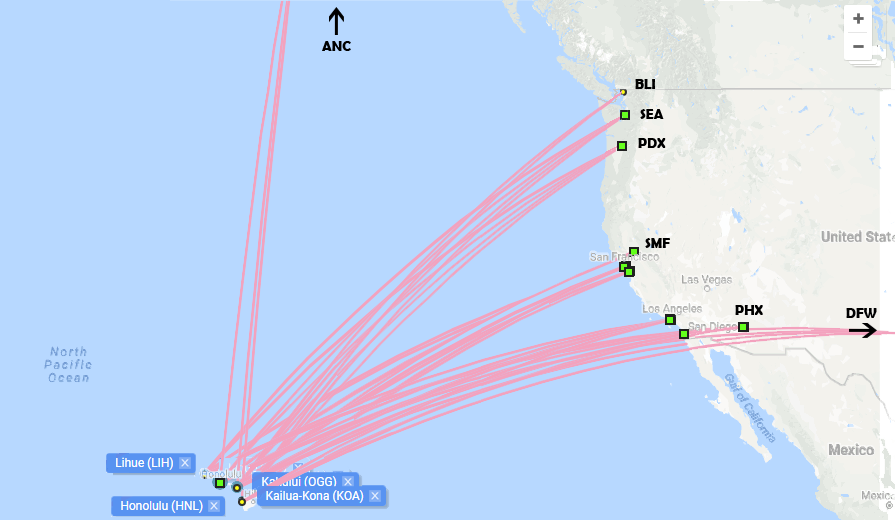
For most travelers, the journey begins in major gateway cities along the Pacific seaboard. From San Francisco, the flight to Honolulu covers roughly 2,390 miles. Travelers departing from Los Angeles face a similar distance of about 2,550 miles. Even from northern hubs like Seattle, the flight path stretches over 2,600 miles of open ocean. These flights typically take between five and six hours, depending on the strength of the jet stream.
The transition during these hours is remarkable. Travelers leave behind the temperate or Mediterranean climates of the mainland and descend into the humid, floral-scented air of the tropics. This “overwater” segment is one of the longest domestic flight paths in the world that does not offer an alternative landing site, which is why airlines must adhere to strict safety regulations when operating these routes.
Flights from the East Coast and Central U.S.
The distance becomes significantly more daunting when traveling from the eastern half of the United States. From New York City, the distance to Honolulu is approximately 4,960 miles. This journey is one of the longest domestic flights available, often exceeding 10 to 11 hours in the air. Similarly, travelers from Chicago must traverse about 4,250 miles, while those flying from Dallas or Atlanta cover roughly 3,700 to 4,500 miles respectively.
For these long-haul travelers, the journey often involves a layover on the West Coast or a direct flight on specialized aircraft like the Boeing 787 Dreamliner or the Airbus A330, which are designed for comfort and efficiency over long distances. The vastness of the United States is truly felt when one realizes that flying from New York to London is actually shorter than flying from New York to Honolulu.
Navigating the Pacific: Air Travel and Logistics
The distance between the mainland and Hawaii has led to a highly developed aviation network. Because the islands rely heavily on tourism and imported goods, the air corridors between the United States and the islands are some of the busiest in the world.
Major Airports and Carriers
The primary entry point for international and mainland travelers is the Daniel K Inouye International Airport in Honolulu on the island of Oahu. However, as tourism has expanded, direct flights from the mainland to other islands have become increasingly common. Travelers can now fly directly into Kahului Airport on Maui, Lihue Airport on Kauai, or Kona International Airport and Hilo International Airport on the Big Island.
Several major airlines dominate these routes. Hawaiian Airlines is the state’s flagship carrier, offering a unique “aloha spirit” from the moment passengers board. Other major players include United Airlines, Delta Air Lines, and American Airlines. In recent years, the entry of Southwest Airlines and the consistent presence of Alaska Airlines have made travel to the islands more accessible and affordable, despite the physical distance.
Travel Time and What to Expect
When calculating the “distance” of Hawaii, one must also consider the time change. Hawaii follows Hawaii-Aleutian Standard Time and does not observe Daylight Saving Time. This means that during the summer months, Hawaii is three hours behind the Pacific coast and six hours behind the Eastern coast.
The physical distance also dictates the type of service on board. Unlike many domestic flights within the contiguous United States, flights to Hawaii often feel like international journeys. Most carriers offer in-flight entertainment, meal services, and amenities tailored to a long-haul experience. For those traveling in premium cabins, the distance provides an opportunity to enjoy lie-flat seats and enhanced dining, making the transit as much a part of the vacation as the destination itself.
Planning Your Hawaiian Journey
Given the significant distance, a trip to Hawaii is rarely a weekend getaway for those living outside of the West Coast. Most travelers plan for at least a week to justify the travel time and to allow their bodies to adjust to the new time zone.
Selecting the Right Island
Because each island is separated by the Pacific, moving between them requires additional planning. Oahu is the most populous and offers a mix of urban excitement and legendary beaches. Maui, often referred to as the “Valley Isle,” is famous for its luxury resorts and the scenic Road to Hana.
Kauai, the “Garden Isle,” is the oldest and most lush, catering to hikers and nature lovers. Meanwhile, the Big Island (officially named Hawaii) is the largest and youngest, featuring active volcanoes and diverse climates ranging from tropical rainforests to arid deserts. Smaller, more secluded islands like Lanai and Molokai offer a glimpse into a slower, more traditional pace of life.
Seasonal Considerations for Travelers
The distance of Hawaii from the mainland also means its weather patterns are dictated by Pacific currents rather than continental weather systems. The islands enjoy a perpetual summer, but there are nuances. The “dry” season runs from April to October, while the “wet” season occurs from November to March.
Travelers should also be aware of the “peak” seasons. Winter is incredibly popular for those escaping the cold of the northern United States and Canada. Additionally, late December and early January see a surge in visitors, as do the summer months when schools are out. Planning a trip during the “shoulder” seasons—such as May, June, September, or October—can often result in better flight deals and fewer crowds at major attractions.
The Cultural and Natural Wonders of the Islands
Once the 2,400-mile journey is complete, the rewards are immense. The distance has allowed Hawaii to maintain a culture that is distinct from the rest of the United States, blending Polynesian heritage with influences from Asia and the mainland.
Iconic Landmarks and National Parks
The islands are home to some of the most famous landmarks in the world. On Oahu, Pearl Harbor stands as a somber and significant historical site, while the Diamond Head State Monument offers a challenging hike with a rewarding view of the Waikiki skyline.
Nature enthusiasts will find paradise in the various national and state parks. Haleakala National Park on Maui is home to a massive dormant volcano where visitors gather to watch the sunrise above the clouds. On the Big Island, Hawaii Volcanoes National Park allows travelers to witness the raw power of Kilauea and Mauna Loa. On Kauai, the Waimea Canyon State Park, often called the “Grand Canyon of the Pacific,” and the stunning Na Pali Coast State Wilderness Park provide breathtaking vistas that are unreachable by car.
Modern Amenities and Urban Centers
Despite its remote location, Hawaii offers all the modern comforts a traveler could desire. Honolulu is a cosmopolitan city with high-end shopping at the Ala Moana Center, world-class dining, and a vibrant nightlife. The North Shore of Oahu provides a different kind of excitement, especially during the winter months when massive swells attract the world’s best surfers to Waimea Bay and Banzai Pipeline.
Cultural experiences are also abundant. The Polynesian Cultural Center offers an immersive look at the various island nations of the Pacific. For those interested in marine life, a visit to Hanauma Bay Nature Preserve offers some of the best snorkeling in the islands, protected by the volcanic crater of the Koolau Range.

Practical Tips for the Long-Haul Flight
Given that you will be in the air for at least five hours—and potentially much longer—preparation is key. Staying hydrated is essential, as the cabin air can be quite dry. Many seasoned travelers recommend packing a neck pillow, noise-canceling headphones, and layers of clothing, as the temperature can fluctuate between the warm departure gate and the air-conditioned cabin.
Another practical tip involves the Hawaii agriculture declaration. To protect the islands’ unique ecosystem, all passengers must fill out a form declaring any plants, fruits, or animals they are bringing into the state. This is a reminder of the islands’ fragility and the importance of preserving the natural beauty that makes the long trip so worthwhile.
Finally, consider the return journey. Flying east from Hawaii to the mainland often involves “red-eye” flights. These overnight journeys can be taxing, so many travelers opt to spend their last day relaxing on Waikiki Beach or enjoying a final luau before heading to the airport.
The distance between Hawaii and the United States mainland is vast, but it serves as a buffer that has preserved the islands’ unique charm. Whether you are gazing at the stars from the summit of Mauna Kea or swimming in the turquoise waters of Lanikai Beach, the thousands of miles crossed will feel like a small price to pay for the experiences found in this mid-Pacific sanctuary.
LifeOutOfTheBox is a participant in the Amazon Services LLC Associates Program, an affiliate advertising program designed to provide a means for sites to earn advertising fees by advertising and linking to Amazon.com. Amazon, the Amazon logo, AmazonSupply, and the AmazonSupply logo are trademarks of Amazon.com, Inc. or its affiliates. As an Amazon Associate we earn affiliate commissions from qualifying purchases.