
The question “How far away is Russia from Alaska?” often conjures images of vast, icy expanses, but the reality is far more astonishingly close than many people imagine. This geographical proximity creates a unique frontier, a place where continents almost touch, where ancient cultures share a common heritage, and where geopolitical divides stand in stark contrast to natural closeness. For anyone interested in travel, history, or the sheer wonder of our planet’s geography, the Bering Strait region offers a fascinating study of connection and separation.
Our exploration will delve into the precise distances, unravel the rich tapestry of shared cultures, examine the historical context that has shaped this remote frontier, and discuss the complex realities of travel and tourism in an area that remains both geographically intimate and politically distant. From the stark beauty of the Arctic wilderness to the resilience of indigenous communities, the edge of Alaska and the Russian Far East tells a story unlike any other.

A Stone’s Throw Across the Bering Strait: Geographical Proximity
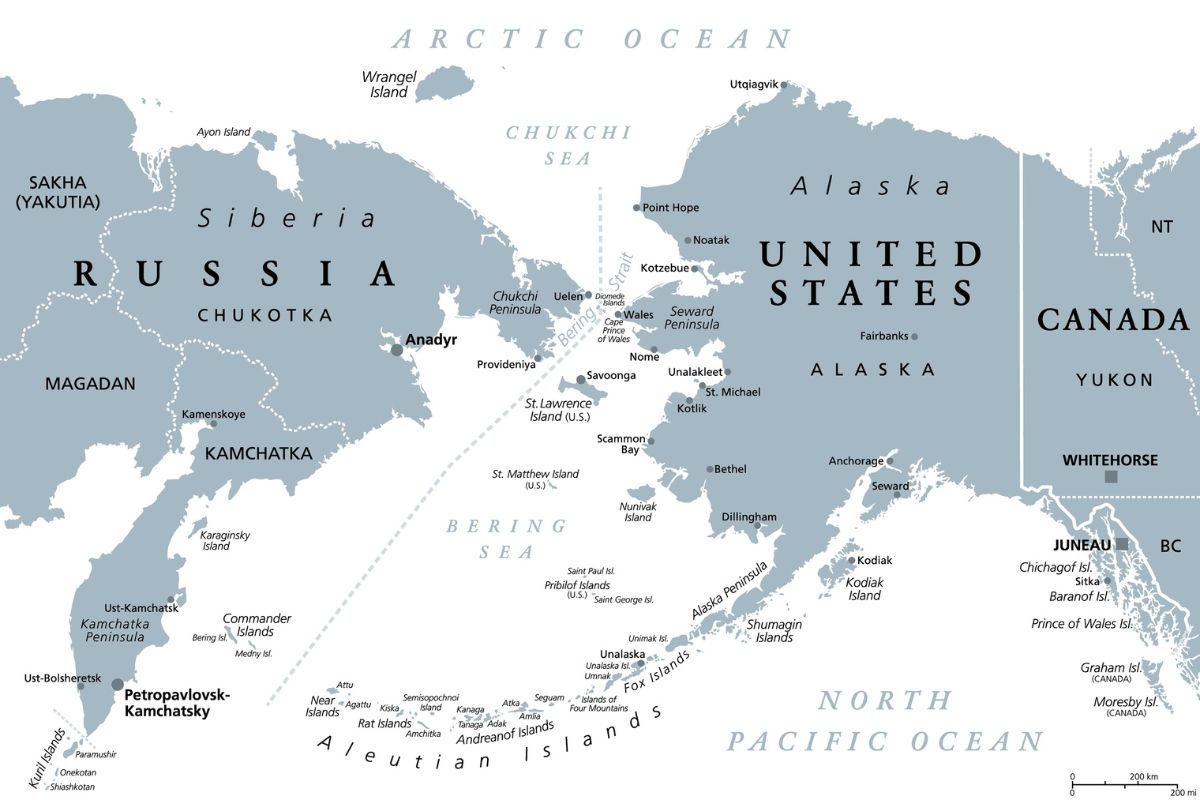
At its closest point, the distance between the United States and Russia is incredibly small, a mere whisper across an icy expanse. This narrow stretch of water, known as the Bering Strait, is one of the most strategically and culturally significant waterways on Earth. Connecting the Arctic Ocean to the Bering Sea and then the wider Pacific Ocean, it represents a natural bridge that has shaped migrations, weather patterns, and human history for millennia.
The Diomede Islands: The Closest Neighbors
The undeniable champions of “closest proximity” are the Diomede Islands. These two small, rocky outcroppings sit right in the middle of the Bering Strait, creating a literal stepping stone between continents.
- Big Diomede Island (also known as Ratmanov Island) belongs to Russia. It is uninhabited by permanent civilian populations, though it hosts a Russian weather station and border guard outpost.
- Little Diomede Island (also known as Krusenstern Island) belongs to the United States, part of Alaska. It is home to the village of Diomede, inhabited primarily by Inupiat Eskimos, with a population typically around 100 people.
The distance between Big Diomede and Little Diomede is an astonishingly short 2.4 miles (3.8 kilometers). This narrow gap is so small that on a clear day, residents of Little Diomede can clearly see Russian territory. Imagine being able to gaze across a few miles of water and see another continent, another country, another world.
Adding another layer of intrigue, the International Date Line runs precisely between these two islands. This means that Big Diomede is almost a full day ahead of Little Diomede. While someone on Little Diomede might be starting their Monday, their neighbors on Big Diomede are already well into Tuesday. This phenomenon has earned them the nicknames “Tomorrow Island” and “Yesterday Island,” a unique geographical quirk that underscores their profound separation despite physical closeness.
Beyond the Diomede Islands, the widest part of the Bering Strait measures approximately 53 miles (85 kilometers) from Cape Dezhnev in Russia to Cape Prince of Wales in Alaska. Even at its widest, this is a relatively short distance, especially when compared to the vastness of the Pacific Ocean that separates Asia from North America further south.
Geological and Ecological Significance
The Bering Strait’s geographical significance extends far beyond its role as a modern border. During glacial periods, when sea levels dropped significantly, the Bering Strait and vast areas of the adjacent continental shelves were exposed, forming a land bridge known as Beringia. This ancient land bridge, which existed periodically over hundreds of thousands of years, played a pivotal role in shaping the biological and human history of both continents. It allowed for the migration of animals, including megafauna like woolly mammoths, and, crucially, was the primary route by which early humans first populated the Americas from Asia. This “Out of Beringia” theory is a cornerstone of American archaeology and anthropology.
Ecologically, the Bering Strait and the surrounding Bering Sea and Chukchi Sea are incredibly productive marine environments. They support a rich diversity of wildlife, including numerous species of whales (bowhead, gray, beluga), seals (walrus, bearded seals, ringed seals), polar bears, and vast populations of migratory birds. The annual movements of ice, the upwelling of nutrient-rich waters, and the unique interaction of ocean currents create a vibrant ecosystem that is vital to the global marine food web and the subsistence livelihoods of indigenous communities.
However, this delicate ecosystem is now at the forefront of climate change. Rising Arctic temperatures are causing significant reductions in sea ice, impacting traditional hunting grounds, altering migration patterns, and threatening the very existence of some species. The changing environment also presents new challenges and opportunities for shipping and resource extraction, making the region an increasingly important focus for international environmental and political discussions.
Threads of History and Culture: Bridging Continents
The narrowness of the Bering Strait has not only facilitated migrations of animals and early humans but has also fostered deep cultural connections that predate modern nation-states. For thousands of years, indigenous peoples moved freely across this watery divide, sharing languages, traditions, and a way of life intrinsically linked to the Arctic environment.
Indigenous Connections and Ancient Migrations
The indigenous peoples on both sides of the Bering Strait share a common ancestry and cultural heritage. The Yupik peoples, for example, inhabit coastal areas of southwestern Alaska and parts of the Chukotka Autonomous Okrug in the Russian Far East. Similarly, the Inupiat of northern Alaska share close linguistic and cultural ties with the Chukchi and other groups on the Russian side. Before the imposition of strict international borders, these communities engaged in regular trade, intermarriage, and shared subsistence practices, including whaling and sealing, which were crucial for their survival in the harsh Arctic climate.
Their traditional knowledge, spiritual beliefs, and social structures were developed in response to the unique challenges and opportunities presented by living at the edge of the world. Artifacts, archaeological sites, and oral histories vividly demonstrate the enduring connections that have bound these communities together across what is now an international boundary. The traditional ivory carvings, elaborate dances, and intricate storytelling traditions often reflect shared themes and artistic styles, underscoring a deep-seated cultural unity.
The creation of the international border in the 19th and 20th centuries, particularly during the Cold War era, severely disrupted these long-standing connections. Families were separated, trade routes were cut off, and cultural exchanges ceased. While some limited exchanges have resumed in recent decades, the impact of these political divisions on indigenous identity and continuity has been profound, creating a sense of longing for the days of open movement and interaction.
The “Ice Curtain” and Cold War Echoes
The proximity of Russia and Alaska took on a new, ominous significance during the Cold War. What was once a bridge became a heavily fortified frontier, often referred to as the “Ice Curtain.” Military installations were established on both sides, and the Bering Strait became a potential flashpoint between two nuclear superpowers. Civilian travel and contact between communities were almost entirely halted, transforming a natural connection into a symbol of global ideological division.
This period saw increased military surveillance, with both nations constantly monitoring the skies and waters of the strait. The remoteness that once protected its inhabitants now made it a strategic battleground, albeit one where direct conflict never erupted. The legacy of the Cold War still lingers, influencing perceptions of the region and contributing to the current challenges in cross-border relations.
Even before the Cold War, the region had a complex history of exploration and colonization. The first documented European to sight the Bering Strait was the Russian explorer Semyon Dezhnyov in 1648, though his discovery went largely unnoticed in Europe. It was Vitus Bering, a Danish navigator in Russian service, who thoroughly explored the strait in 1728, giving it his name. His expeditions, along with subsequent Russian fur traders, led to the establishment of Russian America, with settlements stretching across Alaska until its sale to the United States in 1867. This historical period laid the foundation for the current geopolitical boundary, though it hardly erased the deeper cultural ties forged over millennia.
Travel and Tourism: A Frontier of Exploration and Challenge
Given the astonishing geographical proximity, one might assume that travel between Alaska and Russia across the Bering Strait would be straightforward, perhaps even a popular tourist route. The reality, however, is far more complex and challenging. While the dream of a bridge or tunnel connecting the continents has been proposed multiple times, no such infrastructure exists, and travel remains largely restricted.
Practicalities and Hurdles of Cross-Strait Travel
Today, regular commercial travel across the Bering Strait is virtually non-existent. There are no regular ferries, no bridges, and no established air routes for general tourism. The practicalities of making such a journey are dictated by a combination of stringent geopolitical regulations, formidable environmental conditions, and a severe lack of infrastructure.
- Geopolitical Restrictions: Current international relations between the United States and Russia often dictate strict visa requirements and border controls. Obtaining the necessary permits and visas to enter the Chukotka Autonomous Okrug (the Russian region opposite Alaska), which is a closed border zone, is notoriously difficult for foreign nationals, even when relations are stable. For United States citizens, specific invitations and itineraries from authorized Russian tour operators are usually required, a process that is lengthy and often expensive.
- Environmental Challenges: The Bering Strait is characterized by extreme weather conditions. Winters bring heavy sea ice, sub-zero temperatures, and violent storms, making navigation treacherous or impossible for most vessels. Summers offer a brief window of open water, but dense fog, strong currents, and unpredictable weather remain significant hazards.
- Lack of Infrastructure: There are no major port facilities or established transportation networks on either side immediately adjacent to the narrowest points of the strait that cater to international passenger traffic. The nearest significant towns, such as Nome in Alaska and Provideniya in Russia, are themselves remote and require specialized travel arrangements.
Despite these hurdles, there have been rare instances of cross-strait travel, often by adventure seekers or indigenous cultural exchange groups. Most famously, Lynne Cox swam across the Bering Strait in 1987, symbolizing a hope for easing Cold War tensions. In winter, when the strait freezes over, an “ice bridge” can form between the Diomede Islands, and theoretically, one could walk across. However, this is extremely dangerous due to shifting ice, currents, and legal prohibitions.
Exploring the Edges: Alaskan and Russian Tourism Potential
While direct cross-strait travel is largely impractical, both sides of the Bering Strait offer unique and compelling travel experiences for adventurous tourists seeking remote frontiers and rich cultural encounters.
On the Alaskan side, the nearest major hub is Nome. Famous as the end point of the Iditarod Trail Sled Dog Race, Nome offers a glimpse into Alaskan gold rush history and a vibrant contemporary Inupiat culture. From Nome, visitors can arrange flightseeing tours that offer breathtaking aerial views of the Bering Strait and even the distant Russian coastline on clear days. Further north, communities like Kotzebue and Utqiagvik (formerly Barrow), the northernmost city in the United States, offer immersive experiences in Arctic Native culture, wildlife viewing (polar bears, seals, whales), and the chance to witness the midnight sun or the aurora borealis. Accommodation in these remote areas typically ranges from simple hotels to local guesthouses, reflecting their frontier character. Luxury adventure travel options sometimes include small-ship cruises navigating the Bering Sea and Chukchi Sea, offering unparalleled wildlife viewing and educational experiences.
On the Russian side, the Chukotka Autonomous Okrug is one of the most remote and least-visited regions in the world. The main port town, Provideniya, offers a rare entry point. Once a major Soviet naval base, it now serves as a gateway for highly specialized, permitted tours. These tours typically focus on the region’s unique indigenous cultures (Chukchi, Yupik), stunning Arctic landscapes, and historical sites related to early exploration and the Cold War. Further north, Uelen is the easternmost settlement in Russia and a renowned center for traditional bone and ivory carving. Visiting Chukotka is an extreme form of adventure travel, requiring meticulous planning, considerable expense, and a willingness to embrace rugged conditions. It offers a truly authentic and humbling experience of life at the edge of civilization. For those seeking accommodation, options are very limited, often relying on basic hotels or homestays in the few populated areas.
For those interested in unique experiences, specialized expedition cruises, often starting from Alaska or Canada, sometimes traverse the Bering Strait and venture into the Arctic Ocean, offering a chance to see both continents from the water, observe marine wildlife, and sometimes even make cultural stops on the Alaskan side. These voyages represent a rare opportunity to bridge the divide, albeit under strictly controlled conditions.
Life on the Edge: Culture, Community, and the Future
Living in the Bering Strait region, whether on the Alaskan or Russian side, means living in a place defined by its extreme environment, its profound cultural heritage, and its unique geopolitical position. It is a testament to human resilience and adaptation in one of the planet’s most challenging yet beautiful landscapes.
Resilience of Remote Communities
The communities in the Bering Strait region, particularly indigenous villages like those on Little Diomede Island or along the Chukotka coast, embody extraordinary resilience. Their daily lives are intricately connected to the land and sea, relying on subsistence hunting and fishing for sustenance. Whaling, sealing, and caribou hunting are not just economic activities but also central to their cultural identity and social fabric. Traditional knowledge, passed down through generations, guides their interactions with the environment and their survival strategies.
However, these communities face immense challenges. Isolation means limited access to modern amenities, healthcare, and educational opportunities. The cost of living is exceptionally high, as most goods must be flown or barged in. Perhaps the most pressing challenge today is climate change. Melting sea ice impacts hunting routes and seasons, eroding coastlines threaten villages, and changing animal migration patterns disrupt traditional food sources. The very foundations of their ancient way of life are under pressure, forcing communities to adapt rapidly while striving to preserve their cultural heritage. Despite these hardships, the spirit of these communities remains strong, rooted in tradition, cooperation, and a deep respect for their Arctic home.

The Future of Cross-Bering Strait Relations
The question of “how far away is Russia from Alaska?” is not just a geographical query but also a metaphor for the intricate and often fluctuating relationship between two global powers. While current geopolitical circumstances severely limit cross-strait interaction, there remains a deep desire among many—especially the indigenous peoples—to revive cultural exchanges and foster understanding. Historically, periods of détente have allowed for “ice curtain” flights and limited cultural visits, demonstrating the potential for connection when political will allows.
Looking to the future, the Bering Strait continues to capture the imagination. Discussions about a potential “intercontinental peace park” or even a “Bering Strait tunnel” (a grand engineering feat that would connect the continents by rail) resurface periodically. While such ambitious projects face enormous logistical, financial, and political hurdles, they underscore the enduring human desire to bridge divides and connect people.
More realistically, the future of the Bering Strait region will likely involve increasing international cooperation on issues of climate change, marine conservation, and scientific research. The shared natural resources and environmental challenges demand a collaborative approach, regardless of political tensions. The strait will also remain a crucial, albeit seasonal, shipping route for vessels traversing the Arctic, further emphasizing its global significance.
In essence, Russia is incredibly close to Alaska, physically a mere 2.4 miles away at the Diomede Islands. This geographical intimacy stands in stark contrast to the historical, cultural, and political barriers that have often separated the two sides. It is a region of paradoxes: a natural bridge that has hosted millennia of migration and exchange, yet also a heavily guarded frontier; a fragile ecosystem under threat, yet teeming with life; a remote expanse that holds a unique place in global history and continues to spark wonder for travelers and scholars alike. For those who venture to its edges, the Bering Strait offers not just a lesson in geography but a profound understanding of the complex interplay between nature, culture, and geopolitics on our interconnected planet.
LifeOutOfTheBox is a participant in the Amazon Services LLC Associates Program, an affiliate advertising program designed to provide a means for sites to earn advertising fees by advertising and linking to Amazon.com. Amazon, the Amazon logo, AmazonSupply, and the AmazonSupply logo are trademarks of Amazon.com, Inc. or its affiliates. As an Amazon Associate we earn affiliate commissions from qualifying purchases.