
The journey from the urban core of Los Angeles to the sun-drenched shores of Santa Monica is more than just a measurement of miles; it is a transition between two distinct worlds of the California lifestyle. While the physical distance is relatively short, the experience of traversing this iconic corridor involves navigating the complex geography of Southern California, understanding the rhythm of its legendary traffic, and choosing the right mode of transport to suit your travel goals. For visitors and locals alike, the question of “how far” is often answered in minutes rather than miles, reflecting the unique pace of life in the United States second-largest metropolis.

Understanding the Distance: Geographic and Practical Realities
Physically, the distance from Downtown Los Angeles to the Santa Monica Pier is approximately 15 to 16 miles. However, because Los Angeles is a vast sprawl of interconnected neighborhoods, your starting point significantly alters the math. If you are departing from Hollywood, the drive is about 12 miles. From Los Angeles International Airport, the trip north to the coast is a mere 8 miles.
The Concept of “L.A. Time”
In the realm of travel within Los Angeles County, distance is a relative concept. A 15-mile drive that takes 20 minutes at 10:00 PM on a Sunday can easily stretch to 90 minutes during the weekday afternoon rush. This phenomenon has led to the local tradition of measuring distance in time. When asking how far Santa Monica is, an insightful guide will always follow up with, “What time are you leaving?” This practical reality shapes how tourists plan their excursions to the Pacific Ocean and emphasizes the importance of strategic timing.
Topography and the Coastal Transition
The route from the city center to the sea involves a gradual descent in elevation. As you move west, the dense skyscrapers of the financial district give way to the rolling hills of Beverly Hills and the residential greenery of Brentwood. The air changes as well; the heat of the inland valleys is replaced by the “marine layer”—a cooling mist that rolls in from the Pacific Ocean, often keeping Santa Monica significantly cooler than its inland neighbors.
Modes of Transportation: Navigating the Route
Choosing how to travel between these two points depends on your preference for speed, scenery, or sustainability. Each method offers a different perspective on the landscape of California.
Driving via Interstate 10
The most direct route by car is the Interstate 10, also known as the Santa Monica Freeway. This massive artery serves as the primary link between the coast and the rest of the city. While it is the fastest route in theory, it is also one of the most heavily trafficked roads in the world. Drivers should be prepared for the “405 interchange,” where the Interstate 10 meets the Interstate 405, often creating a bottleneck that tests the patience of even the most seasoned travelers.
The Metro E Line: A Stress-Free Alternative
For those who wish to bypass the gridlock, the Metro E Line (formerly the Expo Line) provides a reliable light-rail connection. Starting at 7th Street / Metro Center in Downtown Los Angeles, the train glides through Culver City and West Los Angeles before arriving at the Downtown Santa Monica Station. The journey takes approximately 50 minutes, offering a sustainable and cost-effective way to reach the beach without the need for parking, which can be both expensive and scarce near the shore.
Cycling the Marvin Braude Bike Trail
For the adventurous traveler, cycling is a viable and scenic option, particularly once you reach the western side of the city. The Marvin Braude Bike Trail, also known as “The Strand,” is a 22-mile paved path that hugs the coastline. While you wouldn’t typically cycle all the way from the city center, many travelers take the train to Culver City and use the Ballona Creek Bike Path to connect to the beach trail, leading them directly into the heart of Santa Monica.
Major Landmarks and Stops Along the Way
The 15-mile stretch between the city and the sea is packed with iconic California landmarks. Breaking up the journey allows travelers to experience the diverse micro-cultures of the region.
The Mid-City Cultural Hub
As you move westward, you pass through the Mid-Wilshire area, home to the Los Angeles County Museum of Art and the La Brea Tar Pits. These sites offer a glimpse into the prehistoric and artistic history of the region. Stopping here provides a sophisticated counterpoint to the leisure-focused atmosphere of the beach.
Beverly Hills and the Golden Triangle
A slight detour north of the Interstate 10 takes you into Beverly Hills. Here, you can experience the luxury of Rodeo Drive and the historic Beverly Hills Hotel. Even if you are just passing through, the manicured landscapes and high-end architecture serve as a quintessential part of the Los Angeles experience.
The Getty Center
Perched on a hill overlooking the route to Santa Monica, The Getty Center is a masterpiece of modern architecture and art. While technically located in the Brentwood neighborhood, its white travertine walls are visible from the freeway. It offers one of the best vantage points to see the entire basin, from the skyscrapers of Downtown Los Angeles to the blue expanse of the Pacific Ocean.
Planning Your Trip: Best Times and Essential Tips
To ensure the journey from the city to Santa Monica is as enjoyable as the destination itself, travelers should consider several logistical factors.
Beating the Rush
The “Golden Rule” of Los Angeles travel is to avoid the freeways between 7:00 AM and 10:00 AM, and 3:00 PM and 7:00 PM. If you must travel during these times, the Metro E Line is your best friend. For a weekend trip, Saturday mornings are generally manageable, but Sunday afternoons can see heavy traffic as everyone heads back inland from a day at Santa Monica State Beach.
Parking and Logistics in Santa Monica
Once you arrive, parking can be a challenge. The city of Santa Monica operates several large parking structures near the Third Street Promenade, which offer the first 90 minutes for free. For those staying overnight, luxury accommodations like the Fairmont Miramar Hotel or the Shutters on the Beach provide valet services, though at a premium price.
Exploring the Coastal Neighborhoods
Santa Monica is incredibly walkable once you are there. After arriving at the pier, you can easily walk south to explore the bohemian vibes of Venice Beach or head north toward the scenic cliffs of Palisades Park. For a more local experience, a stroll down Montana Avenue offers boutique shopping and high-end cafes away from the primary tourist crowds.
The Destination: What Awaits in Santa Monica
Reaching the end of the road means arriving at a place where the city meets the sand. Santa Monica is not just a beach; it is a world-class destination featuring a blend of family-friendly attractions and sophisticated culture.
The Iconic Santa Monica Pier
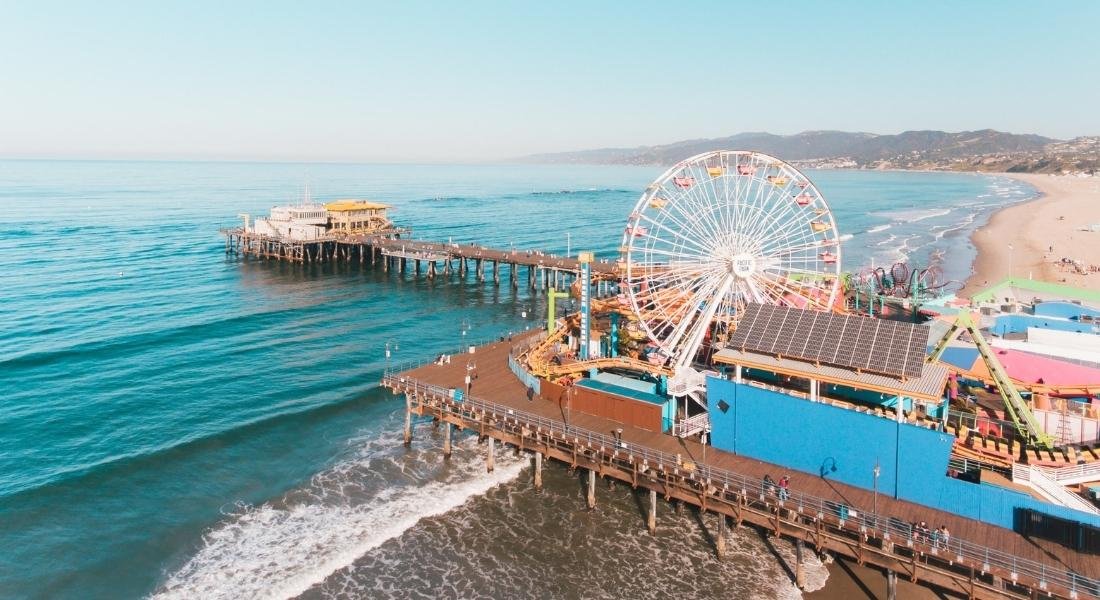
The Santa Monica Pier serves as the symbolic finish line for the historic Route 66. Home to Pacific Park and its solar-powered Ferris wheel, the pier offers amusement, dining, and unparalleled views of the coastline toward Malibu. Below the pier, the Heal the Bay Aquarium provides an educational look at local marine life.
Urban Green Spaces
Beyond the sand, the city offers beautiful parks such as Tongva Park, a modern urban oasis featuring unique sculptural overlooks and native plants. Further north, the Annenberg Community Beach House offers a public pool and historic guest house on the site of a former gold-coast estate.
Culinary and Shopping Delights
No trip to Santa Monica is complete without visiting the Santa Monica Farmers Market, widely considered one of the best in the United States. It draws top chefs from across California who seek the freshest local ingredients. For shopping, the Third Street Promenade and Santa Monica Place offer a mix of global brands and local boutiques.
In conclusion, while the distance from Los Angeles to Santa Monica is a mere 15 miles, the journey encompasses the very essence of the Southern California experience. Whether you are navigating the bustling Interstate 10, riding the efficient Metro E Line, or stopping to admire the art at The Getty Center, the transition from the urban sprawl to the Pacific Ocean is a mandatory pilgrimage for anyone looking to truly understand the heart of the City of Angels. Plan your timing, choose your route, and prepare to trade the skyline for the sunset.
LifeOutOfTheBox is a participant in the Amazon Services LLC Associates Program, an affiliate advertising program designed to provide a means for sites to earn advertising fees by advertising and linking to Amazon.com. Amazon, the Amazon logo, AmazonSupply, and the AmazonSupply logo are trademarks of Amazon.com, Inc. or its affiliates. As an Amazon Associate we earn affiliate commissions from qualifying purchases.