
The journey from Philadelphia, the historical City of Brotherly Love, to New York City, the iconic Big Apple, is one of the most frequently traveled routes on the East Coast of the United States. Whether you’re a seasoned traveler, a first-time visitor, or a local commuting for business or pleasure, understanding the distance, travel options, and what to expect can significantly enhance your experience. This comprehensive guide will explore everything you need to know about traversing the path between these two vibrant metropolises, offering insights into travel, accommodation, tourism, and lifestyle choices that make the trip memorable.
From the cobblestone streets of Old City Philadelphia to the dazzling billboards of Times Square in New York, the transition between these cities offers a fascinating contrast of history, culture, and modern dynamism. Philadelphia presents a rich tapestry of American heritage, with its revolutionary landmarks and burgeoning food scene. New York, on the other hand, stands as a global epicentre of finance, fashion, art, and entertainment. The proximity of these two powerhouses makes for an accessible and exciting adventure, attracting millions who wish to soak in the distinct atmospheres each city offers. Let’s delve into the specifics of this popular corridor.
The Distance Demystified: Understanding the Philly to NYC Journey
At its core, the question “How far from Philly to New York?” refers to more than just mileage; it encompasses the time, convenience, and overall experience of the journey. The physical distance is a straightforward measurement, but the practical travel time can vary significantly based on your chosen mode of transportation, the time of day, and even the weather.
The Straight Shot: Interstate 95 and Beyond
The most direct route by road between Philadelphia and New York City typically covers approximately 95 to 100 miles (about 153 to 161 kilometers). This journey primarily follows Interstate 95 (I-95) North, a major artery connecting cities along the East Coast.
For those traveling by car, the route usually involves crossing the Delaware River into New Jersey and then continuing north. Depending on your exact start and end points within each metropolitan area, the precise mileage might shift slightly. For instance, traveling from Center City Philadelphia to Midtown Manhattan is the most common comparison.
Factors Affecting Travel Time
While the mileage is relatively consistent, travel time is notoriously variable.
- Driving: Under ideal conditions (no traffic, clear weather), the drive can take approximately 1 hour and 45 minutes to 2 hours. However, peak commuting hours, especially weekday mornings and evenings, and weekend travel can easily extend this to 2.5 to 3.5 hours, or even more during severe congestion or accidents. The approach to New York City often involves tunnels or bridges that can be bottlenecks.
- Train: Amtrak’s high-speed Acela Express can make the journey in about 1 hour and 10 minutes to 1 hour and 20 minutes, offering the fastest intercity travel option. Regional trains take slightly longer, typically 1.5 to 2 hours.
- Bus: Bus services generally take anywhere from 2 to 2.5 hours, depending on traffic, the number of stops, and the efficiency of the service.
- Air: While flying might seem quicker for longer distances, the short hop between Philly and NYC is usually not practical. The flight time itself is only about 30-40 minutes, but when you factor in travel to and from airports, security checks, and boarding, the total door-to-door time often exceeds that of train or even car travel, making it an inefficient choice for most.
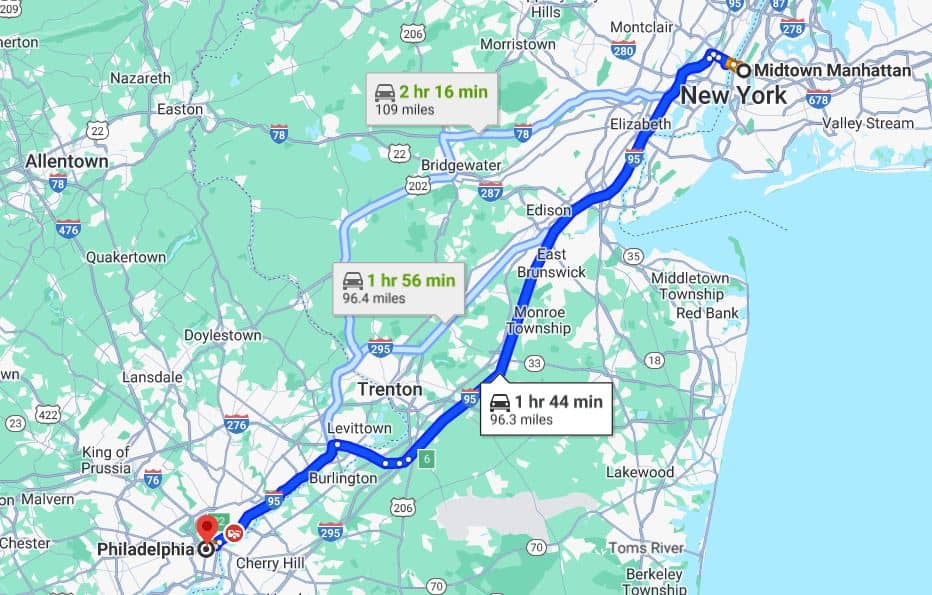
Understanding these variables is crucial for planning your trip effectively, allowing you to choose the best mode of transport that aligns with your schedule and preferences, whether you prioritize speed, cost, or comfort.
Diverse Travel Options: Getting From the City of Brotherly Love to the Big Apple
The corridor between Philadelphia and New York City is exceptionally well-served by a variety of transportation methods, catering to different budgets and travel styles.
Driving: Freedom and Flexibility
For many, driving offers the ultimate flexibility, especially for those traveling with family, carrying luggage, or planning side trips. The primary route is I-95 North. Upon entering New Jersey, drivers typically continue on I-95 N, which merges into the New Jersey Turnpike (a toll road). Exiting the Turnpike around Secaucus or Jersey City allows access to various tunnels and bridges leading into Manhattan, such as the Holland Tunnel, Lincoln Tunnel, or the George Washington Bridge.
Pros: Flexibility, door-to-door convenience (if parking is available), ideal for groups or those with lots of gear.
Cons: Traffic congestion, tolls (especially on the New Jersey Turnpike and NYC crossings), expensive parking in New York City.
Tips: Travel during off-peak hours (mid-day or late evening), utilize GPS apps for real-time traffic updates, consider parking outside Manhattan (e.g., in New Jersey) and taking public transit into the city.
Rail Travel: Amtrak and Commuter Lines
Train travel is arguably the most efficient and comfortable option for many. Amtrak operates frequent services from William H. Gray III 30th Street Station in Philadelphia to Moynihan Train Hall at Penn Station in New York City.
- Acela Express: The fastest option, offering business and first-class seating. Ideal for business travelers or those seeking premium comfort and speed.
- Northeast Regional: More frequent and budget-friendly than Acela, with multiple stops but still a very efficient way to travel.
- Keystone Service: Primarily serves Pennsylvania, but some trains extend to New York City.
Commuter Rail: For a more budget-conscious approach, you can combine local commuter rail services. Take SEPTA’s Trenton Line from Philadelphia to Trenton, New Jersey, then transfer to NJ Transit to New York Penn Station. This method is significantly cheaper but takes longer, often 2.5 to 3 hours, and involves a transfer.
Pros: Avoids traffic, comfortable seating, often includes Wi-Fi, drops you directly in Midtown Manhattan.
Cons: Can be more expensive than bus (especially Acela), less flexible than driving.
Tips: Book tickets in advance for better prices, especially for Acela. Consider off-peak travel times for potentially lower fares.
Bus Services: Budget-Friendly and Convenient
Intercity bus services offer the most economical way to travel between Philadelphia and New York City. Companies like MegaBus, Greyhound, and FlixBus operate numerous daily routes. Buses typically depart from the Philadelphia Greyhound Terminal or various curbside stops and arrive at the Port Authority Bus Terminal in Midtown Manhattan, or sometimes curbside in other NYC locations.
Pros: Most affordable option, frequent departures, often includes Wi-Fi and power outlets.
Cons: Subject to traffic delays, less comfortable than train, can be crowded.
Tips: Book online in advance for the best fares, especially if traveling during popular times. Opt for early morning or late-night buses to potentially avoid traffic.
Air Travel: For Speed and Specific Needs
While not the preferred method for this short distance, flying is an option, primarily if connecting to other flights or for specific logistical reasons. Flights depart from Philadelphia International Airport (PHL) and arrive at Newark Liberty International Airport (EWR), John F. Kennedy International Airport (JFK), or LaGuardia Airport (LGA) in the New York City area.
Pros: Fastest actual travel time in the air.
Cons: Total travel time (including airport transfers, check-in, security) often makes it slower than train. More expensive, less environmentally friendly.
Tips: Only consider if flying aligns with existing travel plans or if you have specific air cargo needs.
Making the Most of Your Trip: Philly and NYC Itineraries & Experiences
A journey between Philadelphia and New York City isn’t just about covering distance; it’s about embracing the unique experiences each destination offers. From historical tourism to vibrant lifestyle choices, these cities cater to every interest.
Philadelphia’s Enduring Charm: A Preamble to NYC
Before or after your trip to NYC, dedicate time to explore Philadelphia’s rich history and culture.
- Landmarks: Visit Independence Hall where the Declaration of Independence and U.S. Constitution were debated and adopted, and gaze upon the iconic Liberty Bell. Explore the National Constitution Center for an interactive dive into American democracy.
- Art and Culture: Run up the “Rocky Steps” at the Philadelphia Museum of Art, and then explore its vast collections. The Barnes Foundation offers an extraordinary collection of Impressionist, Post-Impressionist, and early Modern art.
- Food Scene: Indulge in a classic Philly cheesesteak, but don’t stop there. The Reading Terminal Market is a foodie paradise with diverse vendors, from Amish delicacies to international cuisine. Explore the vibrant dining scene in neighborhoods like Rittenhouse Square and Fishtown.
- Lifestyle: Enjoy the green spaces of Fairmount Park, stroll through the charming streets of Old City, or experience the eclectic vibe of South Street.
New York’s Irresistible Allure: Post-Journey Exploration
Upon arrival in New York City, a world of unparalleled attractions awaits.
- Iconic Landmarks: Witness the grandeur of the Statue of Liberty and Ellis Island, explore the urban oasis of Central Park, ascend the Empire State Building or Top of the Rock for breathtaking views.
- Arts and Entertainment: Catch a world-class show on Broadway, immerse yourself in art at the Metropolitan Museum of Art, the Museum of Modern Art (MoMA), or the Guggenheim Museum.
- Neighborhoods and Culture: Wander through the bohemian streets of Greenwich Village, cross the historic Brooklyn Bridge for stunning skyline views, delve into the financial heart of Wall Street, or savor the diverse flavors of Chinatown and Little Italy.
Culinary Journeys and Cultural Immersion
Both cities are renowned for their culinary scenes, offering everything from Michelin-starred restaurants to diverse street food. Engage in local culture by attending festivals, live music performances, or exploring unique shops and markets. Consider a food tour in Philadelphia to taste local specialties, or an international food crawl in one of New York’s many ethnic neighborhoods. For sports enthusiasts, catching a game with one of the many professional teams in either city (Eagles/Phillies/76ers/Flyers in Philly, Yankees/Mets/Knicks/Nets/Giants/Jets/Rangers/Islanders in NYC) adds another layer to the lifestyle experience.
Where to Stay: Accommodation Between Two Metropolises
Finding the right accommodation is key to a comfortable and enjoyable trip, whether you’re seeking luxury, budget-friendliness, or a home-away-from-home feel. Both Philadelphia and New York City offer a vast array of options.
Accommodation in Philadelphia
Philadelphia boasts a diverse range of hotels, from historic boutique inns to modern high-rises.
- Luxury: The Ritz-Carlton, Philadelphia, Four Seasons Hotel Philadelphia at Comcast Center, and The Bellevue Hotel offer opulent stays with top-notch amenities.
- Boutique & Mid-Range: Options like Kimpton Hotel Monaco Philadelphia near Independence Hall or The Logan Philadelphia, Curio Collection by Hilton provide unique charm and excellent service.
- Budget-Friendly: Numerous chain hotels and hostels, such as those found on Booking.com or Hostelworld, cater to travelers on a tighter budget.
- Apartments/Villas: For longer stays or a more local experience, services like Airbnb offer apartments and houses, especially popular in neighborhoods like Fishtown or Graduate Hospital.
Consider staying in Center City for easy access to most attractions and transport hubs.
Accommodation in New York City
New York City’s accommodation landscape is vast and can be overwhelming. Prices are generally higher than in Philadelphia.
- Luxury: Hotels like The Plaza Hotel overlooking Central Park, the St. Regis New York, or the Mandarin Oriental New York offer unparalleled luxury.
- Mid-Range: Popular chains like Marriott, Hilton, and Hyatt have numerous properties across Manhattan in areas like Midtown or near Times Square. Boutique hotels in SoHo or Greenwich Village offer unique experiences.
- Budget-Friendly: Hostels, smaller independent hotels, or properties in outer boroughs like Brooklyn or Queens can be more affordable. Booking platforms like Booking.com and Expedia are essential for comparison.
- Long-term Stay/Apartments: For extended visits, Airbnb or serviced apartments are popular choices, though regulations in NYC for short-term rentals can be strict.
Tips: Book well in advance, especially during peak seasons. Consider staying in areas like Long Island City in Queens or Downtown Brooklyn for slightly lower prices and excellent subway access to Manhattan. Always check reviews and location proximity to public transportation.
Beyond the Direct Route: Exploring the Mid-Atlantic Corridor
While the direct path between Philadelphia and New York City is efficient, the surrounding Mid-Atlantic region offers numerous attractions for those with more time or a desire for scenic detours. This region is a treasure trove of charming towns, natural beauty, and historical sites.
Scenic Detours and Hidden Gems
If driving, consider veering off I-95 to explore some delightful spots:
- Princeton, New Jersey: Home to the prestigious Princeton University, this charming town offers beautiful architecture, walkable streets, and a vibrant cultural scene. It’s a perfect stop for a leisurely lunch or a stroll through campus.
- Lambertville, New Jersey, and New Hope, Pennsylvania: These twin towns, connected by a bridge over the Delaware River, are known for their art galleries, antique shops, and picturesque riverfronts. They offer a relaxed, artistic vibe distinct from the bustling metropolises.
- Delaware Water Gap National Recreation Area: A bit further off the direct route, but for nature lovers, this area offers stunning landscapes, hiking trails, and waterfalls along the Delaware River, providing a refreshing contrast to urban environments.
The Jersey Shore and Beyond
For those combining their urban adventure with a coastal escape, the famous Jersey Shore is easily accessible from the Philly-NYC corridor.
- Atlantic City: Known for its casinos, boardwalk, and entertainment, Atlantic City offers a different kind of excitement. It’s about an hour’s drive southeast of Philadelphia.
- Cape May: Further south on the Jersey Shore, Cape May is a charming Victorian beach town, famous for its beautifully preserved architecture, pristine beaches, and birdwatching opportunities. It provides a tranquil contrast to the energy of NYC.
- Ocean City, NJ: A family-friendly, dry town with a popular boardwalk, Ocean City, NJ is another excellent option for those looking for a classic beach vacation.
Exploring these areas can transform a simple transit between two cities into a multi-faceted travel experience, allowing you to appreciate the diverse offerings of the Mid-Atlantic region. Whether your travel style leans towards luxury getaways, budget-conscious exploration, family-friendly adventures, or efficient business trips, the journey from Philadelphia to New York City and its surrounding areas provides an abundance of choices to craft your perfect itinerary. With a clear understanding of the distance, myriad transportation options, rich cultural experiences, and diverse accommodation choices, your trip is set to be seamless and rewarding.
LifeOutOfTheBox is a participant in the Amazon Services LLC Associates Program, an affiliate advertising program designed to provide a means for sites to earn advertising fees by advertising and linking to Amazon.com. Amazon, the Amazon logo, AmazonSupply, and the AmazonSupply logo are trademarks of Amazon.com, Inc. or its affiliates. As an Amazon Associate we earn affiliate commissions from qualifying purchases.