
The question “How far is Alaska and Russia?” often conjures images of vast, ice-covered oceans and insurmountable distances. For many, the idea of two continental giants, separated by the immense Pacific Ocean and the icy Arctic Ocean, seems to imply a separation of thousands of miles. Yet, the reality is startlingly different, revealing a geographical intimacy that has shaped history, culture, and even the very concept of time. Far from being distant neighbors, these two nations share a border that, at its narrowest point, is a mere breath across, offering a glimpse into one of the world’s most unique and remote frontiers. This article delves into the fascinating proximity of Alaska and Russia, exploring the geography, history, and the extraordinary travel opportunities that lie at the edge of two worlds. For the adventurous traveler seeking unparalleled destinations and experiences, understanding this unique relationship is the first step towards an unforgettable journey.
The Proximity of Two Giants: A Geographical Marvel
At first glance, it seems improbable that the United States and Russia, two of the largest countries on Earth, could be so close. However, the world’s geography holds many surprises, and the connection between Alaska and Russia through the Bering Strait is arguably one of the most compelling. This narrow waterway, often shrouded in fog and ice, serves as a natural bridge, linking not only two landmasses but also ancient histories and distinct cultures.
The Bering Strait: A Narrow Divide
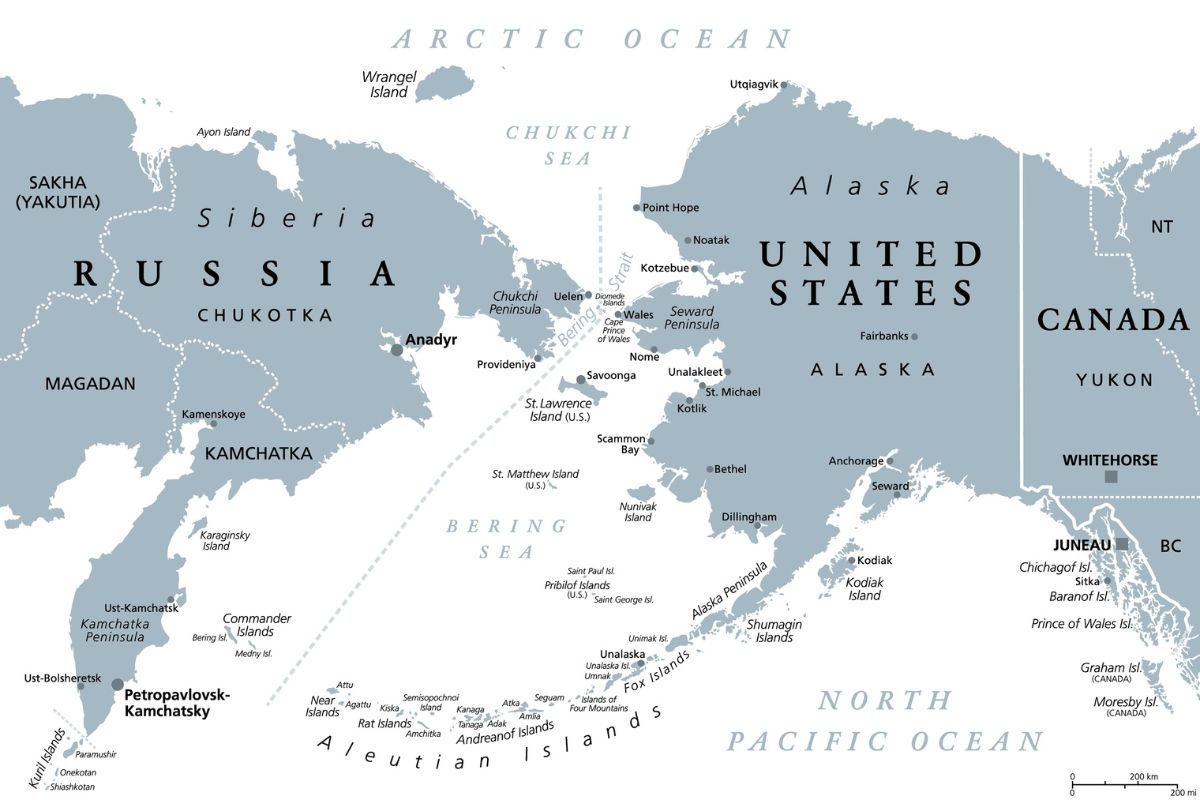
The most direct answer to how far Alaska and Russia are from each other lies in the dimensions of the Bering Strait. This waterway connects the Chukchi Sea (part of the Arctic Ocean) to the Bering Sea (part of the Pacific Ocean). At its narrowest point, the distance between the easternmost tip of Russia – Cape Dezhnev on the Chukotka Peninsula – and the westernmost point of mainland Alaska – Cape Prince of Wales – is approximately 53 miles (85 kilometers). This remarkably short distance means that, on a clear day, it is theoretically possible to see one continent from the other, a truly awe-inspiring thought for any traveler.
While 53 miles might still seem a significant stretch for a casual swim, it pales in comparison to the typical oceanic divides. The strait’s average depth is relatively shallow, around 100 to 160 feet (30 to 50 meters), though it reaches depths of over 160 feet (50 meters) in some areas. This shallow depth and narrowness have been pivotal throughout geological history and continue to play a crucial role in oceanic currents and climate patterns. The strategic importance of the Bering Strait cannot be overstated, acting as a gateway between two of the world’s largest oceans and a historical passage for human and animal migration.
The Diomede Islands: Bridging Time and Space
Even more astonishing than the strait’s 53-mile width is the proximity created by the two small, rocky outcrops known as the Diomede Islands. These islands sit almost perfectly in the middle of the Bering Strait and are divided by an international border. To the east lies Little Diomede Island, belonging to the United States (specifically, Alaska), and to the west is Big Diomede Island, which is Russian territory.
The truly incredible part is the distance between these two islands: a mere 2.4 miles (3.8 kilometers). This is the shortest land-to-land distance between Russia and the United States. But the wonder doesn’t stop there. The International Date Line runs precisely between Little Diomede Island and Big Diomede Island. This means that when it’s, for example, 9 AM on Tuesday on Little Diomede Island, it’s 10 AM on Wednesday on Big Diomede Island during daylight saving time, or potentially 21 hours difference depending on exact local time decisions and the date line path. Essentially, by crossing this narrow strip of water, one can literally “travel to tomorrow” or “travel to yesterday.” This extraordinary geographical quirk earns the Diomede Islands the nickname “Tomorrow Island” and “Yesterday Island,” making them a powerful symbol of connectivity and temporal paradox.
Little Diomede Island is home to a small community of Inupiat people, whose traditional lifestyle is deeply intertwined with the harsh but abundant Arctic environment. Big Diomede Island, in contrast, is uninhabited, serving as a Russian meteorological station and border guard outpost. The presence of these islands dramatically shrinks the perceived distance between the two continents, turning a journey of thousands of miles into one that could almost be traversed by a dedicated swimmer, or certainly by a small boat or even, famously, by foot over ice in winter.

A Journey Through History and Culture
The close proximity of Alaska and Russia isn’t just a modern-day curiosity; it’s a profound historical thoroughfare that has shaped human migration, international relations, and indigenous cultures for millennia. The story of this connection is as rich and complex as the landscapes themselves, offering a deep dive into the forces that have defined this remote corner of the world.
Ancient Connections: The Bering Land Bridge
The geological history of the Bering Strait is perhaps its most significant narrative. During the Pleistocene Epoch, which included the last Ice Age, massive glaciers locked up vast quantities of the Earth’s water. This caused global sea levels to drop significantly, by as much as 300 to 400 feet (90 to 120 meters). As a result, the relatively shallow Bering Strait became a dry landmass known as Beringia, or the Bering Land Bridge.
This colossal land bridge, which stretched for thousands of miles from present-day Siberia into Alaska and beyond, was not a narrow strip but a vast, treeless plain of tundra and grassland. It served as a critical migratory route for animals and, most importantly, for early humans. It is widely accepted by archaeologists and anthropologists that the ancestors of Native Americans migrated from Asia into North America across Beringia between approximately 20,000 and 15,000 years ago. These intrepid early travelers, following herds of mammoths and other megafauna, gradually populated the entire American continents. The genetic and cultural links between indigenous peoples on both sides of the modern-day strait serve as living testaments to this ancient journey. Exploring this history through local museums and cultural centers is a fascinating aspect of tourism in both Alaska and Russia’s Far East.
Cold War Tensions and Modern Day Realities
More recently, the Bering Strait became a front line in geopolitical tensions. During the Cold War, the proximity of the United States and the Soviet Union across this narrow divide transformed it into what was famously dubbed the “Ice Curtain.” Despite their physical closeness, travel and interaction between the two sides were virtually impossible for decades. Military outposts dotted the coastline, and surveillance was constant. The indigenous communities, who had for millennia shared culture, language, and family ties across the strait, found themselves abruptly divided by an impermeable political barrier.
The dissolution of the Soviet Union in 1991 brought a thawing of the “Ice Curtain,” leading to some increased interaction and limited cross-border travel opportunities, primarily for indigenous populations and specific scientific or cultural exchanges. However, even today, the border remains tightly controlled. For tourists, crossing the Bering Strait from Alaska to Russia, or vice versa, is exceptionally challenging, requiring extensive permits and specialized arrangements. While the dream of kayaking between continents is alluring, the practicalities are complex, often requiring the involvement of official tour operators and strict adherence to international regulations.

Exploring the Edges: Travel and Tourism Opportunities
While direct border crossings for independent travelers are rare, the regions flanking the Bering Strait offer incredible, albeit challenging, travel experiences. For those drawn to extreme destinations, untouched wilderness, and profound cultural immersion, exploring the Alaskan and Russian sides of this unique border promises an adventure unlike any other. These areas are destinations in themselves, offering insights into human resilience, magnificent wildlife, and landscapes that feel truly at the end of the Earth.
Alaskan Adventures: From Nome to the Strait
On the United States side, the primary gateway to the Bering Strait region is the city of Nome. Famous for its Gold Rush history and as the finish line of the Iditarod Trail Sled Dog Race, Nome is a bustling hub in the otherwise sparsely populated Seward Peninsula. From Nome, travelers can arrange flights or boat charters to get closer to the strait and even catch a glimpse of Big Diomede Island on a clear day. The community on Little Diomede Island is accessible via small plane or helicopter, though visits are typically limited and require prior arrangement to respect the privacy and traditions of the local Inupiat residents.
Tourism in Alaskan Bering Strait communities focuses on wildlife viewing, historical exploration, and cultural engagement. Visitors can expect incredible opportunities to see marine mammals like gray whales, bowhead whales, walruses, and various species of seals. Birdwatching is exceptional, with migratory species flocking to the Arctic tundra during the summer months. Guided tours often offer insights into the rich Inupiat culture, including traditional crafts, stories, and subsistence hunting practices. Accommodation in Nome typically includes local hotels and lodges, offering a comfortable base for exploration, though luxury resorts are not the norm here. For those looking for deeper immersion, some local families or communities might offer guesthouse stays or unique cultural experiences, allowing for a more authentic lifestyle encounter.
Russian Far East: The Untamed Wilderness of Chukotka
On the Russian side, the region opposite Alaska is the Chukotka Autonomous Okrug, or simply Chukotka. This vast, remote, and largely untouched territory is one of the least visited places on Earth and requires special permits for entry, making it an exclusive destination for the most intrepid travelers. The main port of entry is Provideniya, a former Soviet military base nestled in a stunning fjord.
Travel to Chukotka is an exercise in true adventure tourism. Infrastructure is minimal, and trips are often organized as expedition cruises or specialized tours that focus on wildlife, indigenous culture, and the stark beauty of the Arctic landscape. Visitors may encounter nomadic Chukchi and Yupik peoples, whose traditions of reindeer herding and marine mammal hunting have endured for centuries. The wildlife is equally spectacular, featuring polar bears, Arctic foxes, and vast colonies of seabirds. Landscapes are dominated by tundra, volcanic mountains, and dramatic coastlines. Accommodations are basic but functional, often in guesthouses or onboard expedition ships, emphasizing the rugged nature of the journey. For those interested in a deeper dive into the local culture and potentially longer stays for research or anthropological studies, Chukotka offers unparalleled opportunities for a unique and profound experience.
Planning Your Expedition: Tips for the Adventurous Traveler
Undertaking a journey to the edges of Alaska and Russia is not a typical vacation. It requires meticulous planning, a spirit of adventure, and an understanding of the unique challenges and rewards associated with such a remote destination. However, for those who embrace the journey, the experiences gained are truly priceless, offering perspectives on global geography, history, and human resilience that few other places can match.
Essential Considerations for Getting Close to the Border
Anyone planning a trip to either side of the Bering Strait must prioritize logistics and official requirements.
- Visas and Permits: Travel to Alaska for most international visitors requires a US visa or ESTA. Travel to Chukotka is significantly more complex, demanding a Russian visa in addition to special border zone permits, which can take months to secure and often require booking with a specialized tour operator. Direct travel between the Diomede Islands is highly restricted and generally not permitted for tourists.
- Best Time to Visit: The summer months (June to September) offer the most favorable conditions for travel, with melting ice allowing for boat access and milder temperatures. Winter brings extreme cold, heavy ice, and significantly reduced travel options.
- Logistics and Accessibility: Flights to Nome from Anchorage or Fairbanks are available but can be expensive. For Chukotka, flights typically originate from Magadan or Anadyr, or travelers join expedition cruises from other Arctic destinations. Be prepared for potential delays due to weather conditions.
- Safety and Preparedness: Both regions are remote and unforgiving. Travelers should be prepared for harsh weather, limited medical facilities, and the necessity of robust outdoor gear. Travel insurance is highly recommended. Understanding and respecting local customs, especially in indigenous communities, is paramount for a positive experience.
Unique Experiences and Local Insights
Beyond the logistical hurdles, the rewards of visiting this frontier are immense. The opportunity to stand on the edge of one continent and gaze across to another is a profound experience, connecting you to ancient migrations and modern geopolitical landscapes.
- Cultural Immersion: Engage with the indigenous Inupiat, Chukchi, and Yupik communities. Learn about their unique adaptations to the Arctic environment, their vibrant traditions, and their deep connection to the land and sea. This type of authentic cultural exchange is a cornerstone of responsible tourism in these delicate ecosystems.
- Wildlife Spectacles: The Bering Strait is a biological hotspot. Witnessing immense migrations of marine mammals or observing polar bears in their natural habitat offers unforgettable moments. Responsible wildlife viewing practices are crucial to protect these vulnerable populations.
- Historical Echoes: Walk in the footsteps of ancient migrants on the remnants of the Bering Land Bridge. Reflect on the Cold War history while observing the “Ice Curtain” that once divided these lands. These are living historical landmarks that evoke powerful narratives.
- Adventure Lifestyle: For those who seek a lifestyle defined by challenge and exploration, the Bering Strait region offers peak adventure. Whether it’s a small ship expedition cruise, a backcountry trek, or even a local fishing trip, the sense of accomplishment and discovery is immense. While the idea of a simple hotel might be tempting, the accommodation often reflects the rugged environment, prioritizing utility and warmth over luxury suites. This contributes to the authentic feel of the journey.
In conclusion, Alaska and Russia are remarkably close, separated by as little as 2.4 miles (3.8 kilometers) between the Diomede Islands and 53 miles (85 kilometers) across the Bering Strait. This proximity is not just a geographical fact but a profound testament to millennia of shared history, migration, and the enduring spirit of human exploration. For the discerning traveler seeking destinations that transcend the ordinary, a journey to this unique corner of the world promises an experience filled with awe, challenge, and an unparalleled connection to both nature and humanity.
LifeOutOfTheBox is a participant in the Amazon Services LLC Associates Program, an affiliate advertising program designed to provide a means for sites to earn advertising fees by advertising and linking to Amazon.com. Amazon, the Amazon logo, AmazonSupply, and the AmazonSupply logo are trademarks of Amazon.com, Inc. or its affiliates. As an Amazon Associate we earn affiliate commissions from qualifying purchases.