
The question “How far is Alaska from Seattle?” might seem straightforward, but it quickly unravels into a fascinating exploration of geography, logistics, and the sheer scale of North American travel. For anyone contemplating a journey from the bustling urban hub of the Pacific Northwest to the majestic wilderness of the Last Frontier, understanding this distance is merely the first step in planning an unforgettable adventure. Alaska isn’t just a single point on a map; it’s a vast state, and the “distance” can vary dramatically depending on your chosen destination within it and, crucially, your preferred mode of transport. This article delves into the various interpretations of this distance, offering insights into the diverse travel options available and what each entails for the discerning traveler.
Unpacking the Geographic Relationship
Before we talk about miles and journey times, it’s essential to understand the geographical context that defines the travel between Seattle and Alaska. These two locations, while both iconic, represent different facets of the North American landscape, connected by diverse routes.
Seattle’s Strategic Starting Point
Seattle, Washington, serves as a quintessential gateway to Alaska. Positioned on the eastern shores of Puget Sound, it boasts a major international airport, Seattle-Tacoma International Airport (SEA), and a thriving cruise port, Pier 91. Its strategic location makes it an ideal embarkation point for both air and sea travel to the far north. Travelers often find Seattle to be a convenient and vibrant city for pre-trip preparations, offering a wealth of amenities and services before heading into the wilder expanses of Alaska. The city’s maritime heritage and its strong ties to the Alaskan fishing and resource industries further solidify its role as a key connection point.
The Expansive Territory of Alaska
The challenge in answering “how far” lies in the sheer immensity of Alaska. It is the largest state in the United States by area, spanning over 663,000 square miles. This means that a destination like Ketchikan in the southeastern panhandle is significantly closer to Seattle than, say, Utqiagvik (formerly Barrow) on the Arctic Coast. Most visitors to Alaska typically target major population centers or popular tourist regions such as Anchorage, Juneau, Fairbanks, or the Inside Passage. Each of these points offers a different “distance” and, consequently, a different travel experience. Understanding your specific Alaskan destination is paramount for accurate distance and travel time estimations.
Calculating the Distance: More Than Just Miles
The distance between Seattle and Alaska is not a single, fixed number. It varies based on the destination within Alaska and the chosen method of measurement, each providing a unique perspective on the journey.
Aerial Distances: The Fastest Path
For air travel, the distance is measured as the great-circle distance, which is the shortest path between two points on the surface of a sphere. To Anchorage, Alaska’s largest city, the approximate direct flight distance from Seattle is about 1,440 miles (2,317 kilometers). For Juneau, the capital located in the panhandle, the distance is closer to 900 miles (1,448 kilometers). Further north to Fairbanks, the aerial distance extends to approximately 1,550 miles (2,494 kilometers). These distances translate into flight times ranging from roughly 2 hours for Juneau to 3.5 hours for Anchorage and Fairbanks, making air travel the most efficient means of covering the vast expanse.
Nautical Miles: For Sea Voyagers
When traveling by sea, distances are typically measured in nautical miles. One nautical mile is approximately 1.15 statute miles (or 1.85 kilometers). A cruise ship journey from Seattle through the Inside Passage to destinations like Juneau, Skagway, or Ketchikan can cover distances ranging from 700 to 1,000 nautical miles or more, depending on the itinerary and the number of ports of call. The journey itself is an integral part of the experience, with scenic detours and often slower travel speeds to allow for sightseeing. While the direct line between Seattle and Ketchikan is shorter than to Anchorage, the cruise routes often weave through intricate waterways, adding to the total distance covered.
Overland Routes: A Different Metric
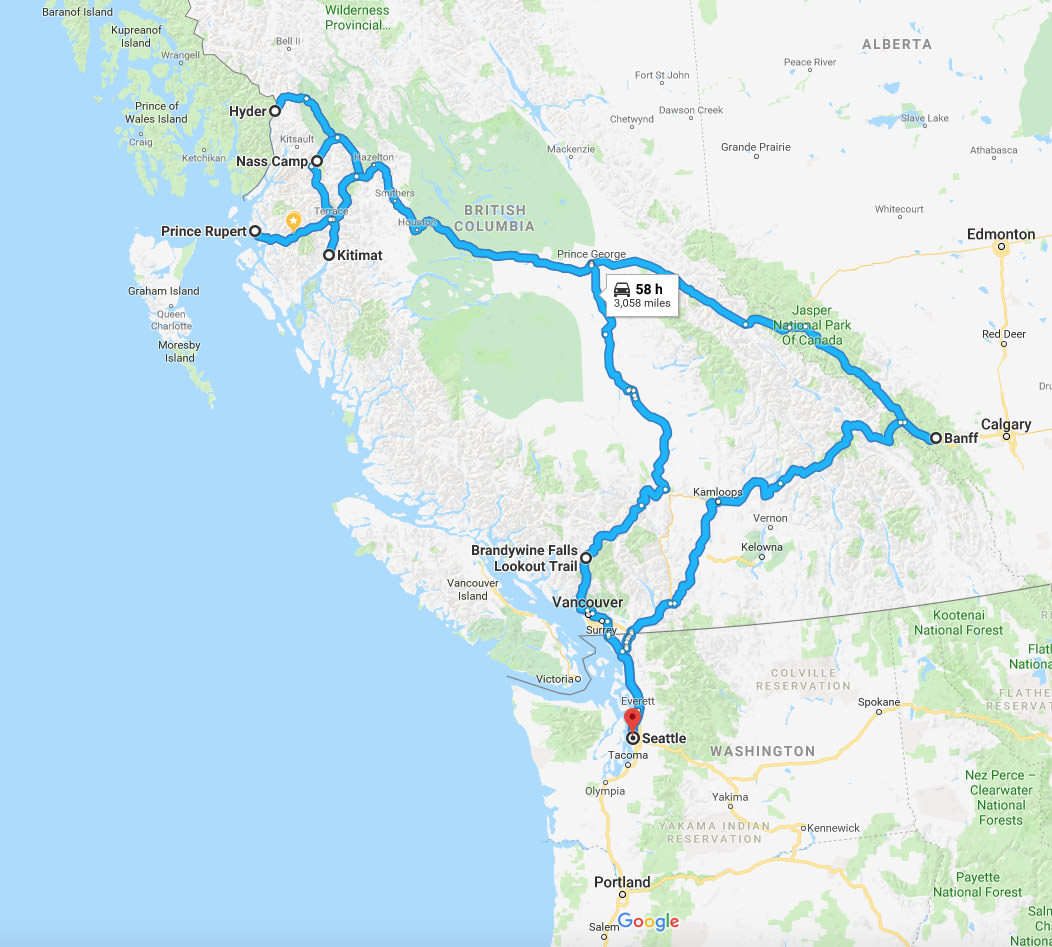
For the truly adventurous, driving to Alaska is an epic undertaking. There are no direct roads from Seattle to Alaska without passing through Canada. The primary route, the legendary Alaska Highway (also known as the Alcan Highway), begins in Dawson Creek, British Columbia. To reach Anchorage from Seattle via the Alaska Highway requires covering approximately 2,300 to 2,500 miles (3,700 to 4,000 kilometers), depending on the exact starting and ending points and chosen detours. This journey typically takes 4 to 7 days of active driving, excluding stops for sightseeing, rest, and border crossings. The distance here isn’t just about mileage but also about the journey through diverse terrains and countries.
Navigating the Journey: Modes of Travel
The choice of travel mode significantly impacts the distance perception, the duration, and the overall experience of your trip from Seattle to Alaska. Each option offers a distinct perspective on the journey.
Soaring to the Last Frontier: Air Travel
Air travel remains the most popular and time-efficient way to reach Alaska from Seattle. Major airlines like Alaska Airlines, Delta Air Lines, and United Airlines offer multiple daily direct flights to Anchorage (ANC) and Juneau (JNU), with connecting flights to other regional airports. The convenience of a short flight allows travelers to maximize their time exploring Alaska’s interior or specific remote destinations. While quicker, it provides less of the scenic journey experience offered by other modes, primarily showcasing the destination itself. It is ideal for those with limited time or specific inland itineraries, such as visiting Denali National Park or Fairbanks for the Northern Lights.

The Scenic Waterway: Alaskan Cruises
Cruises from Seattle to Alaska are immensely popular, offering a luxurious and comprehensive way to experience the coastal beauty of the state. Major cruise lines such as Princess Cruises, Holland America Line, Norwegian Cruise Line, Celebrity Cruises, and Royal Caribbean depart regularly from Seattle’s cruise terminals during the summer months. These voyages typically navigate the sheltered waters of the Inside Passage, offering breathtaking views of glaciers, wildlife, and charming port towns like Ketchikan, Juneau, and Skagway. While the journey can take 7 to 14 days, the focus is less on covering distance quickly and more on the immersive experience of the voyage itself, combining transport, accommodation, and entertainment.
The Ultimate Road Trip: Driving to Alaska
For the adventurous and time-rich traveler, driving to Alaska is a bucket-list experience. The journey involves traversing through significant portions of British Columbia and the Yukon Territory in Canada before crossing into Alaska. The most famous route, the Alaska Highway, offers unparalleled scenery, opportunities for wildlife viewing, and a sense of accomplishment unlike any other mode of travel. This epic road trip requires careful planning, including vehicle maintenance, border crossing documentation, and understanding the availability of services along the route. It’s a journey measured not just in miles but in memories made on the open road.
Ferry Travel: A Hybrid Option
Another unique way to travel is via the Alaska Marine Highway System (AMHS), Alaska’s state-operated ferry service. While not directly departing from Seattle, you can drive north to Bellingham, Washington, where the AMHS ferries embark. These “blue canoes” offer scheduled service up the Inside Passage, allowing passengers to bring their vehicles. This option combines the flexibility of driving with the scenic beauty of a sea voyage, often taking several days to reach various Alaskan ports. It’s a slower, more authentic way to travel, offering a glimpse into the local way of life along the coast.
Essential Planning for Your Alaskan Expedition
Regardless of how you choose to cover the distance from Seattle to Alaska, meticulous planning is crucial to ensure a smooth and enjoyable trip.
Timing Your Visit: Seasons and Events
The timing of your trip profoundly influences the experience. Summer (June to August) is peak season, offering long daylight hours, warmer temperatures, and access to all attractions and activities, including cruises and the best conditions for driving the Alaska Highway. However, this also means higher prices and more crowds. Spring (May) and Fall (September) offer fewer crowds, potentially lower costs, and unique opportunities like spring wildlife viewing or vibrant fall foliage, respectively. Winter travel (October to April) focuses on activities like aurora viewing in Fairbanks, skiing, and dog sledding, but brings colder temperatures and limited access to some areas.
Packing Smart for Diverse Climates
Alaska’s weather can be unpredictable, even in summer. Layers are key: waterproof and windproof outer shells, fleece or down for warmth, and moisture-wicking base layers are essential. Depending on your activities, consider sturdy hiking boots, insect repellent (especially for interior Alaska), sunscreen, a good camera, and binoculars for wildlife viewing. For cruise passengers, a mix of casual wear for daytime excursions and slightly dressier attire for evenings is typical.
Budgeting for Your Adventure
An Alaskan journey can range from moderately expensive to a significant investment. Airfare, cruise costs, vehicle fuel, accommodation, and activities all contribute to the overall budget. Cruises often offer an all-inclusive experience, while driving necessitates budgeting for gas, lodging, and meals along the way. Researching costs for specific tours, excursions (e.g., glacier landings, bear viewing), and dining options in your chosen Alaskan destinations will help create a realistic budget. Booking in advance, especially for peak season travel, can often secure better rates.
Discovering Alaska’s Allure
The journey from Seattle to Alaska, regardless of its distance or mode, culminates in access to a state renowned for its breathtaking natural beauty and unique cultural experiences.
Key Destinations and Their Charms
- Anchorage: The state’s largest city, serving as a gateway to Denali National Park and the Kenai Peninsula. It offers urban amenities combined with easy access to wilderness.
- Juneau: The capital city, nestled in the Inside Passage, accessible only by air or sea. Famous for the Mendenhall Glacier and whale watching.
- Fairbanks: The “Golden Heart City,” known for its proximity to the Arctic Circle, the University of Alaska Fairbanks, and excellent opportunities to see the Aurora Borealis in winter.
- Ketchikan: The “First City” of Alaska, renowned for its vibrant Tlingit culture, totem poles, and salmon fishing.
- Skagway: A historic town echoing the Klondike Gold Rush era, with charming boardwalks and railway adventures.
- Sitka: A picturesque town with rich Russian and Tlingit history, surrounded by stunning natural beauty.
- Haines: Known for its bald eagle preserve and a more off-the-beaten-path experience.

Experiences That Define the Alaskan Wild
Visitors to Alaska are drawn by the promise of unparalleled wilderness experiences. These include bear viewing, whale watching, glacier trekking, fishing for salmon and halibut, flightseeing over majestic mountain ranges, dog sledding, kayaking among icebergs, and hiking through pristine forests. The northern lights display in winter, the midnight sun in summer, and the chance to witness diverse wildlife in its natural habitat are just a few of the iconic moments that make the journey to Alaska truly extraordinary.
In conclusion, the distance from Seattle to Alaska is not a simple number, but rather a dynamic measure that shapes the narrative of an incredible journey. Whether you choose the swiftness of air travel, the serene luxury of a cruise, or the adventurous spirit of a road trip, each path leads to a land of unparalleled beauty and adventure, promising memories that last a lifetime.
LifeOutOfTheBox is a participant in the Amazon Services LLC Associates Program, an affiliate advertising program designed to provide a means for sites to earn advertising fees by advertising and linking to Amazon.com. Amazon, the Amazon logo, AmazonSupply, and the AmazonSupply logo are trademarks of Amazon.com, Inc. or its affiliates. As an Amazon Associate we earn affiliate commissions from qualifying purchases.