
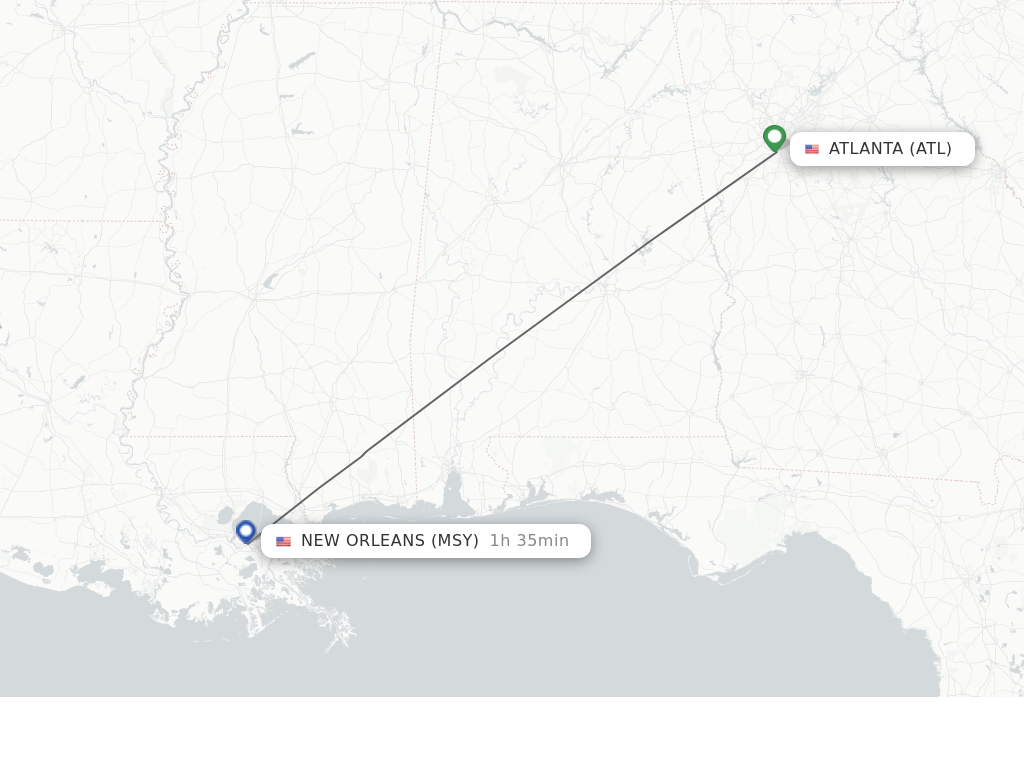
The journey from Atlanta, Georgia, to New Orleans, Louisiana, is a classic American road trip, a transition from the rolling hills of the Deep South to the vibrant, humid soul of the Gulf Coast. While the exact distance can vary slightly depending on your starting point in Atlanta and your chosen route into the Crescent City, it generally hovers around 470 to 480 miles. This translates into a driving time of approximately 7 to 8 hours, making it a manageable one-day excursion for many, though an overnight stop can enhance the experience significantly. This stretch of highway is more than just asphalt; it’s a ribbon connecting distinct cultures, historical narratives, and culinary landscapes, offering a compelling glimpse into the heart of the American South.
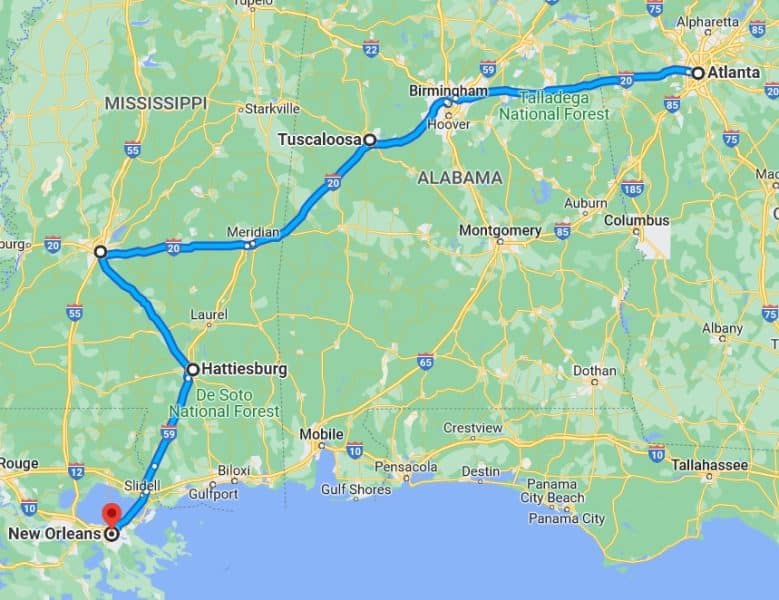
Planning Your Route: Navigating the Path to the Bayou
The primary artery connecting Atlanta and New Orleans is Interstate 85 South, which eventually merges with Interstate 65 South and then Interstate 10 West. This route is generally well-maintained and offers ample opportunities for refueling, dining, and rest stops. While the direct route is the most efficient, travelers might consider slight detours to explore points of interest along the way, adding to the richness of their journey. Understanding the logistics of the drive, from estimated travel time to potential traffic patterns, is crucial for a smooth transition between these two iconic Southern cities.
The I-85 South / I-65 South / I-10 West Corridor
The most common and direct route begins by taking I-85 South out of Atlanta. You’ll traverse a significant portion of Georgia before entering Alabama. Near Montgomery, Alabama, I-85 South merges with I-65 South. You’ll follow I-65 South towards Mobile, Alabama. As you approach Mobile, you will transition onto I-10 West, which will then lead you directly into New Orleans.
- Distance: Approximately 475 miles.
- Estimated Driving Time: 7.5 to 8 hours, without significant stops or traffic delays.
- Key Cities Along the Way: Montgomery, Alabama; Mobile, Alabama.
This route offers a good balance of efficiency and scenic variety. The initial drive through Georgia provides glimpses of pine forests and agricultural landscapes, while the Alabama portion introduces you to a more coastal feel as you approach Mobile. I-10 West, as it nears New Orleans, becomes increasingly characterized by the unique bayou scenery, with elevated stretches of highway crossing vast expanses of marshland, a visual prelude to the city’s distinctive environment.
Alternative Routes and Considerations
While the primary interstate route is the most straightforward, minor variations can cater to specific interests. For instance, some travelers might opt for routes that take them further east in Alabama before connecting to I-10, potentially passing through different state parks or smaller towns. However, these deviations typically add to the travel time.
- Scenic Detours: If time permits, exploring areas like the Tuskegee Airmen National Historic Site near Tuskegee, Alabama, or the USS Alabama Battleship Memorial Park in Mobile, Alabama, can enrich the journey.
- Traffic Patterns: Be mindful of rush hour traffic when departing Atlanta and approaching New Orleans, especially if traveling on a weekday. Early morning departures or late afternoon arrivals can help mitigate delays.
- Weather: The weather in this region can be unpredictable. Summer months often bring intense heat and humidity, with the possibility of thunderstorms. Fall and spring generally offer more temperate conditions, ideal for driving. Winter is usually mild but can occasionally experience cold snaps. Always check the weather forecast before and during your trip.
The Drive Itself: A Journey Through Southern Landscapes
The drive from Atlanta to New Orleans is a gradual immersion into the Southern vernacular. As you move south, the accent of the landscape begins to shift. The rolling Piedmont hills of Georgia give way to the flatter, more humid plains of Alabama and Mississippi, eventually culminating in the coastal marshes and cypress swamps that define the approach to Louisiana. The highway itself, though a modern marvel of engineering, is a conduit through a region steeped in history, from Civil War battlefields to the heartland of the Civil Rights Movement.
Georgia’s Charm and Alabama’s Transition
Leaving Atlanta behind, you’ll initially be enveloped by the verdant greenery of North Georgia. The landscape is characterized by a mix of deciduous and coniferous forests, interspersed with farmland. As you journey deeper into Alabama, the terrain flattens considerably, and the air becomes noticeably more humid. This is the Deep South in its classic portrayal, with sprawling plantations and a slower pace of life.
- Montgomery, Alabama: A significant historical marker along the route, Montgomery played a pivotal role in both the Confederacy and the Civil Rights Movement. It offers opportunities for enriching stops, such as the Rosa Parks Museum or the Dexter Avenue King Memorial Baptist Church.
- Mobile, Alabama: As the largest city on the route before New Orleans, Mobile provides a sense of coastal familiarity. It boasts a rich French colonial history, evident in its architecture and annual Mardi Gras celebrations. The USS Alabama Battleship Memorial Park is a prominent attraction.
Approaching the Bayou: Louisiana’s Unique Scenery
The final leg of the journey, particularly as you cross into Louisiana and travel along I-10, offers a dramatic visual shift. The landscape transforms into the iconic bayou country – a network of waterways, swamps, and marshes teeming with unique flora and fauna. Elevated stretches of the interstate cut through these wetlands, offering spectacular views of Spanish moss-draped cypress trees and the shimmering water.
- The Pontchartrain Causeway: While not directly on the I-85/I-10 route, if one were to approach New Orleans from the north via Slidell, the Lake Pontchartrain Causeway is a remarkable feat of engineering, extending for over 24 miles across Lake Pontchartrain. It offers a unique, almost surreal driving experience over the water.
- Wildlife Spotting: Keep an eye out for alligators, herons, and other waterfowl that inhabit these unique ecosystems. The transition into this environment is a powerful sensory experience, a clear indicator that you are nearing the distinct cultural and geographical landscape of New Orleans.
Making Stops Along the Way: Enhancing Your Road Trip
While the 7-8 hour drive can be completed in a single day, breaking up the journey with an overnight stay or well-timed stops can significantly enhance the travel experience. This allows for a more relaxed pace and the opportunity to explore some of the historical and cultural gems scattered between Atlanta and New Orleans.
Historical and Cultural Points of Interest
The route is rich with historical significance, particularly concerning the Civil Rights Movement and Southern history.
- Civil Rights Trail: Several key sites related to the Civil Rights Movement are accessible from this route. Montgomery, as mentioned, is a prime destination. Further exploration might lead to sites in smaller towns that played crucial roles in the struggle for equality.
- Plantation Country: While often a complex and sensitive topic, certain historical plantations in the region offer insights into the antebellum South, though it is crucial to approach these sites with a critical and informed perspective, acknowledging the full history of enslavement and its lasting impact.
- Culinary Stops: The culinary landscape along the route is as diverse as the scenery. From barbecue joints in Alabama to soul food establishments, opportunities abound to sample authentic Southern cuisine.
Overnight Options and Relaxation
For those who prefer to break up the drive, an overnight stop is highly recommended.
- Montgomery, Alabama: Offers a range of accommodations and historical attractions, making it an ideal mid-point stop. You can explore the city’s significant historical landmarks in the afternoon and evening before continuing your journey the next day.
- Mobile, Alabama: As a larger city with more amenities, Mobile provides a broader selection of hotels and dining options. Its proximity to the Gulf Coast also offers a different flavor of Southern charm. Consider exploring the historic downtown or the waterfront.
- Choosing Your Stop: The decision of where to stop often depends on personal preference and the desired pace of travel. A stop in Montgomery offers a deeper dive into Civil Rights history, while Mobile provides a more coastal, urban experience.
Arriving in New Orleans: The Final Stretch
As you approach New Orleans, the atmosphere perceptibly changes. The air grows heavier with humidity, the architecture begins to hint at Creole and French influences, and the sounds and smells of the city start to permeate the surroundings. The drive culminates in crossing the Mississippi River, a symbolic gateway into one of America’s most unique and vibrant metropolises.
Navigating into the City
I-10 West will guide you directly into New Orleans. Depending on your final destination within the city—whether it’s the historic French Quarter, the lively Garden District, or another neighborhood—you’ll need to be aware of the city’s grid system and potential traffic congestion.
- Key Entry Points: The bridges crossing over Lake Pontchartrain and the Mississippi River are significant landmarks upon entry.
- Accommodation Areas: Familiarize yourself with the primary tourist districts like the French Quarter, the Central Business District (CBD), and the Garden District to plan your route accordingly.
- Parking Considerations: If you are driving into New Orleans and plan to stay in a central area like the French Quarter, be aware that parking can be challenging and expensive. Many hotels offer valet parking, but it is wise to inquire about rates and availability in advance.

The Cultural Immersion Begins
The journey from Atlanta to New Orleans is more than just a measure of miles; it’s a passage through diverse American landscapes and histories. Upon arrival, you are immediately immersed in the distinct rhythm and soul of New Orleans, a city renowned for its music, cuisine, festivals, and unparalleled cultural heritage. The nearly 480 miles traversed are a prelude to the unforgettable experiences that await in this captivating corner of the South.
LifeOutOfTheBox is a participant in the Amazon Services LLC Associates Program, an affiliate advertising program designed to provide a means for sites to earn advertising fees by advertising and linking to Amazon.com. Amazon, the Amazon logo, AmazonSupply, and the AmazonSupply logo are trademarks of Amazon.com, Inc. or its affiliates. As an Amazon Associate we earn affiliate commissions from qualifying purchases.