
Embarking on a journey across the vast and vibrant landscape of Texas often involves traversing the distance between its most iconic cities. For many travelers, the question of “How far is Austin, Texas from Dallas, Texas?” is a fundamental starting point for planning an unforgettable Texas adventure. These two metropolitan giants, while distinct in their character and appeal, are popular destinations for both domestic and international visitors, drawing them in with diverse attractions, thriving cultural scenes, and a distinctly Texan charm.
Austin, the self-proclaimed “Live Music Capital of the World” and the state’s capital, exudes a laid-back, creative, and outdoorsy vibe. It’s a magnet for music lovers, foodies, and those seeking a dynamic yet relaxed urban experience. Dallas, on the other hand, is a sophisticated hub of commerce, fashion, and arts, boasting a gleaming skyline and a reputation for big business and upscale living. Whether you’re planning a weekend getaway, a business trip, or an extensive tour of the Lone Star State, understanding the logistics of travel between these two powerhouses is key. This comprehensive guide will not only answer the distance question but also delve into the various ways to make the journey, what to expect along the route, and how to maximize your experience in both exceptional cities, ensuring your Texas travel is as seamless and enriching as possible.
The Straightforward Answer: Distance and Driving Time
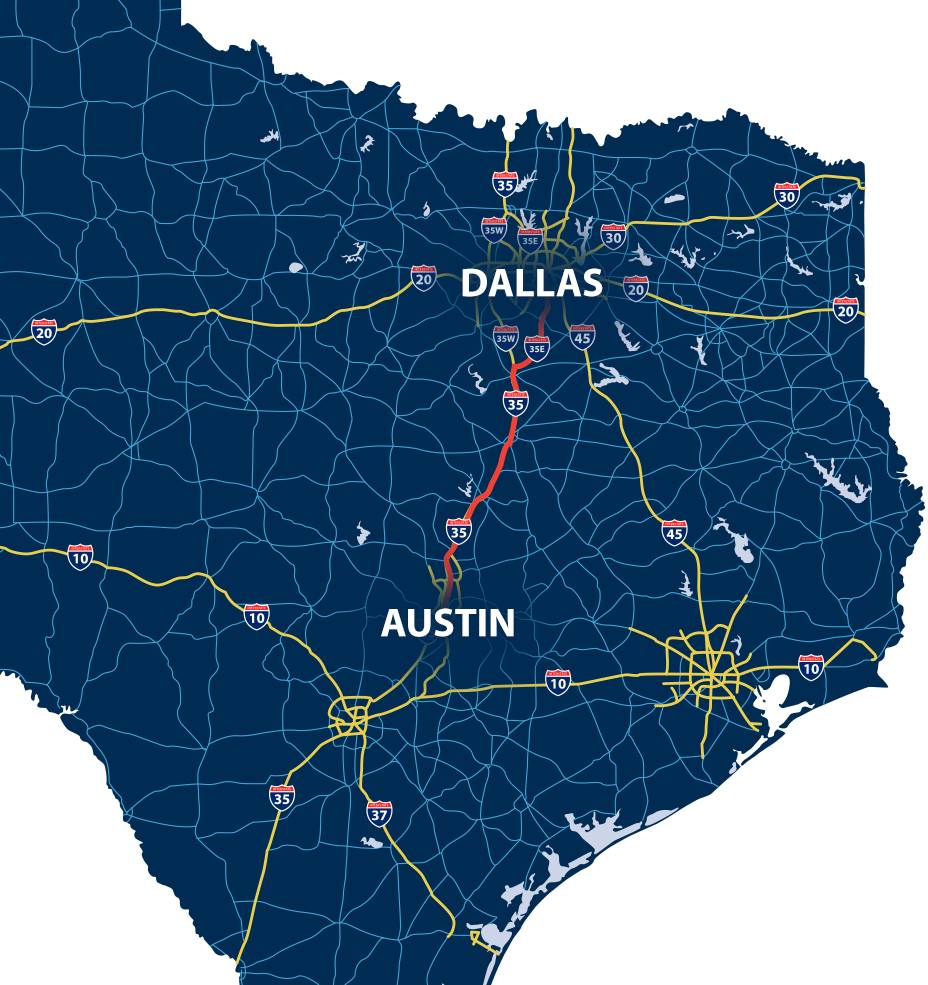
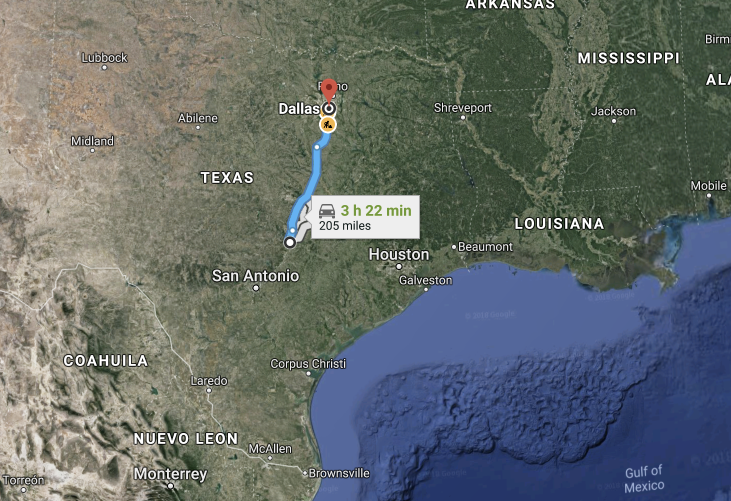
The most direct and frequently asked aspect of travel between Austin and Dallas revolves around the physical distance and the time it takes to cover it by car. The approximate driving distance between Austin and Dallas is generally between 195 to 200 miles (approximately 314 to 322 kilometers), depending on the specific starting and ending points within each city and the exact route taken. This makes it a very manageable day trip or a comfortable segment of a longer Texas road trip.
When it comes to driving time, under ideal conditions with no significant traffic, the journey typically takes around 3 to 3.5 hours. However, it’s crucial to factor in the realities of travel on major interstates, especially in and around large urban areas. Peak traffic hours, particularly during weekday commutes (morning and late afternoon/early evening) and on weekends or holidays, can easily extend this travel time by an additional 30 minutes to an hour or even more. Construction zones, which are common on busy thoroughfares, can also cause delays. Therefore, it’s always wise to check real-time traffic updates before departing and allow for extra time, especially if you have a tight schedule or a flight to catch.
Navigating the Major Routes
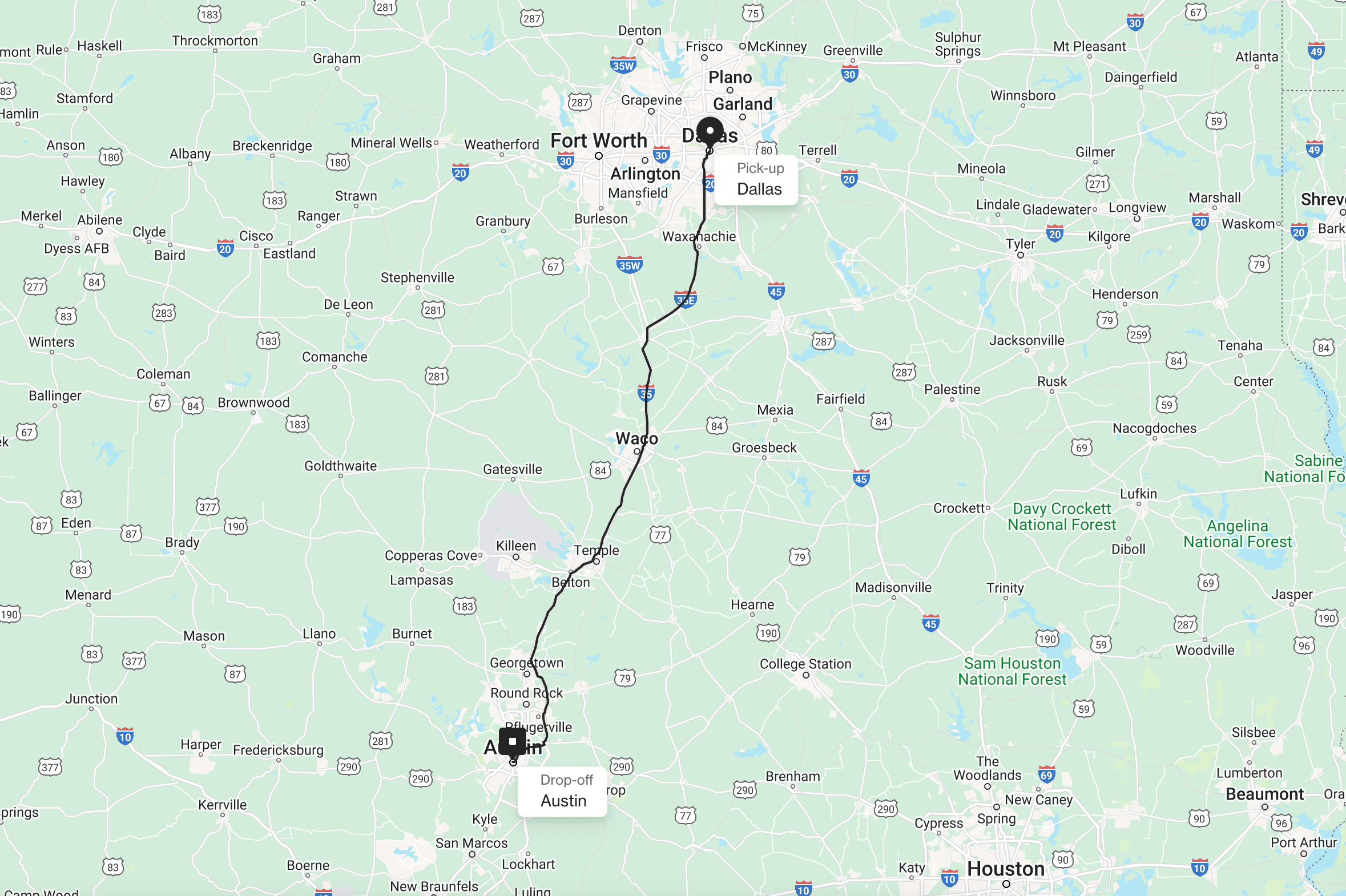
The primary artery connecting Austin and Dallas is Interstate 35 (I-35). This major north-south freeway slices through the heart of Texas, providing the most direct and fastest route between the two cities.
Starting from Austin, you’ll head north on I-35 directly towards Dallas. The route takes you through several smaller cities and towns that offer potential stopovers, which we will explore further below. Once you approach the greater Dallas-Fort Worth Metroplex, I-35 splits into I-35E (East) and I-35W (West). For travel directly into Dallas proper, you’ll want to stay on I-35E, which leads directly into the downtown area. If your destination is Fort Worth or points west, I-35W would be the appropriate choice.
While I-35 is the most popular and efficient route, experienced travelers sometimes explore alternative state highways or toll roads to bypass heavy traffic, particularly around Waco or the outskirts of Dallas. However, for first-time visitors or those unfamiliar with the area, sticking to the well-marked I-35 is generally the simplest option.
Beyond the Wheel: Exploring Alternative Transportation Options
While driving offers flexibility and the chance for a classic Texas road trip, it’s not the only way to travel between Austin and Dallas. For those who prefer not to drive, or for whom flying makes more sense for specific reasons, several viable alternatives exist, each with its own advantages and considerations regarding cost, convenience, and travel time.
The Comfort of a Bus Ride
Bus travel is a popular and budget-friendly option for intercity journeys in Texas. Several reputable bus companies operate routes between Austin and Dallas, offering multiple daily departures.
Greyhound is a long-standing choice, providing direct service between the major bus terminals in both cities. Their buses are typically equipped with Wi-Fi and power outlets, making the journey productive or entertaining. Another popular operator is Megabus, known for its competitive pricing, especially when booking in advance, and its double-decker coaches. Other regional bus lines may also offer routes.
The travel time by bus is usually longer than driving, often ranging from 4 to 5 hours, depending on the number of stops and traffic conditions. However, the convenience of not having to navigate, pay for parking, or worry about vehicle maintenance can outweigh the longer travel time for many. Bus fares are generally quite affordable, often ranging from $15 to $40 for a one-way ticket, making it an excellent option for budget-conscious travelers or students. This aligns perfectly with the “Budget Travel” aspect of the lifestyle topic.
Taking to the Skies: A Quick Hop
For those prioritizing speed above all else, flying is an option, although it’s typically less practical and more expensive for this specific route compared to driving or taking the bus, given the relatively short distance. Direct flights between Austin-Bergstrom International Airport (AUS) and Dallas/Fort Worth International Airport (DFW) or Dallas Love Field (DAL) are available through various airlines, including Southwest Airlines, American Airlines, and United Airlines.
The actual flight time is incredibly short, often around 1 hour. However, the overall travel experience needs to account for time spent getting to and from airports, going through security, boarding, and deplaning. When you add these factors, the door-to-door travel time can easily extend to 3 to 5 hours, which is comparable to or even longer than driving, especially when considering potential delays. Furthermore, flight costs, including baggage fees and ground transportation to/from airports, can quickly escalate, making it a more premium option. However, for business travelers on a tight schedule or those connecting from a longer flight, flying might still be the preferred choice, aligning with “Business Stays” and “Luxury Travel” aspects.
While there is no direct high-speed rail service between Austin and Dallas, Amtrak does offer a route, but it’s often significantly longer and less direct than other options, making it less practical for most travelers.
Making the Journey an Adventure: Road Trip Essentials
For many, the trip between Austin and Dallas isn’t just about getting from point A to point B; it’s an opportunity for a classic Texas road trip. The stretch of I-35 connecting these two dynamic cities is dotted with intriguing towns, unique attractions, and fantastic culinary stops that can transform a simple drive into an unforgettable experience. Embracing the journey itself is a core part of the “Travel” and “Experiences” categories.
Must-See Stops Along I-35
Breaking up the drive with strategic stops can enhance your adventure. Here are a few notable places to consider:
- Waco: Roughly halfway between Austin and Dallas, Waco has become a major tourist destination, largely thanks to the popularity of Chip and Joanna Gaines and their Magnolia Market at the Silos. This complex offers shopping, food trucks, and a relaxed atmosphere perfect for a break. While in Waco, you can also explore the Dr Pepper Museum, dedicated to the beloved soda that originated here, or visit the Texas Ranger Hall of Fame and Museum for a dose of Texan history.
- Georgetown: Just north of Austin, Georgetown boasts “The Most Beautiful Town Square in Texas.” It’s a charming place for a stroll, with Victorian architecture, unique boutiques, and local eateries. History buffs will appreciate the Williamson County Courthouse and its surrounding historic buildings. For a more adventurous stop, the Inner Space Cavern, one of the most well-preserved caves in Texas, offers fascinating underground tours.
- Buc-ee’s: While not a town, a stop at one of Texas’ legendary Buc-ee’s travel centers is an experience in itself. These massive gas stations offer an incredible array of snacks, barbecue, clean restrooms, and quirky Texas-themed souvenirs. You’ll find one conveniently located on I-35 in Temple or Melissa, depending on your direction.
These stops transform a mundane drive into a memorable part of your “Destinations” and “Experiences” journey, offering glimpses into Texas’ diverse culture and history.
Culinary Delights on the Road
No Texas road trip is complete without indulging in the local cuisine. The I-35 corridor offers plenty of opportunities to savor authentic Texan flavors, especially barbecue.
- Barbecue Joints: From small roadside shacks to famous establishments, Texas barbecue is legendary. While Austin and Dallas have their own acclaimed spots, look for local favorites in towns like Belton or Temple. A plate of brisket, ribs, and sausage is the perfect fuel for your journey.
- Local Diners and Cafes: Many small towns along the route boast charming diners offering classic Southern comfort food. These spots are perfect for a hearty breakfast or a casual lunch, giving you a taste of local life and supporting small businesses.
- Sweet Treats: Don’t forget to grab a sweet treat! Buc-ee’s is famous for its “Beaver Nuggets” (caramel-coated corn puffs), but you can also find local bakeries in towns like Georgetown that offer delicious pastries and coffee.
Exploring the “Food” aspect of Texas’ culture on your road trip adds another layer of enjoyment and discovery.
Deep Dive into Your Destinations: Austin vs. Dallas
Once you’ve navigated the roads or skies, you’ll find yourself immersed in two distinct yet equally captivating Texas cities. Understanding the unique character of Austin and Dallas will help you tailor your itinerary and make the most of your visit, whether your interests lie in “Destinations,” “Attractions,” “Local Culture,” or “Landmarks.”
Austin: The Live Music Capital and Outdoor Haven
Austin lives up to its “Keep Austin Weird” motto, offering a unique blend of vibrant live music, innovative culinary experiences, and abundant outdoor activities.
- Music Scene: No visit to Austin is complete without experiencing its legendary music scene. Sixth Street is famous for its lively bars and clubs featuring live bands across various genres. For a more sophisticated experience, explore venues in the Warehouse District or the Red River Cultural District. Major festivals like South by Southwest and Austin City Limits Music Festival draw international crowds, showcasing Austin’s deep musical roots.
- Outdoor Activities: With the Colorado River (also known as Lady Bird Lake) running through its heart, Austin is a paradise for outdoor enthusiasts. You can kayak or paddleboard on Lady Bird Lake, hike and bike trails in Zilker Park, or take a refreshing dip in the natural spring-fed Barton Springs Pool. Don’t miss the famous nightly bat emergence from under the Congress Avenue Bridge.
- Foodie Paradise: Austin’s culinary scene is diverse and celebrated. From world-famous barbecue joints like Franklin Barbecue (be prepared for a wait!) to innovative food trucks and upscale farm-to-table restaurants, there’s something to satisfy every palate. Exploring South Congress Avenue offers a vibrant mix of boutiques, eateries, and street art.
- Historical Landmarks: As the state capital, Austin is home to the majestic Texas State Capitol Building, an impressive architectural landmark offering free tours.
Dallas: A Hub of Culture, Commerce, and Cuisine
Dallas embodies the spirit of modern Texas – grand, sophisticated, and forward-thinking. It’s a city of gleaming skyscrapers, world-class museums, and diverse neighborhoods.
- Arts and Culture: The Dallas Arts District is the largest contiguous urban arts district in the United States, home to renowned institutions like the Dallas Museum of Art, the Nasher Sculpture Center, and the Morton H. Meyerson Symphony Center. History comes alive at the Sixth Floor Museum at Dealey Plaza, which chronicles the assassination and legacy of President John F. Kennedy.
- Shopping and Entertainment: Dallas is a shopper’s paradise, from high-end boutiques in areas like Highland Park Village and the Galleria Dallas to unique finds in the Bishop Arts District. For entertainment, catch a game at AT&T Stadium (home of the Dallas Cowboys) or explore the lively nightlife and music venues of Deep Ellum.
- Family-Friendly Attractions: Families will love the Dallas World Aquarium, Dallas Zoo, and the interactive fun at Klyde Warren Park, which is built over a freeway and offers green space, food trucks, and free activities.
- Iconic Landmarks: The distinctive Reunion Tower offers panoramic views of the city skyline from its observation deck, providing a perfect vantage point for understanding the scale of this sprawling metropolis.
Both cities promise a rich tapestry of experiences, whether you’re drawn to Austin’s bohemian charm or Dallas’ urban sophistication.
Choosing Your Stay: Accommodation Options in Texas’ Metropolises
Selecting the right accommodation is a critical part of planning any trip, influencing both your comfort and your overall experience. Both Austin and Dallas offer a vast array of choices, catering to every “Lifestyle” and budget, from opulent “Luxury Travel” to practical “Budget Travel,” and specialized options for “Family Trips” or “Business Stays.” Understanding the landscape of “Hotels,” “Resorts,” “Apartments,” and “Villas” will empower you to make the best choice.
From Luxury Resorts to Boutique Hotels
- Luxury and High-End Options: For travelers seeking premium amenities, impeccable service, and sophisticated surroundings, both cities boast an impressive selection of luxury hotels and resorts. In Austin, properties like the Four Seasons Hotel Austin, with its serene lakeside setting, or the JW Marriott Austin, known for its vibrant downtown location and rooftop pool, offer a lavish experience. Dallas counters with establishments such as The Ritz-Carlton, Dallas, renowned for its spa and culinary excellence, or the trendy Hotel ZaZa Dallas in the Uptown neighborhood, perfect for those seeking unique design and a lively atmosphere. These options cater to “Luxury Travel” and often “Business Stays” due to their services and locations.
- Boutique Hotels: For a more intimate and distinctive stay, boutique hotels are an excellent choice. Austin is particularly rich in these, with gems like Hotel San José on South Congress Avenue, offering a minimalist yet stylish vibe, or The Carpenter Hotel. In Dallas, the Kimpton Pittman Hotel in Deep Ellum offers a blend of history and contemporary cool. Boutique hotels often reflect the “Local Culture” and provide a more personalized “Experiences” for guests.
- Mid-Range and Budget-Friendly Hotels: Travelers on a more moderate budget will find numerous reputable hotel chains offering comfortable stays without breaking the bank. Brands like Holiday Inn, Hampton Inn, and Comfort Inn are widely available in both cities, often situated conveniently near major attractions or business districts. These are ideal for “Budget Travel” and practical “Family Trips.”
- Vacation Rentals (Apartments, Villas): For longer stays, families, or groups, vacation rentals through platforms are increasingly popular. These can range from stylish downtown apartments to spacious suburban houses or charming “Villas.” They offer the advantage of more space, kitchen facilities, and a more immersive local experience, fitting well with “Long-term Stay” and “Family Trips” preferences.
Practical Tips for Booking Your Ideal Accommodation
- Location, Location, Location: Consider your primary activities and choose a neighborhood that minimizes travel time. In Austin, downtown is great for music and nightlife, while South Congress offers a trendier, independent vibe. In Dallas, Downtown and Uptown are central for business and upscale dining, while Deep Ellum and the Bishop Arts District offer vibrant cultural scenes.
- Book in Advance: Especially during peak seasons, major events (like SXSW in Austin or major sporting events in Dallas), or holidays, popular accommodations can fill up quickly and prices can surge. Booking well in advance ensures better availability and potentially better rates.
- Read Reviews: Always check recent “Reviews” and ratings from other travelers. These insights can provide valuable information about cleanliness, service, amenities, and actual distances to attractions, helping you manage expectations and avoid surprises.
- Compare Prices: Utilize “Comparison” websites to ensure you’re getting the best deal. Sometimes booking directly with the hotel or resort can offer perks not found elsewhere.
- Consider Amenities: Think about what amenities are important to you. A pool can be a lifesaver during a hot Texas summer, while complimentary breakfast can save money. For business travelers, a good workspace and reliable Wi-Fi are essential.
By carefully considering these “Accommodation” and “Booking” aspects, you can ensure your stay in either Austin or Dallas is comfortable, convenient, and perfectly suited to your travel style.
Planning Your Perfect Texas Getaway
With the logistical questions addressed and an understanding of what each city offers, the final step is to refine your travel plans. Effective planning, guided by “Guides” and “Tips,” will ensure your trip between Austin and Dallas is enjoyable, stress-free, and perfectly aligned with your “Lifestyle” preferences.
Best Time to Visit
The climate in Texas plays a significant role in planning your trip.
- Spring (March to May): Widely considered the best time to visit. The weather is generally mild and pleasant, wildflowers (especially bluebonnets) are in bloom, and the cities are vibrant with outdoor activities and festivals. However, this is also peak season, meaning higher prices and larger crowds.
- Fall (September to November): Another excellent period, offering comfortable temperatures, especially from mid-October onwards. The humidity starts to drop, and events like the Austin City Limits Music Festival make it an attractive time.
- Summer (June to August): Be prepared for intense heat and humidity. Temperatures often soar into the high 90s°F (30s°C) and can exceed 100°F (38°C). While indoor attractions and water activities are popular, extensive outdoor exploration can be challenging. Prices might be slightly lower, but the heat is a major factor.
- Winter (December to February): Generally mild, though cold fronts can bring freezing temperatures. It’s a quieter time for tourism, with fewer crowds and potentially lower accommodation rates, making it suitable for budget travelers. Holidays bring their own festive events.
Tailoring Your Trip to Your Lifestyle
Your personal travel style and priorities should dictate your itinerary and choices.
- For the “Luxury Travel” Enthusiast: Focus on high-end hotels, fine dining experiences in both cities (e.g., Uchi in Austin or Gemma in Dallas), private tours of cultural landmarks, and exclusive shopping opportunities. Consider hiring a car service for seamless transfers.
- For “Budget Travel” Warriors: Opt for bus travel, stay in mid-range or budget-friendly hotels or hostels, take advantage of free attractions like Klyde Warren Park or hiking trails, and explore the abundant food truck scenes for delicious yet affordable meals. Booking well in advance is key.
- For “Family Trips”: Plan stops with kid-friendly appeal, such as the Dallas World Aquarium, Zilker Park in Austin, or the Dr Pepper Museum in Waco. Choose accommodations with pools and consider vacation rentals for more space. Pack plenty of water and snacks for road trips.
- For “Business Stays”: Prioritize hotels with business amenities, convenient locations near convention centers or corporate offices, and reliable transportation options. Factor in rush hour traffic if driving to meetings.
No matter your reason for traveling between Austin and Dallas, a little foresight and planning will help you unlock the best of what these incredible Texas cities have to offer, ensuring a journey filled with discovery and enjoyment.
In conclusion, the distance between Austin and Dallas is a manageable 195-200 miles, making it an accessible route whether you choose to drive, ride a bus, or take a short flight. Each mode of transportation offers a unique experience, and the journey itself can be enhanced with strategic stops and culinary adventures. Once you arrive, both cities promise a wealth of attractions, from Austin’s vibrant music and outdoor scene to Dallas’ sophisticated arts and commerce. By considering your travel style, budget, and desired experiences, you can craft a memorable Texas itinerary that seamlessly connects these two dynamic urban centers.
LifeOutOfTheBox is a participant in the Amazon Services LLC Associates Program, an affiliate advertising program designed to provide a means for sites to earn advertising fees by advertising and linking to Amazon.com. Amazon, the Amazon logo, AmazonSupply, and the AmazonSupply logo are trademarks of Amazon.com, Inc. or its affiliates. As an Amazon Associate we earn affiliate commissions from qualifying purchases.