
The question of “How far is Austin to Houston, Texas?” is a common one for travelers planning a road trip through the Lone Star State. These two vibrant, culturally rich cities, while sharing proximity, offer distinct experiences. Whether you’re a seasoned road warrior or a first-time visitor to Texas, understanding the distance and the best ways to travel between Austin and Houston is key to a seamless journey. This guide will delve into the specifics of the distance, travel times, and the diverse options available for getting from the live music capital of the world to the bustling energy of America‘s fourth-largest city.
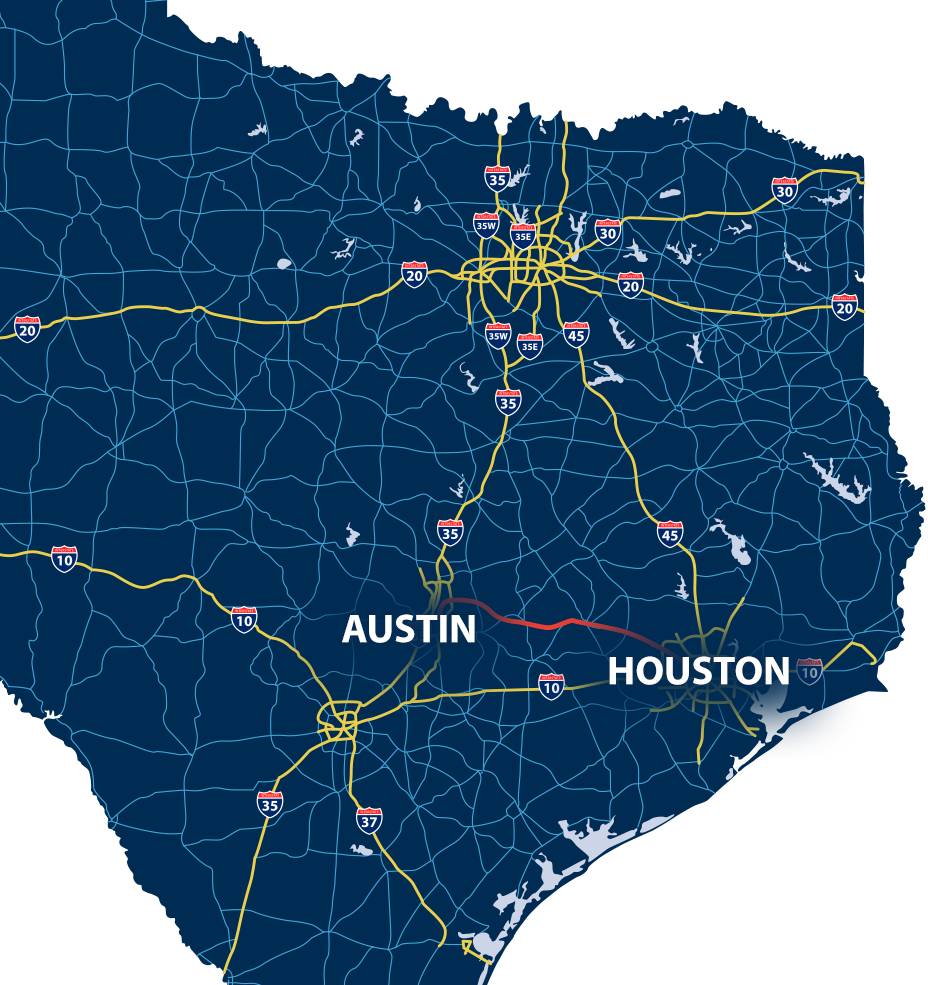
The driving distance between Austin and Houston is approximately 165 miles (about 265 kilometers). This figure can vary slightly depending on the specific starting point in Austin and the final destination in Houston, as well as the chosen route. However, for most practical purposes, 165 miles serves as a reliable estimate.
Navigating the Route: Driving from Austin to Houston
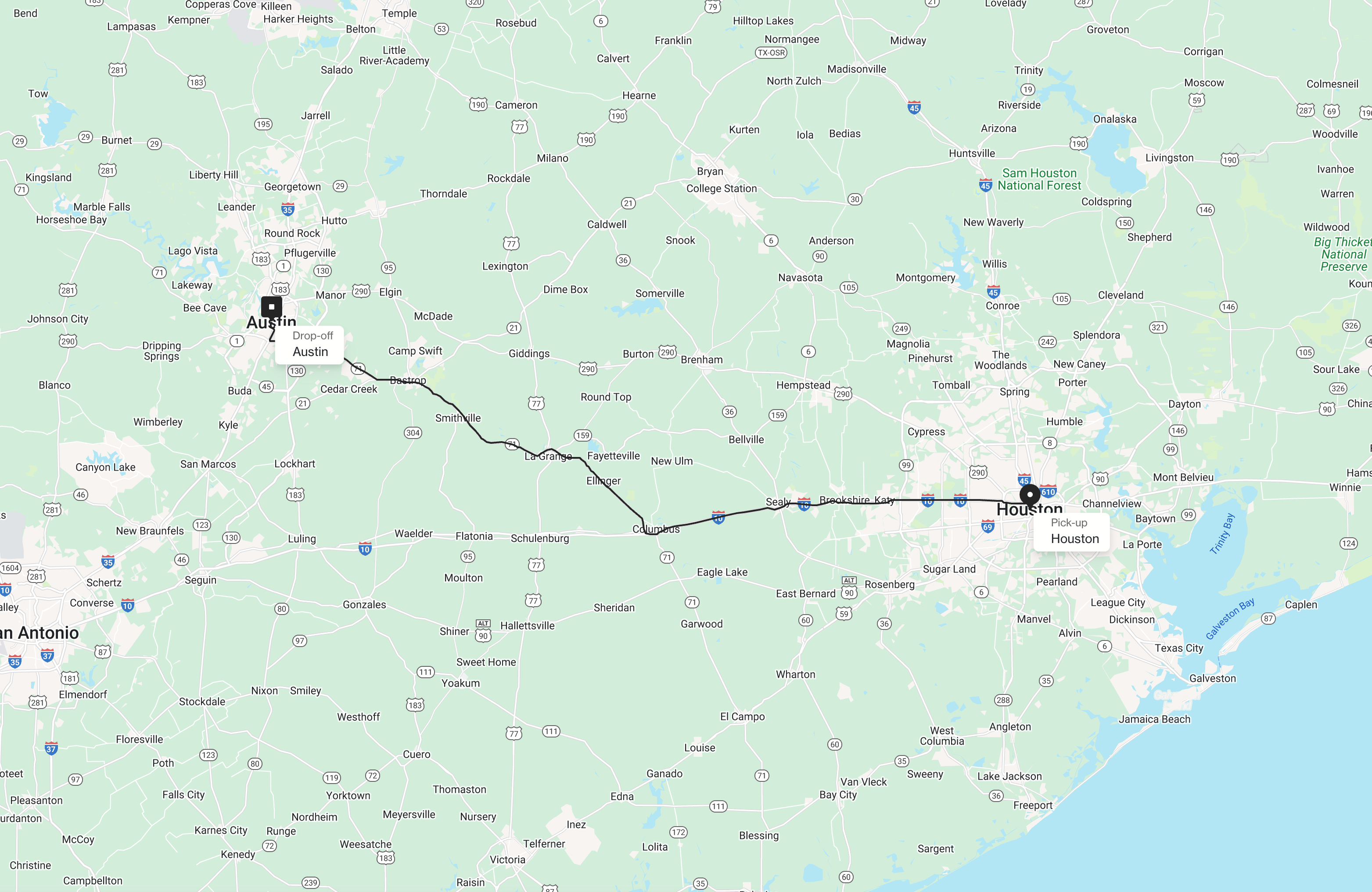
The most popular and straightforward way to travel between Austin and Houston is by car. The journey typically takes around 2.5 to 3 hours of pure driving time, excluding any stops for gas, food, or rest. The primary route is Interstate 10 East (I-10 E), a major highway that connects these two significant Texas metropolises.
The I-10 East Experience
Starting in Austin, you’ll generally merge onto US-290 East, which will then lead you to I-10 East. This interstate highway is well-maintained and offers a relatively smooth drive. As you leave the rolling hills and unique charm of Austin, the landscape gradually transitions to the flatter terrain characteristic of much of eastern Texas.
The drive itself can be an experience. You’ll pass through smaller towns and rural areas, offering glimpses into a different pace of life than the urban centers you’re traveling between. Keep an eye out for roadside attractions, local eateries, and the expansive ranches that dot the Texas countryside.
Strategic Stops Along the Way
While the drive can be completed in under three hours, it’s always wise to factor in stops, especially for longer road trips. Several towns lie along the I-10 corridor that are worth considering for a break:
- Schulenburg: Known for its annual Texas Polka Music Festival and its historical German and Czech heritage, Schulenburg offers a taste of Texas‘s diverse cultural roots. You might find some charming diners or antique shops to explore for a brief respite.
- Flatonia: Another small Texas town that has preserved its historical character. It’s a convenient spot for a quick stretch or to grab a coffee.
- Columbus: This historic town on the banks of the Colorado River boasts a well-preserved Victorian downtown and a beautiful courthouse. It offers a slightly more substantial opportunity to disembark and take a short walk.
- Sealy: Before reaching the greater Houston area, Sealy is a practical stop for gas and snacks.
When planning your drive, consider the time of day. Driving during peak commute hours in either Austin or Houston can significantly extend your travel time due to traffic congestion. Departing early in the morning or later in the evening can help you avoid these urban bottlenecks.
Alternative Routes and Considerations
While I-10 East is the most direct and commonly used route, there are alternative ways to travel. These might be chosen to avoid traffic, explore different scenery, or visit specific points of interest.
- US-290 East and TX-6 North: This route can take you through towns like Brenham, famous for its Blue Bell Creameries. While potentially adding a bit more time, it offers a different scenic experience and a chance to visit a beloved Texas institution.
- US-71 East and TX-71 East: This route offers a more northerly path and can take you through cities like Bastrop and on towards Columbus before connecting to I-10.
When using GPS navigation, you’ll typically be presented with the most efficient route based on current traffic conditions. Always check your navigation app before you depart to get the most up-to-date information on road closures, construction, and traffic delays.
Beyond the Car: Other Travel Options
While driving is the most flexible and popular method, there are other ways to bridge the gap between Austin and Houston, catering to different preferences and budgets.
Bus Services: A Budget-Friendly Choice
For those looking for a more economical option, intercity bus services offer a viable alternative. Companies like Greyhound and FlixBus operate regular routes between Austin and Houston.
The Bus Journey Experience
Bus travel is an excellent choice for budget-conscious travelers or those who prefer not to drive. The journey time by bus is generally longer than driving, typically ranging from 3.5 to 4.5 hours, depending on the number of stops and the specific route taken by the bus company.
Buses usually depart from designated terminals in Austin (often near downtown or the university area) and arrive at terminals in Houston that are also conveniently located. Modern buses often come equipped with amenities like Wi-Fi, power outlets, and comfortable seating, making the journey as pleasant as possible.
Choosing a bus service allows you to relax, read, catch up on work, or simply enjoy the passing scenery without the stress of navigating traffic or finding parking. It’s a more sustainable option as well, consolidating travel for multiple passengers.
Air Travel: Speed Over Scenery
While not a direct point-to-point travel method for this distance, flying between Austin and Houston is technically possible, though it usually involves connecting flights or significant time spent at airports. There are three major airports serving the Houston metropolitan area: George Bush Intercontinental Airport (IAH), William P. Hobby Airport (HOU), and Ellington Airport (EFD). Austin-Bergstrom International Airport (AUS) serves Austin.
The Considerations of Flying
The flight time itself is very short, often less than an hour. However, when you factor in travel to and from the airports, check-in procedures, security screenings, and potential delays, the total travel time can often be comparable to or even longer than driving. Furthermore, the cost of airfare, baggage fees, and airport transportation can make this option significantly more expensive for a relatively short distance.
This option is generally more practical if you are connecting to a longer flight from Houston or if you find an exceptionally good deal. For simply traveling between the two cities, it’s rarely the most efficient choice.
Exploring Austin and Houston: What Awaits You
The distance between Austin and Houston is not just a number; it represents a transition between two distinct, yet equally captivating, Texas experiences. Understanding what each city offers can help you decide if a day trip, a weekend getaway, or a longer stay is in order.
Austin: The Live Music Capital and Beyond
Austin, Texas, is renowned globally for its vibrant live music scene, eclectic culture, and friendly atmosphere. Known as the “Live Music Capital of the World®,” the city pulses with energy, offering a diverse array of venues from intimate bars to grand concert halls. Beyond music, Austin boasts a thriving food scene, with a particular emphasis on barbecue and Tex-Mex. The city’s natural beauty is also a significant draw, with the Barton Creek Greenbelt and Lady Bird Lake offering opportunities for hiking, biking, swimming, and kayaking. Key landmarks include the iconic Texas State Capitol Building, the Congress Avenue Bridge (home to the world’s largest urban bat colony), and the South Congress Avenue district, famous for its quirky shops and vibrant street art.
Houston: A Metropolis of Culture and Industry
Houston, Texas, is a sprawling metropolis that serves as a global hub for the energy industry and space exploration. It’s also a city with a surprisingly rich cultural tapestry. Houston is home to the Museum District, a collection of 19 world-class institutions including the Museum of Fine Arts, Houston and the Houston Museum of Natural Science. The city’s culinary landscape is incredibly diverse, reflecting its multicultural population, with exceptional Vietnamese, Indian, and authentic Mexican cuisine alongside classic Southern fare. For nature enthusiasts, the Buffalo Bayou Park offers urban green space with walking trails and stunning city views, while nearby Galveston Island provides a coastal escape. Space Center Houston is a must-visit attraction, offering an immersive look into NASA’s past, present, and future.
Whether you’re embarking on a road trip, opting for a bus, or considering other modes of transport, the journey between Austin and Houston is a gateway to experiencing the diverse soul of Texas. The approximately 165-mile stretch of highway is more than just asphalt; it’s a path connecting two of the state’s most dynamic and captivating cities.
LifeOutOfTheBox is a participant in the Amazon Services LLC Associates Program, an affiliate advertising program designed to provide a means for sites to earn advertising fees by advertising and linking to Amazon.com. Amazon, the Amazon logo, AmazonSupply, and the AmazonSupply logo are trademarks of Amazon.com, Inc. or its affiliates. As an Amazon Associate we earn affiliate commissions from qualifying purchases.