
The allure of the Bahamas for travelers departing from Miami is undeniable. A mere stone’s throw across the shimmering Atlantic, this archipelago of over 700 islands and cays offers a quick escape to turquoise waters, pristine beaches, and vibrant marine life. For many, the ultimate dream involves charting their own course, feeling the ocean breeze, and navigating the clear blue expanse directly to their island paradise. But the question that often arises for aspiring boaters and curious travelers alike is: just how far is the Bahamas from Miami by boat, and what does the journey entail?
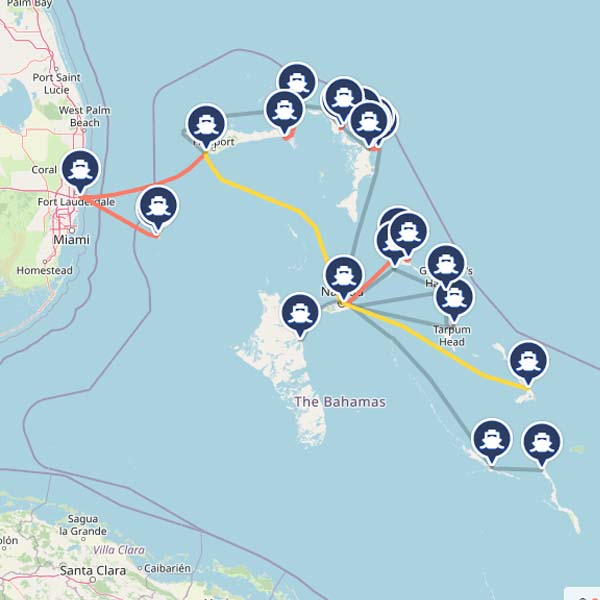
The proximity of the Bahamas to the southeastern coast of Florida is one of its greatest advantages. While “the Bahamas” refers to a vast nation, the closest point is the island of Bimini, which serves as a popular gateway for those venturing across the Florida Straits. Understanding the exact distance, the factors that influence travel time, and the preparation required is crucial for a safe and enjoyable voyage. This comprehensive guide will navigate you through everything you need to know about making the trip from Miami to the Bahamas by boat, ensuring your island adventure starts smoothly.
The Nautical Mile: Unpacking the Distance
When planning an offshore boating trip, distance is measured in nautical miles rather than statute miles. A nautical mile is slightly longer than a statute mile (1 nautical mile = 1.15 statute miles or 1.852 kilometers), a standard measurement for air and sea travel. This distinction is important for accurate navigation and fuel calculations.
Direct Route to Bimini and Beyond
The closest major island in the Bahamas to Miami is Bimini.
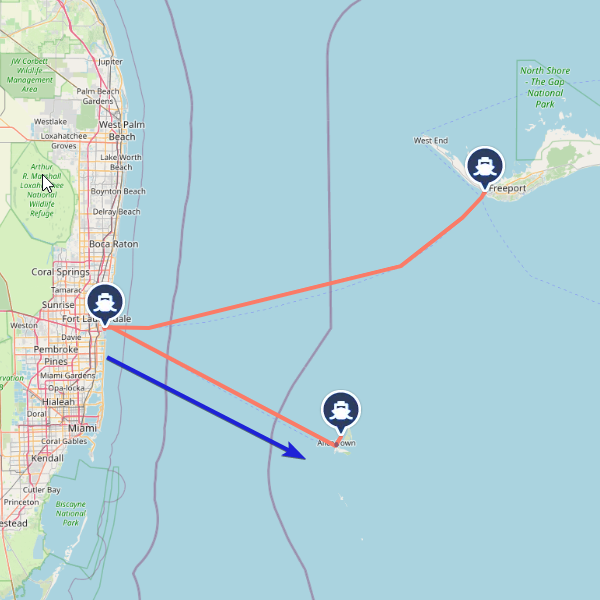
- Miami to Bimini: The shortest distance from Miami to Bimini is approximately 50 nautical miles (about 57.5 statute miles). This relatively short hop makes Bimini an ideal first stop for many boaters. Depending on the vessel’s speed, this journey can take anywhere from 2 to 4 hours. A fast powerboat might complete the crossing in under 2 hours, while a slower cruising sailboat could take 6-8 hours or more, depending on wind conditions and current.
From Bimini, other popular Bahamian islands become accessible:
- Miami to Grand Bahama Island (Freeport): This route is slightly longer, typically around 60-70 nautical miles from ports like Fort Lauderdale or Miami. Travel time would be similar to Bimini but on the higher end of the range due to the increased distance.
- Miami to Nassau (New Providence Island): For those looking to reach the capital, Nassau is approximately 150 nautical miles from Miami. This trip would typically require a full day of travel (8-10 hours for a fast powerboat, significantly longer for a sailboat, often broken up over multiple days with stops along the way).
- Miami to The Abacos: A highly sought-after destination, The Abacos are roughly 180-200 nautical miles from Miami. This is a multi-day trip for most recreational boaters, often involving an overnight stop or sailing in stages.
Understanding Nautical vs. Statute Miles
The use of nautical miles (nm) is standard practice in maritime and aeronautical navigation because it directly relates to the Earth’s circumference, with one nautical mile defined as one minute of latitude. This makes calculations simpler for navigators working with charts. For land-based activities or general understanding, the conversion to statute miles (sm) provides a more familiar context (1 nm ≈ 1.15 sm). For example, the 50 nm journey to Bimini is about 57.5 sm, which still highlights the relatively short distance involved. Awareness of both measurements is key to interpreting charts and understanding official distances communicated by maritime authorities.
Factors Influencing Your Bahamas Boat Trip
While the distance provides a baseline, several critical factors can significantly impact the actual travel time and overall experience of boating from Miami to the Bahamas. Understanding these elements is essential for proper planning and a safe voyage.
Vessel Type and Speed: From Yachts to Ferries
The type of boat you choose or own is perhaps the most significant determinant of your travel time.
- High-Speed Powerboats/Yachts: Modern powerboats and fast yachts can cruise at speeds of 25-40 knots (nautical miles per hour). At these speeds, the 50-nautical-mile journey to Bimini can be completed in a remarkable 1.5 to 2 hours. Larger, more luxurious yachts might maintain similar speeds with greater comfort.
- Cruising Sailboats: Sailboats are at the mercy of the wind and sea conditions. Their average cruising speed typically ranges from 5 to 10 knots. A trip to Bimini could take 5 to 10 hours, and voyages to further islands like Nassau or the Abacos would necessitate multi-day sails.
- Passenger Ferries: For those without their own boat, commercial passenger ferries offer a convenient option. Companies like Balearia Caribbean operate high-speed ferries from Fort Lauderdale‘s Port Everglades to Grand Bahama Island (Freeport) and Bimini. These ferries can make the crossing in approximately 2-3 hours, offering a comfortable and efficient way to reach the islands.
Weather Conditions and Sea State
The weather is paramount for any offshore journey, especially across the Florida Straits. This body of water is known for the powerful Gulf Stream, a warm, swift current flowing northward.
- Gulf Stream: When strong north winds blow against the northward-flowing Gulf Stream, it can create steep, uncomfortable, and potentially dangerous waves. Savvy boaters often plan their crossing for days with south or west winds, or minimal wind, to ensure a smoother ride.
- Wind and Waves: A strong headwind or beam sea (waves hitting the side of the boat) can significantly reduce speed, increase fuel consumption, and make the journey uncomfortable or even unsafe. Always check marine forecasts thoroughly before departing.
- Storms and Hurricanes: During hurricane season (June 1st to November 30th), severe weather can develop rapidly. It is crucial to monitor tropical weather systems and be prepared to alter plans or seek safe harbor.
Customs, Immigration, and Navigational Considerations
Beyond the physical distance and weather, bureaucratic and navigational factors play a role.
- Customs and Immigration: Upon arrival in the Bahamas, all foreign vessels must clear Bahamian Customs and Immigration at an official Port of Entry. This process involves paperwork, paying entry fees, and presenting passports and boat documentation. The time taken for this can vary, from a quick 30 minutes to over an hour, depending on the queue and the efficiency of the office.
- Navigational Challenges: While the route from Miami to Bimini is relatively straightforward, boaters must be vigilant. The Gulf Stream requires careful course correction. Near the islands, coral reefs and shallow areas necessitate accurate chart navigation and potentially a shallow draft for your vessel. GPS, electronic charts, and depth sounders are indispensable tools.
Popular Bahamian Destinations Accessible from Miami
The Bahamas offers a diverse array of islands, each with its unique charm and attractions. From Miami, several destinations stand out as prime choices for boaters, offering varying distances and experiences.
Bimini: The Gateway to the Bahamas

As the closest Bahamian island to Miami, Bimini is often the first port of call for boaters. Known as “the gateway to the Bahamas” and “the Big Game Fishing Capital of the World,” Bimini comprises two main islands, North Bimini and South Bimini, along with numerous cays.
- Attractions: Bimini boasts stunning clear waters perfect for snorkeling, diving, and fishing. Popular sites include the S.S. Sapona shipwreck, the mysterious Bimini Road (some believe it’s part of the lost city of Atlantis), and vibrant coral reefs. The island also offers a lively local culture, fresh seafood shacks, and resorts like the Resorts World Bimini.
- Boating Facilities: Bimini has several marinas equipped with customs and immigration services, fuel, and supplies, making it an excellent base for further exploration.
Grand Bahama Island: A Diverse Option
Just slightly further north of Bimini, Grand Bahama Island is another popular choice, particularly for those seeking a mix of natural beauty and developed amenities. Its main city, Freeport, is a major hub.
- Attractions: Grand Bahama Island is renowned for its expansive white-sand beaches, intricate cave systems at Lucayan National Park, and the bustling Port Lucaya Marketplace for shopping and dining. It offers diverse activities, from eco-tours and dolphin encounters to vibrant nightlife and golf courses.
- Boating Facilities: Freeport hosts several large, full-service marinas capable of accommodating vessels of all sizes, with efficient customs processing. It’s a convenient island for stocking up on provisions or making repairs.
The Abacos and Exumas: Further Adventures
For those with more time and a spirit of adventure, the Abacos and Exumas offer an unparalleled Bahamian experience, though they require a longer journey from Miami.
- The Abacos: Located in the northern Bahamas, the Abacos are famous for their protected waters, ideal for sailing, and charming colonial towns like Hope Town and Marsh Harbour. The area is a boater’s paradise with numerous cays, anchorages, and coral reefs. It is a multi-day trip, often involving an overnight stop at Bimini or Grand Bahama Island.
- The Exumas: Stretching for over 100 miles southeast of Nassau, the Exumas are a chain of 365 cays and islands renowned for their sapphire-blue waters, deserted beaches, and famous swimming pigs at Big Major Cay. This is a destination for seasoned boaters, involving a longer passage and more extensive planning, but rewarding with breathtaking natural beauty and incredible privacy.
Planning Your Voyage: Essential Tips for Boaters
Embarking on an international boat trip requires meticulous planning. Beyond knowing the distance, ensuring you have all necessary documentation, safety gear, and provisions is paramount for a successful and stress-free journey.
Documentation and Safety Gear
- Vessel Documentation: Ensure your boat’s registration is current, and you have proof of ownership. A valid U.S. Coast Guard Certificate of Documentation or state registration is required.
- Personal Identification: All passengers and crew must have valid passports. If traveling with minors not accompanied by both parents, obtain a notarized letter of consent from the absent parent(s).
- Bahamas Cruising Permit: This permit is required for all foreign vessels. You will obtain it upon clearing customs at your first Port of Entry in the Bahamas.
- Safety Equipment: Beyond standard U.S. Coast Guard requirements, consider additional safety gear for offshore travel: an EPIRB (Emergency Position Indicating Radio Beacon) or PLB (Personal Locator Beacon), a well-stocked first-aid kit, spare parts, extra lines, and a comprehensive tool kit. Ensure life jackets are accessible for everyone on board.
Fueling and Provisions
- Fuel Calculation: Estimate your fuel consumption carefully, accounting for the distance, potential strong currents (like the Gulf Stream), and reserve for unexpected delays or changes in course. It’s always wise to have a 25-30% fuel reserve. Fuel in the Bahamas can be more expensive and sometimes less readily available, especially on smaller cays, so plan your refueling stops.
- Water and Provisions: Carry ample fresh water for drinking and washing. Stock up on non-perishable food items, snacks, and any specific dietary needs. While grocery stores are available in larger Bahamian towns, selection might be limited or prices higher than in Miami.
Communication and Emergency Preparedness
- Communication: A VHF radio is essential for inter-boat communication and hailing marinas or emergencies. Consider a satellite phone or a satellite messenger device for communication beyond VHF range, especially for longer passages. Ensure your cell phone plan has international roaming or consider a local SIM card upon arrival.
- Float Plan: File a float plan with a trusted friend or family member, detailing your departure time, route, estimated arrival, and contact information. This ensures someone knows your whereabouts in case of an emergency.
- Insurance: Verify that your boat insurance policy covers international travel to the Bahamas. Some policies may require additional riders.
The Experience of Boating to the Bahamas
The journey from Miami to the Bahamas by boat is more than just a means of transport; it’s an integral part of the adventure. It offers a unique perspective on the ocean and a sense of accomplishment that flying cannot replicate.
Scenic Beauty and Open Waters
As you leave the skyline of Miami behind, the waters rapidly transform. The deep blue of the [Gulf Stream](https://lifeoutofthebox.com/ gulf-stream) transitions to the shallower, mesmerizing turquoise as you approach the Bahamian banks. The open water crossing provides opportunities to spot marine life such as dolphins, sea turtles, and various seabirds. The uninterrupted horizon, the vastness of the ocean, and the changing hues of the water are a spectacle in themselves, reminding you of the natural wonders of the Caribbean.
Fishing, Snorkeling, and Island Hopping
Once in the Bahamas, your boat becomes your ticket to unparalleled exploration.
- Fishing: The waters between Florida and the Bahamas are renowned for sport fishing. Anglers can target mahi-mahi, wahoo, tuna, and marlin during the crossing or once among the islands.
- Snorkeling and Diving: The crystal-clear waters and vibrant coral reefs of the Bahamas are a diver’s paradise. With your own boat, you can access countless secluded coves and untouched reefs, experiencing marine biodiversity up close.
- Island Hopping: The true magic of boating in the Bahamas lies in the freedom of island hopping. Anchor in a secluded bay for a night, explore a charming fishing village the next day, and discover a pristine beach accessible only by boat. Each island offers a distinct flavor, from the lively atmosphere of Bimini to the tranquil beauty of the Exumas.
Making Memories on the High Seas
Ultimately, boating to the Bahamas is about creating unforgettable memories. It’s the camaraderie of navigating with friends and family, the thrill of reaching a new destination by your own means, the peaceful evenings spent under a canopy of stars, and the sheer joy of discovering hidden gems. While meticulous planning is crucial, the rewards of this incredible journey far outweigh the preparation, offering an authentic and deeply personal way to experience the breathtaking beauty of the Bahamas.
LifeOutOfTheBox is a participant in the Amazon Services LLC Associates Program, an affiliate advertising program designed to provide a means for sites to earn advertising fees by advertising and linking to Amazon.com. Amazon, the Amazon logo, AmazonSupply, and the AmazonSupply logo are trademarks of Amazon.com, Inc. or its affiliates. As an Amazon Associate we earn affiliate commissions from qualifying purchases.