
The stretch of coastline connecting Los Angeles to Big Sur is widely considered one of the most magnificent road trips in the world. Travelers embarking on this journey often wonder about the distance and the logistical realities of traversing the winding paths of the California coast. While the direct driving distance covers approximately 300 to 330 miles, the true essence of this trip lies not in the mileage, but in the time spent navigating the breathtaking cliffs and hidden coves that define the Pacific Coast Highway.
Understanding the Logistics of the Route
When calculating how far it is from the bustling sprawl of Southern California to the rugged tranquility of Central California, one must account for the dual nature of the drive. The journey can be approached as a sprint or a sensory experience.

The Direct Drive vs. The Scenic Route
If your primary goal is reaching Big Sur as quickly as possible, you will likely opt for the Interstate 5 corridor. This inland route moves through the Central Valley, covering the distance in roughly 5 to 6 hours depending on traffic exiting Los Angeles. However, this misses the point of the coastline’s majesty.
Taking the scenic route via Highway 1 transforms the commute into a full-day or multi-day adventure. By sticking to the ocean edge, you will pass through iconic seaside towns such as Santa Barbara, San Luis Obispo, and Cambria. This path is significantly longer in terms of hours because the road is serpentine and requires lower speeds to navigate safely. Expect to spend at least 7 to 9 hours behind the wheel if you choose to make frequent stops along the cliffs.
Essential Traffic Considerations
California traffic is a variable that cannot be ignored. Leaving Los Angeles during peak commuting hours can add two hours to your journey before you even reach the scenic sections of the coast. To maximize your experience, it is highly recommended to depart at dawn. Starting your drive early ensures you pass through Ventura and Santa Barbara before the midday congestion sets in, leaving you plenty of daylight to appreciate the dramatic vistas of the Santa Lucia Mountains.
Must-See Stops Between Los Angeles and Big Sur
The beauty of this journey is that the distance is punctuated by world-class attractions. Treating the drive as a destination in itself allows you to appreciate the transition from urban landscapes to the raw, untamed wilderness of Big Sur.
The Charm of the Central Coast
As you head north from Los Angeles, Santa Barbara serves as the perfect halfway point for a lunch break. Known for its Spanish colonial architecture and the historic Old Mission Santa Barbara, this city offers a sophisticated pause before you enter the more rural stretches of the coastline.

Further north, San Luis Obispo and the nearby village of Cambria provide a gateway to the northern coast. Cambria is particularly famous for Moonstone Beach, where the rhythmic sound of waves against the shore perfectly sets the tone for your arrival in Big Sur.
The Gateway to Big Sur: San Simeon
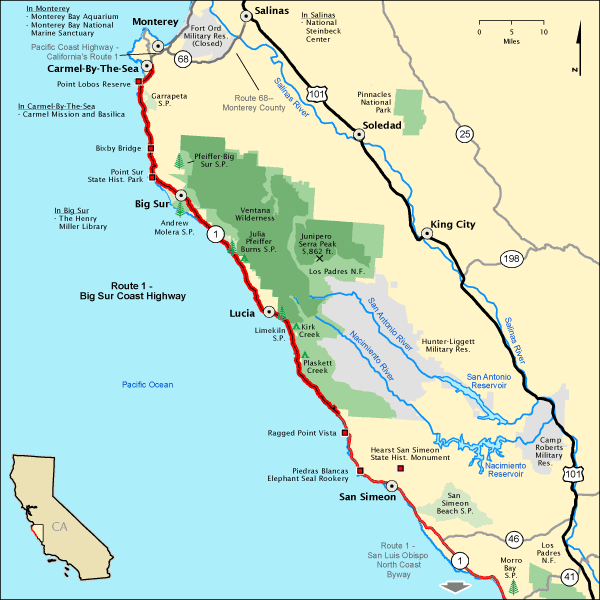
Just before entering the protected wilderness of Big Sur, you must pass San Simeon. This is the home of the legendary Hearst Castle, a sprawling estate that offers a glimpse into the opulent history of the state. Additionally, the nearby Piedras Blancas Elephant Seal Rookery is a mandatory stop. Watching these massive marine mammals lounge on the sand provides a unique wildlife viewing opportunity that serves as a fitting introduction to the natural wonders awaiting you in the north.
Navigating the Terrain of Big Sur
Once you reach the southern boundary of Big Sur, the drive changes fundamentally. The road narrows, the cliffs become steeper, and the Pacific Ocean feels more expansive than anywhere else in the United States.
The Famous Bixby Creek Bridge
One of the most photographed landmarks on the entire route is the Bixby Creek Bridge. Located in the northern portion of Big Sur, this architectural marvel is a testament to the engineering feats required to traverse such a rugged landscape. As you cross this bridge, you are greeted by deep canyons and views that stretch for miles. It is the definitive sign that you have successfully navigated the distance from the south.
Safety and Preparedness
Because Big Sur is geologically active and prone to landslides, it is essential to check the status of Highway 1 before you depart. Road closures are not uncommon, and they can drastically alter the distance and route you need to take. Always have a backup plan that involves U.S. Route 101 or Interstate 5, though these inland alternatives will not provide the same coastal scenery.
Furthermore, cellular service is notoriously unreliable throughout the Big Sur region. Before leaving the urban connectivity of Los Angeles, ensure you have downloaded offline maps of the entire route. Having a physical map is also a prudent precaution for those exploring the winding roads that lead to hidden hiking trails within Pfeiffer Big Sur State Park.
Final Travel Tips for the Journey
To make the most of your road trip, prioritize the experience over the clock. While it is helpful to know that Big Sur is roughly a 6-to-8-hour journey from Los Angeles under ideal conditions, the best way to enjoy this trip is to break it up.
Strategic Overnight Stays
Consider spending a night in San Luis Obispo or Paso Robles on your way up. This allows you to explore the Central Coast wine region and arrive in Big Sur feeling refreshed and ready to hike the trails at Julia Pfeiffer Burns State Park.
Respecting the Environment
The region is protected for a reason. Whether you are stopping at McWay Falls or just pulling over to take a photo of the sunset, always adhere to “Leave No Trace” principles. The distance between Los Angeles and Big Sur isn’t just about miles—it is about moving from the man-made marvels of the city to the ancient, enduring beauty of the California coast. By honoring the land and allowing yourself the time to breathe it in, the distance becomes irrelevant, and the journey becomes the highlight of your travel experience.
LifeOutOfTheBox is a participant in the Amazon Services LLC Associates Program, an affiliate advertising program designed to provide a means for sites to earn advertising fees by advertising and linking to Amazon.com. Amazon, the Amazon logo, AmazonSupply, and the AmazonSupply logo are trademarks of Amazon.com, Inc. or its affiliates. As an Amazon Associate we earn affiliate commissions from qualifying purchases.