
The allure of the Rocky Mountains draws countless travelers to Colorado, and among its most celebrated destinations, Breckenridge stands out as a premier ski resort town with year-round appeal. For many visitors, the journey begins in Denver, the state capital and its most populous city. Understanding the distance and travel options between these two iconic locations is crucial for planning a seamless Colorado adventure. This guide delves into the specifics of the drive, exploring the various routes, travel times, and considerations for making the trip from Denver to Breckenridge.
The Direct Route: I-70 West
The most common and direct route from Denver to Breckenridge is via Interstate 70 (I-70) West. This scenic highway winds through the heart of the Rocky Mountains, offering breathtaking vistas and a true taste of Colorado’s natural grandeur.
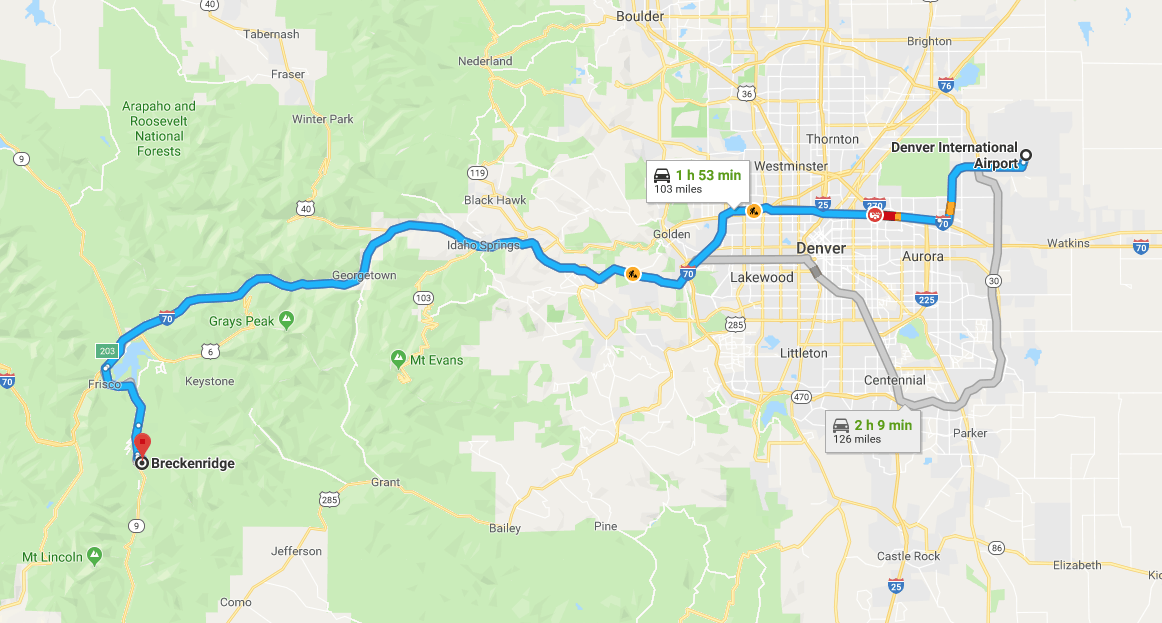
Driving Distance and Time
The approximate driving distance between Denver and Breckenridge via I-70 West is about 70 to 75 miles, depending on your starting point in Denver and your final destination within Breckenridge.
Under ideal conditions, the drive typically takes between 1.5 to 2 hours. However, this timeframe is highly variable and subject to several factors:
- Traffic: Denver and its surrounding areas are known for significant traffic congestion, especially during peak commuting hours (morning and late afternoon/early evening on weekdays) and on weekends, particularly during ski season and holidays.
- Weather Conditions: Mountain weather in Colorado can change rapidly. Snowstorms, ice, heavy rain, and fog can significantly slow down travel, necessitate the use of traction devices (like snow tires or chains), and sometimes lead to temporary road closures. I-70 is a crucial artery, and safety closures are implemented when conditions become hazardous.
- Construction: Road construction projects, common during the warmer months, can also cause delays.
- Day of the Week and Time of Day: Traveling on a Friday afternoon heading west, or a Sunday afternoon heading east, will almost certainly involve more traffic than a mid-week morning.
- Sightseeing: The beauty of the drive might tempt you to stop at various scenic overlooks, which, while rewarding, will add to your overall travel time.
Navigating I-70 West
The journey begins by heading west out of Denver on I-70. You’ll ascend into the foothills and then climb higher into the Front Range. Key landmarks and sections to note include:
- Eisenhower Tunnel: This is a significant landmark, as it’s one of the highest vehicular tunnels in the world, passing beneath the Continental Divide. Be prepared for potential delays due to traffic or weather within or approaching the tunnel, especially during busy periods.
- Georgetown Hill: A steep grade that can slow down larger vehicles.
- Loveland Pass: While not directly on I-70, the turnoff for US Highway 6 (US 6) and Loveland Pass offers an alternative, more scenic (but often slower and more challenging) route over the Continental Divide. For most travelers heading to Breckenridge, staying on I-70 is the preferred option.
- Silverthorne: This is the exit point for many travelers heading to mountain towns like Breckenridge, Keystone, and Copper Mountain.
After exiting I-70 at Silverthorne, you will take US Highway 9 (US 9) South directly into Breckenridge. This stretch of road is about 10 to 15 miles and is generally a straightforward drive, though it can become congested during peak times.
Alternative Routes and Considerations
While I-70 West is the primary route, understanding alternatives and related considerations can be beneficial for your travel planning.
Scenic Detours and Historical Routes
- US Highway 6 and Loveland Pass: For those seeking a more adventurous and visually spectacular, though slower, journey, taking US 6 over Loveland Pass is an option. This route ascends to over 12,000 feet, offering panoramic views. However, it is a winding, narrow road and is often closed in winter, making it unsuitable for many travelers during the snowy months. It also adds significant time to the journey.
- Peak to Peak Scenic Byway: While not directly connecting Denver to Breckenridge, this route offers a stunning alternative for reaching the general vicinity. Travelers could take the Peak to Peak Scenic Byway north from Denver towards towns like Estes Park or Black Hawk and then navigate westward, though this would considerably lengthen the trip and is more suited for those with ample time to explore multiple areas.
Travel Time Adjustments
It is imperative to factor in potential delays when estimating your travel time. A good rule of thumb is to add at least 30-60 minutes to the estimated driving time, especially during peak seasons, weekends, or if traveling during inclement weather. Checking real-time traffic conditions via GPS apps (like Google Maps or Waze) before and during your journey is highly recommended. The Colorado Department of Transportation (CDOT) also provides real-time traffic and road condition updates on their website and via social media, which are invaluable resources for mountain travel.
Transportation Options
Driving your own vehicle or a rental car is the most common way to travel from Denver to Breckenridge. However, several other transportation options are available, catering to different preferences and needs.
Rental Cars

Renting a car at Denver International Airport (DEN) or from various rental agencies in the city provides the most flexibility. Ensure your rental agreement permits travel to the mountains and consider opting for a vehicle with all-wheel drive or four-wheel drive, especially if visiting during the winter months. Many rental agencies require you to equip your vehicle with snow tires or carry chains if you plan to drive in the mountains during winter.
Shuttle Services
Several shuttle services operate between Denver and Breckenridge. These services offer a convenient alternative for those who prefer not to drive, especially in winter conditions. Popular providers include:
- Epic Mountain Express: Formerly known as Colorado Mountain Express, this is a widely used and reliable shuttle service.
- Breck Direct: Offers private and shared rides.
- Summit Express: Another popular choice for shared and private transportation to ski resorts in Summit County.
Shuttle services typically pick up passengers from Denver International Airport (DEN) or various hotels within the Denver metropolitan area. Booking in advance is highly recommended, especially during busy periods.
Ride-Sharing and Taxis
While ride-sharing services like Uber and Lyft operate in Denver, their availability and pricing for trips to Breckenridge can be inconsistent and expensive. Traditional taxis are also an option but are generally the most costly. These are less common choices for the full journey but might be used for local transportation once in Breckenridge.
Public Transportation
Direct public transportation from Denver to Breckenridge is limited. While RTD (Regional Transportation District) offers some bus services within the metro area, it does not extend directly to Breckenridge. Travelers might be able to take an RTD bus to a transfer point and then connect with a different service, but this is generally a time-consuming and complex option.
Preparing for the Mountain Drive
The drive from Denver to Breckenridge is not just a commute; it’s an experience. Proper preparation ensures a safe and enjoyable journey.
Vehicle Readiness
- Tires: Ensure your tires are in good condition with adequate tread. If traveling in winter, consider snow tires or ensure your vehicle is equipped with chains if required by law or road conditions. Colorado law mandates traction devices during certain weather events on designated highways, including portions of I-70.
- Fluid Levels: Check engine oil, coolant, windshield washer fluid, and brake fluid levels.
- Brakes: Ensure your brakes are in good working order, as mountain driving involves significant use of brakes on descents.
- Emergency Kit: Pack an emergency kit including blankets, non-perishable food, water, a first-aid kit, a flashlight, jumper cables, and a portable phone charger.
Weather Awareness
- Check Forecasts: Always check the weather forecast for both Denver and Breckenridge before you leave. Mountain weather can be drastically different from urban forecasts.
- Road Conditions: Utilize resources like the CDOT website for real-time road conditions, closures, and travel alerts.
Altitude Considerations
Breckenridge is situated at a high altitude (around 9,600 feet above sea level), and the drive itself takes you over passes exceeding 11,000 feet.
- Hydration: Drink plenty of water before and during your trip. Avoid excessive alcohol and caffeine, which can exacerbate dehydration.
- Pacing: Take it easy upon arrival. Avoid strenuous activity for the first 24-48 hours if you are not accustomed to high altitudes.
- Recognize Symptoms: Be aware of the symptoms of altitude sickness, which can include headache, nausea, dizziness, and fatigue. If symptoms are severe, descend to a lower altitude if possible and seek medical attention.

Packing Essentials
- Layers of Clothing: Mountain weather requires dressing in layers. Even in summer, evenings can be cool.
- Sun Protection: The sun’s rays are stronger at higher altitudes. Pack sunscreen, sunglasses, and hats.
- Snacks and Drinks: Having snacks and water in your car is always a good idea, especially for longer or potentially delayed drives.
By understanding the distance, routes, transportation options, and preparing adequately, your journey from Denver to Breckenridge will be a pleasant and efficient start to your Colorado mountain experience.
LifeOutOfTheBox is a participant in the Amazon Services LLC Associates Program, an affiliate advertising program designed to provide a means for sites to earn advertising fees by advertising and linking to Amazon.com. Amazon, the Amazon logo, AmazonSupply, and the AmazonSupply logo are trademarks of Amazon.com, Inc. or its affiliates. As an Amazon Associate we earn affiliate commissions from qualifying purchases.