
The question “How far is Canada from Florida?” evokes images of vast distances, contrasting climates, and distinct cultures. It’s a query that immediately brings to mind the scope of North American travel, connecting the balmy, subtropical shores of the Sunshine State with the expansive, often snow-capped landscapes of the Great White North. Far from being a simple metric, the distance between these two popular destinations encapsulates a journey spanning thousands of miles, multiple time zones, and a mosaic of experiences waiting to be discovered. For anyone contemplating a trip that bridges these two significant regions, understanding this geographical reality is the crucial first step in planning an unforgettable cross-continental adventure.

The Geographical Reality: Spanning a Continent
At its core, determining the distance between Canada and Florida isn’t as straightforward as pointing to two adjacent points on a map. Both are vast entities, with Canada stretching from the Pacific to the Atlantic and Arctic oceans, and Florida extending deep into the southeastern United States peninsula. The ‘distance’ thus varies considerably depending on the specific starting and ending points chosen within each.
Understanding the Vastness
To grasp the scale, consider that Canada is the world’s second-largest country by land area, while Florida, though smaller, is one of the most populous and geographically distinct states in the U.S. A direct line from Toronto, Canada’s largest city, to Miami, Florida’s vibrant southern hub, measures approximately 1,200 air miles (around 1,930 kilometers). This represents one of the shorter “intersections” between the two. However, a journey from Vancouver on Canada’s west coast to Key West at Florida’s southernmost tip would entail traversing the entire North American continent, stretching over 3,000 air miles (approximately 4,800 kilometers).
This incredible range highlights that “how far” isn’t a single answer, but rather a spectrum. Travelers must identify their specific origin in Canada and their desired destination in Florida to precisely calculate the distance and subsequent travel time. The journey typically involves crossing several states within the United States, emphasizing the significant continental passage involved.
Key Entry and Exit Points
When considering travel between these two regions, certain major cities naturally emerge as primary hubs. In Canada, key departure points often include Toronto, Montreal, Vancouver, and Calgary. These cities boast major international airports and serve as arterial points for road networks. For Florida, the most frequent arrival destinations are Miami, Orlando, and Tampa, each equipped with large international airports catering to millions of travelers annually. The choice of these hubs significantly influences the overall distance and convenience of the journey. For instance, flying from Montreal to Fort Lauderdale is a considerably different undertaking than driving from Ottawa to Jacksonville.
Modes of Travel: Reaching from Sunshine to Snow
The substantial distance between Canada and Florida necessitates careful consideration of travel methods. Each option — air, road, or rail — offers a distinct balance of speed, cost, and experience, shaping the journey itself as much as the destination.
Air Travel: The Quickest Link
Undoubtedly, flying is the most efficient way to bridge the geographical gap between Canada and Florida. Direct flights from major Canadian cities like Toronto or Montreal to Florida hubs such as Miami International Airport or Orlando International Airport typically range from 2.5 to 4 hours, depending on the specific route. This time frame does not include travel to and from airports, security checks, or potential layovers, which can add several hours to the total travel duration.
A flight from Toronto Pearson International Airport to Miami, for example, might take around 3 hours. However, a journey from Vancouver International Airport to Orlando would involve a significantly longer flight, often with a layover, extending the travel time to 7-10 hours or more. Despite the added logistics, air travel remains the preferred choice for those prioritizing speed and minimizing time spent in transit.
Road Tripping: An Epic North-South Journey
For adventurers with time on their side, a road trip from Canada to Florida offers an unparalleled opportunity to explore the diverse landscapes and cultures of the eastern United States. Driving distances are considerable:
- From Toronto to Miami: Approximately 1,400 to 1,600 miles (2,250 to 2,575 km), requiring 22-26 hours of continuous driving. Realistically, this journey spans at least 2-3 days, with overnight stops.
- From Montreal to Orlando: Around 1,300 to 1,500 miles (2,100 to 2,400 km), also taking 20-24 hours of driving, typically spread over 2-3 days.
- From Vancouver to Fort Lauderdale: This monumental journey covers over 3,000 miles (4,800 km) and demands upwards of 45-50 hours of driving, stretching across 5-7 days of travel.
Road trips necessitate careful planning for fuel stops, meals, and accommodation. Travelers typically utilize major arteries like Interstate 95 (I-95) along the East Coast, enjoying scenic routes and stopping at points of interest along the way. While slower, driving offers flexibility, the chance to carry more luggage, and a unique perspective on the journey itself.
Rail and Bus Services: Alternative Routes
While less common for the entire journey, both rail and bus services offer alternative, often more economical, ways to travel between certain points in Canada and Florida. Amtrak operates extensive rail services within the United States, connecting to Florida cities from various northern hubs that are accessible from Canada. For example, travelers might take VIA Rail from Toronto to a border city, then transfer to an Amtrak service south. The total travel time by train can be significantly longer than driving or flying, often exceeding 24-36 hours, depending on connections. Similarly, long-distance bus services, such as Greyhound, offer extensive networks but involve multi-day journeys with numerous stops. These options are typically chosen by budget-conscious travelers or those who prefer not to drive or fly.
Distance and Time: A Closer Look at Popular Routes
To provide a more concrete understanding, let’s examine specific popular routes between Canada and Florida, focusing on both distance and the realistic time investment.
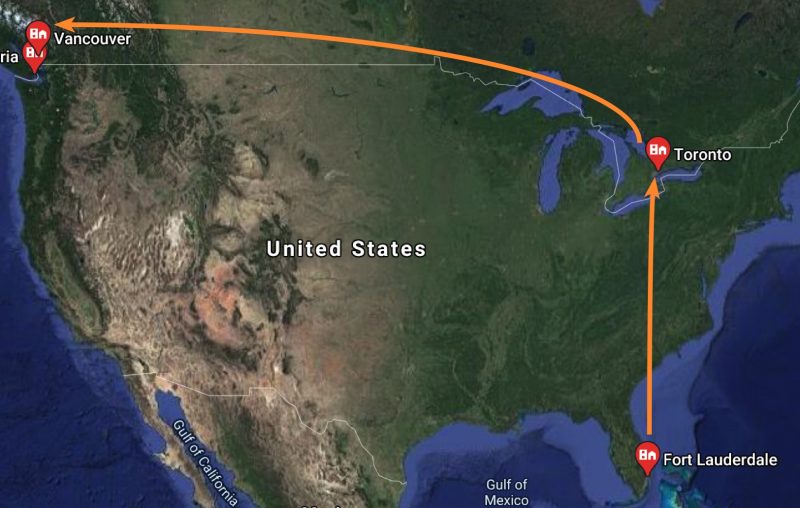
From Toronto to Miami: A Benchmark Journey
The route from Toronto, Ontario, to Miami, Florida, serves as a good benchmark for Eastern North American travel.
- Driving: Approximately 1,450 miles (2,330 km). A non-stop drive would take about 22-23 hours. Most travelers break this into a two-day journey with an overnight stay, perhaps in a city like Charlotte or Savannah.
- Flying: Direct flights typically take around 3 hours. Including airport formalities, the door-to-door travel time is usually 6-8 hours.
This route offers a clear illustration of the trade-offs between speed and the immersive experience of a road trip.
From Vancouver to Orlando: Coast-to-Coast Considerations
Traveling from Vancouver, British Columbia, to Orlando, Florida, is a truly transcontinental endeavor, representing one of the longest possible journeys between the two regions.
- Driving: Roughly 3,200 miles (5,150 km). This monumental drive requires at least 48-50 hours of actual driving, meaning 5-7 full days on the road, crossing numerous states and multiple time zones.
- Flying: Due to the distance, direct flights are rare. Most routes involve at least one layover, often in major hubs like Chicago, Dallas, or Atlanta. The total flight time can range from 7 to 12 hours, including layovers. Door-to-door, travelers should anticipate a full day of travel.
This exemplifies the significant logistical planning required for such a substantial journey, highlighting why flying is almost always the preferred method for such vast distances.
Crossing the Border: Essential Preparations
Regardless of the mode of transport, cross-border travel between Canada and the United States requires adherence to specific regulations.
- Documentation: Canadian citizens typically require a valid passport for air travel into the U.S. and for re-entry into Canada. For land crossings, a passport, NEXUS card, or an Enhanced Driver’s License (where available) is generally accepted. Non-Canadian citizens residing in Canada will need a passport and potentially a U.S. visa or ESTA authorization, depending on their nationality.
- Customs and Immigration: Be prepared for potential inspections and questions from border officials regarding the purpose and duration of your trip, as well as goods being transported. This process can add significant time, especially at busy land border crossings.
- Vehicle Requirements: If driving your own vehicle, ensure you have valid driver’s licenses, vehicle registration, and proof of adequate insurance coverage that extends to the United States.
Travel Experiences: Contrasts and Connections
The journey from Canada to Florida is more than just covering miles; it’s about transitioning between vastly different environments and cultural experiences.
Florida’s Allure: Warmth and Recreation
Florida is synonymous with sunshine, beaches, and world-class entertainment. Travelers arrive seeking warmth, whether to relax on the sandy shores of South Beach, explore the vibrant marine life of the Florida Keys, or immerse themselves in the magic of Walt Disney World Resort and Universal Studios Florida in Orlando. Its unique ecosystem, like that found in Everglades National Park, offers distinct wildlife viewing. The state’s appeal lies in its consistent warmth, diverse recreational opportunities, and a relaxed, resort-like atmosphere that stands in stark contrast to colder climates.
Canada’s Charm: Nature and Urban Sophistication
Conversely, Canada offers a wealth of experiences characterized by breathtaking natural beauty and sophisticated urban centers. From the majestic Canadian Rockies and Banff National Park in the west to the iconic Niagara Falls in the east, the country boasts incredible landscapes. Its cities, like Toronto with its towering CN Tower and diverse neighborhoods, or Montreal with its historic Old Montreal charm and European flair, offer rich cultural experiences, world-class dining, and vibrant arts scenes. Travelers departing Canada often carry memories of crisp air, stunning vistas, and the unique blend of wilderness and urbanity that defines the nation.
Planning Your Cross-Border Adventure
Successfully navigating the distance between Canada and Florida hinges on meticulous planning. From choosing the optimal time to travel to understanding the financial implications, preparation is key to a smooth journey.
Best Times to Travel
The ideal time to travel depends largely on the destination and the traveler’s preferences. Canadians often flock to Florida during the colder winter months (November to April) to escape the snow and enjoy the mild climate. This is Florida’s peak tourist season, meaning higher prices for flights and accommodations, and larger crowds. Conversely, traveling to Florida during the summer (June to September) offers lower prices but coincides with high humidity, heat, and the hurricane season. For travel to Canada, the summer months (June to September) are generally preferred for outdoor activities and milder weather, though specific regions like British Columbia or the Maritime provinces offer distinct seasonal charms.
Essential Travel Documentation
As previously mentioned, proper documentation is paramount. Ensure all passports are valid for at least six months beyond your intended return date. For those with a criminal record, even a minor one, seeking legal advice regarding U.S. entry is prudent, as entry may be denied. Additionally, it’s wise to carry digital and physical copies of all travel documents, including flight bookings, hotel reservations, and travel insurance details.

Budgeting for Your Journey
The cost of travel between Canada and Florida varies significantly.
- Flights: Can range from a few hundred dollars for off-peak economy tickets to thousands for premium class or during peak season. Booking in advance and being flexible with dates can yield savings.
- Driving: Factor in fuel costs (which can be substantial over thousands of miles), potential tolls, accommodation for overnight stops, and wear and tear on your vehicle.
- Accommodation: Prices in Florida can fluctuate wildly based on season and location, with Miami and Orlando typically being more expensive. In Canada, major cities also have higher accommodation costs.
- Food and Activities: Allocate a daily budget for meals, attractions, and unforeseen expenses. Travel insurance is highly recommended to cover medical emergencies, trip cancellations, or lost luggage.
In conclusion, the distance from Canada to Florida is a journey across a continent, marked by varying distances, diverse modes of travel, and a wealth of experiences. Whether you choose the speed of air travel or the immersive adventure of a road trip, understanding the logistical intricacies and preparing thoroughly will ensure a rewarding transition between these two captivating North American destinations.
LifeOutOfTheBox is a participant in the Amazon Services LLC Associates Program, an affiliate advertising program designed to provide a means for sites to earn advertising fees by advertising and linking to Amazon.com. Amazon, the Amazon logo, AmazonSupply, and the AmazonSupply logo are trademarks of Amazon.com, Inc. or its affiliates. As an Amazon Associate we earn affiliate commissions from qualifying purchases.