
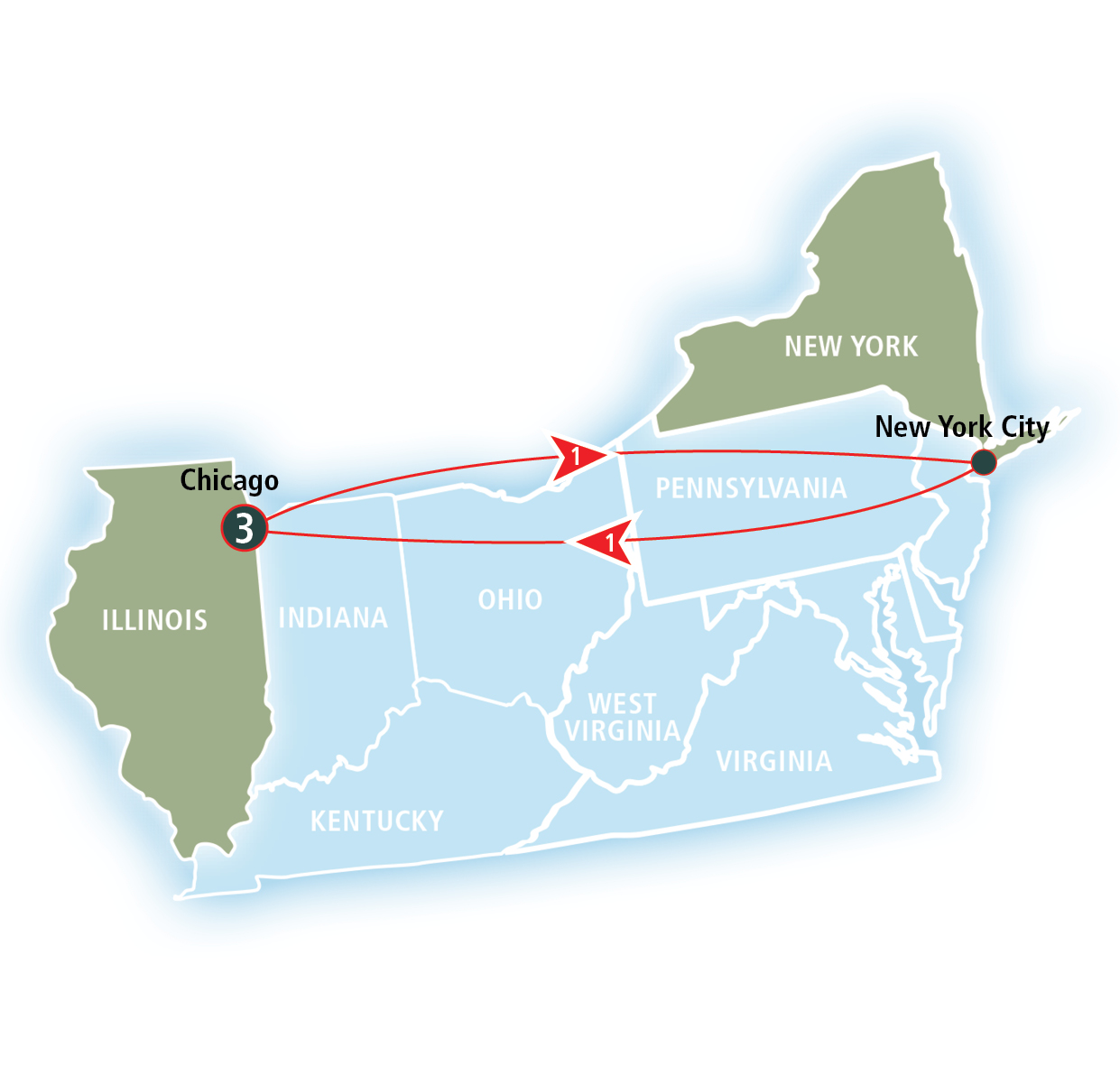
The journey between Chicago, the heart of the Midwest, and New York City, the iconic East Coast metropolis, represents one of America’s most significant cross-country routes for travelers. Whether for business, leisure, or family visits, understanding the distance and the various implications for travel is crucial for planning an efficient and enjoyable trip. This guide delves into the geographical realities, diverse transportation options, and essential planning considerations for bridging the gap between these two vibrant cities.
The Geographic Reality: Distance and Its Implications
While seemingly a straightforward question, “how far” encompasses more than just a single number. The distance between Chicago and New York City varies significantly depending on whether one measures it as a straight line, a driving route, or considers the practicalities of travel time by different modes.

Straight-Line vs. Driving Distance
As the crow flies, the approximate air distance between Chicago and New York City is about 713 miles (1,147 kilometers). This direct measurement is primarily relevant for air travel, providing the shortest possible path. However, for ground transportation, the reality is far more complex.
When traveling by road, the distance stretches due to geographical features, road networks, and preferred routes. Typically, the driving distance ranges from 790 to 800 miles (approximately 1,270 to 1,287 kilometers), depending on the specific starting and ending points within each city and the chosen highways. Most routes involve traversing major interstates such as I-80 or I-90, which pass through several states including Indiana, Ohio, Pennsylvania, and New Jersey before reaching New York.
Understanding Travel Time
The actual time it takes to travel between Chicago and New York City is influenced by the mode of transportation, traffic conditions, and the number of stops made.
- Flying: Direct flights generally take around 2 hours to 2 hours and 30 minutes. However, this excludes the time spent on airport transfers, security checks, boarding, and deplaning, which can easily add another 3-4 hours to the overall journey.
- Driving: A non-stop drive is theoretically possible in 12 to 14 hours. However, this is an ambitious estimate that rarely accounts for necessary stops for fuel, food, rest, or unexpected traffic delays, especially when passing through major metropolitan areas like Cleveland, Pittsburgh, or approaching New York City. Most drivers opt for an overnight stop, turning it into a two-day journey.
- Train: Amtrak services typically take around 18 to 20 hours, offering a more relaxed, albeit longer, travel experience.
- Bus: Bus journeys are the longest, often ranging from 15 to 20 hours, heavily dependent on the number of stops and traffic.
Navigating the Journey: Transportation Options
Travelers have several distinct options for traversing the distance between these two iconic cities, each offering a unique balance of speed, cost, and experience.
Flying: The Fastest Route
For those prioritizing speed, air travel is the undisputed champion. Numerous airlines offer direct flights daily.
- Chicago Airports: Travelers departing from Chicago primarily use O’Hare International Airport (ORD), one of the busiest airports in the world, or the more centrally located Midway International Airport (MDW).
- New York City Airports: Arrivals in New York City can land at John F. Kennedy International Airport (JFK) in Queens, Newark Liberty International Airport (EWR) in New Jersey, or LaGuardia Airport (LGA) also in Queens. Each airport has varying accessibility to Manhattan and other boroughs.
While the flight itself is quick, the overall journey time can extend due to airport transfers, security lines, and potential delays. Booking in advance, especially with budget airlines, can offer competitive fares. Considerations for baggage fees and the cost of transportation to and from airports are essential for accurate budget planning.
Driving: The Scenic and Flexible Option
A road trip offers unparalleled flexibility and the opportunity to explore the diverse landscapes and attractions along the way.
- Estimated Duration: Without significant stops, the drive takes approximately 12 to 14 hours. However, to make it a pleasant experience and avoid driver fatigue, an overnight stop is highly recommended. Popular stopover cities or regions include Cleveland, Pittsburgh, or towns in Pennsylvania.
- Routes: The most common routes involve I-80 and I-90. Both offer varying scenery and access to different points of interest. It’s advisable to check real-time traffic updates, especially around major metropolitan areas and toll plazas.
- Considerations: Fuel costs, tolls (particularly significant in states like Pennsylvania and New Jersey), potential vehicle wear and tear, and parking in New York City (which can be expensive and challenging to find) are all critical factors. Driving allows for greater luggage capacity and spontaneity, making it ideal for families or those with specific equipment.
Rail Travel: A Relaxed Alternative
Amtrak provides a comfortable and often scenic way to travel between Chicago and New York City. The primary service is the Lake Shore Limited, which runs daily.

- Journey Duration: The train journey typically spans 18 to 20 hours, including several stops.
- Advantages: Passengers can relax, enjoy the passing scenery, move around, and avoid the stresses of driving or airport procedures. Onboard amenities often include dining cars, Wi-Fi, and various seating classes, including sleeper cars for overnight comfort.
- Disadvantages: It is a significantly longer journey than flying and can sometimes be more expensive than budget flights, especially if opting for premium seating or sleeper accommodations.
Bus Services: The Economical Choice
For budget-conscious travelers, intercity bus services like Greyhound and Megabus offer the most economical option.
- Duration: Bus trips are the longest, generally taking between 15 to 20 hours, depending on the number of stops and traffic conditions.
- Advantages: Affordability is the main draw. Buses often offer amenities such as Wi-Fi and power outlets.
- Disadvantages: Comfort can be limited on long journeys, and frequent stops can prolong travel time. Luggage limits might also apply.
Planning Your Journey: Beyond Just Distance
Effective travel planning extends beyond merely choosing a mode of transport; it involves strategic budgeting, time management, and consideration of the overall travel experience.
Budgeting for Your Trip
A comprehensive budget should account for more than just the primary ticket or fuel costs.
- Flights: Factor in baggage fees, seat selection charges, and the cost of airport transfers (taxis, ride-shares, public transit).
- Driving: Beyond fuel and tolls, consider potential overnight accommodation, meals on the road, and parking fees upon arrival in New York City.
- Train/Bus: While often straightforward, budgeting for meals on board or during layovers, and local transportation upon arrival, is wise.
Time Considerations
The timing of your journey can significantly impact the experience.
- Peak Travel Times: Weekends, holidays, and summer months often see higher prices and increased congestion across all modes of transport.
- Flexibility: If your schedule allows, traveling during off-peak days or seasons can lead to better deals and a more relaxed experience.
- Buffer Time: Always build in extra time for unexpected delays, especially with air and road travel.
Enhancing the Experience
Regardless of the chosen method, proactive planning can elevate the journey.
- Road Trip: Map out interesting roadside attractions, plan meal breaks at unique diners, or book charming overnight stays in advance.
- Train Travel: Pack snacks, a good book, or a fully charged device with entertainment. Consider upgrading to a business class or sleeper car for enhanced comfort.
- Flying: Utilize airline apps for real-time updates, download entertainment, and plan your airport transfers meticulously.
Exploring the Destinations: A Glimpse into Chicago and New York City
The ultimate reward for the journey is the arrival in one of these magnificent cities. Both offer distinct, rich experiences.
The Allure of Chicago
Known for its stunning architecture, vibrant arts scene, and incredible food, Chicago offers a robust itinerary for any traveler. Key attractions include the iconic “Bean” sculpture in Millennium Park, world-class collections at the Art Institute of Chicago, and the bustling Navy Pier. No visit is complete without sampling its famous deep-dish pizza or exploring its diverse neighborhoods.
The Vibrancy of New York City
The “Big Apple” is a constant whirlwind of culture, history, and entertainment. From the glittering lights of Times Square and the tranquil expanse of Central Park to the historic majesty of the Statue of Liberty and the unparalleled energy of Broadway, New York City offers an endless array of experiences. Its culinary scene, diverse neighborhoods, and status as a global hub for fashion, finance, and art make it a destination unlike any other.
Making the Best Choice for Your Travel Style
The “best” way to travel between Chicago and New York City ultimately depends on individual priorities.
- Business travelers or those with limited time will almost certainly opt for flying.
- Families or those with a desire for a custom itinerary might prefer the flexibility of driving, allowing for stops and more luggage.
- Leisure travelers seeking a relaxed journey with scenic views could find the train an ideal choice.
- Budget travelers will gravitate towards bus services, accepting longer travel times for significant cost savings.
Understanding the various distances, travel times, and options available allows travelers to make an informed decision that best suits their needs, ensuring a smooth and enjoyable journey between these two American titans.
LifeOutOfTheBox is a participant in the Amazon Services LLC Associates Program, an affiliate advertising program designed to provide a means for sites to earn advertising fees by advertising and linking to Amazon.com. Amazon, the Amazon logo, AmazonSupply, and the AmazonSupply logo are trademarks of Amazon.com, Inc. or its affiliates. As an Amazon Associate we earn affiliate commissions from qualifying purchases.