
Embarking on a journey between two of the Midwest’s most iconic cities, Detroit and Chicago, requires a clear understanding of the distance, travel time, and available transportation options. Whether you’re planning a business trip, a weekend getaway, or a scenic road trip, the logistical details are paramount to ensuring a smooth and enjoyable experience. This guide delves into the various facets of inter-city travel between these vibrant metropolises, offering insights to help you choose the best way to navigate the distance.
The Direct Route: Unveiling the Distance and Drive Time
The most common and often preferred method of travel between Detroit and Chicago is by car, offering flexibility and the opportunity to explore at your own pace. The distance between the two city centers is approximately 280 to 285 miles (450-460 kilometers), depending on the specific starting and ending points within each urban sprawl.

The primary route connecting Detroit and Chicago is largely via Interstate 94 (I-94), a major highway traversing through Michigan, Indiana, and Illinois. From downtown Detroit, travelers typically merge onto I-94 West, heading southwest across Michigan. Upon reaching the Michigan-Indiana border, I-94 continues for a stretch before intersecting with other major arteries. Many drivers will then transition to I-80/90, also known as the Indiana Toll Road, which provides a direct path into the Chicagoland area. This toll road is generally well-maintained and offers a more consistent driving experience, though it comes with associated costs. An alternative involves staying on I-94 through northwestern Indiana, which can sometimes be more congested but avoids tolls.
Under ideal driving conditions, with minimal traffic and adherence to speed limits, the drive can take anywhere from 4.5 to 5 hours. However, it is crucial to factor in potential delays. Traffic congestion is a significant consideration, especially when traversing the metropolitan areas of Detroit, Gary, Indiana, and the greater Chicago area during peak hours. Construction zones, common on major interstate highways, can also add considerable time. Moreover, weather conditions, particularly during winter months with snow and ice, or severe thunderstorms in spring and summer, can drastically extend travel times and necessitate caution. Planning for at least one or two brief stops for fuel, restrooms, or a quick meal is also advisable, pushing the practical travel time closer to 5.5 to 6 hours for most journeys.
Beyond the Wheel: Alternative Transportation Options
While driving offers unparalleled freedom, various other modes of transport cater to different preferences for speed, comfort, and cost.
By Air: The Quickest Connection
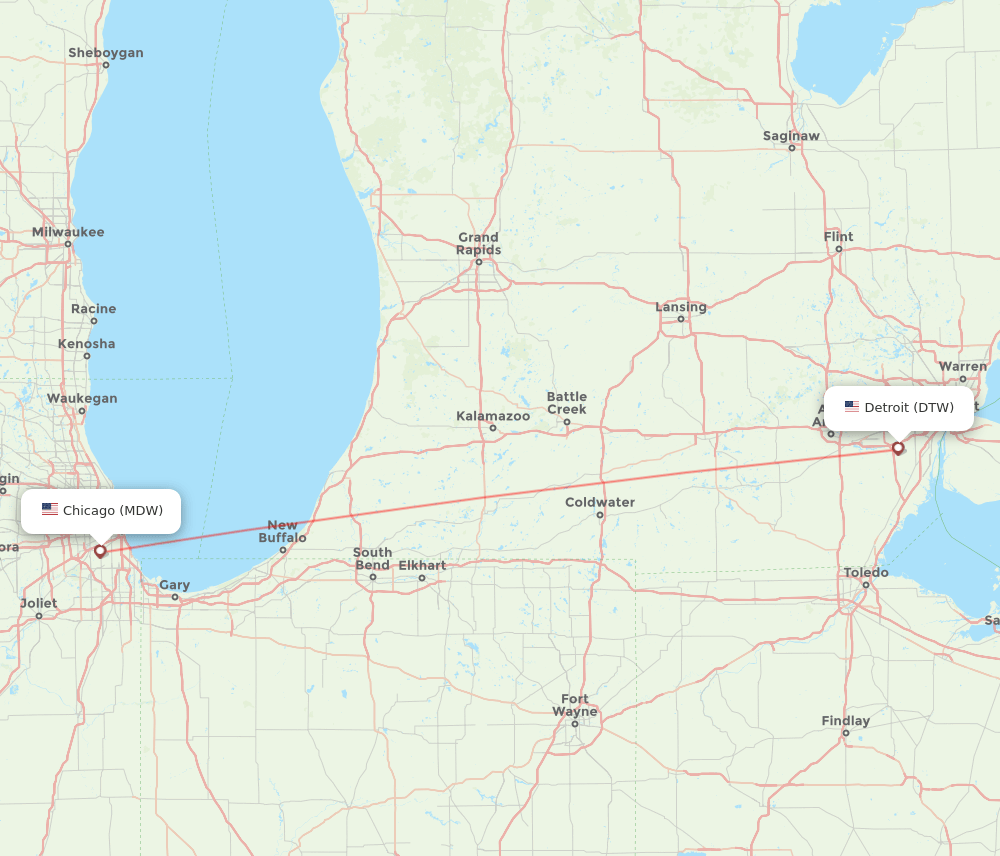
For those prioritizing speed, flying is the most efficient way to travel between Detroit and Chicago. Both cities are home to major international airports, facilitating frequent direct flights. In Chicago, travelers primarily utilize O’Hare International Airport (ORD) or Midway International Airport (MDW), while Detroit is served by Detroit Metropolitan Wayne County Airport (DTW).
The actual flight time between DTW and ORD/MDW is remarkably short, typically ranging from 1 hour to 1 hour and 15 minutes. However, the total travel time extends considerably when accounting for airport procedures. Travelers must factor in transit to and from airports, security checks, boarding, and baggage claim. This can easily add 2-3 hours on either end of the flight, bringing the total door-to-door travel time to a minimum of 4-5 hours. While often more expensive than driving, particularly for solo travelers, flying can be competitive, especially if tickets are booked well in advance or during off-peak seasons. It also offers the advantage of avoiding potential traffic headaches and the fatigue of a long drive.
Rail Travel: A Scenic and Relaxing Journey
Amtrak provides a comfortable and often scenic alternative for inter-city travel. The route between Detroit and Chicago is well-served by several daily trains, primarily the Wolverine Service and the Blue Water lines. These services offer a relaxed travel experience, free from the stresses of driving or airport security lines.

The train journey typically takes between 5.5 and 6.5 hours, slightly longer than the fastest driving time but comparable to a drive with planned stops. Trains offer amenities such as spacious seating, Wi-Fi, dining cars, and the ability to move around the cabin. Departures are usually from Detroit’s Baltimore Street Station or Dearborn Station, arriving at Chicago’s iconic Union Station, both centrally located and well-connected to local public transport. This option is particularly appealing to those who prefer to read, work, or simply enjoy the landscape without the demands of driving. Ticket prices vary based on class of service and booking lead time but often fall within a similar range to budget flights or the cost of gas and tolls for driving.
Bus Services: Budget-Friendly Travel
For the most economical option, inter-city bus services connect Detroit and Chicago. Major carriers like Greyhound and FlixBus operate multiple daily routes. While bus travel is generally the least expensive, it is also typically the longest in terms of travel time.
A bus journey between Detroit and Chicago can range from 6 to 8 hours or more, depending on the number of stops, traffic conditions, and the specific route taken. Buses usually depart from centralized terminals, such as the Detroit Bus Station and arrive at the Chicago Greyhound Station. While modern buses often offer amenities like Wi-Fi and power outlets, the overall comfort level might be less than that of a train or private vehicle. This option is ideal for budget-conscious travelers who are not constrained by time and value direct, no-fuss transportation between city centers.
Making the Journey an Experience: Stops Along the Way
For those choosing to drive, the route between Detroit and Chicago offers opportunities to break up the journey and discover points of interest, transforming a simple commute into a mini-exploration.
Traveling west from Detroit on I-94, you pass through the heart of Michigan. One of the most prominent stops is Ann Arbor, home to the University of Michigan. While a slight detour from the most direct I-94 path, Ann Arbor offers a vibrant downtown, diverse culinary scene, and charming boutiques, making it an excellent spot for a lunch break or a stroll. Further west, Kalamazoo presents another option, known for its craft breweries and historic architecture.
As you cross into Indiana, South Bend stands out as a significant landmark, primarily due to Notre Dame University. A quick stop can include viewing the iconic Golden Dome or exploring the university grounds. For nature enthusiasts, the Indiana Dunes National Park, located along Lake Michigan’s southern shore near Michigan City, Indiana, offers breathtaking sandy beaches, towering dunes, and hiking trails. It’s a refreshing stop for some fresh air and scenic views before tackling the final stretch into the urban expanse of Chicago. These stops provide not just physical breaks but also a chance to immerse in the diverse landscape and culture of the Great Lakes region.
Planning Your Inter-City Travel
Careful planning is key to a seamless journey between Detroit and Chicago, regardless of your chosen mode of transportation.
Consider the time of year and day for your travel. Summer and holiday weekends often see heavier traffic on the roads and higher demand for flights and trains. Weekday mornings and late afternoons are notoriously congested around both cities. Opting for off-peak travel times, such as mid-morning or early afternoon on weekdays, can significantly reduce travel duration and stress. For flights and trains, booking well in advance typically yields better prices and seat availability. For road trips, utilizing real-time navigation apps like Google Maps or Waze is invaluable for monitoring traffic conditions and identifying potential delays or alternative routes.
Compare the total cost of each option. While flight tickets might seem higher initially, factor in the cost of gas, tolls, parking, and potential wear and tear on your vehicle for driving. For train and bus travel, consider the convenience of city-center drop-offs and the ability to avoid parking expenses altogether. Packing essentials like snacks, water, entertainment, and portable chargers is always a good idea, especially for longer bus or train rides.
Ultimately, the choice between driving, flying, taking the train, or riding the bus depends on your personal priorities for time, budget, and travel experience. Each option offers a distinct way to bridge the approximately 280-mile gap between Detroit and Chicago, connecting two historically rich and culturally significant American cities. Whether you seek speed, relaxation, or the freedom of the open road, a well-planned trip ensures that your journey is as rewarding as your destination.
LifeOutOfTheBox is a participant in the Amazon Services LLC Associates Program, an affiliate advertising program designed to provide a means for sites to earn advertising fees by advertising and linking to Amazon.com. Amazon, the Amazon logo, AmazonSupply, and the AmazonSupply logo are trademarks of Amazon.com, Inc. or its affiliates. As an Amazon Associate we earn affiliate commissions from qualifying purchases.