
The question “How far is Florida from here?” is more than a simple geographical query; it’s the gateway to planning an unforgettable journey. “Here” is, of course, a relative term, and the distance to the Sunshine State can range from a short hop to a multi-day trek. What remains constant, however, is Florida’s magnetic pull, drawing millions annually with its promise of sun-drenched beaches, world-class theme parks, vibrant cities, and serene natural landscapes. Understanding the variables that dictate your travel distance and time is the first step toward transforming that distant thought into a tangible itinerary. This comprehensive guide will navigate the complexities of reaching Florida, ensuring your journey is as smooth and enjoyable as the destination itself.

Pinpointing “Here”: The Crucial Starting Point
Before contemplating miles or flight hours, identifying your specific departure point is paramount. Florida, nestled in the southeastern United States, is surprisingly accessible for many, yet a significant undertaking for others. The diverse geography of North America means “how far” will elicit vastly different answers depending on your location.
Geographic Variability Across North America
For those residing in the Southeastern US, Florida can be a relatively short drive away. Major cities like Atlanta, Charlotte, and New Orleans are within a day’s drive of northern and central Florida destinations. A family departing from Atlanta, Georgia for Orlando, for instance, can expect to cover approximately 440 miles, a journey that typically takes around 6-7 hours by car.
Moving further north, cities along the Eastern Seaboard such as Washington D.C., New York City, and Boston will find Florida a more substantial journey. A drive from New York City to Miami encompasses roughly 1,300 miles and requires an estimated 20-22 hours of driving, often necessitating an overnight stop. From Chicago in the Midwest, the drive to central Florida is around 1,150 miles, clocking in at 18-20 hours.
For travelers originating from the West Coast, such as Los Angeles or Seattle, the sheer distance makes driving an impractical, albeit adventurous, option for most. The journey from Los Angeles, California to Miami spans over 2,700 miles, translating to a driving time of approximately 40-42 hours, or about 4-5 days of travel. International travelers from Canada or Mexico face comparable or even greater distances, making air travel the default choice.
Calculating Actual Travel Time vs. Linear Distance
It’s crucial to distinguish between linear distance and actual travel time. While a map might show a certain number of miles, real-world factors significantly influence how long it takes to reach your Florida destination. For drivers, considerations include speed limits, fuel stops, meal breaks, potential traffic congestion in major metropolitan areas, and the necessity for rest. For air travelers, direct flight times are just one piece of the puzzle; layovers, airport security checks, boarding processes, and potential delays can add several hours to the perceived journey. A 3-hour flight might easily translate into a 6-8 hour door-to-door travel experience once all these elements are factored in.
Navigating the Journey: Modes of Transportation to Florida
Once your “here” is established, the next decision is how you’ll bridge the distance to Florida. Each mode of transport offers a distinct experience, balancing speed, cost, and convenience.
Air Travel: Speed and Convenience
For most travelers outside the immediate southeastern region, flying is the most efficient and often preferred method to reach Florida. The state boasts an impressive network of international and regional airports, facilitating access to nearly every corner.
Major international gateways include Orlando International Airport (MCO), serving the theme park capital; Miami International Airport (MIA), a hub for Latin American travel and cruise departures; Tampa International Airport (TPA), catering to the Gulf Coast; and Fort Lauderdale-Hollywood International Airport (FLL), a popular alternative to Miami. Numerous other airports like Jacksonville International Airport (JAX), Southwest Florida International Airport (RSW) near Fort Myers, and Palm Beach International Airport (PBI) offer convenient access to specific regions.
Flight times vary significantly. From the Northeast, a direct flight to Orlando or Miami typically takes 2.5 to 3.5 hours. From the Midwest, expect 3 to 4 hours. Travelers from the West Coast, however, face longer journeys, with direct flights often taking 5 to 6 hours. When booking, consider both full-service carriers and budget airlines like Southwest Airlines, Spirit Airlines, or Allegiant Air, which can offer competitive fares, especially if booked in advance.
The Great American Road Trip: Driving Adventures
For those within a 10-18 hour radius, driving to Florida offers unparalleled flexibility and the opportunity to discover hidden gems along the way. A road trip to Florida is ideal for families, groups with significant luggage, or anyone who enjoys the journey as much as the destination.
Popular driving routes often involve major interstates such as I-95 along the East Coast, I-75 from the Midwest, and I-10 across the southern states. The drive from Atlanta, Georgia to Jacksonville, Florida is roughly 5 hours, making it an easy day trip or a comfortable start to a longer Florida vacation. From cities like Nashville or St. Louis, the drive could span 10-15 hours, typically requiring one overnight stop.
The benefits of driving include cost savings on airfare for multiple travelers, the freedom to bring more belongings, and the chance to explore charming towns or roadside attractions en route. However, be mindful of fuel costs, potential traffic in congested areas like the Orlando corridor or the Miami metro area, and the need for adequate rest stops to ensure safety.
Alternative Travel: Rail and Cruise Options
While less common for direct long-distance travel to Florida, rail and cruise options present unique alternatives. Amtrak offers several services to Florida. The most notable is the Auto Train, which transports both passengers and their vehicles from Lorton, Virginia (just south of Washington D.C.) directly to Sanford, Florida (near Orlando). This overnight journey allows travelers to bypass the long drive while still having their car for exploring Florida. Other Amtrak routes, like the Silver Service/Palmetto, connect various East Coast cities to destinations across Florida.
Cruises, while not typically a primary mode of arrival into Florida for a land-based vacation, often use Florida’s ports as major departure points. PortMiami, Port Canaveral (near Orlando), and Port Everglades (Fort Lauderdale) are among the busiest cruise ports in the world, offering itineraries to the Caribbean, Bahamas, and beyond. Travelers could combine a cruise with a stay in Florida by flying into one of these cities.
Why the Journey to Florida is Always Worthwhile
Regardless of how far Florida is from “here” or how long the journey takes, the destination consistently proves its worth. Florida’s unparalleled diversity ensures there’s an experience for every type of traveler.
A Mosaic of Experiences: From Beaches to Theme Parks
Florida’s reputation as a premier vacation spot is well-earned, built on a foundation of world-famous attractions and natural wonders. For many, Florida is synonymous with its iconic theme parks. The Walt Disney World Resort, encompassing Magic Kingdom, Epcot, Hollywood Studios, and Animal Kingdom, remains a top draw for families worldwide. Equally popular is Universal Orlando Resort, home to The Wizarding World of Harry Potter and thrilling rides. Beyond Orlando, the Kennedy Space Center Visitor Complex offers a captivating journey through space exploration history.
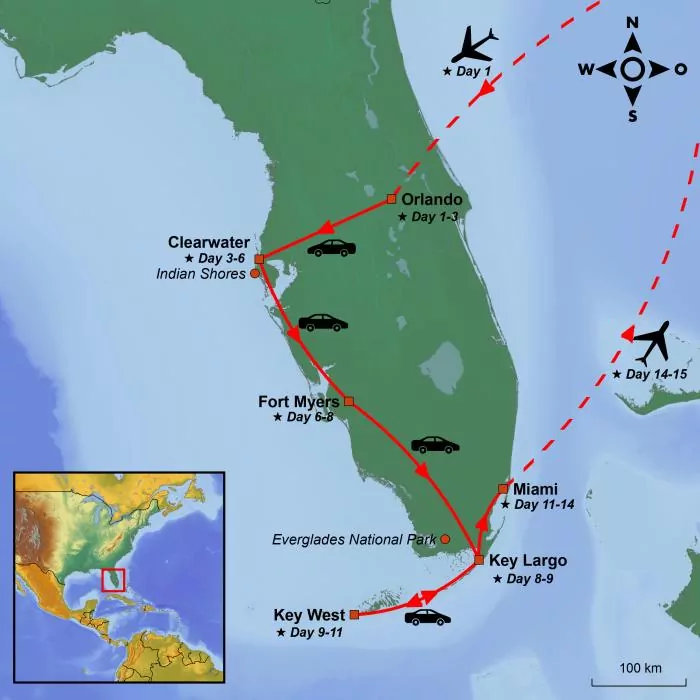
Beyond the man-made wonders, Florida’s natural beauty is breathtaking. Its coastline stretches for thousands of miles, offering a diverse array of beaches, from the lively shores of South Beach in Miami to the pristine, sugar-white sands of Siesta Key Beach and the tranquil barrier islands of the Florida Gulf Coast. The unique ecosystem of Everglades National Park provides an opportunity for airboat tours and wildlife viewing, while the enchanting chain of islands known as the Florida Keys offers world-class fishing, diving, and a relaxed, bohemian vibe, culminating in the vibrant atmosphere of Key West.
Culturally, Florida also offers rich historical experiences, notably in St. Augustine, the nation’s oldest continuously inhabited European-established settlement, with its historic Castillo de San Marcos. Cities like Miami boast eclectic art districts, such as the colorful Wynwood Walls, and a dynamic culinary scene.
Tailoring Your Florida Itinerary
Whether you seek adrenaline-pumping adventures, serene relaxation, cultural immersion, or family-friendly fun, Florida can be tailored to your precise desires. A romantic escape might involve sunset cruises in the Keys and stays at luxury resorts like The Breakers Palm Beach. An adventure trip could include kayaking through bioluminescent bays, diving in the clear waters of John Pennekamp Coral Reef State Park, or golfing at renowned courses such as TPC Sawgrass. For families, the sheer volume of kid-friendly attractions, from water parks to interactive museums, ensures endless entertainment.
Planning and Preparation: Ensuring a Smooth Florida Trip
Optimal planning can significantly enhance your travel experience, regardless of the distance.
Optimal Timing: When to Visit Florida
Florida’s climate is a significant draw, but understanding its seasonal variations is key. The most popular time to visit is generally from November to May, when temperatures are mild and humidity is low, making it ideal for outdoor activities and theme park visits. This period, however, also coincides with peak tourist season, leading to higher prices and larger crowds, especially during winter holidays and spring break.
The summer months (June to August) are characterized by high temperatures, humidity, and daily afternoon thunderstorms. While less crowded than peak season, it’s also the beginning of hurricane season, which officially runs from June 1 to November 30. September and October can offer a sweet spot with fewer crowds and potentially lower prices, though hurricane risk remains. Always monitor weather forecasts closer to your travel date.
Budgeting for Distance and Destination
The cost of your Florida trip will directly correlate with the distance traveled and your chosen travel style. Flights from the West Coast will naturally be more expensive than those from the Southeast. Driving, while potentially saving on airfare, incurs costs for fuel, food, and possibly overnight accommodation.
Once in Florida, accommodation choices range from opulent resorts to budget-friendly hotels and vacation rentals. Theme park tickets represent a significant expense for many, while beach-focused vacations can be more economical. Factor in dining, local transportation, and optional activities. Booking flights, accommodation, and rental cars well in advance, especially during peak season, can lead to substantial savings. Consider travel packages that bundle flights and hotels, or look for deals during the shoulder seasons.
Making the Journey as Enjoyable as the Destination
Ultimately, the question “How far is Florida from here?” invites us not just to measure miles, but to consider the entire travel narrative. The journey, whether a quick flight or a multi-day road trip, is an integral part of the adventure.
Embracing the Travel Experience
For long flights, invest in comfort: noise-canceling headphones, a good book or entertainment, and comfortable clothing. Strategic layovers can break up extensive travel and even offer a brief glimpse of another city. On a road trip, planning fun stops, compiling a great playlist, packing snacks, and sharing driving responsibilities can transform hours on the road into cherished memories. View travel time not as an obstacle, but as a transitional phase, a winding path leading to relaxation and new experiences.
The Reward of Arrival
Upon arrival, the warmth of the Florida sun, the gentle rustle of palm trees, and the anticipation of adventure quickly make any travel fatigue dissipate. Whether you’re stepping off a plane into the bustling energy of Miami Beach, driving into the magical realm of Orlando, or finding solace on a quiet beach along the Gulf, Florida has a way of welcoming its visitors.
In conclusion, “How far is Florida from here?” is a question best answered by your starting point, your preferred mode of travel, and your willingness to embark on an adventure. While the distances vary, the universal appeal of Florida as a vibrant, diverse, and endlessly entertaining travel destination remains constant. Plan wisely, travel comfortably, and prepare to be captivated by everything the Sunshine State has to offer.
LifeOutOfTheBox is a participant in the Amazon Services LLC Associates Program, an affiliate advertising program designed to provide a means for sites to earn advertising fees by advertising and linking to Amazon.com. Amazon, the Amazon logo, AmazonSupply, and the AmazonSupply logo are trademarks of Amazon.com, Inc. or its affiliates. As an Amazon Associate we earn affiliate commissions from qualifying purchases.